My last two blog entries dealt with the Jewish Feast of Passover, its preparation (including the sacrifices) during the preceding days, the actual Biblical Feast, lasting only through the twilight time between Nisan 14 and 15, and it’s correct relationship to Biblical Soteriology. Today I’m moving on to the second Feast, Unleavened Bread.
Unleavened Bread is the second of the Spring Feasts, and in fact it spans the entire seven days now traditionally called “Passover“. The first and last days of the feast are “convocations”, or Sabbaths, no matter on which day of the week they occur. The Saturday Sabbath within this seven-day span is considered an “especially holy Sabbath”, particularly if it falls on Nisan 15. If the Saturday Sabbath and either of the holiday Sabbaths occur on consecutive days, then cooking and other related Sabbath prohibitions are relaxed during the first of the two days.
Deuteronomy 16:16-17 (ESV) designates three days each year as regalim, or “pilgrim festivals“, which all ritually clean adult males (13 and above) are required to attend:
[16] “Three times a year all your males shall appear before the LORD your God at the place that he will choose: at the Feast of Unleavened Bread, at the Feast of Weeks, and at the Feast of Booths. They shall not appear before the LORD empty-handed. [17] Every man shall give as he is able, according to the blessing of the LORD your God that he has given you.
In practice, attendance during Unleavened Bread is only required until the end of the first full day. In fact, many Jews started home on Nisan 16, though many stayed for the entire week. I am confident that an early return to Nazareth was the context in which Jesus’ family left him behind as recorded in
Luke 2:41-47 (CJB) [41] Every year Yeshua’s* parents went to Yerushalayim* for the festival of Pesach*. [42] When he was twelve years old, they went up for the festival, as custom required. [43] But after the festival was over, when his parents returned, Yeshua* remained in Yerushalayim*. They didn’t realize this; [44] supposing that he was somewhere in the caravan, they spent a whole day on the road before they began searching for him among their relatives and friends. [45] Failing to find him, they returned to Yerushalayim* to look for him. [46] On the third day they found him—he was sitting in the Temple court among the rabbis*, not only listening to them but questioning what they said; [47] and everyone who heard him was astonished at his insight and his responses.
Where in Jerusalem was Jesus most likely “sitting … among the rabbis“? Most likely on these stone steps (on the Temple diagram) or on the porch at their top (the Hel). The rabbis mentioned were probably Pharisee members of the Sanhedrin, who at that time regularly convened in the Chamber of Hewn Stone (below the arrow). During times like this they would often walk out to the porch to talk to worshippers and answer theological questions.
Historically, Exodus 12:39 (CJB) records that the Israelites prepared unleavened dough for their flight from Egypt: [39] They baked matzah* loaves from the dough they had brought out of Egypt, since it was unleavened; because they had been driven out of Egypt without time to prepare supplies for themselves.Leaven later came to prefigure sin to Israel, so that the removal of leaven from the Land during this feast symbolized the removal of sin—i.e., sanctification.
By His crucifixion, Jesus bought our salvation, in all its aspects. His crucifixion is seen in all of the Feasts, and each Feast prefigures at least one of those aspects. It turns out that important events in either Jesus’ first or second advent have evidently occurred or are scheduled to occur on Feast days relevant in some way to the events themselves. So far:
Passover symbolized redemption from slavery (to Egypt/to Sin), and it was precisely on the Feast of Passover (during the Seder) that Jesus proclaimed the New Covenant as foretold in Jeremiah 31:32 (CJB),: [32] (33)“For this is the covenant I will make with the house of Isra’el* after those days,” says ADONAI*: “I will put my Torah* within them and write it on their hearts; I will be their God, and they will be my people.
Unleavened Bread symbolized Sanctification, or removal from Israel (of Egypt/of Sin), and it was precisely on the first day of the Feast of Unleavened Bread that Jesus was crucified to provide salvation, including payment for, and sanctification from, sin.
“Theology” is the study of God, and “Soteriology” is the study of, or theology of, salvation.
As an Evangelical Christian, I believe that Salvation is by God’s Grace, through Faith implanted by God and acting in us. I believe that Salvation has always been by Grace, through Faith. In Temple times, yes, certainly there were many Jewish legalists, but the sages always understood that the sacrifices were a response of faith to Salvation, not a means of it. And if not, were Jews of the Babylonian Captivity forever lost because they had no Temple and therefore no sacrifices? No, they had their faith and a gracious God!
We understand that Salvation is, in one sense, a process (personal conviction of sin), culminating in an event. Not, I think, a result of following some yellow brick road through random verses in Romans with a well-meaning friend or stranger, and then repeating back a magic prayer. The best statement I know of to explain salvation is:
Hebrews 11:6 (ESV) [6] And without faith it is impossible to please him, for whoever would draw near to God must believe that he exists and that he rewards those who seek him.
While the Salvation event is a jewel to be sought, it is in reality a jewel with many separate facets (see slide, below): It gathers us into fellowship with likeminded believers; in fact, usually, God brings people into contact with believers in order to introduce them to the reality of His existence. The key facet is regeneration, replacement of our old nature by the new. This results in short- and long-term joy. It also brings redemption from slavery to sin. As we live among God’s people and learn God’s will, we experience sanctification, a turning from sin towards a purer life. Eventually, we all die, but we look forward to ultimate resurrection, followed by revelation of all truth.
So, these facets of Salvation are typified by the recognized themes of the Jewish Feasts! The order is precisely that of the feasts, on Israel’s civil calendar beginning in the fall.
It is important, and the reason for this article, that you recognize that
Jesus is not just the archetype of the Passover Lamb; He is also typified by, and fulfills the prophetic vision of, all Biblical Jewish Feasts and Sacrifices.
In1 Peter 1:18-19 (ESV), the Apostle tells us, “You were ransomed … with the precious blood of Christ, like that of a lamb… without blemish or spot” The emphasis on “like” is mine, and I removed a comma that is not in the Greek. Peter is here comparing Jesus with, really, all of the efficacious sacrificial animals, not just the Passover Lamb.
John the Baptizer, in John 1:29 (ESV), said, “Behold, the Lamb of God, who takes away the sin of the world.” But, what does it mean to call Him “The Lamb of God“? Was John prophesying that Jesus would be crucified during the Passover Feast, some 3-1/2 years in the future? The people hearing John in that day, in that place, would have missed that point and immediately known that John was pointing out to them the person who he believed to be the promised Messiah!
Prior to Jesus’ appearance, the Jewish rabbis taught that personifications of “the Lamb” in the Old Testament were speaking of the coming Messiah. Take, for example,
Isaiah 53:7 (ESV) [7] He was oppressed, and he was afflicted, yet he opened not his mouth; like a lamb that is led to the slaughter, and like a sheep that before its shearers is silent, so he opened not his mouth.
At the bottom of Part 4, I mentioned some reasons that many theologians mistakenly think that the Gospel of John conflicts with the synoptics, and thus proves that the Last Supper could not have been a Passover Seder. Part of their belief is that Jesus must have been crucified at the exact same time as the Passover sacrifices because “He was the Passover Lamb of God who took away the sins of the world.” That, too, is a misreading of John.
Here is a list of some things that I think make it impossible for Jesus to have died on Nisan 14, at the same time as the sacrifices:
Most importantly, a proper understanding of the scriptures and the cultural traditions make the narrative of the four Gospels clear and consistent. The sacrifices were on Nisan 14, the Crucifixion on Nisan 15.
In Exodus, the killing of the sacrifice was of little importance; what mattered is what happened in the home that night—the smearing of the blood on the doorposts and the sharing of the final meal in slavery. Followed, of course by the passing over by the angel of death. In the commemoration, the sacrifice was governed by ritual, but it was still not a holiday occurrence—the meal was now the essential feature and made more-so by Jesus. During that one, all-important twilight, at the Passover Seder, Jesus proclaimed for all time the New Covenant in His body and blood!
If Jesus had died alongside the Passover sacrifices, His death would have been forever connected with that one sacrifice alone. In fact, His death represented every other sacrifice as well!
The key take-home from this lesson is that, while Jesus was certainly the ultimate Passover Lamb, it was not as the Passover Lamb that He saved us! Passover lambs were never sin offerings. A sin offering became a symbolic receptacle for the sins of the people, and could not be eaten, because one would be symbolically re-ingesting the same sins. The Passover lambs were a type of fellowship offering, a remembrance of redemption from slavery, and a celebratory meal between family and/or friends. It not only could be eaten, but it must be eaten. So, where did salvation truly lie? In Jesus, the Scapegoat of Yom Kippur!Stay tuned for a future instalment.
Passover—as commanded in Lev 23—is the only major Jewish feast that lasts less than a day. It spans, in fact, only the relatively short amount of time “between sundown and complete darkness“. Ring a bell? This is the period between Jewish days, as explained in Part 2 of this series. The annual Passover dinner, the Seder, begins during this time span, but ends around midnight. The passage below, from Exodus, describes the original Passover, in Egypt, and the preparation days in advance of it.
Exodus 12:1 (CJB) Chapter 12 [12:1] ADONAI* spoke to Moshe* and Aharon* in the land of Egypt; he said, [2] “You are to begin your calendar with this month; it will be the first month of the year for you. [3] Speak to all the assembly of Isra’el* and say, ‘On the tenth day of this month, each man is to take a lamb or kid for his family, one per household—[4] except that if the household is too small for a whole lamb or kid, then he and his next-door neighbor should share one, dividing it in proportion to the number of people eating it. [5] Your animal must be without defect, a male in its first year, and you may choose it from either the sheep or the goats. [6] “‘You are to keep it until the fourteenth day of the month, and then the entire assembly of the community of Isra’el* will slaughter it at dusk. [7] They are to take some of the blood and smear it on the two sides and top of the door-frame at the entrance of the house in which they eat it. [8] That night, they are to eat the meat, roasted in the fire; they are to eat it with matzah* and maror*. [9] Don’t eat it raw or boiled, but roasted in the fire, with its head, the lower parts of its legs and its inner organs. [10] Let nothing of it remain till morning; if any of it does remain, burn it up completely. [11] “‘Here is how you are to eat it: with your belt fastened, your shoes on your feet and your staff in your hand; and you are to eat it hurriedly. It is ADONAI‘s* Pesach* [Passover]. [12] For that night, I will pass through the land of Egypt and kill all the firstborn in the land of Egypt, both men and animals; and I will execute judgment against all the gods of Egypt; I am ADONAI*. [13] The blood will serve you as a sign marking the houses where you are; when I see the blood, I will pass over [Hebrew: pasach*] you—when I strike the land of Egypt, the death blow will not strike you. [14] “‘This will be a day for you to remember and celebrate as a festival to ADONAI*; from generation to generation you are to celebrate it by a perpetual regulation.
The passage above was the command given by God to the Israelite slaves after Pharaoh refused to let them leave following the ninth plague on Egypt. The Israelites obeyed, the Egyptians scoffed, and that night (Nisan 15) at midnight, God killed the firstborn children and livestock of any family in the land that did not have the blood smeared on their doorposts. The next morning, Pharaoh let the Israelites leave, and they began their trek to the Promised Land.
Some 50 days after the exodus from Egypt, Moses halted the Israelites at Mt. Sinai, where God delivered the Torah (the “teachings”, commonly called “the Law”) to them. Leviticus 23 is part of that Torah, and the Spring Feasts are annual commemorations of the Exodus.
The celebrations in following years and centuries are somewhat of a reenactment. They have always differed from the original events, and in years with no Tabernacle or Temple, they are in some ways quite different—but there are noted similarities.
Verse 2 of Exodus 12 defines Nisan as the starting month for the religious, or ecclesiastical, not the civil, calendar. Nisan is a borrowed Akkadian name; in Moses’ day it was called Aviv.
Verses 3 through 5 were followed as long as there was a Temple. The purpose of the time span between selection and sacrifice was twofold. First, to allow time for inspection and observation of the animal, to ensure that it met the standards of verse 5. Second, in so doing it would allow the owners to become emotionally invested in the animal; it isn’t an offering, it’s a sacrifice—with a cost. Unlike other sacrifices where a pigeon or grain product could be substituted by a poor family, in this case it had to be a lamb or kid, but the expense could be divided between the participants.
In Egypt, animals were sacrificed at individual homes, without priestly supervision, during the dusk period. In Temple times, all sacrifices had to be done in the Temple, and because there were so many they were done before dusk and before the actual Feast days. In Egypt, the blood was smeared around the doors, but in Tabernacle and Temple, it was splashed on the altar base. In Egypt and later years, the animal was roasted (no other method of cooking was permitted), then fully consumed that night, with unleavened bread (Heb. matzah, symbolizing sinlessness) and bitter herbs (Heb. maror, symbolizing the bitterness of slavery).
In the absence of a Temple, there are of course no sacrifices. Different Jewish sects modify the traditions in ways they judge are appropriate. The Seder generally includes some sort of roast meat, and there are generally shank bones from a lamb on each plate.
The table ritual of verse 11 was specified in Egypt, but not thereafter. Traditionally the Passover meal, or Seder, begins at sundown and the ritual portions are finished by complete darkness; then the remainder of the time until midnight is spent in table fellowship. In Egypt, the entire animal was spitted and roasted; in later ritual, the animal was butchered in advance, and only edible meats were roasted. In both Egypt and later tradition, none of the meat could be left for morning; if it was, it had to be burned.
The Passover Seder Plate, from the Chabad.org Haggadah
Verses 11 – 13 only applied in Egypt, of course. At midnight, in tradition, guests break from the table and stream out to the streets and rooftops to sing the hallel (“praise” songs, Psalm 113 – 118) together—an entire city in choir!
More on this next time, but the Passover was not a sin offering, and you had to already be ritually sinless to partake of it. The theme of the Feast is Redemption from slavery, not salvation or regeneration. Though there were rigid requirements for the animal being sacrificed, it was the meat that was ultimately important, not the actual act of sacrifice. To clarify this important point, I plan to dedicate the entire next article to the actual meaning we should attach to Passover, in terms of Christian soteriology, or salvation theology.
Technically, there are three Feasts in the spring month of Nisan, as bracketed in the slide above; but because they are contiguous (even overlapping) and so closely related, it became traditional practice to lump them together as a single Feast, which was called Passover (Heb. Pesach). I will present details of each component Feast in future posts, but for now I want to provide, in narrative form, a description of the events that preceded a typical Passover week, with notes about Jesus’ last Passover.
Since all bar mitzvah (Son of Commandment) Jewish males, age 13 and over, were required to be in Jerusalem for this Feast, nearby roads, bridges, wells and mikvoth (ritual baths, baptistries) were repaired well in advance and the city cleaned up for hordes of out-of-town visitors. Groups of roughly 7 to 12 people would share one lamb or kid, sized so that no meat would be left over after the upcoming Seder. Usually these groups were families, so that’s how I will refer to them here, but frequently small families or more loosely related groups would combine.
Selection of the animals had to be done no later than Nisan 10, so that was the date that most families would begin arriving. Jesus arrived that day (which we now refer to as “Palm Sunday”) on a donkey colt, with Peter and John who appear to have shared the preparation duties in the following days.
Though the Passover Week would not start until the Seder meal during the period of dusk between Nisan 14 and 15, the sacrifices had to be completed during the day on Nisan 14. This day was also called “the first day of unleavened bread”, because all leaven had to be consumed, sold to Gentiles or destroyed before the Seder and the following week-long Feast of Unleavened Bread.
There were usually as many as a million people in Jerusalem for Passover, so around a hundred thousand animals had to be sacrificed in a single day! All 12 courses (rotations) of priests and as many Levites as possible would be on duty. Typically, one or two representatives from each family, with their animal, would gather around the Temple Mount, on its top, and in the outer courts and the Court of Prayer (also known as the Court of Women, or the Treasury). As quickly as possible, these worshippers would be led in groups through the Nicanor Gate separating the Court of Prayer from the Court of Israel.Two lines of priests would be stationed in the slaying area on the north side of the altar, each priest holding a gold or silver bowl as shown below.
Property of the Temple Institute, Jerusalem
The function of the family representatives in this ceremony was to bring the animal and the slaying knife, to kneel in front of one of the priests, and to tenderly hold the animal as a way of identifying with it, emotionally and spiritually. The representative, not the priest, would then slit its throat quickly and humanely. The blood would be drained into the priest’s bowl and passed down the line of priests to be splashed at the base of the altar, near a drain that would channel much of it down into the Kidron Valley, below. After finishing with the slaying, the representatives would carry their dead animals to an adjacent area where they would hang it from one of several posts provided for the purpose and quickly cut out portions of meat dedicated to the temple personnel, and parts forbidden for consumption. The forbidden parts would be carried by priests up a ramp onto the altar and tossed into a fire. The representatives would skin the rest of the offering and cut it up for cooking. The meat would be wrapped in the skins and taken back into the city to be roasted on a spit in ovens constructed for that purpose.
The reason I spent so much energy describing the above process is that it can’t be understood from the Bible alone, and probably 98% of what you read on the Internet is flawed. Many Christians say that there had to have been twoSeders, or the Last Supper must have been some other meal. There are three main reasons for this confusion:
First, many believe that Jesus was crucified “on Passover”, at the same time the lamb (singular) was sacrificed. For historical and theological reasons that I will go into in future posts, the Crucifixion absolutely could not have been on Passover, and it could not have been on the same day as the sacrifices (plural). Jesus was crucified during traditional Passover week, but not until after the Biblical Passover Feast, the one and only Seder. There were not two Seders.
There is also confusion about terminology–the Preparation Day was on the first day of unleavened bread, but that is the day before the first day of The Feast of Unleavened Bread.
Also, in John 18:28, when the Pharisees refused to go into Pilate’s headquarters with Jesus in the morning lest they be defiled and unable to “eat the Passover” (ESV), the meal they were concerned about could not have been the Seder, because defilement from entering a Gentile home only lasted until sundown! Instead, it had to refer to the important chagigah meal at noon following the Seder. More on all these issues later.
The Jewish calendar year is divided into 12 lunar months, each beginning on a new moon. In seven out of every 13 years, an additional lunar month is added to keep the seasons in their proper time frames; think of these extra months as “leap months”. For most of its history, Israel has actually used two separate calendars that differ only in their starting months. The civil calendar starts in the month of Tishri, and it is this calendar that you will see used most often today. The religious calendar begins seven months later, in the month of Nisan. The Bible primarily uses the religious calendar, and in particular, “the first month of the year”, Nisan, is the proper time for the Spring Feasts, and “the seventh month of the year”, Tishri, is the time for the Fall Feasts. What about the Gregorian calendar, used by most of the world in modern times? Well, of course modern Israel uses that, too, but only for international dealings.
In addition to Shabbat, we will be looking at seven Major Feasts spread over three Festival Seasons:
The Spring Feasts take place in Nisan, the first month of the religious calendar. There are three feasts in quick succession, related, for our purposes, to Israel’s past and to Jesus’ first advent.
The Interval Feast is in Sivan, the third month of the religious calendar. There is one feast, relating to the present age and the time between Jesus’ advents.
The Fall Feasts take place in Tishri, the seventh month of the religious calendar. Three feasts that relate to Israel’s future and to Jesus’ second advent.
As we progress through the Feasts, I’ll show that each has both historical and prophetic significance, and that, in particular, each speaks volumes about the Messiah, Jesus. Additionally, there are agricultural aspects to each feast, but those have more significance to Israel’s history than to us. Finally, the rituals of the feasts hold a lot of significance with respect to a believer’s walk, but my emphasis here is more theological, and not on the ritual, so that will be a bit out of our scope.
Given the fact that I’m limiting my scope, both to increase the probability that I can accomplish what I’ve set out to do, and to avoid boring anyone by actually trying to cover all 69 slides that I started out with… I’ve just presented you with a comprehensive list of study topics related to the feasts, but I’m going to leave gaps going forward, and I encourage you to study some on your own.
This is a slide you will see over and over, with various parts emphasized. Please look it over now, and yes, before you ask, I am going to claim that the events listed in the final column are not only pictured by the related Feast, but took place, or will take place, on the actual Feast days.
Before proceeding to discussions of the seven annual Principal Feasts in the remainder of Lev 23, verse 3 emphasizes, by its placement in the chapter, the equal or greater importance of the regular, weekly, Saturday Sabbath. As we will see, there are Sabbath days embedded within some of the Feasts. These days are in addition to the weekly Sabbaths. If a Feast Day Sabbath falls on a Saturday, the rituals for the two, already fairly similar, are combined into one.
In the Bible, the term “Sabbath” (Heb. Shabbat, Shabbos, or Shabbes) means “rest“, or “ease“. A Sabbath Day, therefore, is a “day of rest or ease.” As a child, I was taught that “Sabbath” means “seventh.” That is a myth! Sabbath and its Hebrew equivalents aren’t even close to meaning seventh; nevertheless, the weekly Sabbath is always on Saturday. The concept of a “Christian Sabbath” on Sunday has no Biblical support and is merely a product of the heretical theology that claims that Israel permanently forfeited God’s Promises and was subsequently replaced in God’s Kingdom by the Church.
This is a good time to introduce the Jewish concept of “days“, which we’ll need to understand going forward. Most Christians understand that the Jewish day starts and ends somewhere around the evening hours. It is actually much more complicated than that, and I have tried to illustrate it in the above slide.
Every Jewish day officially ends at sundown, which is defined by ancient Jewish law as the instant that a priest standing on the Temple ramparts signals that the last sliver of the sun has dipped below the western horizon. If for weather or other reasons (like, there is no Temple!) that instant could not be observed, then estimation was allowed. In present days, it’s all determined by computer, with latitude, longitude and altitude all taken into account.
Here is where it starts to get strange! It turns out that the next day doesn’t start when the previous day ends. It doesn’t start until nightfall, officially the instant at which a priest, standing in the same location, can first distinguish three “medium-magnitude” stars in the sky. Try doing that in a modern, brightly lit city sky! As to how one defines a star’s magnitude, that’s obviously very subjective. But again… computers to the rescue.
So, what do we do with the twilight period between sundown and nightfall? Technically, it belongs to both days–or to neither of them. Let me give an example: Right now, as I sit here at the keyboard, it is not quite 5 pm on a Friday evening where I am. Today, where I am (based on my latitude, longitude and height above standard sea level), will formally end at Sunset (Shkia), 6:54 pm local time. The twilight, or dusk, period (Tzait Hakochavim) will last 72 minutes, and end at 8:06 pm.
Tomorrow is Shabbat. Anything that is illegal for a Jew to do on Shabbat, must be completed by 6:54 pm today, at the absolute latest. Tomorrow, dusk ends at 8:05 pm. Anything illegal for a Shabbat must not begin until that time or later. Thus, the twilight time acts as a safety factor to make sure one does not violate Shabbat! This is part of what we call “building walls around Torah.” We will run across this twilight thing again…
Leviticus 23 provides a convenient outline for a discussion of the eight principal Feasts of Israel, including the weekly Sabbath observance.
The first two verses of the chapter set the theme for the rest, and perhaps require some explanation for non-Jewish readers:
In most English translations of the Bible, we see “lord”, in lower or mixed case, used to indicate a functional title for a ruler, and “LORD”, spelled in all-caps, as a reverent substitution for the “Covenant Name”, or “Divine Name” יהוה, yud-heh-vav-heh, YHVH, Yahweh, Jehovah, etc. “Adonai” and “ADONAI” are equivalent Hebrew substitutions for “the lord” and “the LORD”, respectively.
“Moshe” is an English transliteration of the Hebrew name that has come to our standard English versions in its Anglo-Saxon rendering as “Moses”. In this and future slides, transliterations are indicated by a following asterisk.
One other term on this slide requires explanation: A “convocation” (Heb., miqra) is “a sacred assembly, calling, or reading.” Though translations of the term in Lev. 23:1 appear at first glance to refer to the feasts themselves, the context of the remaining verses in the chapter clearly indicate that the “convocations” are here the associated Sabbaths, or days when ordinary work is not permitted.
Traditional interpretations of Scripture often seem to become Scripture over time. Peter’s vision in Acts 10 is a case in point:
Acts 10:10-15 (CJB) [10] He began to feel hungry and wanted something to eat; but while they were preparing the meal, he fell into a trance [11] in which he saw heaven opened, and something that looked like a large sheet being lowered to the ground by its four corners. [12] In it were all kinds of four-footed animals, crawling creatures and wild birds. [13] Then a voice came to him, “Get up, Kefa, slaughter and eat!” [14] But Kefa said, “No, sir! Absolutely not! I have never eaten food that was unclean or treif.” [15] The voice spoke to him a second time: “Stop treating as unclean what God has made clean.”
The Hebrew term “treif“, here (literally, “torn”, as if by wild animals or by falling off a cliff), and its Greek equivalent, “koinos“, include any food that is non-kosher, profane (common), defiled, unclean, or unholy.
Most Christian theologians today, would say, “That is an object lesson, but it is also a clear statement that God has cancelled His own commandment!” But did He? First, let’s be clear, the Jewish dietary laws have never applied to non-Jewish believers! Torah was God’s teachings to Jews, His commandments to them to set them apart from the profane ungodly, as His holy people. The closest we have in the New Testament to a dietary commandment for non-Jewish believers, is an opinion delivered by James at the first church council, in Jerusalem:
Acts 15:19 (CJB) [19] “Therefore, my opinion is that we should not put obstacles in the way of the Goyim [essentially, Gentiles] who are turning to God. [20] Instead, we should write them a letter telling them to abstain from things polluted by idols, from fornication, from what is strangled and from blood.
What was Peter’s understanding of his trance? At first, he didn’t get it at all! The voice had to tell him three times, “Stop treating as unclean what God has made clean” (vs 16). Yet, in the following verse, when he awoke from his trance, he “was still puzzling over the meaning of the vision he had seen” (vs 17). Then “While Kefa’s [Peter’s] mind was still on the vision, the Spirit said, “Three men are looking for you” (vs 19).
I think that is when the light dawned for Peter. The sheet was a vision, not a reality. The food on it was a vision. God wanted to teach him something. The vision wasn’t about food, it was about people! He was given an object lesson; the lesson taught him:
Acts 10:28 (CJB) [28] He said to them, “You are well aware that for a man who is a Jew to have close association with someone who belongs to another people, or to come and visit him, is something that just isn’t done. But God has shown me not to call any person common or unclean…”
Something else needs to be clarified: Peter’s attitude going into this incident was wrong to begin with. There is no commandment in scripture that tells Jews to shun non-Jews! There are only the traditions of the rabbis to account for it. A “cultural construct”. Got created all mankind “clean” from the very beginning. A Gentile in sin is no more defiled than a Jew in sin—in fact because God gave Torah to Israel, He holds them to a higher standard. God doesn’t defile mankind, we defile ourselves. Only God’s grace can restore the holiness we relinquish.
I believe that the resurrection occurred on April 7, AD 30.
So why do I show this on “Nisan 16 or 17″ on the table of feasts, below? It isn’t because I question the date, but simply because the subject of the table is not specifically the resurrection, but rather the date of the feast, Early Firstfruits, or Yom haBikkurim, as celebrated by Israel.
The Levitical command is:
The Feast of Early Firstfruits is Nisan 17 on the Jewish calendar. In the year of Jesus’ crucifixion, that was a Sunday, by our terminology. By my own reckoning, based on astronomical new moon tables,
[10] “Tell the people of Isra’el, ‘After you enter the land I am giving you and harvest its ripe crops, you are to bring a sheaf of the firstfruits of your harvest to the cohen. [11] He is to wave the sheaf before ADONAI, so that you will be accepted; the cohen is to wave it on the day after the Shabbat. —Lev 23:10–11 (CJB)
The question of the day was, which Shabbat (Sabbath); the first day of the Feast of Unleavened Bread, or the normal weekly Shabbat? Modern Jewish calendars follow the view of the Pharisees, who insisted on the latter; but in the First Century, the Sadducees controlled the Temple and the calendar, and they held to the former.
So, even though Jewish calendars today show Yom haBikkurim on Nisan 16, which was a Saturday in AD 30, Jesus was indeed the embodiment of the resurrection theme of the feast, and He rose from the dead on the exact day of the celebration!
I am presenting here a list of dates for key events in Egyptian/Biblical history. Dating of Biblical events during the Egyptian period is very firm, if you believe as I do that the Bible is inerrant and its time references are literal. Dating of the Egyptian King Lists is more problematic, as I will discuss below.
Middle Kingdom, 12th Dynasty
Dating the reigns of Middle Kingdom monarchs is particularly difficult, with a particularly large range of proposed possibilities. I have a fairly large library of Egyptian history. In this post I will list, separated by slashes, two of the newest chronologies that seem reasonable: First is the timeline presented by Van De Mieroop in A History of Ancient Egypt; second, the one I personally prefer, taken from the Wikipedia article, “Twelfth Dynasty of Egypt”, as last edited on 21 December 2021. A radically different chronology by Egyptologist David Rohl, has recently been popularized by the Patterns of Evidence series of videos. I plan to review this series in the near future, but for now, I like most of what is presented in the first two videos, but not so much the second two or the anticipated fifth. Rohl, a self-styled agnostic, follows the lead of various evangelical scholars who shorten the period of the Hebrew “sojourn” in Egypt from the explicitly stated 430 years to 350 years, based on what I believe is a simplistic misunderstanding of the Abrahamic Covenant.
Egypt’s capital throughout the 12th Dynasty period was located in ancient Itj-Tawy, located around 35 miles south of modern Cairo and 21 miles south of ancient Memphis.
Pharaoh Amenemhat II, 1911-1877/1929-1895 BC
Joseph was sold into slavery in Egypt around 1899 BC, at 17 years old(Gen 37:2-29). Most of my sources would put this event somewhere in Amenemhat’s reign. I would place the timing shortly before a brief coregency of Amenemhat and Senusret II.
Pharaoh Senusret II, 1877-1870/1897-1878 BC
Joseph languished in Egyptian slavery and prison for some 13 years before he “stood before Pharoah” at age 30 (1886 BC) to interpret Pharaoh’s dream and to be elevated to Vizier rank (Gen 41:46). By my accounting, this Pharaoh was Senusret II, who seems to have devoted the final eight years of his reign to promoting Joseph’s recommendations for the productive years. Domestically, he is best known for developing the Fayyum Basin area west of the capital. This is a basin watered by a natural offshoot of the Nile, anachronistically named Bahr Yussef (“the Waterway of Joseph”). Although widening of this waterway was done well before the Middle Kingdom era, Senusret built numerous canals for irrigation and to control the levels of the valley’s Lake Moeris for the purpose of land reclamation. He also built new settlements in the center and around the borders of Egypt and appears to have greatly expanded his bureaucracy in these regions. Regarding foreign affairs, he is known to have fostered a period of peaceful trade with the hated “Asiatics” of the Levant.
Pharaoh Senusret III, 1870-1831/1878-1839 BC
This powerful Pharaoh began his reign about eight years after the elevation of Joseph. I believe that his story is told in
Genesis 41:54-57 (CJB) [54] and the seven years of famine began to come, just as Yosef had said. There was famine in all lands, but throughout the land of Egypt there was food. [55] When the whole land of Egypt started feeling the famine, the people cried to Pharaoh for food, and Pharaoh said to all the Egyptians, “Go to Yosef, and do what he tells you to do.” [56] The famine was over all the earth, but then Yosef opened all the storehouses and sold food to the Egyptians, since the famine was severe in the land of Egypt. [57] Moreover all countries came to Egypt to Yosef to buy grain, because the famine was severe throughout the earth.
Senusret continued the agricultural developments begun by his father and attempted to maintain peace within Egypt and with Egypt’s neighbors, but the balance of power within Egypt changed radically during his reign. Since no later than the 3rd Dynasty, Egypt had been divided into individual districts called “nomes“, each ruled by a hereditary “nomarch“. These powerful nobles had decentralized Egyptian rule and placed limits on the Pharaohs. Senusret III seems to have used the famine years and his monopolistic control of Joseph’s well-stocked granaries to break the economic power of the nomarchs and to recentralize power within his kingdom.
In 1876 BC, near the beginning of the famine years, Jacob and the rest of his family and their retinues moved to Egypt (Gen 46:1-47:9). Why were they offered seemingly prime space in the fertile land of Goshen, the eastern Nile Delta region? Was this land gift purely out of Pharaoh’s love for Joseph? I doubt it. Their “Asiatic” origins were a heavy strike against them. They ignored Joseph’s warning not to mention that they were shepherds. Egypt’s herds were cattle, and sheep tend to overgraze pastures and make them unsuitable for raising cattle.
Late 12th Dynasty
Joseph died at 130 years old, in 1806 BC, having lived in Egypt after the famine during the reigns of Senusret III, Amenemhat III, and Amenemhat IV. Queen Sobekneferu was just coming into power for a brief, 4-year reign.
While there is no question that the 12th Dynasty Pharaohs recognized Joseph’s wisdom and supported his programs as Vizier, as mentioned above, I personally have reservations about the sincerity of their welcome of his Hebrew family. Senusret III, in particular, hated the Nubians of Africa and was at best ambivalent about “Asiatics”—foreigners from eastern Mediterranean lands, many of whom had been infiltrating Lower Egypt for generations. I suspect that the Pharaohs’ invitation to Jacob and their tolerance of the Hebrews was more to keep Joseph happy and his relatives under observation.
At the close of the chaotic 14th Dynasty, a group of Asiatics, speaking an Aramaic/Canaanite west-Semitic dialect, took control of Egypt. They came to be called “Hyksos“, meaning “the rulers of foreign lands”. They were settled throughout Goshen and along the Lower Nile Valley, with scattered settlements into Upper Egypt. Dynasties 15, 16 and 17 consisted primarily of Hyksos rulers with their capital first in the eastern Nile Delta city of Avaris, and later in Thebes. They were not deposed until Amose I, founder of the 18th Dynasty, unseated them. He and his successors eventually drove them out of Egypt.
Aside from secular and Deistic theories that equate the Hyksos with the Hebrews, I have never seen or heard a discussion of the inevitable dispersal of the Israelites in Egypt during the Hyksos rule and early 18th Dynastic period. Exodus 1:5-7 implies that the original 70 “sons of Israel” had multiplied until they occupied not just Goshen, but rather “filled” all of the habitable land of Egypt. I imagine that they were displaced completely from Goshen itself, but in any case, as slaves they would have been required to concentrate close to where they worked. By Moses’ time, most of their work would certainly be in Upper Egypt, except at flood times. Travel from the Delta to Thebes by foot would probably have taken them around two weeks, at best. Without any archaeological or written records either way, I am assuming that the bulk of the slaves were sheltering along the Nile wherever they were needed at any given time.
Exodus 1:7-21 covers an undatable period of history after the death of Joseph and before the birth of Moses. A traditional understanding of the chapter assumes that the entire passage describes a single wicked Pharaoh, but I would rather divide it as follows:
the Pharaoh who “did not know Joseph”, and who ordered their enslavement—possibly as early as late in the 12th Dynasty (Ex 1:8-11);
a long period of increasing oppression and further population expansion (Ex 1:12-14); and
the Pharaoh who, during that period, tasked the midwives to kill Israelite boys (Ex 1:15-21).
Most scholars today use a Conventional Egyptian Chronology for this period. The currently popular Patterns of Evidence series is pushing David Rohl’s alternative “New Chronology”, which most Egyptologists agree is way off the mark. Within the 18th Dynasty, the Conventional view has two primary variations, due to an ambiguity in tying the ancient Egyptian calendar to our Gregorian calendar. The so-called “Low Chronology“, which is most popular, contains later dating; use of the “High Chronology” results in dates 20 years earlier. Personally, I prefer a variation of the Low Chronology, as presented by Christian Egyptologist, Kenneth Kitchen. Though I don’t agree with his conclusions about Biblical dating, his Egyptian dating seems to me to fit better with the Biblical narrative as I interpret it.
Pharaoh Amenhotep I, 1532-1511 BC
Moses was born in 1526 BC, by Kitchen’s Chronology, during the 6th year of Amenhotep’s reign. The order to throw newborn boys into the Nile was probably issued shortly before that time, so it is safe to say it was Amenhotep’s order (Ex 1:22). There is a problem with this chronology, though: the following passage (Ex 2:1-11) states several times that it was “Pharaoh’s daughter” who rescued Moses and later adopted him, but Amenhotep had no male or female heirs at all except for one son, who died at a very early age. If the dating is correct, then this wording can still be regarded as correct if she was the daughter of either a past or future Pharaoh. There is precedent for this type of royal ambiguity both in scripture and in other ancient writings. If so, there are three possible scenarios:
She could have been a daughter of Amenhotep’s father, Pharaoh Ahmose I. Ahmose had 12 children, including several daughters, but those who survived to 1526 would have been fairly old by the standards of the day. I think it would have been unlikely that any of them would be at the river under these circumstances.
Amenhotep was succeeded by Thutmose I, who was a military figure and not related to him at all. Thutmose did indeed have a daughter, Hatshepsut, who was 16 years old in 1526, and was suitable for other reasons, as well. See below.
Thutmose might have been considered the current Pharaoh if he was coregent with Amenhotep. This would not have been unusual, and there is some evidence of a coregency; but it would have to have lasted at least 15 years, which is very unlikely.
Pharaoh Thutmose I, 1511-1498 BC
Thutmose’ birth date and parentage are unknown. Amenhotep died without an heir, and it is likely that Thutmose, probably close to Amenhotep’s age, was promoted from a senior military position. Thutmose had five children over his lifetime, of which three died before his accession. His daughter, Hatshepsut, was born around 1541 BC, in the 16th year of Ahmose I’s reign. She would have been 16 years old when Moses was born, in the 6th year of Amenhotep’s reign, which certainly would have made her the ideal candidate for the (eventual) “Pharoah’s Daughter”. When Thutmose became Pharaoh, Moses was 15 and Hatshepsut undoubtedly a “headstrong” princess at 31 years old.
Exodus 2:5 (CJB) [5] The daughter of Pharaoh came down to bathe in the river while her maids-in-attendance walked along the riverside. Spotting the basket among the reeds, she sent her slave-girl to get it. [6] She opened it and looked inside, and there in front of her was a crying baby boy! Moved with pity, she said, “This must be one of the Hebrews’ children.”
Pharaoh Thutmose II, 1498-1485 BC
When Thutmose I died in 1498 BC, he was replaced by his only surviving son, Thutmose II. Egyptian Pharaohs were almost always male, but succession was determined through a matriarchal system which frequently resulted in brother/sister marriages. Thutmose II was the son of Thutmose I by a minor wife, which made his claim to the throne weak. This he remedied by marrying his older half-sister, Hatshepsut, a daughter by Thutmose I’s chief wife.
Based on tradition, and possibly documentation that was available to him at the time, 1st Century Jewish historian Josephus reported that Moses was indeed a “prince of Egypt”, without question receiving the same education that any other Egyptian prince would have received in the eventuality that he might one day inherit the throne of Pharaoh. Josephus reported that Moses led the Egyptian army in at least one successful campaign against the perennial enemy in Nubia.
Although I believe that Hatshepsut was Moses‘ adoptive mother, and I have no doubt that she carefully supervised his education, I think that he later became a liability to her own ambitions. When Moses fled from Egypt in 1486, it was clear (as is evident from the state of his mummy) that Thutmose II was dying. Hatshepsut had her own plans going forward, and there may have been a risk that Moses would be seen as a viable heir. When she heard that Moses had killed an Egyptian, she had an excuse to get rid of him, either in her husband’s name or her own:
Exodus 2:15 (CJB) [15] When Pharaoh heard of it, he tried to have Moshe put to death. But Moshe fled from Pharaoh to live in the land of Midyan.
I am not ignoring the masculine pronoun in “he tried”. Because Pharaohs were almost always male, Hatshepsut began dressing and acting as a male Pharaoh, and insisted that she was king, not queen, of Egypt. All references to her during much of her reign were masculine.
I think that Moses was savvy enough to recognize his danger. It is also significant to me that he was not sentimental about her at this point, either:
Hebrews 11:24 (CJB) [24] By [faith], Moshe, after he had grown up, refused to be called the son of Pharaoh’s daughter. [25] He chose being mistreated along with God’s people rather than enjoying the passing pleasures of sin. [26] He had come to regard abuse suffered on behalf of the Messiah as greater riches than the treasures of Egypt, for he kept his eyes fixed on the reward.
When Thutmose II died in 1485 BC, he was succeeded by his infant son, Thutmose III, so Hatshepsut became queen regent. She reigned as actual Pharaoh for 19 years, until her own death. She is regarded by many as one of the most powerful woman monarchs of history. She died when Moses was 62 years old, roughly the midpoint of his 40 years in Midian.
Pharaoh Thutmose III, 1464-1431 BC
Thutmose III became sole ruler on Hatshepsut’s death. He is known as the “Napoleon of Egypt” for his many military campaigns and is considered to have been a military genius.
The Exodus and the loss of his armies occurred in 1446 BC, in approximately the 18th year of his reign after Hatshepsut’s death. His extreme reluctance to release the Hebrew slaves, despite the severity of the plagues, can probably be explained by Thutmose’s unwillingness to use potential fighting men in their place for common labor. In the few years after the Exodus, he continued his foreign invasions, and claimed great victories, but scholars discount these claims because there was apparently so little booty taken. There is no reason to assume, however, that the loss of so many of his fighting men in the Red Sea would have suppressed his military might for long.
Some commentators object to Thutmose III as the “Pharaoh of the Exodus” because they read some verses elsewhere in the Bible as stating that he had to have drowned with his army—for example:
Psalms 136:13 (CJB) [13] to him who split apart the Sea of Suf, for his grace continues forever; [14] and made Isra’el cross right through it, for his grace continues forever; [15] but swept Pharaoh and his army into the Sea of Suf, for his grace continues forever;
I don’t believe that this poetic description is meant to be precise; just flowery! In any case, the Hebrew text does not support the strength of the “and” interpretation.
Pharoah Amenhotep II, 1431-1406
Amenhotep was Thutmose III’s son by a minor wife. Interestingly, Thutmose’ firstborn son, Amenemhat, son of chief wife Satiah, was the heir-apparent until his death “between years 24 and 35 of Thutmose’ reign.” When accounting for the period of coregency with Hatshepsut, this conforms quite nicely with the Biblical account of the killing of the firstborn!
The purpose of any study of biblical tithing should never be to justify stinginess, because this is clearly not the heart of God! Even if we find that the principle of tithing has no direct applicability to the Church, the study will nevertheless show that God surely desires a spirit of generosity and sacrificial giving.
That being said, I will show that if you wish to dogmatically insist on tithing Biblically, then you have quite a chore in front of you. During two out of every seven years, you must give 22.5% of gross. During roughly four years of every seven, you only owe 12.5%, but you must take another 10% with you to Jerusalem and consume it there. During the sabbatical and Jubilee years, you don’t owe any tithes or offerings at all, but you also can’t earn any money!
Tithing, as taught by scripture, may be summarized as follows:
Technically speaking, tithing applies only to agricultural increase, because virtually all the people of ancient Israel depended on agriculture for their living. In practice, Judaism has always applied the principles to any form of personal increase. Of course, this broadening of application, though done in a spirit of Godly generosity, can be categorized as a “tradition of man.”
The central understanding of tithing is that God is the real owner of everything; therefore, tithes and offerings are not ours to give! When a Jew “brings his tithes to the storehouse”, he is to do so humbly, realizing that he is merely conveying to God that which belongs to Him. Of course, there is always some ritual involved, but the ritual comes, not with the giving, but with the separating. In recognition of Gods bounty, blessings are always said at the time that the tithe is separated from the portion that God has graciously allowed the “giver” to keep for his own sustenance.
Scripture does not demand just one tithe; rather, there are at least two separate tithes, and a smaller preliminary offering. We will not consider here the complex system of offerings (most of which were scripturally obligatory in Temple days) or taxes for the upkeep of the Temple itself.
Before the larger tithes were given, one was to separate out the terumah gedolah, 1/40 of all his increase. This was not a “tithe” (ma’aser, or tenth), but a mandatory “offering” (terumah). Like the tithes, this was required from the “firstfruits”; in other words, “gross”, not “net.” The terumah gedolah was given to the cohanim (priests).
After setting aside the terumah gedolah, one must then set aside the ma’aser rishon, or “first tithe.” This amount is a full ten percent of the gross, which in ancient days was given to the l’vi’im (Levites). Ten percent of this amount, the terumas ma’aser, was in turn parceled out to the cohanim.
After setting aside the terumah gedolah and the ma’aser rishon, a “second tithe” was required. This tithe was a full ten percent of the firstfruits. Its disposition depended on the year. The produce of the third and sixth year of the shemittah cycle (the seven-year sabbatical cycle) was to be given to the poor. This was known as the ma’aser sheni. The produce of the first, second, fourth and fifth years was separated out and blessed, but was not to be given away—rather, it was to be brought to Yerushalayim (Jerusalem) and consumed there. This was the ma’aser ani.
During every seventh year of the shemittah cycle, and during every 49th and 50th year of the Jubilee cycle, no tithes or offerings whatsoever were required. This is of course because no work was allowed during those years.
As gentile Christians, we should realize that every mention of tithing in the Bible refers to practices mandated specifically by what we call the Mosaic Law—that is, the system of legal principles contained within the structure of the Mosaic, or Sinaiatic, Covenant. The covenants of the Tanakh (Old Testament scriptures), including the Mosaic Covenant, were covenants between God and Israel. The Mosaic Law was intended to set Israel apart from other nations and was never meant to be applied to believers of other nations.
The New Testament principle is that God’s people of the gentile nations should give cheerfully as God has prospered them. Though no amount can be legalistically demanded of others, I believe personally that if you don’t set a personal standard for giving that is sacrificial, you are in violation of God’s trust, just as much as if you were a Jew who withheld his tithes and offerings.
So, then, what is the “storehouse” to which tithes were to be brought?
Malachi 3:10 (ESV) [10] Bring the full tithe into the storehouse, that there may be food in my house. And thereby put me to the test, says the LORD of hosts, if I will not open the windows of heaven for you and pour down for you a blessing until there is no more need
The storehouse is technically the Temple Treasury, more commonly known as the Court of Prayer, and more commonly still as the Court of Women. I don’t like the final term, because it is not true that women were never allowed to go farther into the Temple compound, and in point of fact, non-Levitical men rarely went beyond this court, either. The passage directly separating the Court of Prayer from the Court of Israel and the Court of Priests, where sacrifices were offered, was called the Nicanor Gate. Women were not allowed to pass through this gate, but when it was appropriate for them to move within, there was a separate door, the Gate of Offering Women, in the north wall of the inner Temple court.
Within the Court of Prayer, there were thirteen offering boxes, designated for contributions towards different tithes and offerings. It was into one of these that Jesus observed a widow dropping two small coins, Mk 12:42.
How could corrupt High Priests like Annas and Caiaphas enter into God’s presence in the Holy of Holies on Yom Kippur? Why didn’t they die in the attempt?
The short answer is that God did not demand personal purity for this function—only ritual purity!
Annas and Caiaphas were certainly corrupt, but they were not the most corrupt of high priests by a long shot. They were political appointees whose loyalties were divided between Rome, the nation of Israel, Torah and their own ambitions. Among earlier high priests, some bought their appointments, and others killed for them. Some were motivated by absolutely nothing other than personal gain. Though some high priests were clearly “better” than others, none was free from some degree of corruption. Indeed, if the high priestly office required total purity, no human being would have survived an entry into the Holy of Holies. More importantly, their ministrations on behalf of the people would have been of no effect. In fact, no priestly sacrifice or function could work!
The essence of Jewish and Christian existence is that, in our fallenness and corruption, nothing we do on our own can meet God’s standards.
Sometimes, the best we can do is to follow a check list. Leviticus 16 describes an elaborate set of ritual preparations that the cohen hagadol, or high priest, had to accomplish before entering the Most Holy Place (the Holy of Holies). If he correctly accomplished each and every step in exactly the way scripture required, then he would survive his encounter with God and would atone for the sins of the nation for another year, no matter how much evil was in his heart. If his preparations erred in any manner whatsoever, he would die behind the veil and atonement would fail. We have no evidence in scripture or history that any high priest did die in the Holy of Holies. That is not too surprising given the care that each high priest and his attendants took to assure that no mistakes were made.
This once again illustrates a truth that we see over and over again in scripture: that God is able to, and completely willing to, accomplish His purpose even at the hands of fallen people.
The term “atonement” is used over and over in the Old Testament to describe the purpose for and result of the Sinaitic (or Mosaic) sacrificial system. Many Christian theologians extrapolate the Old Testament concept into the New Testament setting and speak of the “atoning work of Christ on the cross.” This usage, however, obscures the very real difference between Old Testament atonement and New Testament expiation, propitiation and reconciliation. Atonement, in the Biblical sense, is a temporary covering up of sin, or guilt. A “stay of execution”, so to speak. Expiation means “to extinguish guilt incurred.” Propitiation is roughly the same, but with the additional dimension of appeasement of anger. Reconciliation means to “reestablish a close relationship” between two entities or concepts. Expiation and propitiation accurately describe what the death of Messiah did, while reconciliation, an accounting term, describes the result: our relationship with God is brought into balance. Cause and effect. Sin is paid for in full and permanently expunged from the record, God is appeased, and our relationship with Him is restored.
The Hebrew terms for “atonement” are variations from the root kaphar, which all carry the idea of “covering”; for example, covering a ship’s hull with bitumen to prevent leakage, or covering a stain in a hardwood floor with a rug. Orthodox Jewish males today cover their heads with kippot, the skullcaps or yarmulkes (Yiddish) that we have all seen. The “lid” of the Arc of the Covenant was called the kapporah, and it, too, is a covering. Atonement for sin, then, becomes a means of covering, or obscuring, it from sight, without actually expunging or removing it. The guilt remains, but God has provided a means of temporarily “sweeping it under the rug” pending permanent expungement by means of Messiah’s crucifixion.
Aside from references to the Jewish feast, the Day of Atonement, the words atone, or atonement appear seldom or not at all in most translations of the New Testament. In the Septuagint (LXX, the Greek translation of the Old Testament used by Paul, translated, apparently, by 70 Jewish scholars in Elephantine, Egypt in the 2nd Century, BC), the word “atonement” is rendered as hilasterion, because there apparently was not a Greek equivalent for “atonement”. Where the feast day is intended, the Greek hilasterion is thus also used in the New Testament for “atonement”, or even for “Mercy Seat”, referring to the covering of the Ark of the Covenant; otherwise, hilasterion is correctly translated as expiation or propitiation. Where the Greek katallagē is used, the proper translation is reconciliation.
Though most New Testament translations are generally okay in this respect, Christian writers and speakers continue to refer to phrases like, “the atoning blood of Christ”, which is a theological non-sequitur. Atonement is decidedly not what His crucifixion accomplished! The confusion arises because most Christians believe that the sacrifices were means of salvation under the Jewish Torah. But this is taught nowhere in scripture. Atonement by means of the sacrificial system is never said to make anybody “at one with Christ” or with God. Atonement is not “at-one-ment” as many have claimed. Salvation is permanent, whereas atonement is only temporary.
In discussing the superior sacrifice of Jesus, Heb 10:4 states that
Hebrews 10:4 (CJB) [4] …it is impossible that the blood of bulls and goats should take away sins.
Many passages in the Tanach (Old Testament) also discuss the inadequacy of sacrifice in the presence of a sinful heart. For example
1 Samuel 15:22 (CJB) [22] Sh’mu’el [Samuel]said, “Does ADONAI take as much pleasure in burnt offerings and sacrifices as in obeying what ADONAI says? Surely obeying is better than sacrifice, and heeding orders than the fat of rams.
Psalms 40:7 (CJB) 7 Sacrifices and grain offerings you don’t want; burnt offerings and sin offerings you don’t demand. Instead, you have given me open ears;
Psalms 51:18 (CJB) 18 For you don’t want sacrifices, or I would give them; you don’t take pleasure in burnt offerings.
Proverbs 15:8 (CJB) [8] ADONAI detests the sacrifices of the wicked but delights in the prayers of the upright.
Isaiah 1:11 (CJB) [11] “Why are all those sacrifices offered to me?” asks ADONAI. “I’m fed up with burnt offerings of rams and the fat of fattened animals! I get no pleasure from the blood of bulls, lambs and goats!
Jeremiah 6:20 (CJB) [20] What do I care about incense from Sh’va [Sheba] or sweet cane from a distant land? Your burnt offerings are unacceptable, your sacrifices don’t please me.”
Hosea 6:6 (CJB) [6] For what I desire is mercy, not sacrifices, knowledge of God more than burnt offerings.
Hosea 8:13 (CJB) [13] They offer me sacrifices of flesh and eat them, but ADONAI does not accept them. Now he will recall their crimes and punish their sins— they will return to Egypt.
Hosea 9:4 (CJB) [4] They will not pour out wine offerings to ADONAI; they will not be pleasing to him. Their sacrifices will be for them like mourners’ food— everyone eating it will be polluted. For their food will be merely to satisfy their appetite; it will not come into the house of ADONAI.
Why did God not want the sacrifices that He, Himself, had demanded? Just as we believe that baptism and the Lord’s Supper are a response of obedienceby someone already saved, and useless to the unsaved, so were the sacrifices a response of obedience. Salvation then, as now, was “by grace through faith.” Sacrifice had no efficacy except to those who were already the recipients of God’s saving grace. The purpose of the sacrifices was to ritually “cover”, or hide from God’s eyes, the guilt of the sinner who, by his obedient sacrifice, was “making amends.”
But notice this:
Every single one of the atoning sacrifices was for incidental, or unintentional, sin; in other words, for sins committed in ignorance, accidentally, or under duress. There was absolutely no means of sacrificial atonement for willful sin—except for God’s grace! On Yom Kippur, the “Day of Atonement” the Cohen HaGadol (high priest) would sacrifice a bull for his own incidental sin and a goat for the incidental sin of the people. Once the problem of incidental sin had been covered up, he would then lay his hands on the forehead of another goat, the scapegoat, symbolically transferring to it all further, willful, sin. The scapegoat would be led “outside the camp”, i.e., away from the people and out of God’s presence. Thus, the nation’s sin was allegorically returned to Azazel, the chief of demons.
This post was first published over 10 years ago but recently got a major overhaul. First, because my own style has changed a bit over the years; but also, because I’ve changed my mind about one related issue, which I’ll discuss below. This is a good time for an update because it is now the middle of the Hebrew month Elul, and that is the temporal setting of my main topic here, the Fall Feasts.
I started this edit by setting a time frame for Jesus’ First Advent, which I date in the following short table. Here I have used the Gregorian calendar for the year, because that is more identifiable to most of us, but I’m taking the month and day from the Hebrew calendar, because annual events are Biblically fixed according to that standard and are different every year by the Gregorian and earlier Julian calendars.
Event
Age
Hebrew Date
Gregorian Year
Birth
–
Tishri 15
4 BC
Baptism
about 30 years
Elul 1
AD 26
Crucifixion
about 33 yrs., 6 mos.
Nisan 14
AD 30
Here are some of the factors I considered in composing this table:
The Biblical feast days commemorate important Jewish historical events, celebrate the annual agricultural cycle, and prophesy about Messiah’s life on earth, in both of His advents.
I am convinced that the Jewish principal feasts, as commanded in Leviticus 23, provide a totally reliable outline of important events in Jesus’ life, as shown in the last column of Figure 1, above. Events highlighted there in peach occurred during His first advent, on the actual feast days shown. Events highlighted in blue will occur during His second advent, again on the actual feast days shown.
I’m very confident that Jesus’ birth was on Tishri 15, the first day of the Feast of Tabernacles, Sukkoth. Not in December, on a date with absolutely no Scriptural support (but with a pagan connotation!); but rather in a September/October timeframe corresponding to Jewish celebration of the time that God previously “tabernacled” with His people during their 40 years of wilderness wandering. With Jesus’ birth, once again God was living among His people.
The year of Jesus’ birth has been disputed during my entire lifetime. There are always unresolved arguments about when Herod died, when Quirinus was governor of Cilicia/Syria, and what year a lunar eclipse hit the region, all of which are applicable. The most commonly cited estimates that I’ve seen place Jesus’ birth in 4 BC, though dates ranging from 1 through 6 BC are also commonly mentioned. I’m sticking with 4 BC here, because it fits well with the other two dates in my table.
Luke 3:23 states that Jesus was “about thirty years of age” when He began His ministry. Fall of AD 26 is about thirty years after the autumn of 4 BC. In fact, if His ministry began on Yom Kippur (see below), and that was the last day of His 40-day “wilderness fast and temptation”, then He was just five days shy of 30 years old.
His baptism by John was 40 days before Tishri 10, which is the Day of Atonement, Yom Kippur. I’ll explain the 40-day offset below, but it culminates with Jesus on the pinnacle of the Temple, defying Satan, on Yom Kippur, in full view of many thousands of worshippers on the plaza below.
Fig. 2: The late Alec Garrard, facing “south”, posing in his backyard shed model of Herod’s Temple. The parapet in the lower right corner overlooks the Kidron Valley, and as the highest point on the Temple Mount walls, it is thought by many to be the “pinnacle” mentioned in Scripture. I personally suspect that the somewhat lower parapet to the left, more commonly known as the Place of Trumpeting, might be the actual pinnacle of Scripture, since it is far more visible from the streets below. Photo from The Miniature Engineering Craftsmanship Museum.
His crucifixion was on Nisan 15, the first day of the Feast of Unleavened Bread, Yom ha-Bikkurim, not on Nisan 14, the day of the sacrifices.
The year of Jesus’ crucifixion, shown here as AD 30, was calculated by me, using NOAA (National Oceanic and Atmospheric Association) New Moon Tables, which were prepared with historic ocean tides in mind. Every published Biblical chronology that I’m aware of puts the crucifixion in AD 33, but they are all based on an incorrect interpretation that insists He was crucified on Nisan 14. With a correct understanding of the timings of Passover Week which (thanks to my traditional presuppositions) it frankly took me many years to achieve, it is clear that Jesus was crucified on Nisan 15.
9/5/2023 addition:
1 In the fifteenth year of the reign of Tiberius Caesar, Pontius Pilate being governor of Judea, and Herod being tetrarch of Galilee, and his brother Philip tetrarch of the region of Ituraea and Trachonitis, and Lysanias tetrarch of Abilene, 2 during the high priesthood of Annas and Caiaphas, the word of God came to John the son of Zechariah in the wilderness. —Luke 3:1-2 ESV
Leaving Tiberias until last, here are the tenure years of the leaders mentioned (all are 1st Century AD): Pilate, 26–36; Herod (Antipas), 4–39; Philip, 4–34; Lysanius, unknown; and Caiaphas, 18–37. Annas was High Priest during the period 6–15 but was the real power in the Temple during the tenure of Caiaphas, his son-in-law, 18–37.
For the purpose of dating the text, only Tiberias‘ rule is useful. Many historians and Biblical commentators date Tiberias’ accession to the time of Augustus’ death. That puts the timing of Jesus’ baptism in the year AD 29, which would pose a problem for my proposed dating. I don’t think AD 29 is correct, because it was common for many, possibly most, ancient rulers and their chroniclers to ambitiously include years of coregency in citing tenure of rule. Tiberias was coregent with Augustus starting in either AD 11 or 12. AD 11 fits perfectly with my AD 26 date for Jesus’ baptism.
I find that I am not alone in recognizing this discrepancy. The well-respected commentary Jamieson, Faucett & Brown, for example, states that:
the fifteenth year of Tiberius — reckoning from the period when he was admitted, three years before Augustus’ death, to a share of the empire [results in a date for the events of Matthew 3:1 of] about the end of the year of Rome 779, or about four years before the usual reckoning.
“The usual reckoning” is AD 30. The traditional date for the founding of Rome was 753 BC, which makes “the year of Rome 779” equivalent to AD 26.
Please refer to Figures 3 and 4, above. The Passover sacrifices were killed on Nisan 14, then consumed during the Seder, which began that evening at dusk. Jesus and His 12 apostles celebrated the Seder until late, as customary, then joined with the Hallel singing outside at midnight. Following that, they walked to Gethsemane, where Jesus was arrested. His trials were conducted during the early morning of Nisan 15, and He was crucified and buried that day. That was on a Friday, and the only year within a reasonable range with a Friday on Nisan 15 was AD 30. I am very confident that this scenario is correct!
Fig. 5: An April 2024 calendar showing parallel Hebrew dates on the right. This clearly demonstrates that the 8-day Passover celebration (7 days in Israel) begins on Nisan 15. Jewish Time®, by Calendar Maven
Most scholars think that Jesus’ ministry lasted around 3½ years, based on the number of Passovers He seems to have attended during that time. I agree.
This month shall be to you the head of the months; to you it shall be the first of the months of the year. —Exodus 12:2 (The Complete Jewish Tanach)
Nisan 1, in the Spring, is the Jewish religious New Year. Jews today, though, celebrate the civil new year, Rosh Hashanah, which is six months later, on Tishri 1.
Most of the modern world celebrates the new year with revelry. Not so among devout Jews in 1st Century Judea, because Tishri 1 is also the date of Yom Teruah, the Day of Trumpets. This important feast day heralds God’s judgment of His chosen people for their deeds, both good and bad, committed during the preceding year.
As such, the mood during the entire ten-day period through Yom Kippur, the Day of Atonement, on Tishri 10, is somber and introspective. There is prayer, fasting, ritual immersion (baptism for purification), and general spiritual misery and mourning. No weddings or other celebrations are permitted.
Once Yom Kippur has passed, the mood shifts. There is spiritual relief, and a 5-day period of relaxed preparation, followed by the joyous eight-day celebration of Sukkoth, the Feast of Tabernacles.
In the rest of this post, I will concentrate on two of the fall feasts in particular: The Day of Trumpets and the Day of Atonement. These two feasts, and the 10-day span of time connecting them, is known as Yamim Noraim, the ten “Days of Awe”. This somber period, as described above, is devoted to sincere individual and national confession of sins, and to t’shuvah, or repentance.
Rosh Hashanah, also known as Yom Teruah (The Day of Trumpets), is the Jewish day for regathering. Jews believed that, on this day every year, God divided His people into three groups according to their faithfulness over the preceding year. One group was the “wholly righteous”, whose names would certainly be written in the Book of Life. A second group was the “wholly wicked”, who would be written into the Book of Death. The final group was comprised of “those in between”, whose fate would be sealed by the quality of their t’shuvah over the next ten days, with their final judgment reserved until Yom Kippur.
In the original version of this post, I said of the above viewpoint, “this doctrine is certainly not Biblical”; however, I have mostly changed my mind about the books, though I think that the Jewish perspective on them may be a bit skewed. I have recently been introduced to the works of Michael S. Heiser, and what he called the “Deuteronomy 32 worldview” (see Gods and Demons). He addressed this subject in ways that I had not previously considered.
There are, in fact, eight New Testament references, mostly in Revelation, to the “book of life“, and many Old Testament and intertestamental references to heavenly “books” and “tablets” that are clearly connected. I assume that these conceptual records are metaphorical, considering that God is God, and doesn’t need a physical database to remember what He needs to remember. Heiser makes sense when he suggests that our sins are recorded in one book, and our salvation in another. If (and only if) we are not listed in the second, then we will be judged by what is recorded in the first. There may be a “book of death“, too, that renders some ineligible for salvation. Regarding the latter, see, for example:
[31] Therefore I tell you, every sin and blasphemy will be forgiven people, but the blasphemy against the Spirit will not be forgiven. —Matthew 12:31 (ESV)
Whether or not the doctrine of these books is valid, the fact that the holiday recognizes a separation of people from people is very significant since it prophetically depicts the regathering of God’s people on the coming day of Rapture:
[16] For the Lord himself shall descend from heaven with a shout, with the voice of the archangel, and with the trump of God: and the dead in Christ shall rise first… —1 Thessalonians 4:16 (KJV)
In light of 1 Thes 4:16, the blowing of the trumpet (actually, a shofar, or ram’s horn) on Yom Teruah is particularly interesting. The shofar (accompanied by metallic trumpets in Temple days) was blown at mid-morning after the morning (Shacharit) prayers, in three series of four distinctive notes: tekia (“blast”); shevarim (“broken notes”); teruah (“shout”—thought of as “the shout of an archangel”); and tekia gedolah (the “great blast”). The first series is tekia, shevarim, teruah, tekia, repeated three times. The second is tekia, shevarim, tekia, repeated three times. The final series is tekia, teruah, tekia, repeated three times, followed immediately by tekia gedolah, referred to in 1 Cor 15:52 as “the last trumpet”.
[52] in a moment, in the twinkling of an eye, at the last trumpet. For the trumpet will sound, and the dead will be raised imperishable, and we shall be changed. —1 Corinthians 15:52 (ESV) emphasis mine
Since long before Jesus’ day, the Days of Awe have, in practice, begun thirty days beforeYom Teruah, on the first day of the Jewish month Elul. T’shuvah (repentance) is much too important to put off until the last minute, so the Rabbis decided that forty full days should be devoted to it, rather than the ten required by Torah.
On Elul 1, Jews would flock to the mikvot (baptisteries) of the Temple and synagogues, and to the “living waters” of streams and rivers like the Yarden (Jordan), to immerse themselves for ritual purification. That would then be followed by forty days of prayer, fasting and introspection. In the years preceding AD 30, it seems that many had become preoccupied with the politics and woes of the Roman occupation, and such customs were being neglected. Into this scene stepped Yochanan, who we now call John the Baptizer, calling Jews to baptism and t’shuvah.
[13] Then Jesus came from Galilee to the Jordan to John, to be baptized by him. [14] John would have prevented him, saying, “I need to be baptized by you, and do you come to me?” [15] But Jesus answered him, “Let it be so now, for thus it is fitting for us to fulfill all righteousness.” Then he consented. [16] And when Jesus was baptized, immediately he went up from the water, and behold, the heavens were opened to him, and he saw the Spirit of God descending like a dove and coming to rest on him; [17] and behold, a voice from heaven said, “This is my beloved Son, with whom I am well pleased.” —Matthew 3:13–17 (ESV)
I believe that the events of Mt 3:13-17, describing Jesus’ baptism and anointing by the Holy Spirit, took place on Elul 1, conforming to the current tradition. As to the year, I lean towards AD 26, as stated above. If that year is off, I’m still 100 percent sure of the Hebrew month and day.
Fig. 8: The Jordan River today, due east of Jerico. Scripture places Jesus’ baptism at Bethany on Jordan, no doubt referring to the east bank of the oxbow, close to the village. From Google Earth.
Though of course He was sinless, His baptism, followed by forty days of prayer and fasting, were consistent with and required by the customs of the season.
More importantly, the temptation and His response were theologically vital. Jesus was “the Second Adam” (see The Two Adams). The first was created sinless, but when tempted by the “lust of the flesh, the lust of the eyes, and the pride of life”, failed and brought sin to the world. The same tempter and same temptations came to Jesus in the wilderness: lust of the flesh (stones to bread); lust of the eyes (the kingdoms of the world); and pride of life (rescue by angels in the sight of all Israel). Jesus did not fail, and brought redemption to the world.
Matthew presents a different order for the temptation, which is not a problem because chronological order was not strictly important in the literature of the day. In any case, all three temptations most likely occurred on the same day.
Interestingly, that placed Jesus on the Pinnacle of the Temple on Yom Kippur:
[9] Then he [the devil] took him to Yerushalayim, set him on the highest point [Greek pterugion, literally, a “wing” or “turret”] of the Temple and said to him, “If you are the Son of God, jump from here! [10] For the Tanakh [Old Testament] says [Psalm 91:11–12],
‘He will order his angels to be responsible for you and to protect you. [11] They will support you with their hands, so that you will not hurt your feet on the stones.’”
[12] Yeshua [Jesus] answered him, “It also says, ‘Do not put ADONAI your God to the test.’” [13] When the Adversary [Greek diabolos, literally, “accuser”] had ended all his testings, he let him alone until an opportune time. —Luke 4:9–13 (CJB)
While the Temple still stood, on Yom Kippurall the people gathered on the Temple Mount for the ritual sacrifices that would roll the sins of the truly repentant back for another year. Since there is no longer a Temple, and thus no legitimate place for blood sacrifices, the gatherings are now in the synagogues, and what is offered are “sacrifices of prayer.”
Most translations render pterugion as “pinnacle”, following the KJV. This is traditionally interpreted as the highest point on the Temple Mount or its surrounding walls, but I don’t think that this is warranted. It seems to me most likely that this is referring to the “place of trumpeting” (see Figure 2) which, by inference, was probably the parapet, or observation platform, from which the priests monitored the ritually vital sunrise and sunset every day. This high overlook was visible from the exterior streets below. If Jesus had accepted Satan’s temptation to throw Himself off and allow the angels to catch Him, all the Jewish world would have witnessed the destruction of His public ministry on the very day it began! Certainly, this was Satan’s plan!
I am forever thrilled at the beauty of God’s timing! I believe that many of the events connected with Jesus’ First and Second Advents actually occurred or will occur on the precise day of the Feast that pictures the event. Could it be that He will return for his Church at the exact moment of the “Last Trump” on the Feast of Trumpets (as God indeed said He would!), which is prophetic of the Rapture? Is it possible that He will return in judgment at the end of Tribulation on the Day of Atonement, the very day when God is thought to seal His judgment of His people? I am convinced it is so!



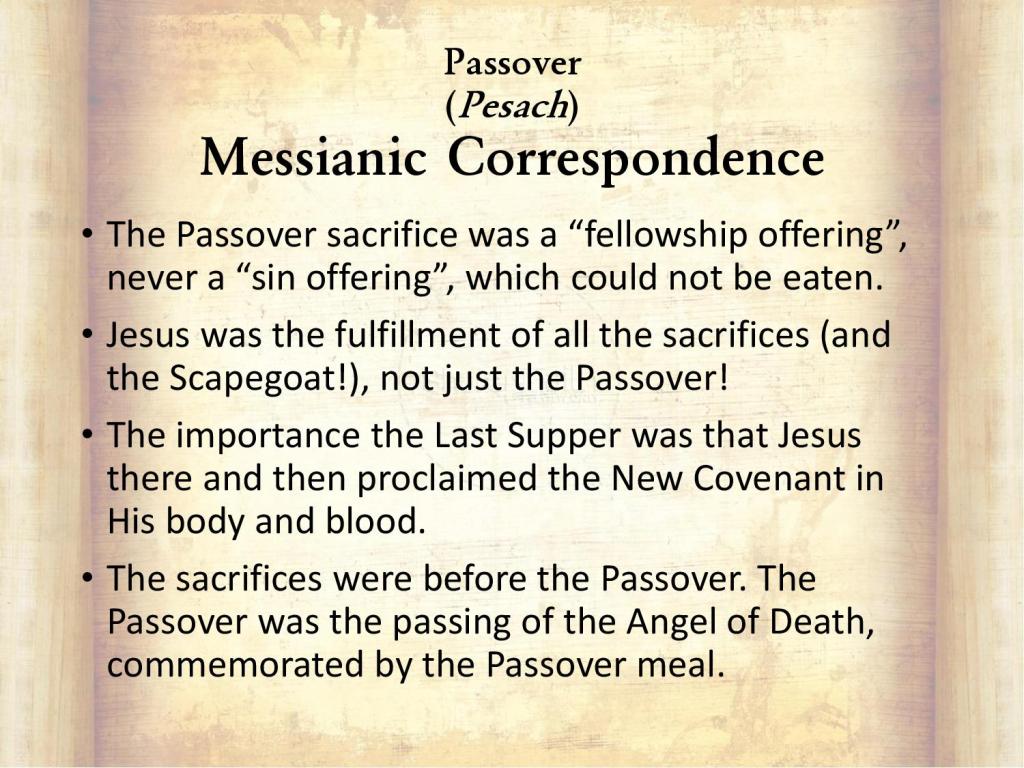
![Leviticus 23:5
Passover (Pesach)
[5] '"In the first month, on the fourteenth day of the
month, between sundown and complete darkness,
comes Pesach* for ADONAI*.](https://gpront.blog/wp-content/uploads/2020/09/image-7.jpeg?w=1024)
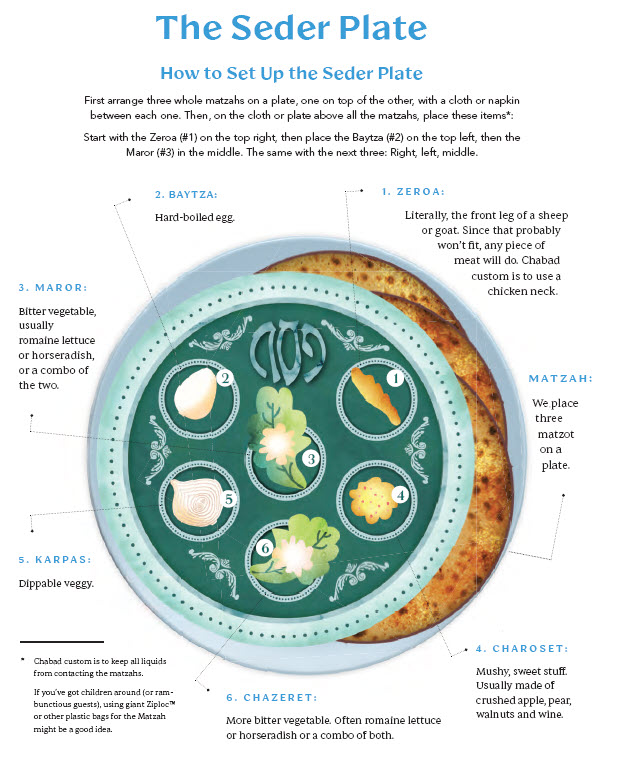
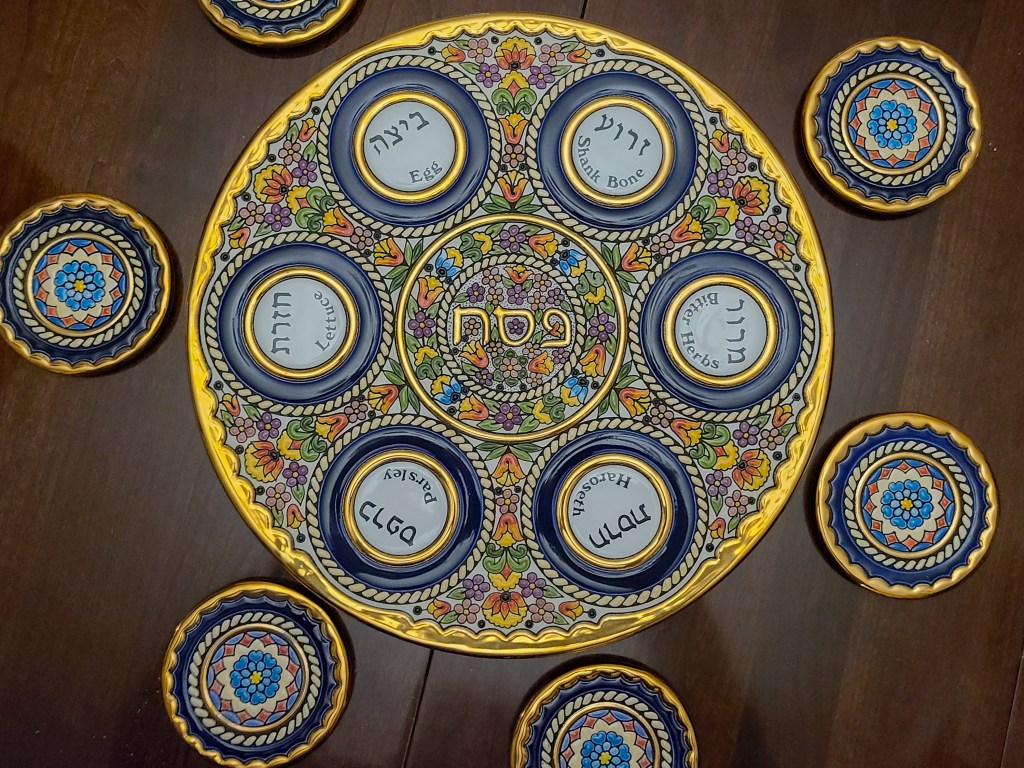




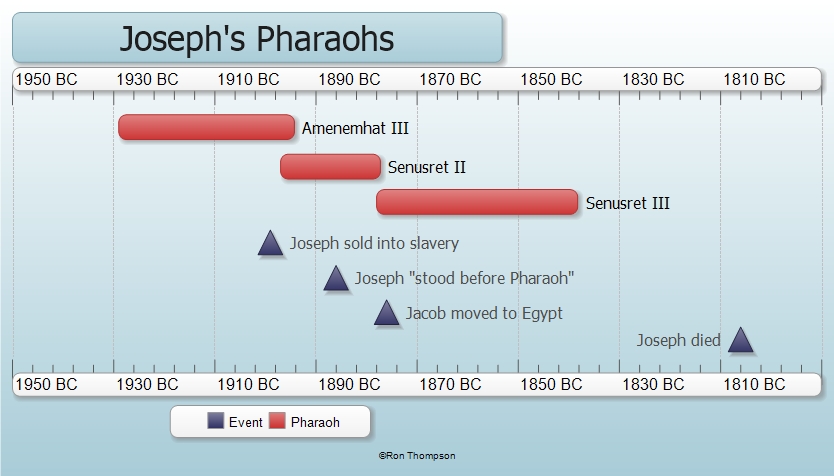
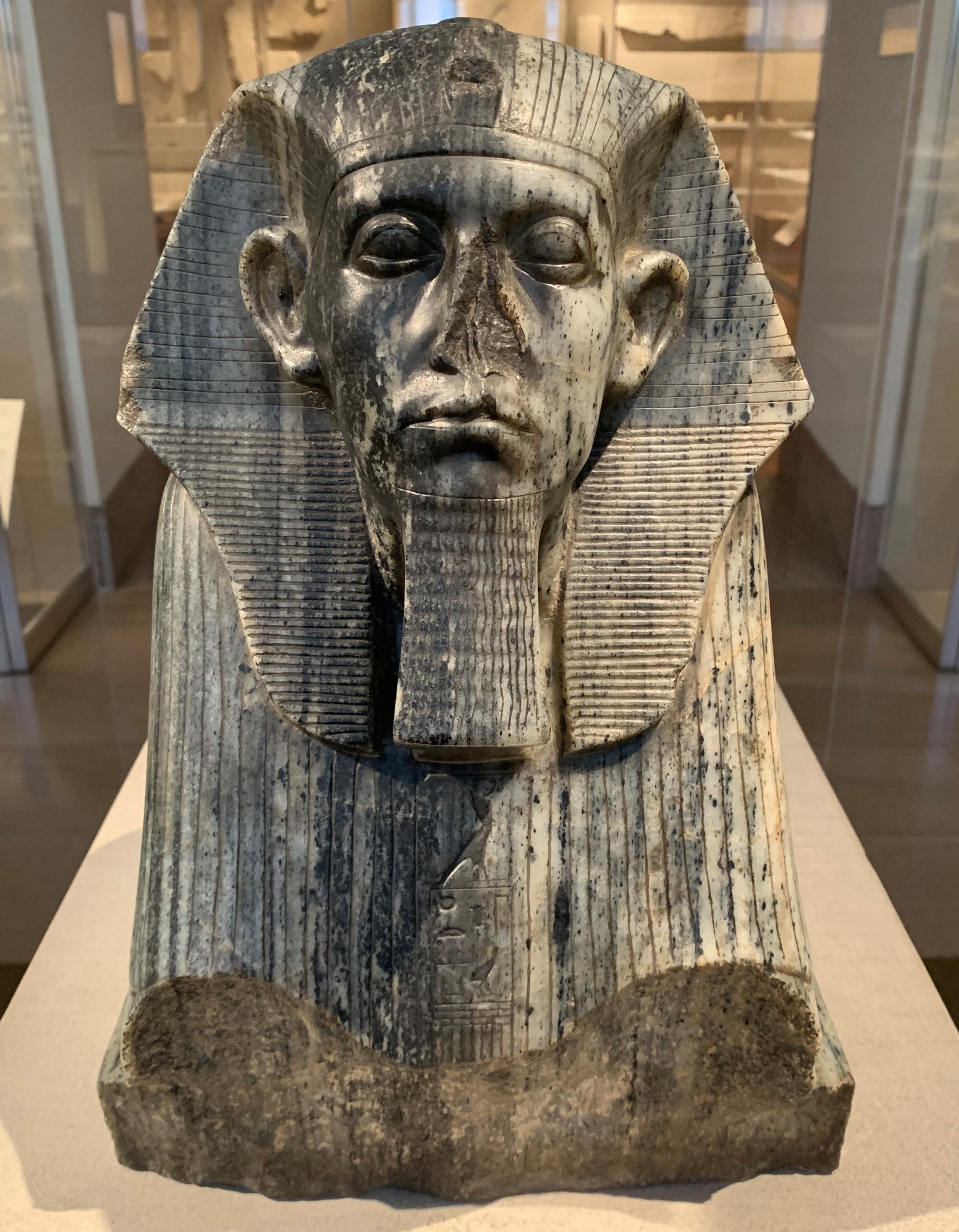
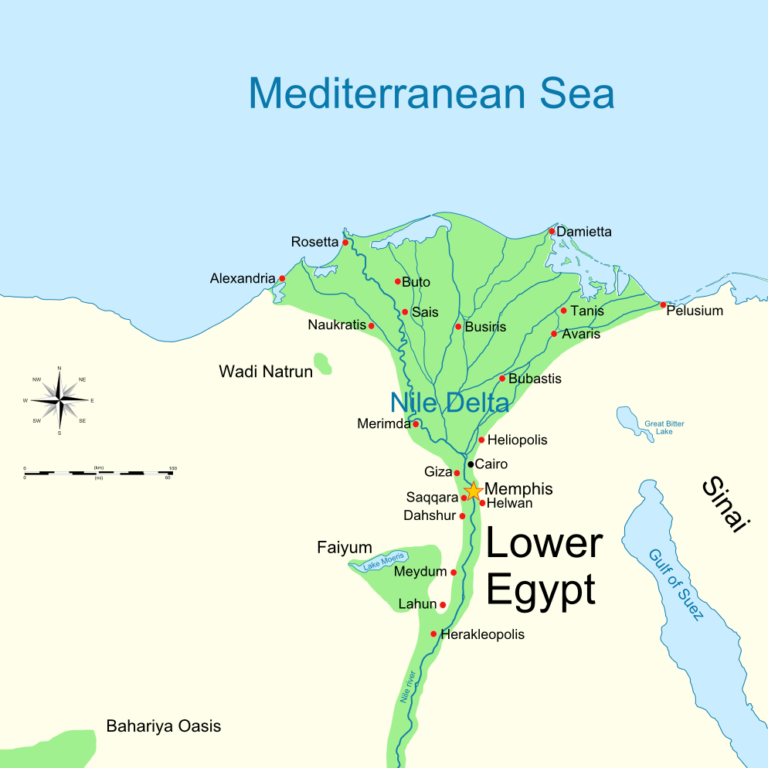
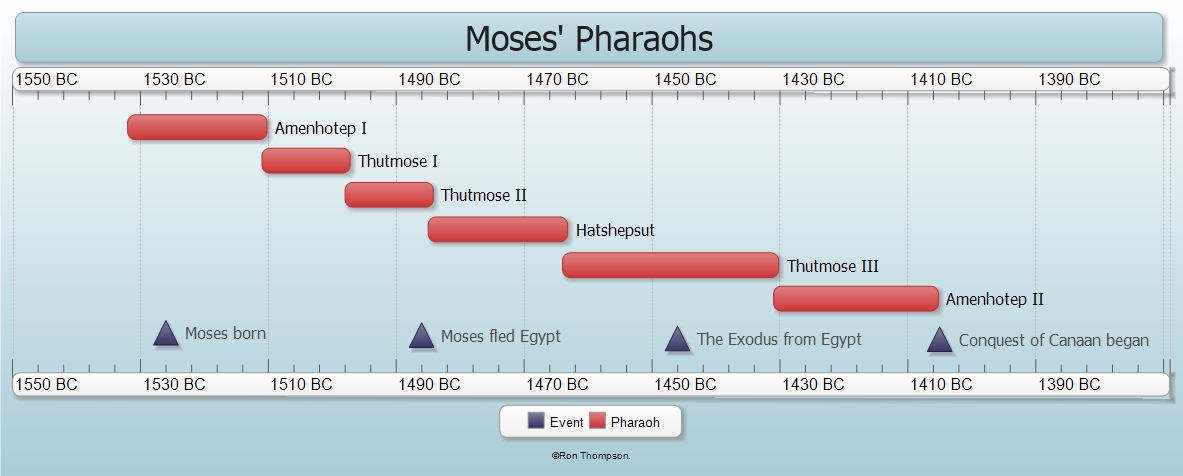
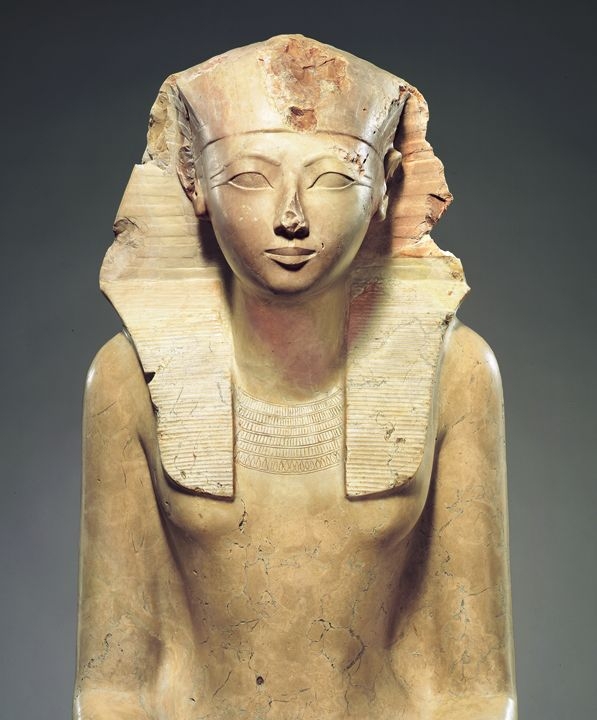


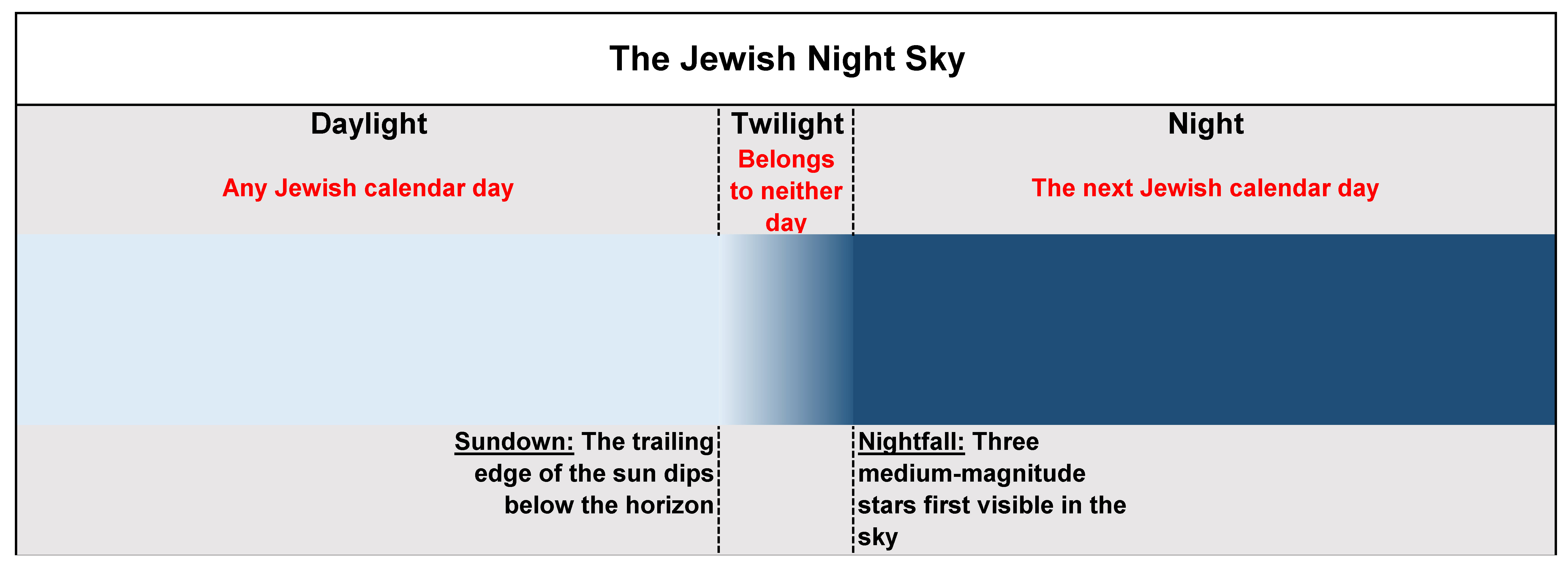


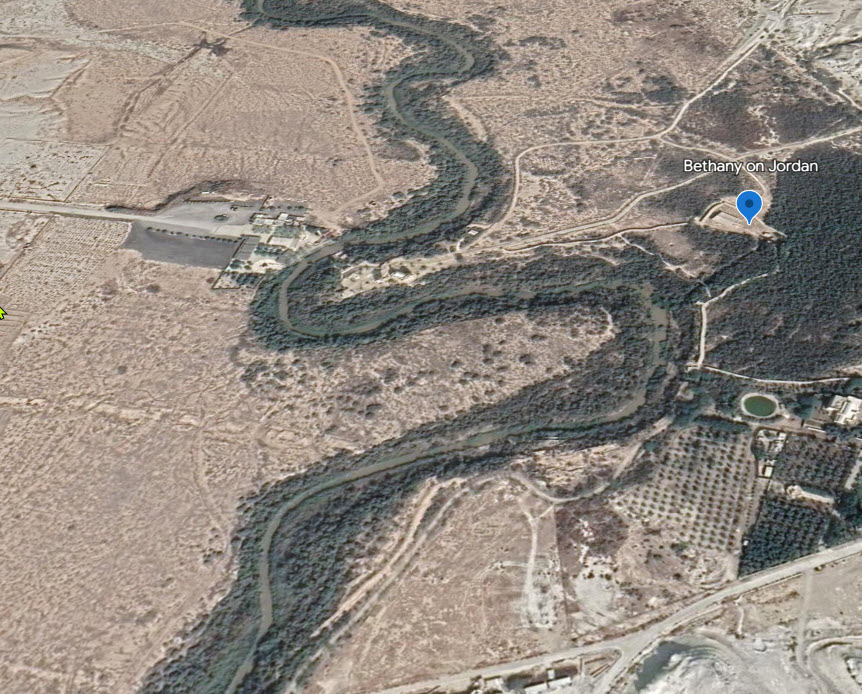
 The Back of My Mind