
Posted on:
Modified on:
- An arbiter of truth?
- The Sinner’s Prayer
- Romans 10:9 heart and mouth
- Diligently Seeking God
- Practical Soulwinning
I’ve been very busy on other things for the last couple months. What little time I’ve had for my blog, I’ve been concentrating mostly on something most of you would consider non-controversial. But I ran into something on Facebook recently that I can’t resist responding to.
An arbiter of truth?
A friend, who I really like, recently suggested that I’m setting myself up as the arbiter of truth. Honestly, that’s not my purpose.
I was saved at a very young age. I’m now 77, and for most of those years, I have been, and still am, a convinced Baptist. Not that I agree with every tenet of the Baptist Church, and in reality, Baptist sub-denominations are not in anything close to agreement on a great many doctrinal issues. For example:
- Most are premillennial (so am I), but many aren’t.
- Most are “pretrib” (so am I), but many aren’t.
- Many are Calvinist (so am I), but most probably aren’t.
- Most are Dispensational (I’m not, but I’m closer to that than the main alternative), but many aren’t.
- Most are young earth creationists (I’m not), but many aren’t.
There are many more examples. For many of my first 30 years, I was a member of churches in the Baptist Bible Fellowship, a split from the Southern Baptists, but they shared Landmark Baptist ideas that I eventually rejected.
Well, maybe I do consider myself to have a gift of discernment. I try not to write stuff without caveat that I’m not personally convinced about.
Yes, most of you will probably be offended, but what I consider to be God’s will for my last years is (a) expanding on or correcting what I think is bad exegesis, and (b) spawning discussion of Christian tradition that I don’t think is supported by Scripture. Little if any of what I decide to write against would I consider heresy, and whether you agree with me or not doesn’t make either of us a “bad Christian.” I just don’t think that bad interpretation or bad tradition are good for the Church. And there is a lot of it.
Here’s the meme that got my attention:

Sounds pretty good, doesn’t it? For most of my life I would have agreed with it completely. But now, I’ve come to see some problems. If any of this sounds familiar, I’ve approached the same subject before, from a different perspective.
In the paragraphs below, I’m going to discuss why I’m personally skeptical about asking someone to repeat a “Sinner’s Prayer”, and I don’t think we’re interpreting Romans 10:9 the way Paul wrote it in Greek.
The Sinner’s Prayer
Most people who think that a Sinner’s Prayer is mandatory believe it simply because they’ve always been told that it is.
Arguments for
I’m aware of absolutely no Scripture that explicitly mentions a Sinner’s Prayer. I am aware of two passages that are used by some to support the concept:
One is Romans 10:9, mentioned on the photo shown above. The assumption is that to “confess with your mouth” is to verbally recite a Sinner’s Prayer. I’ll have much more to say about this below.
The other is David’s prayer of contrition:
Psalms 51:1–19 (ESV)
Create in Me a Clean Heart, O God
To the choirmaster. A Psalm of David, when Nathan the prophet went to him, after he had gone in to Bathsheba.
[51:1] Have mercy on me, O God,
according to your steadfast love;
according to your abundant mercy
blot out my transgressions.
[2] Wash me thoroughly from my iniquity,
and cleanse me from my sin!
[3] For I know my transgressions,
and my sin is ever before me.
[4] Against you, you only, have I sinned
and done what is evil in your sight,
so that you may be justified in your words
and blameless in your judgment.
[5] Behold, I was brought forth in iniquity,
and in sin did my mother conceive me.
[6] Behold, you delight in truth in the inward being,
and you teach me wisdom in the secret heart.
[7] Purge me with hyssop, and I shall be clean;
wash me, and I shall be whiter than snow.
[8] Let me hear joy and gladness;
let the bones that you have broken rejoice.
[9] Hide your face from my sins,
and blot out all my iniquities.
[10] Create in me a clean heart, O God,
and renew a right spirit within me.
[11] Cast me not away from your presence,
and take not your Holy Spirit from me.
[12] Restore to me the joy of your salvation,
and uphold me with a willing spirit.
[13] Then I will teach transgressors your ways,
and sinners will return to you.
[14] Deliver me from bloodguiltiness, O God,
O God of my salvation,
and my tongue will sing aloud of your righteousness.
[15] O Lord, open my lips,
and my mouth will declare your praise.
[16] For you will not delight in sacrifice, or I would give it;
you will not be pleased with a burnt offering.
[17] The sacrifices of God are a broken spirit;
a broken and contrite heart, O God, you will not despise.
[18] Do good to Zion in your good pleasure;
build up the walls of Jerusalem;
[19] then will you delight in right sacrifices,
in burnt offerings and whole burnt offerings;
then bulls will be offered on your altar.
This could easily be taken as an example of a sinner’s prayer, except it doesn’t mention Jesus by name or in any other obvious fashion (e.g., Messiah, anointed one, or even Daniel’s “Son of Man”).
David is not asking for salvation here—for all his faults, he was already “a man after God’s own heart”! He was just expressing his guilt and his sorrow.
Arguments against
As a child and for most of my life I was taught that “God doesn’t even hear the prayers of the wicked, except for the Sinner’s Prayer, which is a prerequisite for salvation.”
I don’t believe that such a prerequisite exists, though of course any God-honoring prayer by a Godly person is always a good thing. However, I believe that God never honors the prayers of the wicked! No exceptions.
The Prayers of the wicked
Here is a sampling of texts mentioning God’s disdain for the prayers of the unsaved, and neither here, nor anywhere else that I’m aware of, is a sinner’s prayer loophole mentioned. I’m using King James, because the tradition that one needs to say a Sinner’s Prayer” to be saved began no later than the KJV age. Underlined phrases are my own emphasis.
Psalms 66:18
If I regard iniquity in my heart, the Lord will not hear me:
Proverbs 15:29
The LORD is far from the wicked: but he heareth the prayer of the righteous.
Isaiah 59:2
But your iniquities have separated between you and your God, and your sins have hid his face from you, that he will not hear.
1 Peter 3:12
For the eyes of the Lord are over the righteous, and his ears are open unto their prayers: but the face of the Lord is against them that do evil.
James 5:16
Confess your faults one to another, and pray one for another, that ye may be healed. The effectual fervent prayer of a righteous man availeth much.
John 9:31 (KJV)
Now we know that God heareth not sinners: but if any man be a worshipper of God, and doeth his will, him he heareth.
My conclusion from these is that you are free to ask God’s forgiveness and declare your devotion to Messiah Jesus any time you want—after you have been granted Salvation. Not before.
Romans 10:9 heart and mouth
The photo above presents two verses that introduce the prayer. John 3:16 is familiar to everyone and speaks of what God has done for mankind. Differences of opinion about that verse are scarce and irrelevant to this conversation, so I’ll leave it alone here.
As noted above, “confess with your mouth” in Romans 10:9 has been interpreted by some denominations and/or local churches as praying a Sinner’s Prayer—confessing one’s sins and verbally asking Jesus to “come into his heart.” For reasons explained above, I don’t think that view is tenable.
Confession as profession
Others interpret the phrase as a necessary public profession of faith to be made at some time after salvation. This is the view I grew up with.
Verses 9 and 10 are usually quoted together, because 10 continues the thought expressed in 9. Because so many Evangelicals use the English Standard Version now, I’ll quote that here:
Romans 10:9–10 (ESV) emphasis mine
[9] because, if you confess with your mouth that Jesus is Lord and believe in your heart that God raised him from the dead, you will be saved. [10] For with the heart one believes and is justified, and with the mouth one confesses and is saved.
Unfortunately, as much as I like ESV, the underlined portion is a bad translation. Here is what verse 10 looks like in a Greek New Testament, with a word-for-word translation underneath:
Romans 10:10 (SBLGNT)
[10] καρδίᾳ γὰρ πιστεύεται εἰς δικαιοσύνην, στόματι δὲ ὁμολογεῖται εἰς σωτηρίαν·
In the heart/for/is belief/unto/righteousness/in the mouth/now/is confession/unto/salvation
The word translated twice here as “unto” indicates a purpose or result being sought. In the first case it is righteousness (imputed sinlessness and right-standing before God) being sought. In the second case it is salvation (from some besetting condition or enemy) that is being sought.
With the above in mind, I’ll requote the verses in another translation:
Romans 10:9 (NKJV)
[9] that if you confess with your mouth the Lord Jesus and believe in your heart that God has raised Him from the dead, you will be saved. [10] For with the heart one believes unto righteousness, and with the mouth confession is made unto salvation.
A formula for salvation?
It is common to interpret these verses as the definitive formula for salvation, often as part of a walk through the “Romans Road of Salvation” (see Roads to Salvation).
For those using this method of personal evangelism, there is a defined order of presentation that should be followed:
- Show them that all humans sin and fall short of God’s glory.
- Show them that this means they are sinners.
- Show them that the wage for sin is death.
- Show them that the gift of God is eternal life.
- Show them that Jesus loved them and died for them.
- Now read them Romans 10:9, usually with verses 10 and 13.
- Next is the Sinner’s Prayer, never in their own words, but as guided by you or written in a script.
- Finally explain, as if you really know the state of their spirit, that they are now saved!
The first six of those things are of course absolutely true statements of fact. The seventh is problematic for me, because as stated above and discussed at length below, I can find no Scriptural support for the concept. The eighth is, in my opinion, forcing a false sense of security on them.
This is basically a scavenger hunt through one of 66 books of the Bible to find hidden clues leading to the most valuable prize we could ever obtain. It is artificial and fragmented, and way more complicated than it needs to be. And neither Paul nor anyone else we read about in the Bible had access to any of the New Testament books, including Romans, when NT evangelization work commenced.
In my opinion, folks who have latched onto Romans 10:9–10 as the ultimate endpoint for leading someone to faith are probably themselves saved, but don’t really understand how they, themselves, got there. As I’ll show below, I don’t think Paul’s purpose in the chapter was to tell us how to be saved, but rather to explain why his countrymen, the Jews, had not been evangelized fully. He later extended the idea to the gentiles.
Although a case can perhaps be made for the public profession point of view, it seems to me that there are an infinite number of ways to accomplish that in a New Testament context without standing in front of a Church congregation and proclaiming, “I hereby profess that I have just put my faith in Jesus Christ as my personal Lord and Savior.” For example:
James 2:18 (NKJV) emphasis mine
[18] But someone will say, “You have faith, and I have works.” Show me your faith without your works, and I will show you my faith by my works.
What about me? When I was a child in Albuquerque, my parents were deists, my father a Scottish Presbyterian and my mother a Danish Lutheran, going to separate churches. God drew my mom to a Billy Graham meeting in a building about the size of a Walgreen’s drug store, and she then insisted that all of us go to church together. She found us a non-denomination church that did a good job of teaching my sister and me all the Gospel Bible stories. I recall that my belief and trust in Jesus was fully implanted by the time I was around eight years old, lying in bed at night and thinking about what I had been learning.
I never heard any of those 8 points of the Romans Road back then, but my belief has never wavered over the next nearly 70 years. My public profession didn’t come until months later, standing in a baptistry in front of a full congregation. What if I’d died in the interim, as I fully expected when my swimming instructor forced me to dive off the high board at the Albuquerque “A-Pool”, before I made that first profession?
But is that even what Paul had in mind here?
Confession as proclamation
I see confession, as discussed here, as not profession of faith, but rather as a proclamation of faith with a view to winning the lost. To explain my thinking on this, I need to present the verse in its context. Romans 10:9 has contextual ties throughout the Old and New Testaments, but most directly, it ties to Paul’s discussion of Jewish salvation, in Romans 10–11. The first of the two chapters is most relevant to the discussion.
The Romans 10 context
Romans 10:1–21 (NKJV)
Israel Needs the Gospel
[10:1] Brethren, my heart’s desire and prayer to God for Israel is that they may be saved. [2] For I bear them witness that they have a zeal for God, but not according to knowledge. [3] For they being ignorant of God’s righteousness, and seeking to establish their own righteousness, have not submitted to the righteousness of God. [4] For Christ is the end [goal] of the law for righteousness to everyone who believes. [5] For Moses writes about the righteousness which is of the law, “The man who does those things shall [attain life] by them.” [6] But the righteousness of faith speaks in this way, “Do not say in your heart, ‘Who will ascend into heaven?’” (that is, to bring [Messiah] down from above) [7] or, “‘Who will descend into the abyss?’” (that is, to bring [Messiah] up from the dead). [8] But what does it say? “The word is near you, in your mouth and in your heart” (that is, the word of faith which we preach): [9] that if you confess with your mouth the Lord Jesus and believe in your heart that God has raised Him from the dead, you will be saved. [10] For with the heart one believes unto righteousness, and with the mouth confession is made unto salvation. [11] For the Scripture says, “Whoever believes on Him will not be put to shame.” [12] For there is no distinction between Jew and Greek, for the same Lord over all is rich to all who call upon Him. [13] For “whoever calls on the name of the LORD shall be saved.”
Israel Rejects the Gospel
[14] How then shall they call on Him in whom they have not believed? And how shall they believe in Him of whom they have not heard? And how shall they hear without a preacher? [15] And how shall they preach unless they are sent? As it is written:
“How beautiful are the feet of those who preach the gospel of peace,
Who bring glad tidings of good things!”
[16] But they have not all obeyed the gospel. For Isaiah says, “LORD, who has believed our report?” [17] So then faith comes by hearing, and hearing by the word of God. [18] But I say, have they not heard? Yes indeed:
“Their sound has gone out to all the earth,
And their words to the ends of the world.”
[19] But I say, did Israel not know? First Moses says:
“I will provoke you to jealousy by those who are not a nation,
I will move you to anger by a foolish nation.”
[20] But Isaiah is very bold and says:
“I was found by those who did not seek Me;
I was made manifest to those who did not ask for Me.”
[21] But to Israel he says:
“All day long I have stretched out My hands
To a disobedient and contrary people.”
Romans 10 begins with Paul discussing the legalistic box-checking that had become for many Jews in Rome and elsewhere the way of achieving righteousness before God. These people were certainly zealous for God, and given the Jewish emphasis on Torah education, they were very knowledgeable—up to a point.
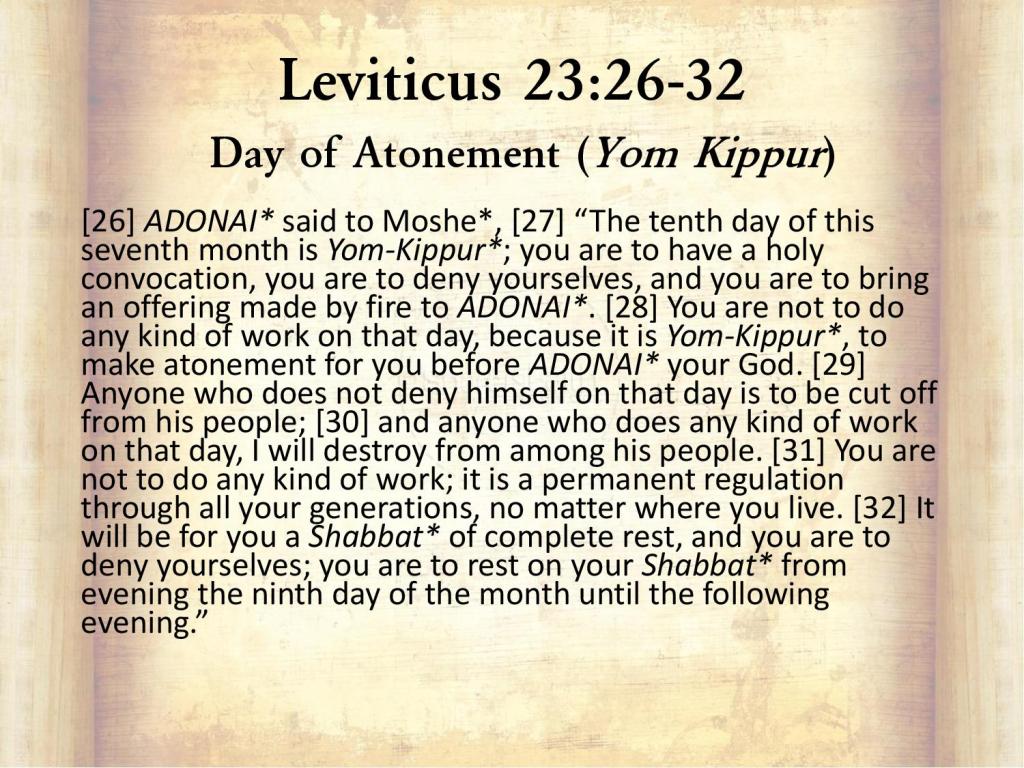
But in ignoring the teachings and miracles, and most importantly the prophetic signs, of the Man claiming to be their Messiah, they also rejected His sacrifice on their behalf. The righteous God, through Jesus’ sinless death, was able to do what their sacrifices could not. The sacrifices stipulated under Torah could only sweep sin under the rug (atonement), not forever cancel it (expiation—for more on this important topic, see Atonement vs Expiation).
In verse 5, Paul quotes a passage from Torah which his hearers would all be familiar with and understand completely:
[5] You are to observe my laws and rulings; if a person does them, he will have life through them; I am ADONAI.
—Leviticus 18:5 (CJB)
He then paraphrases another familiar passage:
[11] For this mitzvah [commandment] which I am giving you today is not too hard for you, it is not beyond your reach. [12] It isn’t in the sky, so that you need to ask, ‘Who will go up into the sky for us, bring it to us and make us hear it, so that we can obey it?’ [13] Likewise, it isn’t beyond the sea, so that you need to ask, ‘Who will cross the sea for us, bring it to us and make us hear it, so that we can obey it?’ [14] On the contrary, the word is very close to you—in your mouth, even in your heart; therefore, you can do it!
Deuteronomy 30:11–14 (CJB)
The point of the Deuteronomy passage is that Torah observance, the ritual obedience required for atonement, is not hard to understand or difficult to obey. They know it in their hearts and can speak it with their mouths. Likewise, Paul says, the “word of faith” that he is preaching is as simple as believing the truth of Jesus’ miraculous virgin birth and resurrection: “If you confess with your mouth the Lord Jesus and believe in your heart that God has raised Him from the dead, you will be saved.”
But, if “confess” means either to “profess” or “proclaim”, doesn’t the order seem odd here? How can you make the profession before you believe? How can you proclaim that which you haven’t experienced? Let’s not be slavish here. Paul merely wants to maintain the order of the Deuteronomy 30:14 text. He corrects the Romans 10:9 order in 10:10—“For with the heart one believes unto righteousness, and with the mouth confession is made unto salvation.”
Moving forward in Romans 10, the conversation in verses 14–21 is about Israel having been given the Gospel and having rejected it. How was it given to them? Through the evangelism of Jesus, the apostles, others like the deacons Stephen and Philip, and in the Diaspora, the preaching of Paul, Barnabas and others like them who have been sent into the world as missionaries. The progression of Paul’s message in Romans 10 leads me to the inescapable conclusion that confession with the mouth, as he described it, is nothing other than spreading the faith—believe, then pass it on.
Romans 10:10 is thus saying, in my opinion, that you are righteous (in modern terms, “saved”) if and only if you are personally convinced that Jesus was miraculously sent by God (whether or not you thoroughly understand concepts like His sonship and are doctrinally sound in all of His teachings). Only then are you expected to proclaim that salvation to others.
The Greek translated above as “confess” is ὁμολογέω (homologeó), which literally means to agree with, or say the same thing as, someone else. It is used in Scripture to denote confessing as opposed to denying, admitting to, declaring a belief, promising with an oath, acknowledging, assuring, professing, or even giving thanks for something. None of those meanings necessarily requires vocalization.
Adding to the confusion, we move on to the next three verses in Romans 10 and see, “Whoever believes on Him will not be put to shame” and “whoever calls on the name of the LORD shall be saved.” The first statement says nothing about confession, but in so many words promises salvation. The second is used by some to support the Sinner’s Prayer.
Both are quotes from the Prophets:
[16] Therefore thus says the Lord GOD:
“Behold, I lay in Zion a stone for a foundation,
A tried stone, a precious cornerstone, a sure foundation;
Whoever believes will not act hastily.
Isaiah 28:16 (NKJV)
[32] And it shall come to pass that everyone who calls on the name of the LORD shall be saved.
Joel 2:32a (ESV)
Peter has also previously quoted the same verse from Joel:
[21] And it shall come to pass that everyone who calls upon the name of the Lord shall be saved.’
Acts 2:21 (ESV)
Proclamation as prerequisite
So, still digging away at it, is proclamation then a prerequisite for salvation?
If so, isn’t this still just more box-checking?
🗹 Believe
🗹 Confess
Perhaps it is!
We all agree that salvation is “by grace, through faith”, and I assume that many of you would agree with me that it is God who implants that faith. Those of you who reject the doctrine of Total Depravity and think that your faith was of your own volition, without God previously drawing you to Himself, then for the purpose of this post we’ll have to agree to disagree. It doesn’t impact the theme of this post.
Verses 9 and 10 may look like they are requiring a verbal statement, with open mouth and audible words. Are they?
Diligently Seeking God
What does it mean to “call on the name of the Lord”?
I don’t think that there is a cookbook approach to answering this question. As a Calvinist, I believe that God invites everyone, without exception, to His salvation, but because we are all sinful and rebellious, not a single person accepts that invitation on his own. Yet God, in His wisdom and sovereignty, chooses whosoever He wills for salvation and draws them to Himself. We can guess, but He doesn’t reveal His selection criteria.
I have come to think that the best verse to describe my own salvation and the model that I would hold up for anyone is found in the great “Hall of Faith” chapter:
[6] But without faith it is impossible to please Him, for he who comes to God must believe that He is, and that He is a rewarder of those who diligently seek Him.
Hebrews 11:6 (NKJV)
If this is a prayer, it comes from the heart and not from a script! And I think it requires no verbalization.
Response AFTER Salvation
Ephesians 2:8 (ESV)
[8] For by grace you have been saved through faith. And this is not your own doing; it is the gift of God,
When the Almighty, Loving God draws a sinful human to Himself, then the only response possible is faith. The faith described in Scripture is always active, meaning that the one so called, though he or she may resist in part, is compelled to action of some sort. That action doesn’t bring salvation, it only demonstrates it.
What might that action be? In addition to evangelism, I will mention several others that might at first appear to be mandatory, but need further analysis to understand better.
Repentance
There are so many verses in the Bible that speak of repentance that I’m pretty sure it must be a part of the same call from God that leads you to reach out or call to Him for salvation.
The Hebrew תְּשׁוּבָה, teshubah, means to “return” or “answer.” As stated by myjewishlearning.com:
According to Jewish tradition, only sins against God can be atoned for through confession, regret and promising not to repeat the action. Sins against other people can be atoned for only once the wrong has been made right — restitution has been paid for a financial crime, for example, and forgiveness received from the victim.
The online Jewish library, sefaria.org, quotes the sage, Rambam:
What constitutes Teshuvah? That a sinner should abandon his sins and remove them from his thoughts, resolving in his heart, never to commit them again as [Isaiah 55:7] states “May the wicked abandon his ways….” Similarly, he must regret the past as [Jeremiah 31:18] states: “After I returned, I regretted.”
[He must reach the level where] He who knows the hidden will testify concerning him that he will never return to this sin again as [Hoshea 14:4] states: “We will no longer say to the work of our hands: `You are our gods…
The Greek μετανοέω, metanoeó, is defined by Strong’s as “to change one’s mind or purpose.” Vine’s, which I consider to be generally more accurate, specifies that metanoeó more precisely means a change of mind after the fact, in contrast to pronoeó meaning to change one’s mind before, in this case, committing a sin.
Baptism
The following verse seems to require baptism for salvation, but as evidenced by the immediately following clause, omitting to do so does not result in condemnation:
Mark 16:16 (NKJV) emphasis mine
[16] “He who believes and is baptized will be saved; but he who does not believe will be condemned.
At the close of his sermon in Acts 2, Peter instructs his hearers to repent and be baptized:
Acts 2:38 (NKJV)
[38] Then Peter said to them, [Repent [turn from sin and return to God, CJB], and let every one of you be baptized in the name of Jesus Christ for the remission of sins; and you shall receive the gift of the Holy Spirit.
There are few “non-sacramental” denominations aside from Church of Christ that would say you’re lost if you haven’t been baptized. This is another instance where context is vital to understanding. Immediately after delivering his sermon, the baptisms began.
Acts 2:40–41 (NKJV)
[40] And with many other words he testified and exhorted them, saying, “Be saved from this perverse generation.” [41] Then those who gladly received his word were baptized; and that day about three thousand souls were added to them.
What did baptism mean to the people hearing Peter’s sermon? The time frame is shortly after Jesus’ ascension, before the dust had settled, before Paul’s enlightenment and his letters establishing Church customs. Peter’s audience was Jewish, used to Jewish customs. Baptism and table fellowship were important to them. Paul would incorporate both of those into Church custom as what we call “ordinances”.
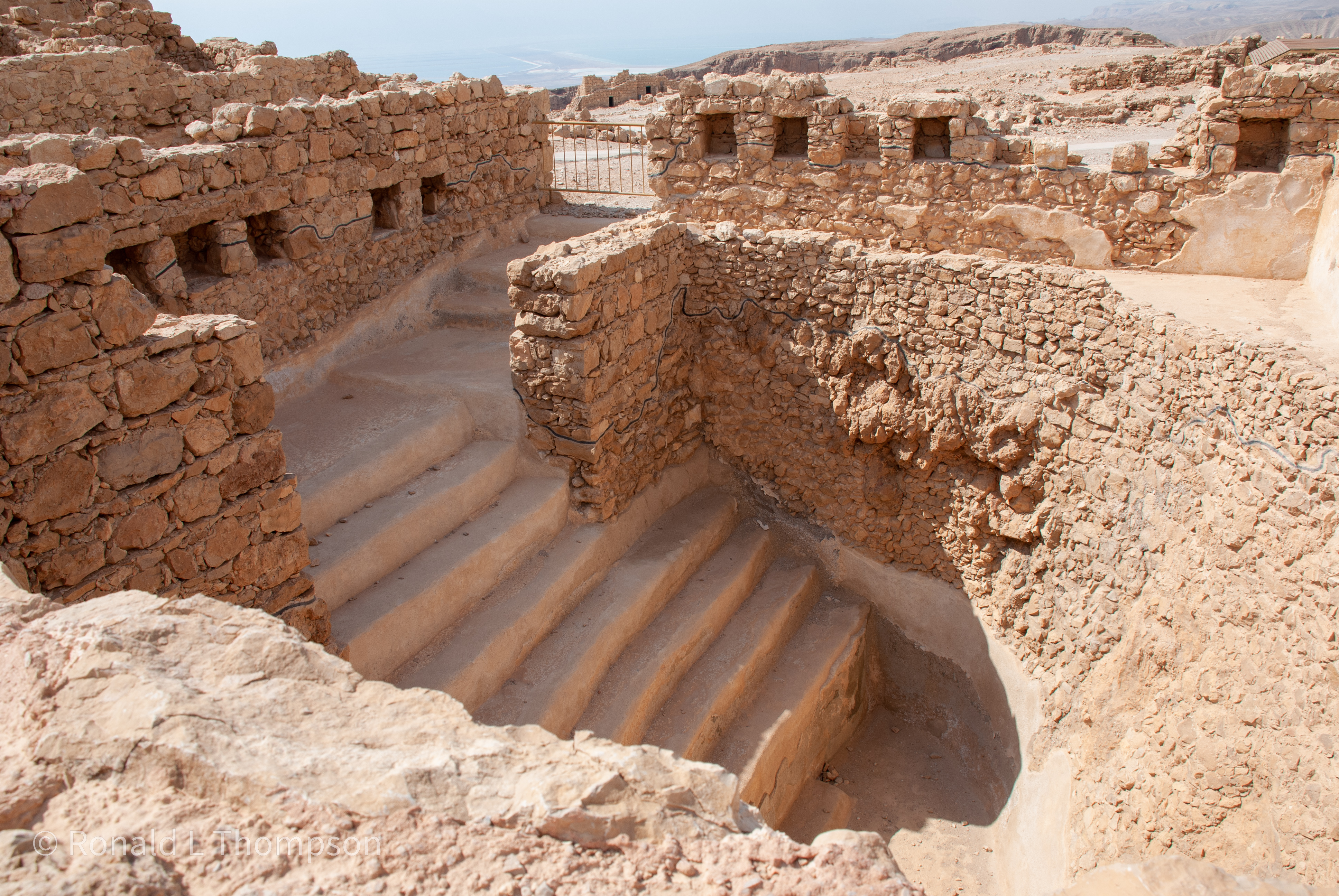
To the Jewish faithful, baptism was required for ritual purity after almost any infraction of Torah observance, in order to make one again acceptable for worship or fellowship. By totally immersing oneself in one of the many mikvoth in Judea or Galilee, he or she would be symbolically washing away the sin or defilement. But immersion had no effect for the unrepentant.
This was the spirit of John’s baptism:
Matthew 3:11a (CJB)
[11] It’s true that I am immersing you in water so that you might turn from sin to God;
We see later that Paul, under inspiration, added additional meaning to baptism by using it to picture Jesus’ death, burial and resurrection.
Almsgiving
Many would say that in Matthew 19:21, Jesus tells the “rich young ruler” that giving his riches to the poor is necessary for salvation, but what He’s really telling him is that if he wants to be perfect in obedience to Torah, then that is what he must do. If he were perfect, he never would have required salvation in the first place! But Jesus had anticipated the question, in verse 17, by stating that nobody but God is perfect.
Practical Soulwinning
Unfortunately, I have to admit that soulwinning is not, apparently, my strong suit. As an ex-Minister of Visitation and ex-Youth Pastor when I was a young man, I have a lot of experience going to the homes of visitors and known prospects and using the Romans Road method for evangelization. I led a number of people in the Sinner’s Prayer, and I assisted more experienced pastors do the same. A few that said the prayer came back to our church, but I can’t recall even a single one being baptized or sticking around for long, and our membership didn’t show any signs of growth over the years I was there.
As a church bus driver, though, I know that Theo, my then-girlfriend and now-wife, and I brought in a horde of kids whose parents had no interest in church. Some of those kids kept coming back on their own for years after we were long gone. That was a much more informal sort of evangelism, without pressure, and with a lot more sharing and ongoing personal interaction.
The Sinner’s Prayer concept was, I’m fairly certain, an innovation of Billy Graham. His “Crusades” brought in many thousands of “seekers” and curious folks who sat through great preaching, followed by an emotional invitation. Those who went forward were motivated in advance, and then “the deal was closed” using a Sinner’s Prayer. Whether or not it has Scriptural precedent, it was undoubtedly successful in those conditions. My entire family got their introduction to the Gospel from my mom’s visit to that Albuquerque Crusade back in the mid-20th century.




 The Back of My Mind