Prophetic Visions: Through a Glass Darkly

Posted on:

Modified on:

  1. Introduction
    1. The mirror analogy
    2. The purpose of prophecy
    3. Prophetic Applicability
    4. The role of visions
    5. The office of Prophet
  2. Interpretive challenges
    1. Throne visions
      1. Common elements of the throne visions
      2. The 24 elders
      3. The Divine Council
    2. The suffering servant
    3. Ezekiel
      1. Ezekiel 10 – 11 (God Leaves the Most Holy)
      2. Ezekiel 38 – 39 (Gog and Magog)
      3. Ezekiel 40 – 42 (The Millennial Temple)
      4. Ezekiel 43:1–12 (God Returns to the Most Holy)
    4. Revelation
      1. Chapter 8–9 (trumpets)
      2. Chapter 10 (the angel with the little scroll)
      3. Chapter 12 (a woman and a war)
      4. Chapter 13–14 (the two beasts)
  3. A pair of Dreams
    1. Joseph and the sheaves
    2. Peter and the sheet
  4. Conclusions

Introduction

The mirror analogy

Chances are you’re familiar with the following verse:

[12] For now we see through a glass [mirror], darkly; but then face to face: now I know in part; but then shall I know even as also I am known.
—1 Corinthians 13:12 (KJV)

This is part of an extended passage in which Paul is discussing the interrelationships between believers in the church, including the interplay between their various natural abilities and spiritual gifts. He then stresses that what is most important is their mutual love—ἀγάπη (agapé), affection, good-will, benevolence, or (KJV) charity, all in an atmosphere of mutual preference for one another.

The “glass”, or “mirror” of verse 12 is the Greek ἔσοπτρον (esoptron), a noun that technically denotes any smooth, reflective surface that can function as a mirror. Undoubtably, what Paul had in mind was the polished brass, copper, or occasionally iron, silver or gold mirrors used in his time. Back in my camping days, I carried an unbreakable polished aluminum mirror, which works better than brass, but still reflects much less efficiently than a modern silvered glass mirror. These metals are all more or less prone to tarnish, and the polishing technology of the Roman Empire was unable to achieve the fine finish possible now.

Roman silver mirror, 1st century. Public domain. This, of course, is the back side of the mirror. The front is polished smooth, and this particular specimen has a maker’s mark etched at the bottom front.

By the frequent (but unfortunate) Christian custom of basing doctrine on individual verses pulled out of context, many Christians are taught that Paul is promising here that when we get to heaven, we will all instantly recognize everyone we see. That may or may not be a part of our glorification, but in his analogy, Paul is conveying a more general picture of how weak our knowledge is now compared to what we will know and understand after our imperfect lives end and we come face to face with God.

The same analogy serves well to illustrate how little we can learn from prophecy compared to a face-to-face encounter with the real thing. The point I pursue below is that prophecy should never be dogmatically relied on to tell us, literally, exactly what we can expect in the future.

The purpose of prophecy

It seems to me that Biblical prophecy, in the main, performs three primary functions:

  1. It warns God’s people of coming judgement, either impending or far in the future. For example, the “blessings and curses” of the Mosaic Covenant (Deut. 28ff) warn of the consequences of disobeying the precepts of the Covenant and contrast those consequences with the blessings they could expect for keeping the Covenant. Virtually all of the prophets predicted Israel’s failure to keep the Covenant and forecast the terrible price they will pay for their disobedience.
  2. It provides comfort in times of woe. The prophetic books that forecast terrible judgement on Israel almost always end with promises that, despite their failure and subsequent punishment, God will ultimately bring them back to Himself and give them final bliss in their own land.
  3. It also forecasts events in the future that, though usually at least partly unclear in the telling, will become obvious in the fulfillment. It is this forecasting role that I will emphasize below.

Prophetic Applicability

What most Christians fail to realize is that all of the Old Testament prophesies and promises, beginning with the Abrahamic Covenant, were for Israel—the Jews. Humanity in general was already condemned. Only eight humans escaped The Flood. The descendants of those eight, the second chance for humanity, immediately returned to a state of rebellion that God quickly dealt with in Shinar, at Babel:

since they did not see fit to acknowledge God, God gave them up to a debased mind to do what ought not to be done.
— Romans 1:28 (ESV)

I view the Church as a Jewish “family” with gentile children “fostered in.” Those of us who are gentiles in the Church are excused from most of God’s requirements for genetic Israel (see Acts 15), so shouldn’t expect all of their blessings and promises either. But that doesn’t mean we are second class in God’s eyes, and it doesn’t mean we don’t go along on the ride when God comes for His own.

The role of visions

1 In days gone by, God spoke in many and varied ways to the Fathers through the prophets. 2 But now, in the acharit-hayamim*, he has spoken to us through his Son, to whom he has given ownership of everything and through whom he created the universe.
— Hebrews 1:1-2 (CJB)

*[a•cha•rit-ha•ya•mim—Literally, “the end of the days”, i.e., The End Times or “latter days,” when the ‘olam hazeh (the present age) is coming to a close and the ‘olam haba (the age to come) is about to begin.]

While some prophecy was delivered to the prophets verbally by God or angels, and some was no doubt simply an idea placed the prophet’s head or perhaps even a subtle guiding of the pen, the most striking prophecies often came through dreams or visions. Visions were apparently all in the mind of the prophet, while dreams were sometimes imparted to others, to be interpreted by the prophet.

For the purpose of this post, I’m going to lump dreams with visions. Both are highly symbolic—often obscure, surreal, distorted, or iconographic. Both involve subjective imagery that is typically suggestive rather than immediately definitive.

The office of Prophet

The office of Prophet, like that of Apostle, has ceased!

The Apostles were a specific group of twelve men who were individually selected and trained by Jesus and then instructed to act as His official agents to begin the mission of evangelizing the world. Eleven were His closest disciples, who accompanied Him during the 3-1/2 years of His earthly ministry, remained faithful to the end, and were verbally commissioned by Him at His Ascension. The twelfth was Saul of Tarsus, who was selected and commissioned on the road, trained in Damascus and Arabia, and, like the others, served to the end of his life.

The Prophets were also selected by God. I reject the idea that modern preachers are “prophets.” The prophets preached and wrote, but their message was supernaturally imparted to them and therefore infallible, in the same sense that we regard the canonical books of the Bible as infallible.

Literally hundreds of times I’ve heard preachers and evangelists say, “God placed this message in my heart,” or “I was going to teach on … but God told me to do this instead“.

Sorry, no! I don’t for an instant deny that God calls some people into a preaching ministry and gives them appropriate spiritual gifts and a general inclination and wisdom to minister in a Godly fashion. But I have no Biblical or observational reason to believe that God, in this age, speaks directly and with total clarity to any human. No mere preacher, no matter how devout or scripturally knowledgeable, is inspired in the Biblical sense. If that were the case, then the first time he repeats a flawed interpretation he is revealed to be a false prophet. Verses that differentiate between true and false prophets include: 1Ki 22:8; Jer 14:14; 23:16; 28:9; Ez 13:3; Mat 7:15-20; 24:24; 1Jn 4:1; Pet 2:1.

Interpretive challenges

All visionary prophecy is, by its nature, difficult to interpret until its fulfillment, and sometimes even then its fulfillment might be obscure to most. Was it already fulfilled in the past? Is it completely fulfilled now? Is there more fulfillment to come? And if dreamlike imagery isn’t explained, how do we read the mind of the prophet? Did even the prophet himself know the interpretation? I suspect that the answer to that final question was often a negative.

While prophecy derived from visions and dreams is most difficult to interpret, there are challenges in interpreting prophecy derived by other means, too. End-times prophecy, no matter its source, is going to use terminology appropriate to ancient peoples at the time of writing. For example, 21st century vehicles might be described in prophecy as “horses”, aircraft as “clouds” or some flying creature, rifles as “swords”, etc. We can make that interpretation, but we might be completely wrong.

In the rest of this article, I’ll mention some mistakes that I think people—even theologians—make in their attempts to interpret prophecy and prophetic visions. Because some of the passages discussed are lengthy, I’ll usually provide only the Biblical references.

Throne visions

The Bible reports several very explicit prophetic visions of God seated on a throne in heaven: Isaiah 6, Ezekiel 1 and 10, Daniel 7, and Revelation 4 being most striking.

Ezekiel 1 vision of God’s heavenly throne, aka, His Chariot Throne. By rive6-d7dtasm1. This is one of many hundreds of attempts by various artists to depict Ezekiel’s vision.

I previously wrote about these visions in Monotheism and the Trinity:

don’t think that these visions [as described] can be reconciled with God as an omnipresent spirit. Instead, I think that what the prophets are “seeing” are representations of preconceptions popularly held by ancient peoples. [Allegory], not reality! This is more or less how the pagan deities would have been visualized in contemporary surrounding cultures. If 21st century American Christians can’t visualize the Christian Trinity, how much less would primitive denizens of the Ancient Near East be able to set aside their ingrained preconceptions? And how important could it have been to ask them to do so? In my opinion, not very!

In other words, what I believe that these visions have in common is that God is giving each of the prophets a sense of His grandeur in heaven as He rules in and through His Divine Council (see below). But because God and the angels are all spirit beings, they are in reality not visible to a human eye and can’t be described in human terms. For that reason, God left the prophets with mental impressions that could be roughly described in human-like terms, rather than accurate visual representations of something fundamentally alien to human conceptions.

Common elements of the throne visions

What the throne prophecies depict is the presence of the following:

  • An omnipresent, invisible, Almighty God. See Implications of God’s Omnipresence and Eternity in Space-Time.
  • He is revealing Himself at a specific point in space and time—what physicists call an “event in spacetime”.
  • He is metaphorically seated on a grand throne, reminiscent of kings and the pagan gods who rule the kings.
  • He is surrounded by “24 elders” (see below).
  • They are metaphorically seated on lesser thrones.
  • God is metaphorically protected by a few (usually 4) guardian seraphim/cherubim.

Not all of those elements are included in all of the descriptions. The perceptions of the different prophets were similar to each other, but not totally the same.

My advice when reading the throne prophecies and other baffling prophetic descriptions is to forget about the detail, like the “wheels within wheels”, because all of that is just the prophet’s abstract impressions of things that can’t actually be seen with the eye.

The 24 elders

John, in particular, speaks of “24 elders” seated at “lesser thrones.” The identity of these elders is not revealed:

2 At once I was in the Spirit, and behold, a throne stood in heaven, with one seated on the throne. 3 And he who sat there had the appearance of jasper and carnelian, and around the throne was a rainbow that had the appearance of an emerald. 4 Around the throne were twenty-four thrones, and seated on the thrones were twenty-four elders, clothed in white garments, with golden crowns on their heads.
— Revelation 4:2-4 (ESV) emphasis mine

In verse 4, the “twenty-four elders” are usually interpreted to be the twelve sons of Jacob and the twelve apostles. That is flat-out guesswork, because the Bible offers no clarification. Another guess often heard is that they are representatives from the twenty-four divisions of priests who served in the Temple.

A third guess is that they are angels. Since this is a vision, not an absolute reality, any of these guesses is possible, but this one is the one that I would go with, without reservation, because it is what John’s contemporaries would have immediately assumed. Specifically, these elders would be angelic members of God’s Divine Council, discussed in the next section.

This view is borne out by

8 And when he had taken the scroll, the four living creatures and the twenty-four elders fell down before the Lamb, each holding a harp, and golden bowls full of incense, which are the prayers of the saints.
9 And they sang a new song, saying,
“Worthy are you to take the scroll
and to open its seals,
for you were slain, and by your blood you ransomed people for God
from every tribe and language and people and nation,
10 and you have made them a kingdom and priests to our God,
and they shall reign on the earth.

— Revelation 5:8-10 (ESV)

“They”? If any of the elders are humans, then why are they excluding themselves here?

The Divine Council

Chances are, you’ve never even heard of the Divine Council, but it is well-attested in Scripture. I believe that God created the host of angels when He created the universe. In general, their function was to tend and monitor the cosmos, in much the same way as humans were told to have dominion over the earth. God governs this host by means of a council of senior angels.

God doesn’t need angels or humans to tend earth or the cosmos, but because of His divine love, he chose to share and delegate responsibility. For further explanation of the nature and purpose of angels in general and the Divine Council in particular, see Gods and Demons.

The suffering servant

How you treat Isaiah 53 depends on your presuppositions (as does a lot of Biblical interpretation).

Most Christians reading Isaiah 53 will be astounded that Jews of the Centuries following Jesus‘ life, death and resurrection didn’t immediately recognize that it was speaking of Him. How could they have missed the obvious prophetic connection?

Well, it isn’t that simple. The Jews of those days were looking for the Messiah, most famously predicted by Daniel, and best described by:

13 “I kept watching the night visions,
when I saw, coming with the clouds of heaven,
someone like a son of man.
He approached the Ancient One
and was led into his presence.
14 To him was given rulership,
glory and a kingdom,
so that all peoples, nations and languages
should serve him.

His rulership is an eternal rulership
that will not pass away;
and his kingdom is one
that will never be destroyed.

— Daniel 7:13-14 (CJB) emphasis mine

During His ministry, Jesus consistently spoke of Himself as “the Son of Man,” which under the circumstances was an unmistakable claim to be Daniel’s “someone like a son of man,” that is, someone who appeared to be a human being and who would be given an eternal Kingdom. Most (but not all) of the Jewish Scribes interpreting Daniel missed the implication in verse 13 that “like a human” might mean “more than a mere human,” so what they were looking for then and now was a human Messiah, who in order to become king over “all peoples, nations and languages,” would obviously have to first be a great conqueror.

Therefore, when they looked at Isaiah 53, it wasn’t at all obvious that the Suffering Servant would be that same Son of Man, the Messiah. Because we Christians insist that the two are one and the same, some Rabbis over the last two millennia have chosen to simply remove Isaiah 53 from their scrolls, but for the most part Jews since as early as the Babylonian captivity have speculated that the Servant was either another human (the Yahad peoples of Qumran and the Dead Sea Scrolls, possibly a splinter group of Essenes, took this approach) or, more frequently a symbolic reference to Israel as a whole under the many persecutions they have suffered over the ages.

Acts 1 shows us the “progressive revelation” of the dual advents as the are unfolding:

9 After saying this, he was taken up before their eyes; and a cloud hid him from their sight. 10 As they were staring into the sky after him, suddenly they saw two men dressed in white standing next to them. 11 The men said, “You Galileans! Why are you standing, staring into space? This Yeshua, who has been taken away from you into heaven, will come back to you in just the same way as you saw him go into heaven.”
— Acts 1:9-11 (CJB) emphasis mine

Ezekiel
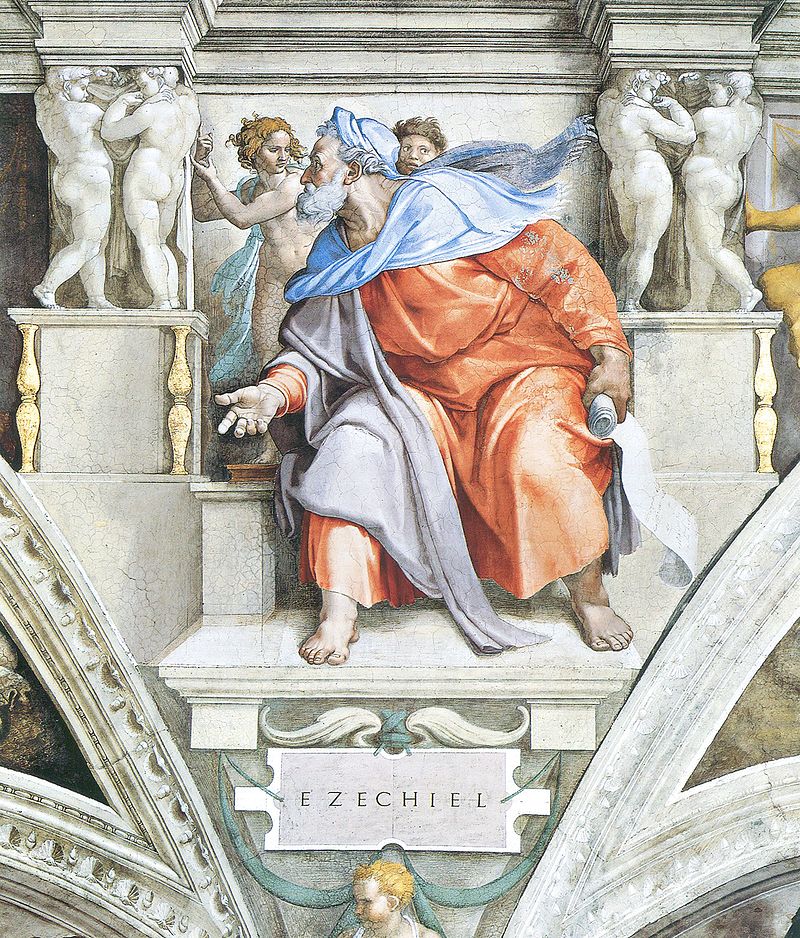
Ezekiel, Michelangelo painting in the Sistine Chapel

Ezekiel is possibly my favorite book of the Bible because of the richness of the prophecy. Virtually the entire book is prophetic, presented sometimes as poetry, sometimes as prose, and sometimes acted out in front of his audience, at God’s direction.

I have enough of an affinity for Ezekiel’s writing that I feel I have as good an understanding of the man and his prophecy as one can have at this distance. I have already commented on his (and others’) throne visions, above. I have also written about several of his prophecies in previous articles, which I’ll link below.

Ezekiel’s prophecies are apparently written chronologically, in the order of their future fulfillment, though not necessarily in the order he experienced them.
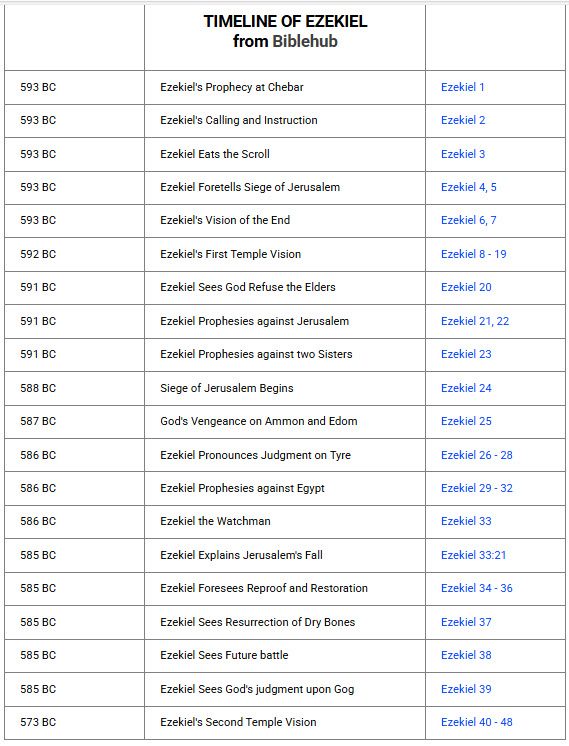
Timeline of Ezekiel, showing the date of the prophecy, not the fulfillment. ©Biblehub

Christian tradition contains a number of misconceptions that are taught by pastors who aren’t necessarily theologians and don’t necessarily have a good grasp on Bible history. Some of those misconceptions are propagated by Israeli tour guides, and the tour sponsors (often pastors) who learn from them. The tour guides are mostly Jewish Israeli citizens, who have learned what they know from manuals prepared and taught at trade schools, not necessarily by folks with religious backgrounds.

Ezekiel 10 – 11 (God Leaves the Most Holy)

One of the common misconceptions about Ezekiel concerns his prophesies about the Glory of the Lord departing the temple, discussed in this section. Much of the following is reproduced from Opening the Golden Gate, which I first posted on May 12, 2022. In that article I presented a brief history of the Temple and its Eastern Gate and then discussed some of the common misconceptions about that gate.

Then the glory of the LORD went out from the threshold of the house, and stood over the cherubim.
And the cherubim lifted up their wings and mounted up from the earth before my eyes as they went out, with the wheels beside them. And they stood at the entrance of the east gate of the house of the LORD, and the glory of the God of Israel was over them.
—Ezekiel 10:18–19 ESV

Then the cherubim lifted up their wings, with the wheels beside them, and the glory of the God of Israel was over them.
And the glory of the LORD went up from the midst of the city and stood on the mountain that is on the east side of the city.
—Ezekiel 11:22–23 ESV

God is omnipresent, both in space and in time. As our infinite, Almighty God, He can’t be contained in a tent or a building. But because He chose to deal with humanity, as represented by the primitive Israelites, He picked a form in which to appear to them. An “interface”, so to speak. In the desert, it was “a pillar of cloud by day and a pillar of fire by night.” In the Tabernacle, and later the Temple, His “Divine Presence,” in whatever visible form it appeared, was in the Holy of Holies, above the Mercy Seat of the Ark.

Chapters 8 through 11 of Ezekiel record a vision that came to him while he was sitting in his house with “the leaders of Judah”. In the vision, he was taken to the Temple in Jerusalem and shown men in leadership positions performing “disgusting” idolatrous religious rites in the Temple precincts. God then ordered a scribe to pass through the city and put a seal on the foreheads of innocents, while six other presumably angelic beings followed him and executed anyone not so sealed. The six beings were then told to set fire to the city. After the return of the scribe, God’s Sh’kinah Presence left the Temple, rose above its threshold, paused for a bit over the “east gate of the Lord’s house” (this could be the gate of an interior courtyard, or it could be the Shushan Gate overlooking the Kidron Valley), and then “stood” over the mountain on the east side of the city (no doubt the Mount of Olives).

Most visitors to Jerusalem who have read Ezekiel or have taken the tour guide’s explanation as Gospel truth, are certain that God lived in the Holy of Holies and that He moved out through the Golden Gate. That’s very sloppy theology!

Also, the part about Jerusalemites being “sealed” and those without seals being executed most likely did not happen. I take it as a homiletic description of “sinners in the hands of an angry God,” so to speak.

Ezekiel described an allegory, not reality. Yet it was a prophecy of something that was very real, which came very soon thereafter. Because of corruption reaching even into the Temple, God withdrew His protection from the city and the Temple, and both were sacked and burned by Nebuchadrezzar’s army, with many people killed.

Ezekiel 38 – 39 (Gog and Magog)

Beginning around Ezekiel 34, the prophet begins to shift from prediction of judgement to prediction of restoration. Chapter 37 is the famous “dry bones” prophecy, which I have to think brings us to our own age and the return of Jews to Israel starting in the late 19th century, and culminating with a declaration of independence in May 1947. The next event on Ezekiel’s calendar is the Gog and Magog War, which I believe will occur before the Tribulation period, and possibly before the Rapture.

I wrote a compete article about this prophecy in 2015, in The Coming World War: Gog and Magog. There is no indication whether this prophecy originated from a vision or by some other means, but I think it is appropriate to include it here to demonstrate that even prophecies that were not delivered as visions or dreams can be tricky to understand if you want to insist that every word must be taken in a literal sense.

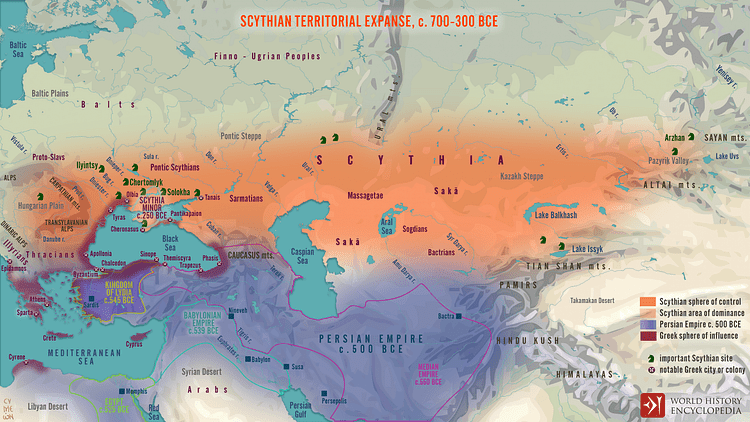
Players in the Gog & Magog War. Base map annotated by Ron Thompson

I stand by that article as amended from time to time, though I may have taken the participant nations too literally. Populations move around over the centuries, and today’s nations may not occupy the same territories as those of Ezekiel’s day.

Also, my view on the motivations for the attack have changed a bit since the October 7 terror attack in Israel. In a November 2023 update, Did Ezekiel Prophesy the October 2023 Israel/Gaza War?, I stated that the Gog/Magog war would “of course” be precipitated by Iran’s proxies. That cause appears to be pretty much off the table for a while, but I went on to speculate that Russia might take the initiative in an effort to bolster Putin’s waning reputation.

And now President Trump, NATO, and new trade and defensive alliances are backing Putin into a very tight and embarrassing corner. Very interesting!

It frequently happens that prophecy has to be reevaluated when conditions change!

Ezekiel 40 – 42 (The Millennial Temple)

In 573 BC, Ezekiel was given a vision of a new Temple to be built in Jerusalem. He records that vision in great detail in chapters 40 and following of his prophetic book. In an excellent 20th century book entitled Messiah’s Coming Temple, John W. Schmitt and J. Carl Laney analyzed both the design of this temple and the use to which it will be put. It bears a superficial resemblance to previous Temples, but is by far the largest, and in even some of the “essential characteristics”, it differs from them in ways that do not correspond to Jewish law. This is because its purpose will be different in many respects, as outlined in the Schmitt/Laney book.
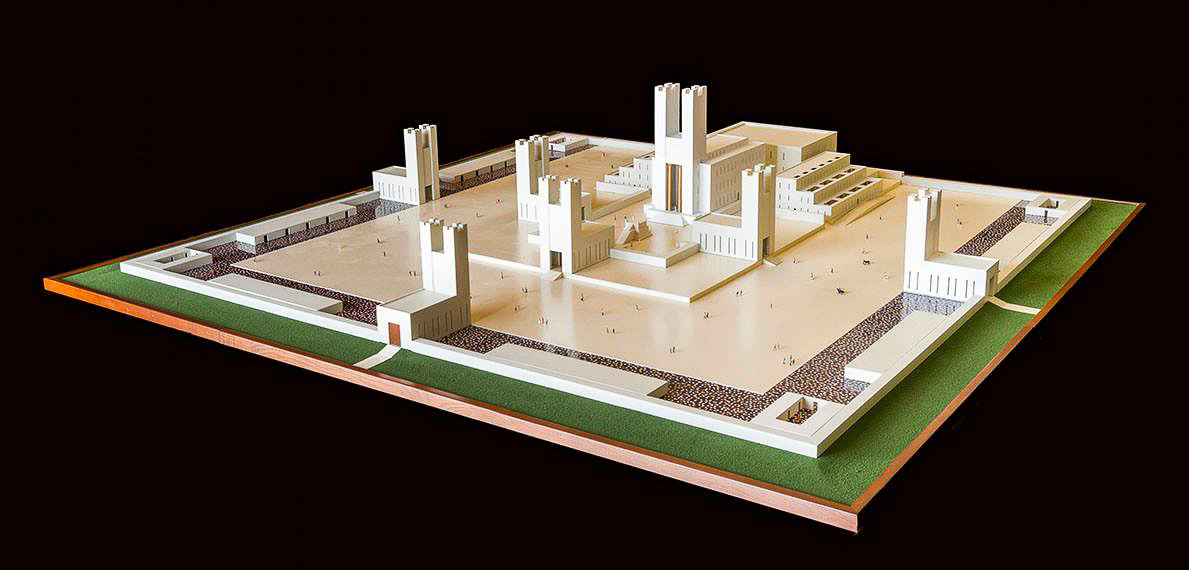
Model of the Millennial Temple, ©John W. Schmitt

The lesson here is less about sloppy reading than it is about neglect.

Judaism mainly ignores this passage because the design of this Temple differs from the Mosaic instructions in several key elements. They claim it can’t possibly be a legitimate design since it doesn’t match the required specs for the Tabernacle and Solomon’s Temple. Of course, the reason for the differences is that Jesus’ death and resurrection changed significant parts of the cultic practice, as mentioned in the book of Hebrews.

Christians, however, neglect it for the opposite reason: they can’t see any use at all during the Millennium for a Temple with an alter and other features needed for any part of the Mosaic Covenant observance.

Both sides are wrong, but I wonder how many of my readers have been even slightly curious about this portion of Scripture. It is God’s Word, so it is important to me!

Ezekiel 43:1–12 (God Returns to the Most Holy)

Then he led me to the gate, the gate facing east.
And behold, the glory of the God of Israel was coming from the east. And the sound of his coming was like the sound of many waters, and the earth shone with his glory.
And the vision I saw was just like the vision that I had seen when he came to destroy the city, and just like the vision that I had seen by the Chebar canal. And I fell on my face.
As the glory of the LORD entered the temple by the gate facing east,
the Spirit lifted me up and brought me into the inner court; and behold, the glory of the LORD filled the temple.
—Ezekiel 43:1–5 ESV

Again, see Opening the Golden Gate.

Beginning in chapter 40, Ezekiel has been once again taken to Jerusalem in a vision, but this was to show him events far in the future, during the Millennial Reign. The vision shows him a new Temple (see the previous section), to be built presumably at the start of the Reign. In chapter 43, suddenly God’s Glory returns to the Temple, but this time through the gate facing east, not above it. The assumption that many people make is that “God’s Glory” here refers to Jesus. The parallels between this and the earlier vision indicate it is God’s Sh’kinah returning—the Father, not the son.

The sequence in chapter 43 is as follows: God’s Glory returns, through the “gate facing east.” God goes into the Temple itself and fills it with His Glory. Ezekiel is standing outside the Temple with the angel who has been showing him around. God calls out from inside, saying that He will now dwell with His people forever, and never again will they defile His house.

So, if it wasn’t Messiah entering through the eastern gate, is Jesus “the prince“, who is mentioned several times in the prophecy? Clearly, He is not! This prince, whoever he is and whatever his function, has sins to atone for, and evidently, he has children. I surmise that he is to be a senior Zadokite priest, over the other priests but reporting to the new permanent High Priest, Messiah.

We know from other prophecies that Jesus will reign from Zion. But nowhere does scripture say that it was Jesus who entered through the eastern gate! And incidentally, there does not seem to be a throne room in Ezekiel’s Temple.

Once again, sloppy reading makes sloppy theology. It is the visible, localized sh’kinah Glory of God, the Father, entering the Temple. But He is entering through a new Eastern Gate, not the Golden Gate, which will no longer exist.

Jesus does return in clouds to Mt. Olivet, but nowhere does scripture say that He enters the Temple to reign. Most likely He’ll reign from a Palace.

Revelation

Of course, most of Revelation is prophetic imagery. I’m only going to hit some high points here. I need to mention that I am not a Dispensationalist, but I am premillennial, and in general, I pretty much agree with the Dispensational interpretation of Revelation. But not everything…

Chapter 8–9 (trumpets)

First, there are no trumpets in this passage! I plan to show in a future post that shofarim (animal horns used for blowing) are in view here. A shofar is blown like a trumpet, but it is not a trumpet, and the two have different functions in the Bible. In reality, therefore, this chapter is about the Seven Shofar Judgements!

Two shofarim. The large one on the top shelf is a traditional Yemenite shofar, made from a Kudu horn. The small shofar on the lower left is made from a ram’s horn. ©Ron Thompson

In verse 8:1, the Lamb opens the 7th Seal, which releases “thunder, lightning, [sounds or voices] and an earthquake“, 8:5. The “sounds or voices”, (translated “rumblings” in ESV) are part of the vision, and unexplained. The Seal sets the context for the 8 shofarim to follow, and suggests that the judgements are connected in some way to powerful tectonic and atmospheric forces on earth.

The first shofar judgement is hail and fire, mixed with blood, resulting in “a third of the earth … burned up, and a third of the trees … burned up, and all green grass … burned up” , 8:7. Using the hermeneutic principle of taking the plain sense of the verse if it “makes common sense,” we might then opine that the storms of verse 5 will produce the hail, and the lightning will set the fires. The third of the “earth” burned up might simply be a reference to the location of the burned portion of the vegetation. The blood mixed with the hail is harder to explain.

The second shofar judgement is “something like a great mountain burning with fire” causing the death of sea creatures and destruction of ships. That much is easy to explain as a large asteroid hit, but once again there is unexplained blood that casts doubt on the interpretation.

The third shofar judgement would appear to be a comet rather than another asteroid. Asteroids mostly originate in the Asteroid Belt, between Mars and Jupiter, and have compositions similar to those of the inner planets. Comets usually come from the Keiper Belt outside the orbits of the planets, and some “long-period” comets don’t originate in the solar system at all. A naturalistic explanation of “Wormwood” would be such a comet containing an unfamiliar compound that scatters in the wind and turns water sources bitter.

The fourth shofar judgement would seem to follow naturally from either or both of the “falling stars”.

While the first four shofar judgements, chapter 8, may possibly have a more or less naturalistic mechanism, judgements 5 and 6, chapter 9, are clearly supernatural from start to finish. I won’t attempt to explain them here, except to speculate that they should probably be taken at face value.

Note, however, that the “star” of 8:10 is no doubt an inanimate orbiting body (as opposed to a literal star), but the star of 9:1 is angelic. Angels are frequently referred to metaphorically in Hebrew literature as stars.

The 7th shofar, like the 7th Seal, is introductory for what follows it.

Like the shofar judgements, many Biblical prophecies can be interpreted naturalistically, while others can’t. It’s not always possible to know which is the case. Unfortunately for those of us who crave to understand every word spoken by God, both naturalistic and supernaturalistic prophecies can have an ultimate meaning that is either literal or metaphorical, or even both!

Chapter 10 (the angel with the little scroll)

This angel is also described, in verses 2 and 5 as the angel with his right foot on the sea and his left foot on the land.

Most scholars will tell you that prophetic references to the sea are speaking of chaos. The sea is chaotic. The land is not or is relatively free of chaos. I totally disagree with this interpretation!

All Bible prophecy is at its core Jewish. To the ancient and classical Jews, “the land,” when used metaphorically in prophecy, almost always refers to Eretz-Yisra’el, the Land of Israel, and “the sea” refers to all other lands on earth. Thus, the angel and the little scroll are going to effect both Jews and gentiles in some way.

At least portions of some Biblical prophesies can be interpreted with a high degree (though less than 100%) of certainty if certain key words or phrases are detected. Conversely, missing these keys may lead to completely erroneous conclusions.

Chapter 12 (a woman and a war)

This is a hotly contested passage that I will not say much about here. I believe it is partly a flashback to Jesus’ birth, and partly a discussion of Israel’s disposition going into the second half of the Tribulation.

Verses 1–5 are seen by some of the more radical (in my view) prophecy teachers to be signs that will appear in the zodiac at the close of the Trumpet Judgements. There are whole books written on this interpretation. There have always been Jewish and gentile Christian teachers who dabble in astrology, but that, in my opinion, is a pagan practice that has no place in God’s prophetic scheme.

What the passage is to me, is a highly figurative description of Messiah’s birth, not to Mary, but to Israel in general, and of His death and ascension into heaven.

Verses 7–12 is description of an angel-versus-angel war in heaven following the incarnation of The Son. A large number of disgruntled angels, led by Satan (Lucifer, if you will), enraged by this affront to the power they had gained on earth since the dispersal from Babel, waged war in heaven with the faithful angels, led by Mikha’el (Michael, see Daniel 10:21), the champion of Israel.

Prior to this outright war, the first recorded angelic rebellion was when Satan contradicted Elohim in the Garden. Subsequently, there were several angelic rebellions, but the “bad guys” were still given access to God at His Divine Council in heaven. This war marked the end of that access:

7 Now war arose in heaven, Michael and his angels fighting against the dragon. And the dragon and his angels fought back, 8 but he was defeated, and there was no longer any place for them in heaven.
— Revelation 12:7-8 (ESV) emphasis mine

Chapter 13–14 (the two beasts)

Once again, I will not try to dig for everything in these chapters, but I do want to mention a few points about Antichrist and his realm.

The “Beast from the Sea”

Jerry Falwell, Sr. famously stated that the Antichrist will “definitely be Jewish.” On the contrary, Antichrist’s origin in “the sea” unmistakably marks him as gentile (see the previous section).

Naming the Antichrist can’t be done using only this passage. Other passages in Revelation, Matthew, and elsewhere in the NT must be considered, along with various OT prophecies, especially in Daniel and the Minor Prophets. Still only guesswork is possible.

Counterfeit Christ?

Many commentators and pastors describe Antichrist as “a counterfeit Christ,” and that may be a big part of why Falwell decided he is Jewish. That is a misunderstanding of Antichrist’s role. Without question there are some parallels between the Trinity and the realm that Satan tries to establish here, but I see Antichrist as simply a false God, a pagan deity opposed to Jesus.

“Anti-Christ” means “opposed to the Messiah”, not a fake or a negative image of Messiah.

Antimatter is not counterfeit matter. A positron is an antielectron, meaning it is an electron with a positive, rather than negative, charge. If an electron and a positron come into contact with each other, both are instantly annihilated.

Fatal wound

Verse 13:3, speaking of Antichrist, says:

One of its heads seemed to have a mortal wound, but its mortal wound was healed, and the whole earth marveled as they followed the beast.
— Revelation 13:3 (ESV)

“Seemed to have a mortal wound” translates the Greek phrase, ὡς ἐσφαγμένην ἐσφαγμένην θάνατον, literally, “[was] as having been slain to death.” Similarly, “mortal wound” is πληγὴ τοῦ θανάτου, literally, “wound of death.” The phrasing here convinces me that this is not saying Antichrist was killed, but merely that he had a wound that at least briefly seemed to have been fatal. The timing of the event is also not addressed. He could have survived a wound as a child and the press coverage later flaunted as he gained power. Or he could have survived an assassination attempt during his rise in power.

The “Beast from the Land”

The “Beast from the Land”, aka, the “Second Beast”, aka, the “False Prophet” will more nearly take on the role of a false Messiah. And by the way, his origin in “the Land” identifies him as Jewish.

Horns and Heads

Revelation 13 and Daniel 7 both speak of the Antichrist as having ten horns (each with a diadem) and seven heads. Rev. 12 and 17 also speak of Satan (the Red Dragon, identified as the Serpent) as likewise having 10 horns and seven heads, so the two (Dragon and Satan) are connected in some way, presumably master and servant. No surprise.

Dan. 7:24 and Rev. 17:12 identify the horns as “kingdoms” from which the Antichrist will rise. In Rev. 17:9, the seven heads are identified as “seven mountains on which the woman is seated”, and at the same time, “seven kings.”

Despite numerous attempts that I have personally read going back at least to Hal Lindsey’s Late, Great Planet Earth and Satan is Alive and Well on Planet Earth, nobody has ever done better than guess as to the identities of those 10 “kingdoms.” Back then it was the Common Market, but that quickly outgrew ten nations. Tim LaHaye’s Left Behind books, Biblically dubious in so many ways, picked the United Nations.

My own guess is that the Gog and Magog War, which God Himself will end, will leave both sides hugely weakened but will not quell the centuries of compounded hatred in the region. A powerful world leader will then gather a group of ten heads of state around a table to produce the peace treaty that guarantees Israel’s safety going forward—and sets The Tribulation in motion. More or less in the pattern of President Trump’s August 2025 initiative to stop the Russia/Ukraine War.

In other words, the 10 horns need only be powerful entities. It would make sense to me if they were ten individual members of the larger European Union or NATO, a political or economic cartel, perhaps even huge corporations, or megarich Oligarchs. I suppose we’ll know them when they become obvious.

A Revived Roman Empire?

News Flash: The Roman Empire is dead! It ain’t coming back! I’m not ruling out that Antichrist’s empire could have similar characteristics, similar membership, or even the same general location (which might be around Rome, Istanbul, or Even Aachen, Charlemagne’s medieval capital in the Holy Roman Empire.

The notion of a “Revived Roman Empire” comes from a modern view of Daniel’s interpretation of Nebuchadrezzar’s statue dream in Daniel 2. I agree that we are correct in seeing the gold, silver, bronze and iron segments of the statue as Babylon, Medo-Persia, Greece, and Rome, respectively (many Christians have other views). But where others see a Revived Roman Empire, I see the feet and toes made of iron mixed with clay as merely the fragmented post-Roman world from the Middle Ages on through the present:

Daniel 2:43 (CJB)
[43] You saw the iron mixed with clay; that means that they will cement their alliances by intermarriages; but they won’t stick together any more than iron blends with clay.

A pair of Dreams

Since this post is now becoming insufferably long, I’m going to close with just two more examples…

Joseph and the sheaves

Behold, we were binding sheaves in the field, and behold, my sheaf arose and stood upright. And behold, your sheaves gathered around it and bowed down to my sheaf.”
— Genesis 37:7 (ESV)

Everyone is familiar with Joseph’s older brothers’ hatred for him because of the favoritism shown to him by their father. The intricate (from פַס, pahs, a difficult to pronounce guttural adjective if your language is English) robe given him by Jacob, probably “long-sleeved” rather than “multicolored”, greatly exacerbated the problem. When he then naively repeated his dream to the brothers, it was certainly a (forgive me) last [bundle of] straw.

Nobody needed to interpret that dream! Clearly, they recognized that it was a metaphorical picture of them, bowing down abjectly to their snotty young brother.

There is a tendency among Christian interpreters of Jewish Scripture to read literal meanings into visions and dreams even when it is clearly the symbolism that is vital. In this case, we understand that the brothers are right—the dream is indeed picturing them bowing to their brother.

Because of the absurdity of the dream itself, we understand that it is an allegory for Joseph’s relationship with his brothers, not a prediction that their crops will worship his!

Peter and the sheet

Here is another Biblical dream that uses an allegory to illustrate a Jewish premise. In this case, though, most gentile Christians (which today means most Christians) have a very weak understanding of Judaism and the Mosaic Covenant, so they take both the allegory and its premise literally.

10 [Peter] became hungry and wanted something to eat, but while they were preparing it, he fell into a trance 11 and saw the heavens opened and something like a great sheet descending, being let down by its four corners upon the earth. 12 In it were all kinds of animals and reptiles and birds of the air. 13 And there came a voice to him: “Rise, Peter; kill and eat.” 14 But Peter said, “By no means, Lord; for I have never eaten anything that is common or unclean.” 15 And the voice came to him again a second time, “What God has made clean, do not call common.” 16 This happened three times, and the thing was taken up at once to heaven.
— Acts 10:10-16 (ESV)

When Peter woke from his trance, did he immediately run to the kitchen and shout, “Halleluiah, hold the falafel and hummus on pita and bring me a ham and cheese sandwich!”? No, he “was inwardly perplexed as to what the vision that he had seen might mean.” He knew that his God would not tell him to violate Kashrut (the dietary laws under Covenant), so he thought that it made absolutely no sense.

But by the time he met with Cornelius, he’d figured it out:

And he said to them, “You yourselves know how unlawful it is for a Jew to associate with or to visit anyone of another nation, but God has shown me that I should not call any person common or unclean.
— Acts 10:28 (ESV) emphasis mine

As with Joseph’s sheaves, the sheet here is a picture, not the actual subject under discussion. I’ve stated in other articles that I believe the Mosaic Covenant, including its dietary laws, is still in force for Godly Jews. This passage by itself cannot prove me wrong (or right), because it is not about food, it’s about people.

Conclusions

Dogmatic interpretations of visions and dreams is seldom, if ever, possible unless corroboration is provided elsewhere—by means, for example of:

  1. Interpretation by the prophet himself, if provided.
  2. Direct interpretation by statements elsewhere in Scripture.
  3. Clear fulfillment elsewhere in Scripture.
  4. Parallelism, where two or more passages each contribute information.
  5. Ancient Jewish thought from Hebrew literary sources.
  6. Ancient Near Eastern (ANE) thought from ANE literary sources.
  7. Ancient history.
  8. Post-Biblical History.
  9. Current events.

Prophetic understanding sometimes comes slowly, and sometimes in bits and pieces. The Old Testament alone was not clear on the fact that the Messiah would come twice, with different agendas.

Prophecy has to be reevaluated when conditions change. Which goes along with my main purpose in writing this article—to urge against being too dogmatic about prophetic interpretation.

Over-interpretation by modern-day Christians is risky, though it may be entertaining!

Did Ezekiel Prophesy the October 2023 Israel/Gaza War?

It’s way too early to say, but personally, I would rate the odds at about 50/50 right now. It all depends on what Russia does (see below).

What I’m referring to is an important prophecy delivered to Israel over 2-1/2 millennia ago, in Ezekiel 38–39. I wrote The Coming World War: Gog and Magog about that prophecy in 2015 and updated it in 2022. From what I have seen, the early stages of this war are checking the boxes, with no contraindications.

Of course, any war involving Israel is going to start with Hamas and Islamic Jihad in Gaza and Hezbollah in Lebanon. Shots have also been fired on Israel and its allies by Iran, Syria, Iraq, Islamic Houthi rebels in Yemen, and Fatah-led Palestinians in Judea and Samaria. All are equipped by Iran directly and Russia directly or indirectly. Saudi Arabia, expected to be more or less on Israel’s side, has already intercepted and destroyed a suicide drone launched by the Houthis against Eilat, an important Israeli port on the Red Sea.

The key question going forward is, “What will Russia do?” If Russia enters the war, it will substantially increase the strength and mobility of the anti-Israel forces, and it will embolden other actors who are for now holding back.

But isn’t Russia debilitated by its failing war against Ukraine? No, I don’t think it is! I don’t think that official Russian military action in Ukraine has been very substantial. Most of that operation has been handled by the Wagner Group, a paramilitary force trained and supplied by the Russian Defense department, but with separate staffing and command structure. This arrangement allows Putin and the Russian military to say, “Hey, it isn’t our fault.”

I believe that the Russian Army, Navy and Air Force are all at nearly full strength. What is not strong is Putin’s reputation around the world and with his own people. What would help him to put that behind him is to direct a “can’t-fail” operation to destroy Israel, right now, while there is so much antisemitism and pro-Palestinian sentiment in the news. America doesn’t have the will to do more than spend money and send armaments, and no other country is likely to go out on a limb for Jews.

Comparing Russia and Iran with Israel, the 2023 Global Firepower assessments for the three as of October 28 show Russia as still the second most powerful country in the world out of 145 ranked (though China is rapidly closing the gap), Israel 18th and Iran 17th. With respect to individual firepower categories that I judge to be most applicable to the present situation, the numbers stack up as follows:

RussiaIranIsrael
Active & Reserve Troops1,080,900925,000638,000
Paramilitary*250,00090,0008,000
Tanks12,5664,0712,200
Armored Vehicles151,64169,6856,290
Artillery10,9112,630950
Rocket Launchers3,8871,085300
Total Aircraft4,182541601
Fighter Aircraft773196241
Transport Aircraft4448637
Attack Helicopters5371248
Fleet Strength59810167
Aircraft Carriers100
Submarines70195
Large Combat Ships86107
Mine Warfare4910
*Although Paramilitary forces might be a huge military disadvantage to Israel, the quarter million on paper for Russia may not be available due to ongoing warfare in Ukraine.

As you can see, Iran’s strength is comparable to Israel’s, but with Russia in the fray, Israel is completely overmatched. Make no mistake, Russia will go all-out if their regular military is engaged. It has already been reported that Russia’s Wagner Group is supplementing Hezbollah in Lebanon.

The US currently has one carrier battle group in the Mediterranean, and another in the Red Sea. Additionally, a nuclear submarine is on the way to station in the Red Sea. These are a powerful deterrent, but only if Biden decides to go all-out, too. It won’t happen, and congress would balk if he did.

How it plays out if this is the Gog/Magog War

Referring to Ezekiel 38 and 39, it begins in earnest when an array of hostile, mostly Muslim nations in the Middle East, Africa and Eastern Europe unite under the leadership of Russia to attack Israel and attempt to destroy her and to annihilate God’s Holy People. Geopolitical realities have prevented this from happening up until now, but Satan is no doubt aware of the growth of worldwide antisemitism since 1948, the general decline in human values and the lack of moral strength among Israel’s allies.

The prophecy passes over the events we are seeing now leading up to the attack, but they reveal the shocking truth that, though Satan may see it as his own initiative, it is God who is initiating the conflict to bring both Israel and her enemies to their knees in advance of the coming Tribulation. In vv 3–4, God says,

[3] ‘I am against you, Gog, chief prince of Meshekh and Tuval. [4] I will turn you around, put hooks in your jaws and bring you out with all your army, horses and horsemen, all completely equipped, a great horde with breastplates and shields, all wielding swords.
—Ezekiel 37:3b–4 (CJB)

Putin and his allies act because God ordained it. Don’t be concerned with the prophetic imagery here of ancient armies and armaments. This war will not be about horses and swords, but about air and sea power, tank battles and explosions.

[8] After many days have passed, you will be mustered for service; in later years you will invade the land which has been brought back from the sword, gathered out of many peoples, the mountains of Isra’el. They had been lying in ruins for a long time, but now Isra’el has been extracted from the peoples and all of them are living there securely.
—Ezekiel 38:8 (CJB)

We are indeed in the “latter days“. Israel was “brought back” and “extracted from the peoples” some 75 years ago, and though surrounded by mortal enemies and subjected by daily rocket attacks, they have been lulled to sleep once again by a period of relative peace and security.

[14] “Therefore, human being, prophesy! Tell Gog that Adonai ELOHIM says this: ‘Won’t you be aware of it when my people Isra’el are living in security? [15] You will choose just that time to come from your place in the far reaches of the north, you and many peoples with you, all of them on horseback, a huge horde, a mighty army;
—Ezekiel 38:14–15 (CJB)

Given the ways that prophecy works, this surprise attack could be speaking of the brutal proxy attack by Hamas that we’ve already seen, on October 7, or it could be referring to a main wave attack during a lull at or near the close of Israel’s reduction of Gaza.

If God Himself is the instigator of this war, then what could be His purpose?

[16] and you will invade my people Isra’el like a cloud covering the land. This will be in the acharit-hayamim [the “latter days”]; and I will bring you against my land, so that the Goyim [non-Jewish nations] will know me when, before their eyes, I am set apart as holy through you, Gog.’
—Ezekiel 38:16 (CJB)

And how will He accomplish that purpose?

[18] When that day comes, when Gog invades the land of Isra’el,’ says Adonai ELOHIM, ‘my furious anger will boil up. [19] In my jealousy, in my heated fury I speak: when that day comes there will be a great earthquake in the land of Isra’el; [20] so that the fish in the sea, the birds in the air, the wild beasts, all the reptiles creeping on the ground and every human being there in the land will tremble before me. Mountains will fall, cliffs crumble and every wall crash to the ground. [21] I will summon a sword against him throughout all my mountains,’ says Adonai ELOHIM; ‘every man will wield his sword against his brother. [22] I will judge him with plague and with blood. I will cause torrential rain to fall on him, his troops and the many peoples with him, along with huge hailstones, fire and sulfur. [23] I will show my greatness and holiness, making myself known in the sight of many nations; then they will know that I am ADONAI.’
—Ezekiel 38:18–23 (CJB)

This is essentially a repeat of what He did in Egypt to free His people, but this time, the whole world will be watching!

[3] But then I will knock your bow out of your left hand and make your arrows drop from your right hand. [4] You will fall on the mountains of Isra’el, you, your troops and all the peoples with you; I will give you to be eaten up by all kinds of birds of prey and by wild animals. [5] You will fall in the open field, for I have spoken,’ says Adonai ELOHIM.
—Ezekiel 39:3–5 (CJB)

The remainder of Ezekiel 39 deals with the aftermath. God will take the destruction to at least the homeland of Gog (though Ezekiel elsewhere uses the term “coastlands” to designate a much larger area, so this probably means all of the invading nations will be crushed), vv 6-8. Israel, meanwhile, will begin cleaning up the mess. Combustible military equipment, which I take to be fuel, camp equipment, rifle stocks and so on, will provide fuel for seven years of burning, vv 9-10.

The dead invaders will be gathered and buried in mass graves in an unknown area called the Travelers’ Valley, east of the Dead Sea, in Jordan (or possibly east of the Sea of Galilee, in Syria), vv 11-16. This operation will take seven months and will block the valley, which evidently is a major east/west route for commerce. Those who remain will provide a feast for wild animals, vv 17-20.

As a result of the Gog and Magog War, if that is what this is:

[21] “‘Thus will I display my glory among the nations, so that all the nations will see my judgment when I execute it and my hand when I lay it on them. [22] From that day on, the house of Isra’el will know that I am ADONAI their God; [23] while the Goyim will know that the house of Isra’el went into exile because of their guilt, because they broke faith with me; so that I hid my face from them and handed them over to their adversaries; and they fell by the sword, all of them. [24] Yes, I treated them as their uncleanness and crimes deserved; and I hid my face from them.’
—Ezekiel 39:21–24 (CJB)

Final thoughts

I did an Internet search this morning trying to find other commentators who are attempting to match the current war with Bible prophecy. I did find one who pretty much agrees with me, but mostly what I found was ridicule and very poor, if any, textual analysis. My wife told me she listened to a couple videos by respected eschatologists who seemed to think that America’s support for Israel negates the possibility that this is Ezekiel’s war. I don’t follow that logic at all. If America is mentioned anywhere in Scripture, it is buried very deep! Ezekiel 38:13 does mention three nations that will support Israel. I see no reason to require that list to be exhaustive. But, if you insist, I think that a loose interpretation of v 13 could equate Tarshish with America, in either of two ways: (1) Tarshish is thought by most to have been a city on the Bay of Cadiz in southwestern Spain. Since that was just about as far west as Ancient Near East scholarship stretched, Ezekiel may have made that connection. (2) I was very briefly stationed at the US Naval Base, Rota, Spain in 1970, while awaiting air transportation to Naples. Rota is a relatively large base just across Cadiz Bay from the city of Cadiz and could be considered an American outpost. These two speculations are flimsy, and I think unnecessary.

Second, if you read many of my posts, I’m sure you’re aware that I firmly believe that God chooses important prophetic dates on the Hebrew calendar to accomplish His important purposes. October 7 this year (the date of the terror attack) fell on Tishri 22, the day following the 7-day Feast of Tabernacles, the last of the principal feasts commanded in Leviticus 23. This day is also known as Simchat Torah, and that is the first day of the annual Torah reading cycle in Jewish synagogues everywhere. One way or another, this war is bound to change the dynamics in the Middle East. Does a new cycle of Scripture reading correspond to a new cycle of Middle East relationships?

Will the Gog/Magog War do what God intends it to do? Of course! When I wrote the original post on this subject, I was thinking that the obvious outpouring of God’s power would bring many secular Jews around the world to a new measure of faith, and many Gentile atheists and agnostics would turn to God in faith. While there is bound to be some of this, I no longer think it will be widespread.

Today I think of Gog/Magog more as God shaking His fist and saying, “Enough! Israel is mine, and off-limits!” The blatant, in-your-face, unmistakable demonstration of His power will be viewed by most of deluded humanity as an afront, and they will hate Him more personally than ever before.

One effect almost sure to come out of Gog/Magog, I think, is that both the Iraeli and Arab militaries will be depleted to the extent that Antichrist will be able to entice them into a mutually binding peace treaty. You know the rest of this story!

Implications

If the Israel/Hamas war being fought now in the Gaza Strip is indeed the opening action in the Gog/Magog war prophesied by Ezekiel, then we are without question living in the “Last Days!” Given the rapid increase in evil in America and around the world, I can only hope and pray that it is so!

Opening the Golden Gate

Posted on:

Modified on:

  1. A brief overview of the Temple, past and future
    1. The “First Temple”
    2. The “Second Temple”
    3. The “Tribulation Temple”?
    4. Ezekiel’s “Millennial Temple”
    5. The “Golden Gate”
  2. Questions and answers about the Golden Gate
    1. Is the Eastern Gate the same as the Beautiful Gate of the Gospels?
    2. Is it true that Muslims sealed the gate and established the cemetery in front of it in order to prevent the Jewish Messiah from entering through it?
    3. Is it true that Jesus entered Jerusalem through this gate on the first Palm Sunday?
    4. Is it true that this is the “Eastern Gate” through which the Divine Presence left the Temple, as prophesied in Ezekiel chapters 10 and 11?
    5. Is it true that Jesus will one day enter the Temple through this same Eastern Gate, per Ezekiel chapters 43 and 44?

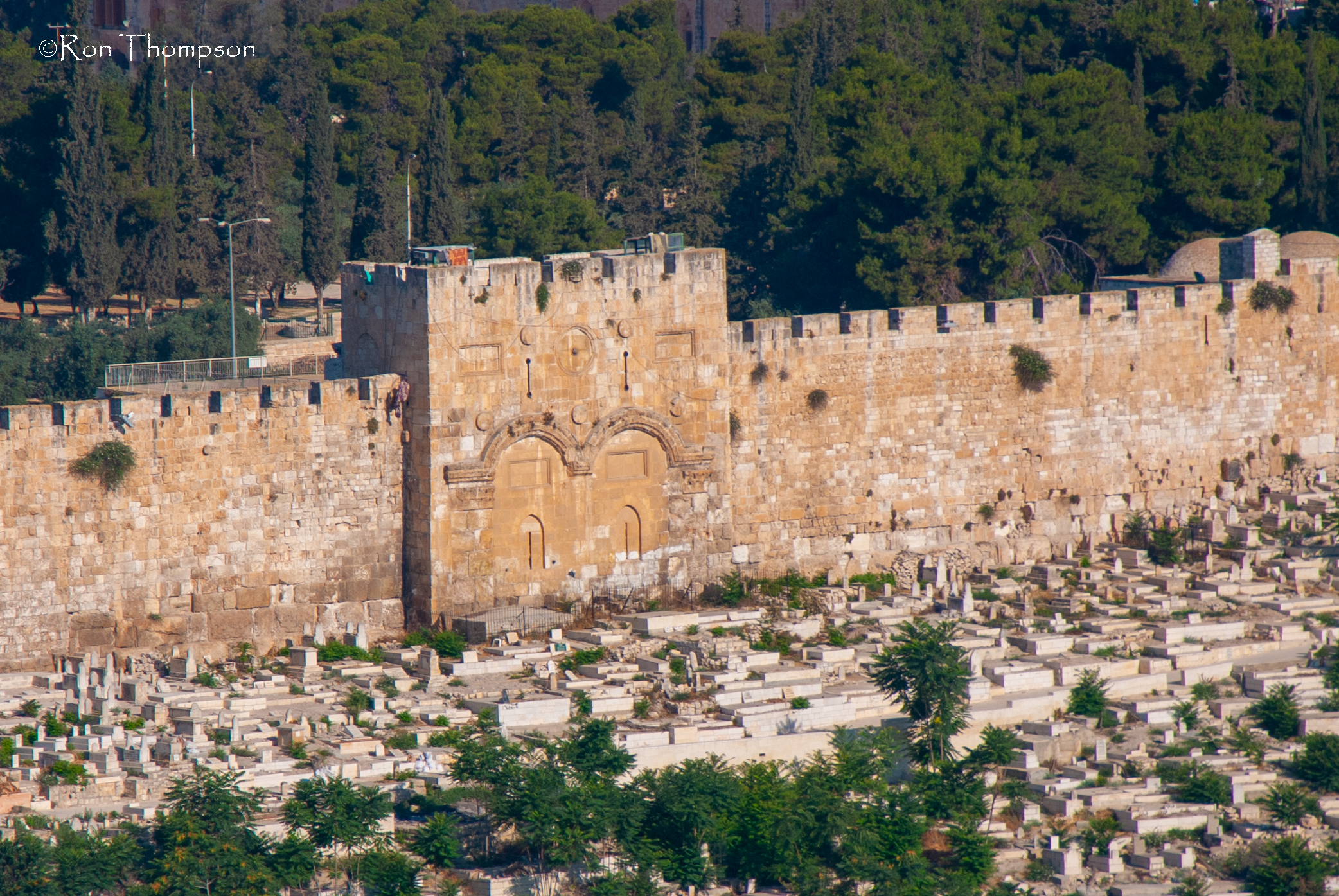
In the various Facebook Archaeological groups that I frequent, there are often discussions about the Eastern, or “Golden Gate”, on the Temple Mount in Jerusalem. Most tourists are probably introduced to the Mount by way of the overlook on the Mount of Olives. From that viewpoint, you get a wonderful, panoramic view of the eastern wall. The first three features of that wall that you notice are the Dome of the Rock and the Al Aqsa Mosque on top and the grand gate in the wall—The Golden Gate. Oddly, it turns out that almost everybody is hugely impressed by the gate, but almost nobody comes away from Jerusalem understanding its history or its prophesied future.

Golden Gate, eastern wall of the Temple Mount, Jerusalem. ©Ron Thompson 2008

The mythology of the Golden Gate has several common features that I think are confusing to some people:

  • Some equate the Golden Gate with the Beautiful Gate of the Gospels.
  • It is said that Muslims sealed the gate and established the cemetery in front of it in order to prevent the Jewish Messiah from entering through it.
  • Many people believe that Jesus entered Jerusalem through this gate on the first Palm Sunday.
  • It is commonly believed that this is the “Eastern Gate” through which the Divine Presence left the Temple before the Exile
  • It is further believed that Jesus will one day triumphantly enter the Temple through this same Eastern Gate.

I will discuss these issues in detail below.

To top

A brief overview of the Temple, past and future

By one way of thinking, there have been four Jewish Temples on Mt. Moriah, with two more coming in the future. Two of the historical Temples have simply been extensive upgrades due to declining physical condition, so they aren’t considered to be separate new Temples.

Although there are important variations in the construction from one Temple to the next, many important details are the same for all, because the specifications for those are either Biblical or were unalterably decided by the rabbis and codified in Jewish law.

To top

The “First Temple”

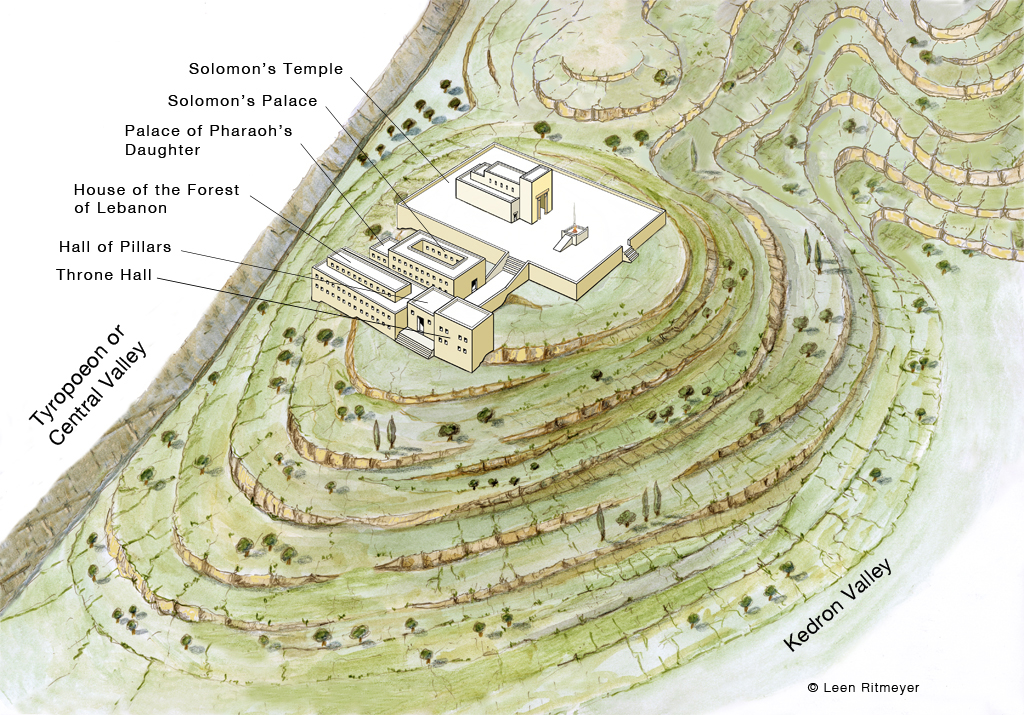
Solomon’s original Temple complex, shown below, was ornate, but relatively small. The Temple itself was built on a small platform erected on the threshing floor purchased by King David from Araunah the Jebusite. Solomon built a large palace for himself adjacent to the Temple platform and connected to it by a stairway.

First Temple, and Palace of King Solomon, Jerusalem. ©Leen Ritmeyer

Over the following 400 years, both edifices crumbled from age. Various kings made repairs and upgrades. Hezekiah in particular, demolished much of what remained and built a new Temple on the site, much as Herod did in Second Temple days. Hezekiah’s Temple, shown in the next diagram, was built on a much larger platform, a square, 500 cubits (around 875′) on each side. As with all renditions of the Temple, the doors leading to the Temple porch and antechambers faced east towards the Mount of Olives. A separate eastern gate named, appropriately, the East Gate was set into the eastern retaining wall, near the northeast corner and recessed below the level of the platform.

First Temple as Rebuilt by King Hezekiah, Jerusalem. ©Leen Ritmeyer

To top

The “Second Temple”

In 586 BC, Hezekiah’s Temple was destroyed by the Babylonian army, and the 3rd and final deportation of Judeans into captivity began. The retaining walls were damaged, but not totally destroyed. When Jews returned decades later under King Zerubbabel to rebuild the temple, the surviving 500-cubit by 500-cubit platform was reused. The East Gate was repaired. It was renamed the Shushan Gate, because a memorial picture of the Palace of Shushan (Susa) was portrayed on it.

As for Zerubbabel’s Temple itself, it was built along similar lines as before, but was a pale imitation of what Solomon’s craftsmen had produced.

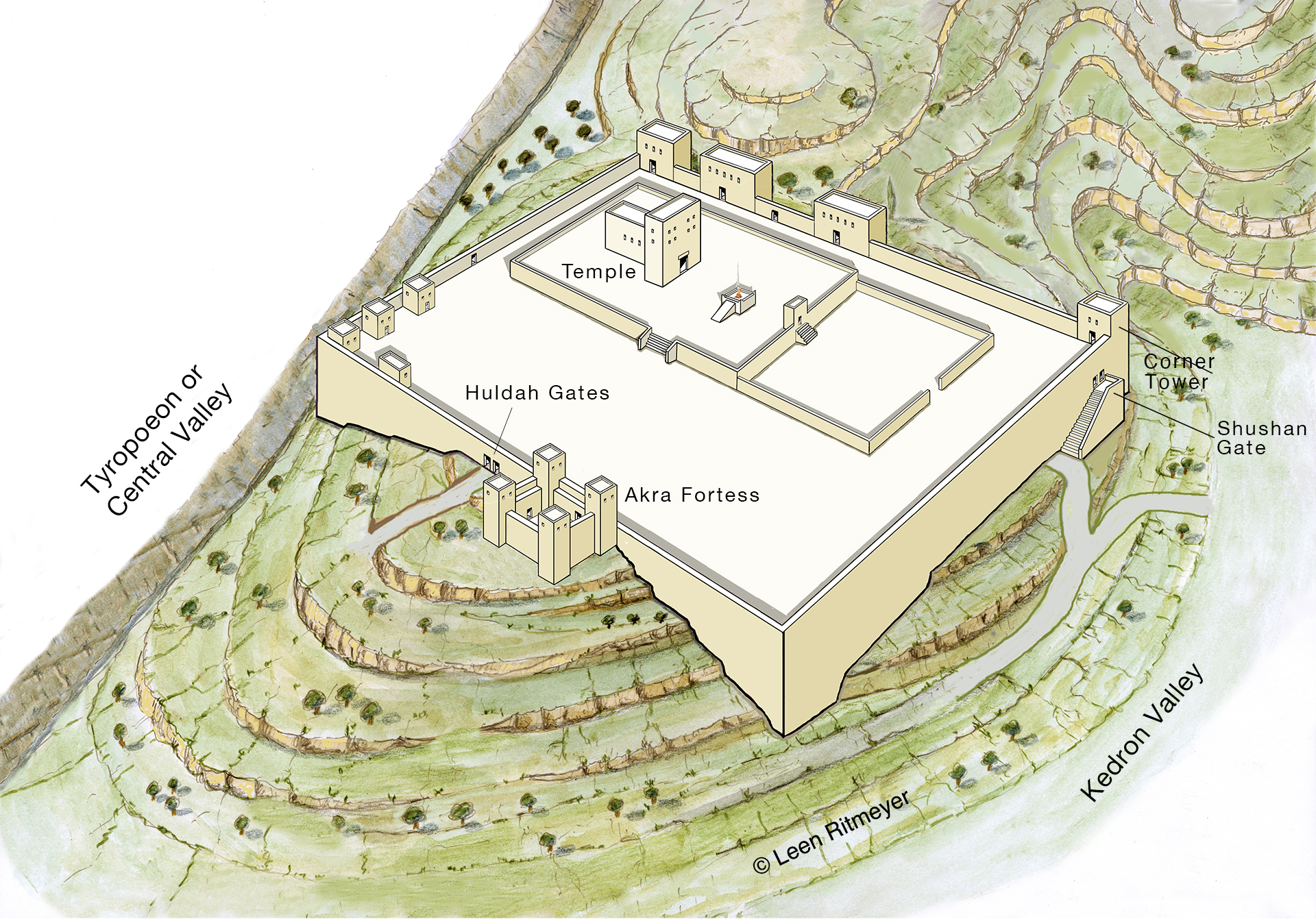
In 168 BC, under Seleucid rule, a fortress called the Akra was built adjacent to the south wall for the purpose of controlling the Hulda Gates, where most Jews entered and left the Temple Mount.

Zerubbabel’s Temple, with the adjacent Seleucid Akra Fortress added. ©Leen Ritmeyer

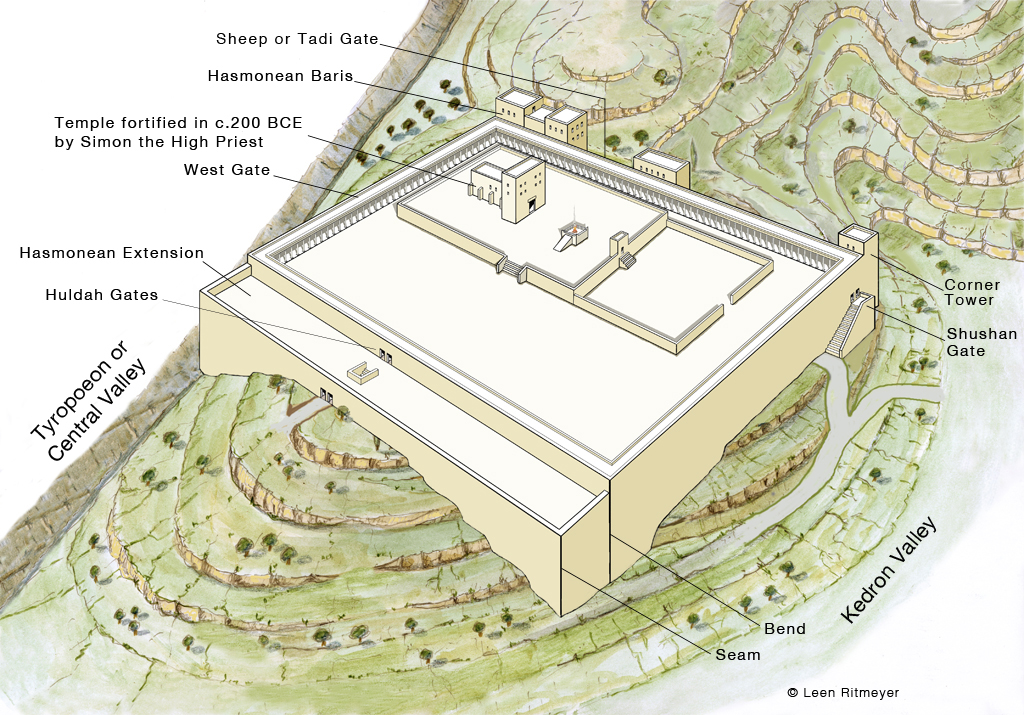
In 141 BC, Simon Maccabaeus expelled the Seleucids and demolished the Akra. He leveled the hill on which it stood and upgraded the platform, extending it to the south.

Simon’s Hasmonaean extension of the Temple Mount. ©Leen Ritmeyer

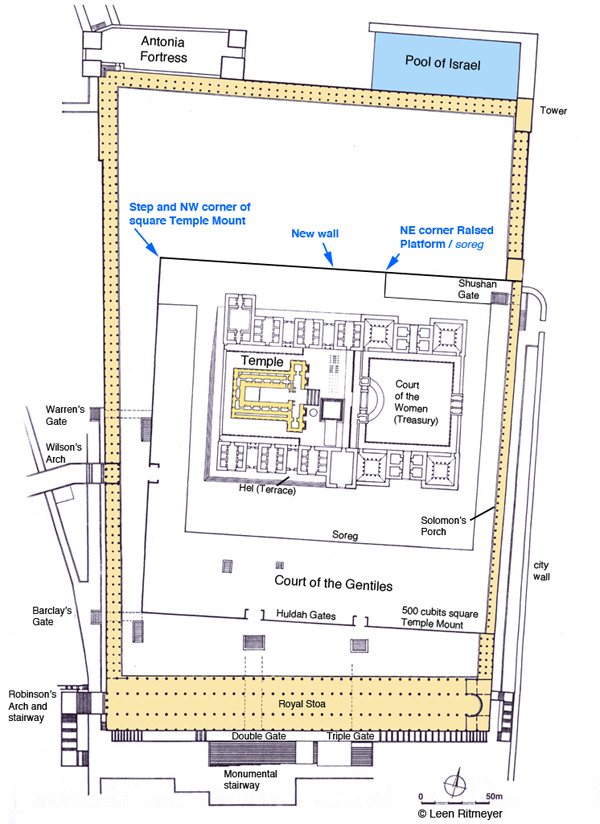
After the Romans conquered Judea, their appointed puppet ruler, King Herod, gutted the entire edifice, rebuilt the structures (but again based on the same general plan), and again extended the platform, this time to the north, south and west. The Shushan Gate remained in its previous location.

Herod’s Temple, in Jesus’ time. ©Leen Ritmeyer. Mr. Ritmeyer is widely regarded as the ultimate authority on the architecture of everything associated with the Temple Mount, and I believe that he has definitively established that the Dome of the Rock is sitting where the Holy of Holies should be.

To top

The “Tribulation Temple”?

Of course, there has been no Jewish Temple in Jerusalem since Herod’s Temple was destroyed by the Romans in AD 70. I believe that some time before the Tribulation period, the Gog and Magog war prophesied in Ezek 38 and 39 will result in the complete incapacitation of the Israeli and Arab militaries, setting the stage for a peace agreement to be administered by the Antichrist. I believe that part of the agreement will enable Israel to hastily build a very short-lived Temple that will function during the first half of the Tribulation; but this is only my opinion, and beyond the scope of this post. [Autor’s note, 8/16/2024: As the October 7 War continues to escalate and with Iran on the verge of completing their first nuclear bomb, I think there is an excellent chance that this is the early stage of God and Magog. “Even so, Lord Jesus…”]

To top

Ezekiel’s “Millennial Temple”

In 573 BC, Ezekiel was given a vision of a new Temple to be built in Jerusalem. He records that vision in great detail in chapters 40 and following of his prophetic book. In an excellent 20th century book entitled Messiah’s Coming Temple, John W. Schmitt and J. Carl Laney, analyze both the design of this temple and the use to which it will be put. It bears a superficial resemblance to previous Temples, but is by far the largest, and in even some of the “essential characteristics”, it differs from them in ways that do not correspond to Jewish law. This is because its purpose will be different in many respects, as outlined in the Schmitt/Laney book. The three outer gates on the model pictured below are, from the right, the north, east and south gates. By the time this Temple is built, I believe there will be no trace left of the present Temple platform or the Golden Gate.

Model of the Millennial Temple, ©John W. Schmitt

To top

The “Golden Gate”

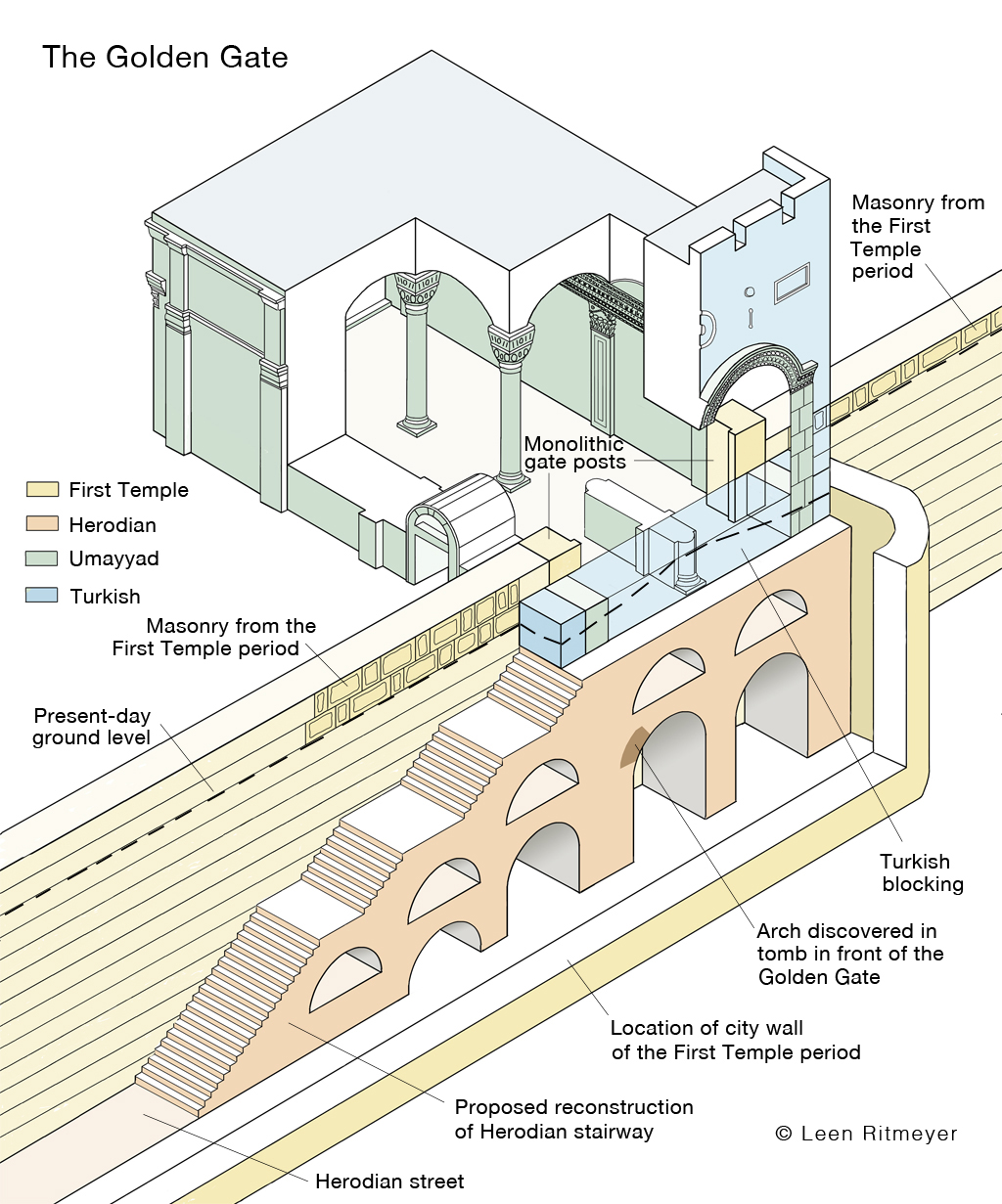
All versions of the Temple faced east, with an eastern door, or gate. All were surrounded by one or more courtyards, and each of those had an east-facing gate. The preexilic East Gate, the postexilic Shushan Gate, and the present Golden Gate are all apparently at the same location in the eastern wall. The “monolithic gate posts” shown in Ritmeyer’s diagram, below, were most likely the lentils of the Shushan Gate so, though somewhat elevated, the Golden Gate, probably built in the 7th Century under Umayyad rule, incorporates the earlier gates. An arch covering a mass grave was discovered below the gate in 1969, and for a time it was thought to be the actual Shushan Gate arch. Instead, it appears that it was part of a staircase connecting the elevated gate with the ground level below.

The Golden Gate, architectural drawing. ©Leen Ritmeyer
The back side of the Golden Gate, from the Temple Mount platform. The doors lead into a quadruple-domed chamber. ©Ron Thompson 2008

To top

Questions and answers about the Golden Gate

To the best of my ability, I will now respond to the list of questions mentioned at the top of this post.

Is the Eastern Gate the same as the Beautiful Gate of the Gospels?

And a man lame from birth was being carried, whom they laid daily at the gate of the temple that is called the Beautiful Gate to ask alms of those entering the temple.
—Acts 3:2 ESV

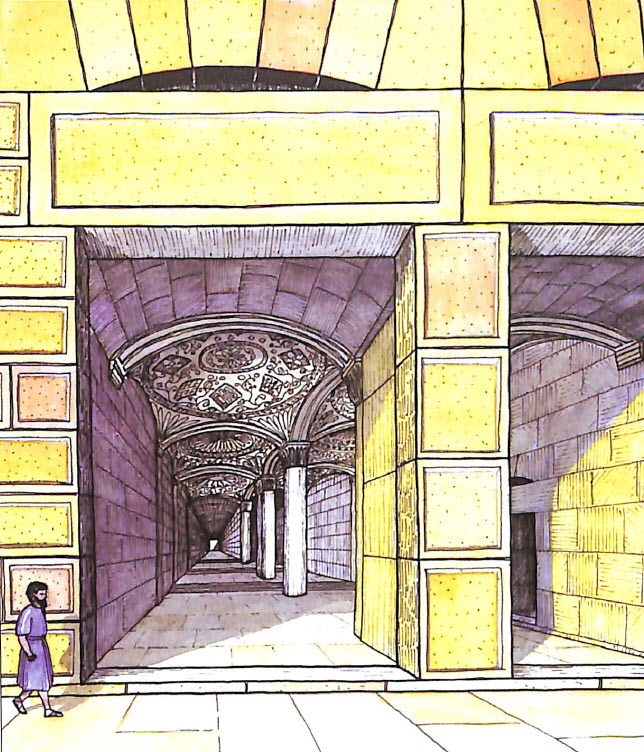
It is not credible that beggars would seek alms at a gate that was used only by priests, and that only rarely. Nor is it likely that the Beautiful Gate was the ornate, nearby Gate of the Pure and Just, the eastern gate of the Court of Women; that gate was only for VIPs, and we know that they tended to be stingy. I believe, along with many, that it is the Double Gate on the south side of the Mount, with its beautiful domed passage through to the interior Hulda Gate. That gate would see not only the largest crowd, but probably the most generous.

View through the Double Gate from the porch on the south side of the Temple Mount. The Gate is now sealed and the interior is part of the al Aqsa Mosque complex, off limits to non-Muslims. ©Leen Ritmeyer.

To top

Is it true that Muslims sealed the gate and established the cemetery in front of it in order to prevent the Jewish Messiah from entering through it?

More or less. When the Ottoman Sultan, Suleiman I, learned that Jews and Christians expected the Jewish Messiah to be led onto the Temple Mount by the Prophet Elijah, he ordered that it be permanently sealed, in AD 1541. Knowing that Elijah would not defile himself by passing through a cemetery, he ordered that one be established outside the Gate. Later, plague victims were buried in a mass grave at the foot of the Gate.

To top

Is it true that Jesus entered Jerusalem through this gate on the first Palm Sunday?

The answer is, no, in part because the Shushan (Susa) Gate was never open to the general public. The sages of the Mishnah pretty much ignored Herod’s extensions to the Temple Mount, so when they wrote about the gates, they were referring only to the gates giving access to the 500-cubit square platform. According to them, the Temple Mount gates were used as follows:

A. Five gates were in the [wall of the] Temple mount:
B. two Hulda gates at the south, serving for entry and exit;
C. Qiponos [Kiponus] gate on the west, serving for entry and exit;
D. Tadi gate on the north, serving no purpose at all;
E. the Eastern Gate—
F. on it is a picture of the Walled City of Shushan—
G. through which the high priest who burns the red cow, and the cow, and all who assist in its rite, go forth to the Mount of Olives
[M. Par. 4:11.]
—Middot 1:3 MISH-N

Another Mishnah tractate indicates that the scapegoat, (the goat for Azazel, the devil), was also led through this gate each year, on Yom Kippur.

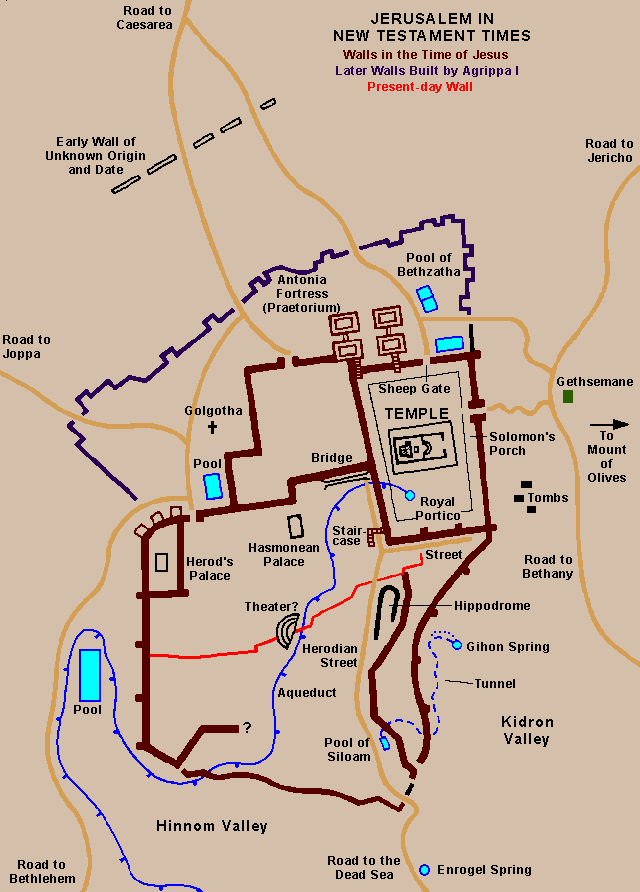
Most Internet maps showing Jerusalem in Jesus’ day indicate a switchback road from the Kidron Wadi, ascending to the eastern gate. If that road existed at all, I think it would have been for ceremonial or maintenance use only. Yet another tractate indicates that an arched causeway crossed the Kidron between the gate and the Mount of Olives where the red heifer ceremony was conducted. In any case, the Shushan Gate would have been inappropriate for access to the city, because pack animals and ridden animals would have to be led up the stairway to the gate, and once on the Temple Mount, they would have to pass through the outer courts and exit through another Temple gate to get to the city.

This is unthinkable! First, neither human nor animal could enter the outer gates in an unclean state. Humans had a choice of numerous mikvoth, or ritual baths, on all but the east side. Second, animals entering the court for sacrifice also needed cleansing in water, and that was done in the Sheep Pool, also known as the Pool of Israel, outside the northern wall, with no access to the Eastern Gate. Finally, the common pack and ridden animals were donkey, horse, camel, ox, and occasionally cow. Of those, only the ox and cow could even be cleansed. Donkeys, horses and camels are Biblically unclean, irrespective of washing. They could never be allowed on the Temple Mount.

How, then, did Jesus enter the city? There were probably two routes in from Bethany. The map below shows the dubious switchback road, and a road to Jericho that may or may not be correct. Other maps say that Jericho travelers came in through Bethany on the road shown here. The exact location of Bethphage is unknown, but it was probably somewhere on the east slope of the Mount of Olives, roughly east of Gethsemane. I believe that another, more tortuous road, probably came around the south slope of the Mount of Offense, at the southeast corner of the map (not shown), and divided, with a branch going up the Kidron Valley to connect with the other road, and other branches leading to the southern gates to the city. If Jesus came in past Gethsemane, He would have most likely entered through the gate north of the Temple mount and passed the Pool of Bethesda and the Antonia Fortress. City streets are not shown on this map, so He would have had multiple choices once in the city. When He entered the Temple, He could have gone through the Sheep Gate on the north side or used the more traditional route of the Double Gate on the south side of the Mount.

First Century roads and gates around Jerusalem. I don’t know the source of this map, but I have little confidence in the accuracy of the roads on any similar map that I have. However, other features on this map correspond well with my understanding of the city at that time.

Whichever road He took from Bethany to Jerusalem, I think He was expected by the populace, and the crowd was alerted and waiting for Him on the west slope of the Olivet chain of hills.

Many prophecy enthusiasts point to the sealed Golden Gate as proof that Jesus entered the city by that route:

Then he brought me back to the outer gate of the sanctuary, which faces east. And it was shut.
And the LORD said to me, “This gate shall remain shut; it shall not be opened, and no one shall enter by it, for the LORD, the God of Israel, has entered by it.
—Ezekiel 44:1–2 ESV

But this prophesy refers to the eastern gate of Ezekiel’s Temple, described in Ezek 40 and following. That Temple has not been built yet and will not be built until the Millennium. More to the point, that prophecy does not point to Jesus (see below). Also, the Shushan Gate was destroyed or at least damaged in AD 70, and the Golden Gate not built on top of it until hundreds of years later. Once built, it was later sealed, then opened, then sealed permanently, but not until AD 1541!

To top

Is it true that this is the “Eastern Gate” through which the Divine Presence left the Temple, as prophesied in Ezekiel chapters 10 and 11?

Then the glory of the LORD went out from the threshold of the house, and stood over the cherubim.
And the cherubim lifted up their wings and mounted up from the earth before my eyes as they went out, with the wheels beside them. And they stood at the entrance of the east gate of the house of the LORD, and the glory of the God of Israel was over them.
—Ezekiel 10:18–19 ESV

Then the cherubim lifted up their wings, with the wheels beside them, and the glory of the God of Israel was over them.
And the glory of the LORD went up from the midst of the city and stood on the mountain that is on the east side of the city.
—Ezekiel 11:22–23 ESV

God is omnipresent, both in space and in time. As our infinite, Almighty God, He can’t be contained in a tent or a building. But because He chose to deal with humanity, as represented by the primitive Israelites, He picked a form in which to appear to them. An “interface”, so to speak. In the desert, it was “a pillar of cloud by day and a pillar of fire by night.” In the Tabernacle, and later the Temple, His “Divine Presence” was in the Holy of Holies, above the Mercy Seat of the Ark.

Chapters 8 through 11 of Ezekiel record a vision that came to him while he was sitting in his house with “the leaders of Judah”. In the vision, he was taken to the Temple in Jerusalem and shown men in leadership positions performing “disgusting” idolatrous religious rites in the Temple precincts. God then ordered a scribe to pass through the city and put a seal on the foreheads of innocents, while six other presumably angelic beings followed him and executed anyone not so sealed. The six beings were then told to set fire to the city. After the return of the scribe, God’s Sh’kinah Presence left the Temple, rose above its threshold, paused for a bit over the “east gate of the Lord’s house” (this could be the gate of an interior courtyard, or it could be the Shushan Gate), and then “stood” over the mountain on the east side of the city (no doubt the Mount of Olives).

It doesn’t matter what gate, or what mountain, because it was a vision. It was not real, and the Divine Presence left by air, not through any gate. Yet it was prophecy of something that was real, which came very soon thereafter. God withdrew His protection from the city and the Temple, and both were sacked and burned by Nebuchadrezzar’s army.

To top

Is it true that Jesus will one day enter the Temple through this same Eastern Gate, per Ezekiel chapters 43 and 44?

Then he led me to the gate, the gate facing east.
And behold, the glory of the God of Israel was coming from the east. And the sound of his coming was like the sound of many waters, and the earth shone with his glory.
And the vision I saw was just like the vision that I had seen when he came to destroy the city, and just like the vision that I had seen by the Chebar canal. And I fell on my face.
As the glory of the LORD entered the temple by the gate facing east,
the Spirit lifted me up and brought me into the inner court; and behold, the glory of the LORD filled the temple.
—Ezekiel 43:1–5 ESV

Beginning in chapter 40, Ezekiel has been once again taken to Jerusalem in a vision, but this was to show him events far in the future, at the start of the Millennial Reign. The vision shows him a new Temple, to be built presumably at the start of the Reign. In chapter 43, suddenly God’s Glory returns to the Temple, but this time through the gate facing east, not above it. The assumption that many people make is that “God’s Glory” here refers to Jesus. That is possible, but the parallels between this and the earlier vision indicate it is God’s Sh’kinah returning. The Father, not the son.

The sequence in chapter 43 is as follows: God’s Glory returns, through the “gate facing east.” God goes into the Temple itself and fills it with His Glory. Ezekiel is standing outside the Temple with the angel who has been showing him around. God calls out from inside, saying that He will now dwell with His people forever, and never again will they defile His house.

So, if it wasn’t Messiah entering through the eastern gate, is Jesus “the prince“, who is mentioned several times in the prophecy? Clearly, He is not! The prince, whoever he is and whatever his function, has sins to atone for, and evidently, he has children.

We know from other prophecies that Jesus will reign from Zion. But nowhere does scripture clearly say that He entered through the eastern gate. And incidentally, there does not seem to be a throne room in Ezekiel’s Temple.

To top


The Coming World War: Gog and Magog

Updated January 2022; original May 2015

  1. The Triggers
  2. The Deterrent
  3. The Players
  4. The Protest
  5. The War
  6. The Outcome
  7. The Timing

There are two major events on God’s prophetic calendar which could occur at any time, now or years from now. One, of course, is the Rapture. There are no other prophetic events which have to occur before the Rapture. The same can be said for the other imminent event, the War of Gog and Magog, described in Ezekiel chapters 38 and 39. It is this war that I want to discuss here, because it seems to me that all of the pieces for it are in place.

Gog and Magog, which I will refer to hereafter as, simply, The War, may happen either before or after the Rapture, but must precede Antichrist’s treaty and the Tribulation period. Why? A number of compelling reasons are proposed by Arnold Fruchtenbaum in his book, The Footsteps of the Messiah: The Sequence of Pretribulational Events. I may reprise additional reasons in a future posting, but for now I will simply say that the prophesied seven years of cleanup after the war seems to preclude any other possibility.

There are numerous geopolitical events and conditions that I saw as lining up or lined up when I first wrote this post in 2015. Now, in late 2021, not much has changed to alter my views.

To Top

The Triggers

The War will be an invasion of Israel by Russia, Iran, and a number of additional players. As most news-savvy Americans know, Iran is allied with Russia, which sends them military technology, including advanced offensive and defensive armaments.

The West has long been worried about Iran’s nuclear missile development program. Over the last decade or so, Israel has launched several limited strikes against Iranian facilities in Iran itself and in their client state, Syria. Unfortunately, serious physical and political risks prohibit them from attacking in a more decisive manner.

With all the talk about Iran’s nuclear development, relatively little has been said about their build-up of conventional forces and armaments. According to GlobalFirepower.com, as of April 1, 2015, Iran had at that time over a half million active front-line military personnel, with 1.8 million reserves and almost 40 million citizens fit to serve. They were and surely are very highly trained and well equipped. The result is that their level of aggression against other Arab states was high. They continue to flex their military muscles, with two primary ends in view: (1) hegemony in the Middle East and ultimately the world; and (2) the total destruction of Israel in the short term, and the United States eventually.

To Top

The Deterrent

The reason that The War has not yet begun is simply Eastern fear of Israel’s might, particularly with the US as her ally, along with a perennial inability of the Muslim faction in the Middle East to unite effectively in a common cause.

Clearly, the US alone is no longer a viable deterrent. Anti-Israel sentiment in our political and educational institutions and even in some American Jewish circles, has grown too strong. America is not mentioned in Biblical prophecy because we will voluntarily take no part in the defense of our allies. The EU and the United Nations will also certainly not side with Israel. I don’t believe that Iran would risk an attack on Israel on its own without first completing its nuclear program, but with Russia’s help and additional Shiite allies, there simply is no longer a viable deterrent. As for the lack of Muslim commonality, I believe that with powerful non-Muslim allies, the potential reward to Islam as a whole could at any time prove to be an overriding factor.

Players in the Gog & Magog War. Base map annotated by Ron Thompson

To Top

The Players

Ezekiel 38:2-6 lists the participants we can expect to see coming against Israel in The War:

38 Now the word of the Lord came to me, saying, 2 “Son of man, set your face against Gog, of the land of Magog, the prince of Rosh, Meshech, and Tubal, and prophesy against him, 3 and say, ‘Thus says the Lord God: “Behold, I am against you, O Gog, the prince of Rosh, Meshech, and Tubal. 4 I will turn you around, put hooks into your jaws, and lead you out, with all your army, horses, and horsemen, all splendidly clothed, a great company with bucklers and shields, all of them handling swords. 5 Persia, Ethiopia, and Libya are with them, all of them with shield and helmet; 6 Gomer and all its troops; the house of Togarmah from the far north and all its troops — many people are with you. NKJV

Nations are defined Biblically by their peoples, not necessarily by the lands that they occupy; furthermore, they are named as they were in the day of writing, and boundaries occupied by the lands and peoples must be understood to be fluid over time. One would like to say, “Magog is Russia”, and “Gomer is Germany”, as was common in the early days of American “popular prophecy”, but it just is not that simple. Modern Eurasian civilization is an incredibly complex mixture of peoples who often can only roughly be identified, based largely on archaeological and linguistic evidence. With the exception of Gomer and Rosh (see below), I am more or less inclined to stick with my conclusions from some seven years ago when I prepared the attached map.

Gog and Magog: The invading forces will be led by “Gog, of the land of Magog” (v2a). Magog corresponds roughly to the area of modern European Russia, particularly the southwest region, between the Caspian and Black Seas, including Georgia and Azerbaijan. Of course, we won’t see a war launched by “Southwest European Russia.” My assumption is that the entire Russian Federation will be involved. Gog is not a name, but rather a leadership title, like “Pharaoh.” Presumably, then, this refers to Vladimir Putin or a successor. Russia is closely allied to Iran. With extensive natural resources of its own, Russia still desires to control Middle Eastern oil and natural gas, for strategic purposes.

Rosh, Meshech and Tubal: Gog is also the “prince of Rosh, Meshech, and Tubal (v2b)”. These three names, and most of the others, can most likely be equated with some of the many nomadic tribes that over centuries swept west and south from Mongolia and the Russian Steppe regions. Meshech and Tubal constitute most of modern Turkey and are probably Scythian in origin. Though I seem to have omitted it from my map, I think that Rosh refers to the well-attested Rus people, namesakes of modern Russia, who migrated from western Russia and Belarus, southward into the Baltic regions. The peoples of the coastal areas west of the Black Sea are largely of Rus (again, Scythian) origin. European Turkey and parts of modern Bulgaria, Romania and Macedonia were known as Rus until after the fall of the Byzantine Empire to the Ottomans. From the time of the Ottoman conquests, the area has been largely Muslim.

Persia: Persia (v5a) of course refers to Iran, probably along with her client states of loyalist Syria; Hezbollah-controlled Lebanon, eastern Iraq and perhaps Yemen.

Cush: Ethiopia (or Cush, v5b) may refer to the upper Nile regions of modern Sudan, Ethiopia and Somalia, or it may refer to parts of Iraq. Or both. I believe that Cush, as referred to in Genesis 2:13, refers to the upper Mesopotamia region around the Diyala River, and that river is, in fact the Gichon, or Gihon, River of the same verse. Cush, a son of Ham, is thought to have populated a wide region of the ancient Middle East and Africa. The ancient empire of Babel, in modern Iraq, was founded by Nimrod, a Cushite.

Put: The KJV and most modern translations equate Put (v5c) with Libya; however, some authors including Fruchtenbaum claim that Libya is equivalent to “Lud”, and Somalia corresponds to “Put.” My own opinion is that Libya is primarily Put, and Somalia is part of the general region of Cush. I would place Lud in Tunisia and far western Libya.

S1cyythian Gomer?

Gomer: According to Josephus and some other early sources, Gomer (v6a), corresponds to Anatolian Galatia, in central Turkey; however, many conservative scholars have identified it with Germany, and that was the view taken by Hal Lindsey and Herbert W. Armstrong. I went with that in the original writing of this post, but I am now convinced that Gomer refers instead to the ancient Scythians, who were once united in a nomadic empire that covered much of the Steppe region north of the Black and Caspian Seas, eastwards into Mongolia, and westwards into Eastern Europe. I would surmise that the region in view here is the Islamic regions of Eastern Europe.

Beth Togarmah: The “House of Togarmah” (v6b) is located around present-day Armenia.

As you can see from this listing, all these pieces of the puzzle make total sense today, in the context of current geopolitical alignments. In fact, I would not hesitate to say that all or most of the colored regions on the map above will be included in the alliance.

To Top

The Protest

I don’t believe that the US, the EU or the UN will lift a hand to help Israel. At most, there might be a weak diplomatic protest from these entities. They are becoming more and more anti-Semitic and anti-Israel. The Bible mentions no allies for Israel, aside from Almighty God Himself! Ezekiel 38:13 hints at the only protest from Israel’s neighbors:

13 Sheba, Dedan, the merchants of Tarshish, and all their young lions will say to you, ‘Have you come to take plunder? Have you gathered your army to take booty, to carry away silver and gold, to take away livestock and goods, to take great plunder?'”‘ NKJV

Sheba was located around modern northern Yemen, and Dedan is the present Al Ula in northwestern Saudi Arabia. Tarshish, mentioned in a number of Biblical passages, is known only to be someplace in the ancient Mediterranean area “far away” from Israel. Possibly the site of Carthage, or as usually cited, Spain. The reference to its “young lions” is an idiomatic expression indicating colonies or an empire; I would speculate that it actually has in mind the Emirates of Arabia, which are Saudi and American allies, and lean towards friendship with Israel.

To Top

The War

Ezekiel 38:8-17 describes the setting and prosecution of the war:

8 After many days you will be visited. In the latter years you will come into the land of those brought back from the sword and gathered from many people on the mountains of Israel, which had long been desolate; they were brought out of the nations, and now all of them dwell safely. 9 You will ascend, coming like a storm, covering the land like a cloud, you and all your troops and many peoples with you.”

10 ‘Thus says the Lord God: “On that day it shall come to pass that thoughts will arise in your mind, and you will make an evil plan: 11 You will say, ‘I will go up against a land of unwalled villages; I will go to a peaceful people, who dwell safely, all of them dwelling without walls, and having neither bars nor gates’ — 12 to take plunder and to take booty, to stretch out your hand against the waste places that are again inhabited, and against a people gathered from the nations, who have acquired livestock and goods, who dwell in the midst of the land. 13 Sheba, Dedan, the merchants of Tarshish, and all their young lions will say to you, ‘Have you come to take plunder? Have you gathered your army to take booty, to carry away silver and gold, to take away livestock and goods, to take great plunder?'”‘

14 “Therefore, son of man, prophesy and say to Gog, ‘Thus says the Lord God: “On that day when My people Israel dwell safely, will you not know it? 15 Then you will come from your place out of the far north, you and many peoples with you, all of them riding on horses, a great company and a mighty army. 16 You will come up against My people Israel like a cloud, to cover the land. It will be in the latter days that I will bring you against My land, so that the nations may know Me, when I am hallowed in you, O Gog, before their eyes.” 17 Thus says the Lord God: “Are you he of whom I have spoken in former days by My servants the prophets of Israel, who prophesied for years in those days that I would bring you against them? NKJV

This passage describes Israel today, a peaceful nation though not at peace, alive again after nearly 2,000 years, and dwelling in their own land, in relative safety, comfort and confidence. The invasion will come from the north, up into the mountains of Israel (and Jerusalem is always considered “up”, no matter where you come from). Russia, at least, is seeking booty: oil and gas, the mineral riches of the Dead Sea, and above all, the strategic positioning of the nation at the “crossroads of the world.” The booty listed here, as well as the weapons used, are metaphorical because Ezekiel could know nothing of today’s riches and weaponry.

To Top

The Outcome

As described in Ezekiel 38:18-23

18 “And it will come to pass at the same time, when Gog comes against the land of Israel,” says the Lord God, “that My fury will show in My face. 19 For in My jealousy and in the fire of My wrath I have spoken: ‘Surely in that day there shall be a great earthquake in the land of Israel, 20 so that the fish of the sea, the birds of the heavens, the beasts of the field, all creeping things that creep on the earth, and all men who are on the face of the earth shall shake at My presence. The mountains shall be thrown down, the steep places shall fall, and every wall shall fall to the ground.’ 21 I will call for a sword against Gog throughout all My mountains,” says the Lord God. “Every man’s sword will be against his brother. 22 And I will bring him to judgment with pestilence and bloodshed; I will rain down on him, on his troops, and on the many peoples who are with him, flooding rain, great hailstones, fire, and brimstone. 23 Thus I will magnify Myself and sanctify Myself, and I will be known in the eyes of many nations. Then they shall know that I am the Lord.”‘ NKJV

God will overtly and miraculously intervene, and the invading armies will be totally destroyed. The effects of God’s wrath will be felt and recognized around the world, with Russia’s homeland itself leveled. Reading on, the mountains of Israel will be literally covered with the dead and their armaments. Seven months will be required to bury the dead and seven years to dispose of the armaments.

I believe that tremendous damage will have been done to Israel and its armed forces, but at the close of this war, the power and might of Russia and the militant Muslim countries will be at a complete end. Into this milieu, I see the rise of a world leader, the Antichrist, who will take advantage of the chaos, offering to guarantee peace to all sides. Neither the Muslims nor the Anti-Semitic West will have power to prevent him from granting Israel the right to rebuild the Temple; thus will begin the Tribulation.

To Top

The Timing

I have shown that The War could happen at any time. It may follow the Rapture, but I would not be at all surprised if it happened first, in order to give the world, and especially Israel, one final glimpse of God’s awesome power, and to give them one final chance to repent–or more likely, to demonstrate how utterly blind humanity can be!

Ezekiel 39:6b-8:
6b Then they shall know that I am the Lord. 7 So I will make My holy name known in the midst of My people Israel, and I will not let them profane My holy name anymore. Then the nations shall know that I am the Lord, the Holy One in Israel. 8 Surely it is coming, and it shall be done,” says the Lord God. “This is the day of which I have spoken.” NKJV

To Top


The Upper Room and End-Times Nuttiness

I just dug up something that I posted in early June 2014, and took down again when part of it became old news. My original post was in response to an article that was being circulated claiming that Israeli Prime Minister Benjamin Netanyahu was planning to hand control of the traditional “Upper Room” site of Jesus’ Last Supper, on Mt. Zion, to Pope Francis, presumably so that it could be developed into yet another Catholic shrine. The author of the article was enraged because he viewed the Pope to be the False Prophet of Revelation and “giving him an official seat in this most sacred of places … is the Abomination of Desolation spoken of by Daniel.” The question was posed, “Should [the False Prophet] be glorified before the nations on Mount Zion, God’s holy mountain?”

Unfortunately, in my life I have seen no shortage of end-times weirdness, and this certainly qualifies. I would call it “poorly informed pop theology.”

What made me think of this now (April 2023) is that the current Southern Baptist Sunday School quarterly includes several lessons from John’s Gospel covering parts of the Last Supper, and also a back-page map showing the commentator’s interpretation of Jesus’ movements from the Upper Room to the Cross. He shows Jesus’ trek beginning at the traditional site on Mt. Zion. I usually tend to place a lot of stock in early Christian tradition, but I’m very dubious of this one, which I discussed in more detail in my own interpretation (see Jesus’ Last Steps).

The traditional “Upper Room” This is a 12th Century Crusader structure, image downloaded from Vintage Grace, constancedenninger.blogspot.com.

Honestly, I can’t really recall much detail from the article I was responding to, and the link to it is now broken, no doubt because the particular “abomination” it warned of never happened. I am now reposting an updated version of my response, simply because there are still points to be made about the Upper Room, and Eschatology in general. For perspective, I am Premillennial, and my views presuppose a pre-Tribulation Rapture of the Church.

The Abomination of Desolation will be a desecration of the Holy of Holies in the Tribulation Temple; not of the Upper Room, as stated in the article. The majority of today’s Christians belong to denominations that are either Catholic, Orthodox, or Reformed, and most of those teach that God has permanently turned His back on the Hebrew people. This is a characteristic of Covenant Theology in general, which I suspect is the reason the article elevates the Upper Room in significance, at the expense of the Jewish Temple.

Any suggestion that the prophesied Abomination would pertain to any strictly Christian holy site, like the Upper Room, is bogus. The end-time prophesies, and the Tribulation itself, are related wholly to Israel and to Gentile nations, not to the Church and New Testament Christianity. By the time of the Abomination, the Church will have been Raptured. Any believers present on earth as the Tribulation period advances will be worshiping in a totally Jewish context.

The Abomination of Desolation spoken of by Daniel, Jesus, Paul—and of course John in Revelation—referred to end-time events. It was prefigured during Intertestamental times by a similar Abomination perpetrated by the Syrian king Antiochus IV. It is not uncommon in history to see prophesied events prefigured by earlier events. Prefiguration is illustration. Because Antiochus defiled the Most Holy Place in the Jerusalem Temple, we are strengthened in our understanding that it will be the Most Holy Place in the Jerusalem Temple that Antichrist will defile.

To state it again, the Abomination will be perpetrated by Antichristnot the False Prophet. Messiah ritually cleansed the Temple when He drove out the moneychangers. Antimessiah will defile it.

The Upper Room shrine is one of the most poorly attested of the ancient holy sites. The room shown in the photo above is Byzantine, and the most that can be said about it is that it may be built on or near the original site of the actual Upper Room. Even more dubiously, the ground floor of the same building is also said to sit on the tomb of King David. This is way, way down the scale of likelihood!

Mt Zion, where the shrine is located, is not even “God’s holy mountain” at all! In Bible times, “Mt. Zion” referred to Mt. Moriah, where the First and Second Temples stood and where previously God directed Abraham to sacrifice Isaac. All Biblical references to Zion refer to Mt. Moriah. In Byzantine times, probably due to confusion, the name “Zion” became connected instead to the “Western Hill” area (the Upper City) between the Tyropoeon Valley and the Hinnom Valley. This area, as well as the Bezetha Hills to the north, were first built up by King Hezekiah, in order to accommodate a huge immigrant population from the region of Samaria.

Before I leave that subject, the so-called “Ten Lost Tribes” were never totally lost. After the conquest of the Northern tribes by Assyria, hordes of upper- and middle-class Jews were exiled to other Assyrian conquests. Many peasants were left behind to share the land with conquered peoples from elsewhere that were resettled there. Many of those intermarried to produce the mamser (“bastard”) Samaritan population later despised in Judea. But shortly before the Assyrian conquest, many well-to-do northerners fled to Judea. The size of Jerusalem doubled as a result of that influx. In the First Century, this region was populated largely by aristocratic Sadducees and Roman officials—hardly a holy mountain!

Contrary to the famous, controversial claim by the late Jerry Falwell, Antichrist will not be Jewish, in my understanding—but the False Prophet will be. I base this on my strong belief that in prophecy, “the sea” usually, if not always, refers to the masses of non-Jewish people surrounding the Holy lands, and “the Land” refers to the lands given by God to His people. Antichrist is “the beast from the sea”, and the False Prophet is “the beast from the land.” To my knowledge, no Pope has ever been Jewish!

Reading in the Pope as the False Prophet, I’m sure, comes easily because Premillennialists have long assumed that the “Great Whore” of Revelation is the Catholic Church, or some form of apostate Christianity. Catholicism seems to fit the metaphor because to Protestants it incorporates many syncretistic rituals and beliefs. On the other hand, history now suggests another possible identity of the Harlot of Revelation: Islam. Militant Islam is a whorish religion in that it insists on an illicit union between false religion and the state, and I believe it to now be a far more powerful entity than Catholicism or the apostate Church.

That is not to suggest that the False Prophet will be a Muslim. Early in his regime, Antichrist will cozy up to all religions, but his own religion, and later the only one allowed, will be worship of him. The False Prophet will ultimately be a prophet of only that one religion, which will probably have little or no liturgy or theology. He will be more of a chief of staff or press secretary by then.

Finally, I am puzzled by the outrage in the article. Surely God’s plan is the best plan! Why not say, with the Apostle John,

[20] He which testifieth these things saith, “Surely I come quickly. Amen. Even so, come, Lord Jesus.”
—Revelation 22:20 (KJV)

The Fall Feasts and the Rapture

Posted on:

Modified on:

  1. Dating Three Key Events in Jesus’ Life
  2. The Fall Feasts
  3. The Days of Awe
  4. The Day of Trumpets
  5. Extension of the Days of Awe
  6. The Baptism and Temptation of Jesus
  7. The Day of Atonement
  8. Conclusion

This post was first published over 10 years ago but recently got a major overhaul. First, because my own style has changed a bit over the years; but also, because I’ve changed my mind about one related issue, which I’ll discuss below. This is a good time for an update because it is now the middle of the Hebrew month Elul, and that is the temporal setting of my main topic here, the Fall Feasts.

Fig. 1: The Seven Principal Feasts, as outlined in Leviticus 23, ©Ron Thompson

To Top

Dating Three Key Events in Jesus’ Life

I started this edit by setting a time frame for Jesus’ First Advent, which I date in the following short table. Here I have used the Gregorian calendar for the year, because that is more identifiable to most of us, but I’m taking the month and day from the Hebrew calendar, because annual events are Biblically fixed according to that standard and are different every year by the Gregorian and earlier Julian calendars.

EventAgeHebrew DateGregorian Year
BirthTishri 154 BC
Baptismabout 30 yearsElul 1AD 26
Crucifixionabout 33 yrs., 6 mos.Nisan 14AD 30

Here are some of the factors I considered in composing this table:

  • The Biblical feast days commemorate important Jewish historical events, celebrate the annual agricultural cycle, and prophesy about Messiah’s life on earth, in both of His advents.
  • I am convinced that the Jewish principal feasts, as commanded in Leviticus 23, provide a totally reliable outline of important events in Jesus’ life, as shown in the last column of Figure 1, above. Events highlighted there in peach occurred during His first advent, on the actual feast days shown. Events highlighted in blue will occur during His second advent, again on the actual feast days shown.
  • I’m very confident that Jesus’ birth was on Tishri 15, the first day of the Feast of Tabernacles, Sukkoth. Not in December, on a date with absolutely no Scriptural support (but with a pagan connotation!); but rather in a September/October timeframe corresponding to Jewish celebration of the time that God previously “tabernacled” with His people during their 40 years of wilderness wandering. With Jesus’ birth, once again God was living among His people.
  • The year of Jesus’ birth has been disputed during my entire lifetime. There are always unresolved arguments about when Herod died, when Quirinus was governor of Cilicia/Syria, and what year a lunar eclipse hit the region, all of which are applicable. The most commonly cited estimates that I’ve seen place Jesus’ birth in 4 BC, though dates ranging from 1 through 6 BC are also commonly mentioned. I’m sticking with 4 BC here, because it fits well with the other two dates in my table.
  • Luke 3:23 states that Jesus was “about thirty years of age” when He began His ministry. Fall of AD 26 is about thirty years after the autumn of 4 BC. In fact, if His ministry began on Yom Kippur (see below), and that was the last day of His 40-day “wilderness fast and temptation”, then He was just five days shy of 30 years old.
  • His baptism by John was 40 days before Tishri 10, which is the Day of Atonement, Yom Kippur. I’ll explain the 40-day offset below, but it culminates with Jesus on the pinnacle of the Temple, defying Satan, on Yom Kippur, in full view of many thousands of worshippers on the plaza below.
Fig. 2: The late Alec Garrard, facing “south”, posing in his backyard shed model of Herod’s Temple. The parapet in the lower right corner overlooks the Kidron Valley, and as the highest point on the Temple Mount walls, it is thought by many to be the “pinnacle” mentioned in Scripture. I personally suspect that the somewhat lower parapet to the left, more commonly known as the Place of Trumpeting, might be the actual pinnacle of Scripture, since it is far more visible from the streets below. Photo from The Miniature Engineering Craftsmanship Museum.
  • His crucifixion was on Nisan 15, the first day of the Feast of Unleavened Bread, Yom ha-Bikkurim, not on Nisan 14, the day of the sacrifices.
Fig. 3: Jesus’ Crucifixion Timeline, showing in green what I consider to be the correct dates for each phase, on both the Jewish and Gregorian calendars. The vertical gray bars (not to scale) represent the evening twilight periods between Jewish dates (see Fig. 4). ©Ron Thompson
  • The year of Jesus’ crucifixion, shown here as AD 30, was calculated by me, using NOAA (National Oceanic and Atmospheric Association) New Moon Tables, which were prepared with historic ocean tides in mind. Every published Biblical chronology that I’m aware of puts the crucifixion in AD 33, but they are all based on an incorrect interpretation that insists He was crucified on Nisan 14. With a correct understanding of the timings of Passover Week which (thanks to my traditional presuppositions) it frankly took me many years to achieve, it is clear that Jesus was crucified on Nisan 15.

9/5/2023 addition – When I was working on my August update last week, I completely forgot to add one other crucial piece of evidence:

1 In the fifteenth year of the reign of Tiberius Caesar, Pontius Pilate being governor of Judea, and Herod being tetrarch of Galilee, and his brother Philip tetrarch of the region of Ituraea and Trachonitis, and Lysanias tetrarch of Abilene,
2 during the high priesthood of Annas and Caiaphas, the word of God came to John the son of Zechariah in the wilderness.
—Luke 3:1-2 ESV

Leaving Tiberias until last, here are the tenure years of the leaders mentioned (all are 1st Century AD): Pilate, 26–36; Herod (Antipas), 4–39; Philip, 4–34; Lysanius, unknown; and Caiaphas, 18–37. Annas was High Priest during the period 6–15 but was the real power in the Temple during the tenure of Caiaphas, his son-in-law, 18–37.

For the purpose of dating the text, only Tiberias‘ rule is useful. Many historians and Biblical commentators date Tiberias’ accession to the time of Augustus’ death. That puts the timing of Jesus’ baptism in the year AD 29, which would pose a problem for my proposed dating. I don’t think AD 29 is correct, because it was common for many, possibly most, ancient rulers and their chroniclers to ambitiously include years of coregency in citing tenure of rule. Tiberias was coregent with Augustus starting in either AD 11 or 12. AD 11 fits perfectly with my AD 26 date for Jesus’ baptism.

I find that I am not alone in recognizing this discrepancy. The well-respected commentary Jamieson, Faucett & Brown, for example, states that:

the fifteenth year of Tiberius — reckoning from the period when he was admitted, three years before Augustus’ death, to a share of the empire [results in a date for the events of Matthew 3:1 of] about the end of the year of Rome 779, or about four years before the usual reckoning.

“The usual reckoning” is AD 30. The traditional date for the founding of Rome was 753 BC, which makes “the year of Rome 779” equivalent to AD 26.

Fig. 4: Explanation of how Jewish days traditionally begin and end. ©Ron Thompson

Please refer to Figures 3 and 4, above. The Passover sacrifices were killed on Nisan 14, then consumed during the Seder, which began that evening at dusk. Jesus and His 12 apostles celebrated the Seder until late, as customary, then joined with the Hallel singing outside at midnight, and afterwards walked to Gethsemane, where Jesus was arrested. His trials were conducted during the early morning of Nisan 15, and He was crucified and buried that day. That was on a Friday, and the only year within a reasonable range with a Friday on Nisan 15 was AD 30. I am very confident that this scenario is correct!

Fig. 5: An April 2024 calendar showing parallel Hebrew dates on the right. This clearly demonstrates that the 8-day Passover celebration (7 days in Israel) begins on Nisan 15. Jewish Time®, by Calendar Maven
  • Most scholars think that Jesus’ ministry lasted around 3½ years, based on the number of Passovers He seems to have attended during that time. I agree.

To Top

The Fall Feasts

This month shall be to you the head of the months; to you it shall be the first of the months of the year.
—Exodus 12:2 (The Complete Jewish Tanach)

Nisan 1, in the Spring, is the Jewish religious New Year. Jews today, though, celebrate the civil new year, Rosh Hashanah, which is six months later, on Tishri 1.

Most of the modern world celebrates the new year with revelry. Not so among devout Jews in 1st Century Judea, because Tishri 1 is also the date of Yom Teruah, the Day of Trumpets. This important feast day heralds God’s judgment of His chosen people for their deeds, both good and bad, committed during the preceding year.

As such, the mood during the entire ten-day period through Yom Kippur, the Day of Atonement, on Tishri 10, is somber and introspective. There is prayer, fasting, ritual immersion (baptism for purification), and general spiritual misery and mourning. No weddings or other celebrations are permitted.

Once Yom Kippur has passed, the mood shifts. There is spiritual relief, and a 5-day period of relaxed preparation, followed by the joyous eight-day celebration of Sukkoth, the Feast of Tabernacles.

To Top

The Days of Awe

In the rest of this post, I will concentrate on two of the fall feasts in particular: The Day of Trumpets and the Day of Atonement. These two feasts, and the 10-day span of time connecting them, is known as Yamim Noraim, the ten “Days of Awe”. This somber period, as described above, is devoted to sincere individual and national confession of sins, and to t’shuvah, or repentance.

Fig. 6: The Days of Awe, Yamim Noraim. ©Ron Thompson

To Top

The Day of Trumpets

Rosh Hashanah, also known as Yom Teruah (The Day of Trumpets), is the Jewish day for regathering. Jews believed that, on this day every year, God divided His people into three groups according to their faithfulness over the preceding year. One group was the “wholly righteous”, whose names would certainly be written in the Book of Life. A second group was the “wholly wicked”, who would be written into the Book of Death. The final group was comprised of “those in between”, whose fate would be sealed by the quality of their t’shuvah over the next ten days, with their final judgment reserved until Yom Kippur.

Fig. 7: My Judaica wall. The small shofar is from a traditional ram’s horn, used mainly in mobile situations. The large one is Yemenite, a Kudu horn. Kudu is a species of antelope found in eastern and southern Africa. Large shofarim like this are favored for fixed locations, like the Temples of Israel, or modern synagogues. The lampstand is a hanukkiah, used ceremonially in Hanukah celebrations, which require 9 candles. If it had only 7 branches, it would be a menorah. Photo ©Ron Thompson

What prompted me to revise this post was that, in the original version, I said of the above viewpoint, “this doctrine is certainly not Biblical”; however, I have mostly changed my mind about the books, though I think that the Jewish perspective on them may be a bit skewed. I have recently been introduced to the works of Michael S. Heiser, and what he called the “Deuteronomy 32 worldview” (see Gods and Demons). He addressed this subject in ways that I had not previously considered.

There are, in fact, eight New Testament references, mostly in Revelation, to the “book of life“, and many Old Testament and intertestamental references to heavenly “books” and “tablets” that are clearly connected. I assume that these conceptual records are metaphorical, considering that God is God, and doesn’t need a physical database to remember what He needs to remember. Heiser makes sense when he suggests that our sins are recorded in one book, and our salvation in another. If (and only if) we are not listed in the second, then we will be judged by what is recorded in the first. There may be a “book of death“, too, that renders some ineligible for salvation. Regarding the latter, see, for example:

[31] Therefore I tell you, every sin and blasphemy will be forgiven people, but the blasphemy against the Spirit will not be forgiven.
—Matthew 12:31 (ESV)

Whether or not the doctrine of these books is valid, the fact that the holiday recognizes a separation of people from people is very significant since it prophetically depicts the regathering of God’s people on the coming day of Rapture:

[16] For the Lord himself shall descend from heaven with a shout, with the voice of the archangel, and with the trump of God: and the dead in Christ shall rise first…
—1 Thessalonians 4:16 (KJV)

In light of 1 Thes 4:16, the blowing of the trumpet (actually, a shofar, or ram’s horn) on Yom Teruah is particularly interesting. The shofar (accompanied by metallic trumpets in Temple days) was blown at mid-morning after the morning (Shacharit) prayers, in three series of four distinctive notes: tekia (“blast”); shevarim (“broken notes”); teruah (“shout”—thought of as “the shout of an archangel”); and tekia gedolah (the “great blast”). The first series is tekia, shevarim, teruah, tekia, repeated three times. The second is tekia, shevarim, tekia, repeated three times. The final series is tekia, teruah, tekia, repeated three times, followed immediately by tekia gedolah, referred to in 1 Cor 15:52 as “the last trumpet”.

[52] in a moment, in the twinkling of an eye, at the last trumpet. For the trumpet will sound, and the dead will be raised imperishable, and we shall be changed.
—1 Corinthians 15:52 (ESV) emphasis mine

To Top

Extension of the Days of Awe

Since long before Jesus’ day, the Days of Awe have, in practice, begun thirty days before Yom Teruah, on the first day of the Jewish month Elul. T’shuvah (repentance) is much too important to put off until the last minute, so the Rabbis decided that forty full days should be devoted to it, rather than the ten required by Torah.

On Elul 1, Jews would flock to the mikvot (baptisteries) of the Temple and synagogues, and to the “living waters” of streams and rivers like the Yarden (Jordan), to immerse themselves for ritual purification. That would then be followed by forty days of prayer, fasting and introspection. In the years preceding AD 30, it seems that many had become preoccupied with the politics and woes of the Roman occupation, and such customs were being neglected. Into this scene stepped Yochanan, who we now call John the Baptizer, calling Jews to baptism and t’shuvah.

To Top

The Baptism and Temptation of Jesus

[13] Then Jesus came from Galilee to the Jordan to John, to be baptized by him. [14] John would have prevented him, saying, “I need to be baptized by you, and do you come to me?” [15] But Jesus answered him, “Let it be so now, for thus it is fitting for us to fulfill all righteousness.” Then he consented. [16] And when Jesus was baptized, immediately he went up from the water, and behold, the heavens were opened to him, and he saw the Spirit of God descending like a dove and coming to rest on him; [17] and behold, a voice from heaven said, “This is my beloved Son, with whom I am well pleased.”
—Matthew 3:13–17 (ESV)

I believe that the events of Mt 3:13-17, describing Jesus’ baptism and anointing by the Holy Spirit, took place on Elul 1, conforming to the current tradition. As to the year, I lean towards AD 26, as stated above. If that year is off, I’m still 100 percent sure of the Hebrew month and day.

Fig. 8: The Jordan River today, due east of Jerico. Scripture places Jesus’ baptism at Bethany on Jordan, no doubt referring to the east bank of the oxbow, close to the village. From Google Earth.

Though of course He was sinless, His baptism, followed by forty days of prayer and fasting, were consistent with and required by the customs of the season.

More importantly, the temptation and His response were theologically vital. Jesus was “the Second Adam” (see The Two Adams). The first was created sinless, but when tempted by the “lust of the flesh, the lust of the eyes, and the pride of life”, failed and brought sin to the world. The same tempter and same temptations came to Jesus in the wilderness: lust of the flesh (stones to bread); lust of the eyes (the kingdoms of the world); and pride of life (rescue by angels in the sight of all Israel). Jesus did not fail, and brought redemption to the world.

Matthew presents a different order for the temptation, which is not a problem because chronological order was not strictly important in the literature of the day, but I’m certain that “pride” was last in real time, as listed by Luke.

Interestingly, that placed Jesus on the Pinnacle of the Temple on Yom Kippur:

[9] Then he [the devil] took him to Yerushalayim, set him on the highest point [Greek pterugion, literally, a “wing” or “turret”] of the Temple and said to him, “If you are the Son of God, jump from here! [10] For the Tanakh [Old Testament] says [Psalm 91:11–12],

‘He will order his angels
to be responsible for you and to protect you.
[11] They will support you with their hands,
so that you will not hurt your feet on the stones.’”

[12] Yeshua [Jesus] answered him, “It also says, ‘Do not put ADONAI your God to the test.’” [13] When the Adversary [Greek diabolos, literally, “accuser”] had ended all his testings, he let him alone until an opportune time.
—Luke 4:9–13 (CJB)

To Top

The Day of Atonement

While the Temple still stood, on Yom Kippur all the people gathered on the Temple Mount for the ritual sacrifices that would roll the sins of the truly repentant back for another year. Since there is no longer a Temple, and thus no legitimate place for blood sacrifices, the gatherings are now in the synagogues, and what is offered are “sacrifices of prayer.”

Most translations render pterugion as “pinnacle”, following the KJV. This is traditionally interpreted as the highest point on the Temple Mount or its surrounding walls, but I don’t think that this is warranted. It seems to me most likely that this is referring to the “place of trumpeting” (see Figure 2) which, by inference, was probably the parapet, or observation platform, from which the priests monitored the ritually vital sunrise and sunset every day. This high overlook was visible from the exterior streets below. If Jesus had accepted Satan’s temptation to throw Himself off and allow the angels to catch Him, all the Jewish world would have witnessed the destruction of His public ministry on the very day it began! Certainly, this was Satan’s plan!

To Top

Conclusion

I am forever thrilled at the beauty of God’s timing! I believe that many of the events connected with Jesus’ First and Second Advents actually occurred or will occur on the precise day of the Feast that pictures the event. Could it be that He will return for his Church at the exact moment of the “Last Trump” on the Feast of Trumpets (as God indeed said He would!), which is prophetic of the Rapture? Is it possible that He will return in judgment at the end of Tribulation on the Day of Atonement, the very day when God is thought to seal His judgment of His people? I am convinced it is so!

To Top