Yes, indeed it does! Contemporary scholarship is aware of many, many undeniable similarities between historical events, cultural traditions, and even cultic practices (temple construction and ritual) as recorded in the Bible and those recorded in the sometimes-earlier legends of various ancient pagan civilizations. Does this mean that the Biblical material is stolen, copied, or derived from pagan sources? Is the Hebrew Bible copycat literature? If so, should we question the Bible’s inspiration, inerrancy and authority?
The Flood Tablet. This is perhaps the most famous of all cuneiform tablets. It is the eleventh tablet of the Gilgamesh Epic and describes how the gods sent a flood to destroy the world. Like Noah, Utnapishtim was forewarned and built an ark to house and preserve living things. After the flood he sent out birds to look for dry land. Photo by Mike Peel.
Which came first?
There may be copying, but it isn’t always clear who copied whom.
Most of you will have either heard or read somewhere that the Genesis Flood story is similar to pagan legends such as the ancient Gilgamesh Flood Myth. Since “everyone knows” that the pagan work is mythological and came first, then “surely the Biblical record must be mythological as well, and so it should not be believed by intelligent people.” The Hebrew Bible is copycat literature, right? Plagiarized!
Did the Babylonian Flood Mythreally precede the writing of Genesis? The pagan myth resides primarily on Tablet 11 (of 12) of the Standard Babylonian Version of the Epic of Gilgamesh, which contains gaps (lacunae) but is the most complete version known. This version is dated to the period 1300–1000 BC. Wikipedia claims that this is hundreds of years before Genesis was written, but by conservative Evangelical dating, Genesis can’t have been written any later than around 1406 BC, 40 years after the Exodus, when Moses died. However, earlier Gilgamesh tablets dated to as early as the Third Dynasty of Ur, 2100–2000 BC seem to contain an abbreviated version of the Flood Myth.
Common Origin?
For me, it isn’t worth quibbling about who scooped the story, because the actual event preceded both the Genesis account and all the flood myths in the world—of which there are a great many. A key reason for the existence of any cultural parallelism was that the different cultures shared a common ancestry.
Although writing began to appear as early as 3200 BC, history and legends were mostly propagated by mouth until well after Ur III. Everyone on earth was descended from Noah, and the story would certainly have spread from Babel along with humanity itself.
According to Ussher, the Flood occurred about (circa) 2350 BC and the Tower of Babel c2200 BC. I think those dates may be just a bit off. History records the 1st Dynasty of Egypt beginning c3100 BC. That had to be years after the Flood, and likely years after the Tower. Sargon the Great (probably Nimrod of the Bible) began ruling from Akkad from c2350 BC, and that would necessarily be some years after the Tower dispersion.
Whatever the dates, knowledge of the Flood would certainly have persisted as cultural lore for hundreds or even thousands of years—dinner-table tales passed from generation to generation.
Perhaps as important is the possibility that the immortal “sons/angels of God” that He placed over the scattered nations would always know of the Flood and would have engineered religious observances that exaggerated their own roles in His cosmos. This is a topic that will be foreign to most of you. I wrote about it in detail in Gods and Demons. Here I will just include one relevant passage:
8 When the Most High divided the nations, when he separated the sons of Adam, he set the bounds of the nations according to the number of the angels of God. 9 And his people Jacob became the portion of the Lord, Israel was the line of his inheritance. —Deuteronomy 32:8–9 LXX-B
I would suggest that, instead of viewing such parallels as evidence that Scripture is mythical, it is more productive to view them as evidence that there may be more truth in the pagan writings than previously realized.
What constitutes a myth?
In a short blog I just released a day or two ago, titled Religion vs. Mythology, I endorsed an Egyptologist’s definition of “mythology” as allegorical stories about primordial events, which aren’t necessarily meant to be believed, but are rather intended to convey a particular worldview.
The Biblical Flood story, whether myth or history, is clearly a polemic (a “controversial argument, especially one refuting or attacking a specific opinion or doctrine”—Webster) against pagan flood mythologies. The ubiquity of the mythologies supports belief that the Flood was real. I see nothing in the Biblical story to make me think it is not historically accurate. I’ve written a number of articles on the subject (see, for example, Fountains of the Deep and Ships, Boats, Floats and Arks).
What about creation stories? Like the Flood stories, they are ubiquitous in the ancient world. We observe a universe, in which we all reside. Obviously, it exists, so that ubiquity is not surprising. I believe in causality. If something happens, including creation, then it was caused. I have way less confidence in the idea that the universe just popped up spontaneously, or that it has simply always existed, either on its own or as a bud on a multiverse that has always existed, than in the idea that it was created.
The pagan creation stories are clearly mythology. Is Genesis 1?
The Egyptian creation myth
In my article Genesis 1:1–5, Day 1, I presented an artist’s conception of the Mesopotamian version of creation and described how it also seems to picture the Genesis 1 account. One way that historians differentiate between “religion” and “mythology” is that religion is meant to be believed in all its detail, while mythology is intended to impart lessons or principles, without requiring slavish belief in the story itself. Though I didn’t word it quite this way, what I suggested was in a sense that Genesis 1 deliberately presents a mythological picture, obvious to Moses’ audience, in order to teach the superiority of the God of Israel over the gods of the pagans. By definition, that constitutes a polemic.
Here, I will go into a bit more detail on the specifics of the Egyptian version.
Egyptian version of creation. Note the vaguely organic shapes on “earth” and the stars on “sky”, with the sun suspended in “air”.
In the beginning, there was the Ogdoad, a group of eight frog-headed “primordial gods”, in four pairs (both brother/sister and husband/wife):
Hok and Hoket, whose defining attribute was Formlessness.
Amun and Amunet, whose defining attribute was Invisibility.
Kuk and Kuket, whose defining attribute was Darkness.
Nun and Nunet, whose defining attribute was Fluidity.
As a group, the Ogdoad represents a chaotic state, reminiscent of Genesis 1:2 (“without form, and void (or hidden), and darkness on the face of the waters“).
Out of this watery chaos rose a primordial hill, on which stood Atum, from whom all else arose. He created himself and is the father of Shu (air) and Tefnut (moisture).
Shu and Tefnut had two children, Geb (earth) and Nut (sky). This pair is pictured above wearing brown and blue, respectively. In some versions, their father, Shu, is jealous of the incestuous relationship of Geb and Nut and has squeezed himself in between them—”air” between “earth” and “sky.”
Moving beyond the creation of the cosmos, Shu and Tefnut have four children, the pairs Isis and Osiris (the good guys) and Seth (evil) and Nephis (good).
Genesis 1 in the Bible clearly describes the same cosmos as the Egyptian version (and those of other ancient pagan cultures). Clearly, the Bible teaches that the God we worship is Creator of all that exists. To me, that is indisputable. But at the same time, the description presented in Genesis 1 is too much like the pagan myths (but with Yahveh replacing all the pagan gods) and too little like the universe we live in to be taken literally. I would describe it as a polemic against the pagan versions, presented allegorically, like prophetic vision and Jesus’ parables.
The Bible’s use of non-Biblical sources
Still scandalized that the Bible stoops to make use of non-Biblical sources?
In the same way that modern scholarly writers frequently cite earlier sources, so did the Biblical writers. As I mentioned in some detail in Gods and Demons (under “Source Materials”), there are some 100 Biblical references to non-canonical sources actually cited by name by the Scriptural writers. A list can be found on Wikipedia.
Since few of these are now extant, you will often hear them referred to as “lost books of the Bible.” This terminology is unfortunate because it implies that they are inspired works that have somehow slipped through the cracks of history. Not so—I’m pretty sure that if God cared enough to oversee their writing in the first place, He would have protected them from loss.
But what if some of those lost writings were inspired? Then I’m quite comfortable assuming that they were written for a specific time and/or place in history and are no longer relevant. I refuse to waste my energy speculating on possibilities like that since it is all in God’s hand.
Another “but”: If inspired text references other writings, shouldn’t we consider them as inspired as well? Consider the following, for example,
[19] Now the rest of the acts of Jeroboam, how he warred and how he reigned, behold, they are written in the Book of the Chronicles of the Kings of Israel. —1 Kings 14:19 (ESV)
What this tells me is that the Biblical writers researched their material. It wasn’t merely whispered in their ears by the Holy Spirit. When Christian writers today cite Josephus, they are acknowledging that he was a 1st Century historian who had access to sources that are now unavailable. We believe that Josephus was mostly pretty accurate, so we use what he says where it makes sense, even though we know that (a) he did make occasional demonstrably incorrect statements; and (b) he did write with certain political biases, for a Roman audience. When we cite him without qualification, we are endorsing (at least provisionally) the material applicable to our own work, but not at all the rest of his writings. When a Biblical writer does the same, we aren’t to think that the source material is infallible, just that the Holy Spirit has infallibly endorsed the ideas gleaned from it.
Another use of the term “lost books of the Bible” is in reference to the so-called deuterocanonical (“second canon”) books. These include the apocryphal and pseudepigraphal books found, for example, in Catholic bibles. Also sometimes included are various “gospels” that some folks think should be regarded as canon. They are not “lost” in the sense of being non-extant. All I’ll say about these is that many good books have been written about the selection of Christian canon, and I’m happy to take the position that the Church Fathers did the best possible job in setting the official canon. Though there is much I think can be learned from these sources regarding historical and cultural issues, and common beliefs that were held by ancient peoples, I agree that they cannot be considered inerrant.
The Bible also contains a number of actual quotations from extrabiblical sources like the Book of 1 Enoch. That a non-canonical source was quoted does not mean that the source was Spirit-inspired, only that the Spirit approved the material from that source that was used by the Biblical author. That a passage from 1 Enoch was quoted by Jude and Peter likewise does not imply that the Book of 1 Enoch was inspired; but it does invest the quoted passage with a “seal of authenticity.” In other words, Jude and Peter were inspired in their restating of the quoted words.
I think that we sometimes err in not paying enough attention to such quoted material. Consider, for example,
14 It was also about these that Enoch, the seventh from Adam, prophesied, saying, “Behold, the Lord comes with ten thousands of his holy ones, 15 to execute judgment on all and to convict all the ungodly of all their deeds of ungodliness that they have committed in such an ungodly way, and of all the harsh things that ungodly sinners have spoken against him.” —Jude 1:14–15 ESV
Jude may be the most underrated book of the Bible. At first glance it seems to have a very simple theme: In times past, and still today, God condemns heresy and wickedness. We are familiar with most of the historical examples of bad behavior given in Jude. Most studies treat them as simple examples of sinful humanity. I think there is way more to it than that. Pending a future blog on the subject, I’m just going to state now that the verses quoted above can’t be understood without also reading the source material, which in this case is still available.
Before getting into this, I’ve been asked why I keep alienating my friends by harping on a version of Creationism that most of them consider to be unbiblical. I can respond to that in several ways:
First, I’m not really “harping” on it at all. This is a multipart series that I’ve planned for quite a while, to replace something I did years ago. I’ve still got two or three chapters to write before I’m finished with it. I did the same thing with my series on The Jewish Feasts.
I’ve been vitally interested in both theology and astrophysics since, literally, my pre-teen years. I write about what interests me most.
I don’t consider that one’s interpretation of Genesis 1 is a “fundamental of the faith“, but many of my friends do, and I am convinced that the currently mandatory “Genesis Flood Theory” is an unnecessary stumbling block for many lost souls.
Although many wonderful Christians would refuse to fellowship with me because I’m not a Young Earth Creationist, I don’t feel the same about them; but I suppose I’d like to convince them that I’m “righter than they are.”
As stated below, “With respect to the question of Creation, the central, foundational Truth of all Scripture is that the One, True, Eternal, Triune God, by His own power, created and sustains all else that exists in the cosmos.“
Moving on…
My views are driven by several axioms:
God is both omnipotent and sovereign, so He can do whatever He wants to do, however He wants to do it!
The Bible, as originally written, is the inerrant, irrevocable,Word of God.
The Bible we now possess (at least insofar as the accepted canonical books are concerned) is substantially the same holy Word as the originals, but subject to a very limited extent to human error in translation and interpretation.
Correct interpretation (exegesis) of Scripture requires a consistent hermeneutic, which among other factors, includes recognition that some scripture is not meant to be taken literally, as discussed in the next section in relation to The Golden Rule of Biblical Interpretation.
A consistent hermeneutic also must require recognition of the cultural background of both the writer and the ancient reader.
Though Holy Scripture is as valid and vital today as it ever was, correct interpretation demands unequivocally that modern culture and tradition not be anachronistically imposed on the writers and readers of the day in which they were written.
Because God is not a liar or an author of confusion, we must recognize that the testimony of God’s Word cannot conflict with the testimony of His Created World when both are rightly understood.
Hermeneutics and the Golden Rule of Biblical Interpretation
“When the plain sense of Scripture makes common sense, seek no other sense; therefore, take every word at its primary, ordinary, usual, literal meaning unless the facts of the immediate context, studied in the light of related passages and axiomatic and fundamental truths, indicate clearly otherwise.”–Dr. David L. Cooper (1886-1965), founder of The Biblical Research Society
The above quote is known by many expositors as “The Golden Rule of Biblical Interpretation.” I read somewhere that this has often been shortened to “When the plain sense of Scripture makes common sense, seek no other sense, lest it result in nonsense.”
Implicit in the above is the assumption that the “plain sense of Scripture” sometimes does not seem to make sense. Certainly, when that is the case, you must first question your own common sense, but that doesn’t always solve the problem.
Few conservative Bible scholars believe that every word of Scripture is meant to be understood literally.
That is troubling to many, because the alternative opens the door to subjectivism and arbitrary conclusions. Yet almost all the great conservative Bible commentators practice a hermeneutic (a set of formal principles for Biblical interpretation) that allow for non-literal text, including parables, figures of speech, anthropomorphism, poetic exaggeration, and a host of other confusing factors. Not to mention translational difficulties.
None of that subtracts from the central truth that “all Scripture is God-breathed.” It is axiomatic to me that the Bible is inerrant in its original language and the original manuscripts. Yet some folks read my opinions, especially respecting emotional themes like creation, and make snide comments like, “So you believe it’s inerrant except when it isn’t!”
So, to clarify, I don’t think there are any substantive problems with corruption of our Scriptures over the millennia. There are, however, problems with translation, but few of those are impossible to unravel, with sufficient attention to the linguistic and cultural background of the inspired humans who penned the words, and those to whom the words were written.
There are also “mysteries.” Most Evangelicals are happy to admit that Paul revealed things hidden within Scripture that were mysteries with respect to the New Testament Church. The Church itself being one of the chief mysteries! The dual advents of Messiah are another mystery now revealed. Yet many seem unwilling to consider that some things are still mysterious.
What I consider to be the biggest factor of all that contributes to doctrinal confusion and infighting in the Church is that some misinterpretations are imbedded into a nearly impenetrable wall of tradition.
Unfortunately, the reason there are so many Christian denominations in the world, and the reason they often have so much trouble getting along, is that each has its own particular list of what constitutes “axiomatic and fundamental truths.” For example, I was brought up in a “fundamentalist” sub-denomination of Baptists that teaches there is no such thing as a universal Church of all believers; only local churches are Biblical. To them this is an axiomatic and non-negotiable Truth, based in part on the simple fact that the Greek word translated “church” is ecclesia, which literally means “assembly.” After all, how can people scattered across the world and across many ages possibly assemble together?
With respect to the question of Creation, the central, foundational Truth of all Scripture is that the One, True, Eternal, Triune God, by His own power, created and sustains all else that exists in the cosmos.
That fact is stated clearly and concisely in just one verse: Genesis 1:1.
As for what that process looked like and how we should interpret Genesis 1:2–2:3, I regard that as still a mystery.
A 6,000-year-old universe and the Genesis Flood Theory of today’s Young Earth Creationists does not meet the commonsense test, not because God can’t do whatever He wants, but because the clear evidence of centuries of careful observation and analysis by very smart and dedicated professionals, both Christians and otherwise, can’t be ignored. God is not the Author of Confusion. He doesn’t plant lies in front of our face to test our faith.
Moreover, the universe is demonstrably dynamic, changing over time even as we observe. That isn’t “evolution”, it’s simply the application of forces and interactions decreed by God. We understand the physics of supernovae (the implosion of giant stars) and we observe them happening. We understand the process of star formation, and we see examples of every stage of that process. We can’t see the movement of stars and galaxies, but we can measure their movements using Doppler shift, similar to the clocking of a speeding car.
Limitations of Science
When I was young, scientific method was viewed as a simple, 3-step process:
State a hypothesis.
Form a tentative theory.
“Prove” the theory, which then becomes a law.
But so many of the “laws” found under that paradigm have been subsequently found to be limited in scope (for example, Newton’s laws of motion are now known to be invalid for very large and very small masses), that the paradigm has changed:
Now, hypotheses still become tentative theories, but once a theory has become so well proved that it is accepted as true by most authorities on the subject, it still doesn’t get promoted to “law”. That is why it is utterly meaningless to say that “The Big Bang Theory” is just a theory!
Scientists now look for certain characteristics of a theory to judge how “well established” it is:
Obviously, the more evidence supports a theory, and the less that appears to contradict it, the stronger it becomes. This evidence may be experimental, or it may be observational. If it is statistical in nature, then the results must be well within a recognized margin of error.
To be considered a truly “scientific“, a theory must be judged to be “falsifiable.” That means that for all practical purposes, if there is no conceivable way that a theory can ever be proven false, then it must remain speculative in the minds of those who are not predisposed to take it on faith. This principle is the tool of choice for those who wish to exclude all discussion of religion, or “Intelligent Design“, as an alternative explanation.
For a theory to become intrenched as factual, it is also necessary for it to successfully produce demonstrably true predictions, by means either of observation, logical arguments, or mathematics.
The strongest theories are those that can be expressed by mathematics, because mathematics is the only truly “exact science“. Two plus two always equals four in our base 10 number system. The circumference of a circle divided by its diameter always equals pi (3.1415926…) in a Euclidean frame of reference.
Proving the Bible
Something I see online over and over again online is well-meaning Christians exclaiming over interesting archaeological finds that, “They prove that the Bible is correct.” No, they don’t! Science will never prove Scripture, and that is by God’s design, because He wants us to live by faith, not by sight. The most that science can do for us is to confirm the faith that God has already supplied to us.
At the same time, if we are worried that science will contradict our faith, then our faith is weak to begin with!
God has written of Himself in both Scripture and creation. The purpose of science is to help us understand creation. Embrace it!
Moses was a prophet!
According to Scripture, Moses was the greatest prophet of all times, other than Jesus. He didn’t personally see any of the events of Genesis, so how did he know what to write? Both the Old and New Testament contain numerous references to non-canonical source writings. Moses himself references The Book of the Wars of the Lord (no longer extant) in Numbers 21:14, which recorded some contemporary events, but I know of no sources that he could have used for events prior to the invention of writing. He could have gotten his information only from God. After-the-fact prophecy, so to speak.
How was that information communicated to him? Perhaps verbally, because we know that he and God talked to each other directly. Having nothing concrete to go by, I personally assume that from Genesis 11:10 forward, Moses’ inspiration was primarily verbal.
Verses 10–32 of chapter 11 constitute one of eleven so-called toledoth in Genesis. These primarily genealogical blocks of Scripture were included by Moses and are believed to be intended as section dividers.
Because the first 11+ chapters of Genesis consist of abbreviated, flowery accounts of earthshaking historical events, I see them as poetic discourse, a different genre from what follows. For that reason, I suspect that these chapters were conveyed, at least in part, via visions or dreams. There is a theological label for prophetic visions of past events: Preterism. A “full preterist” believes that all prophecy describes the past, in effect dismissing the possibility that prophets could foretell the future. I am far, far from that position! I am a “partial preterist” in that I refuse to dismiss the possibility that God can also reveal the unseen past to his prophets.
Typically, prophets preached and reported the content of visions and dreams, but not necessarily their interpretations.
Previous posts in this series on the topic of creation
In The Hijacking of Creationism, I laid out several of the views that Evangelical scholars have historically held in order to account for the apparent ancient age (13.8 billion years) of the universe. In particular, I focused on The Genesis Flood Theory, and its popularizer, Henry M. Morris. Today, 1/10/2024, I expanded on my bio of Dr. Morris. Yes, I am a little bit brutal with him, but his writings were frequently brutal towards those who disagreed with him.
In Does Science Trump Theology? I explore the intellectual domains covered by the two disciplines, similarities in the two, and how they should work together in Bible interpretation.
In Fountains of the Deep I draw on my own geological engineering background to present what I believe to be the most likely mechanism of the Genesis Flood. This mechanism is unlikely to have caused the distortion of the earth’s surface that followers of Morris demand. Incidentally, the 13.8-billion-year age of the universe is as firmly rooted in astrophysics and cosmology as the 4.54-billion-year age of earth is in geology. One of these days I’d like to hear a Young Earth Creationist explain how the Genesis Flood accounts for the cosmologic appearance of age.
In Geology a Flood Cannot Explain I randomly describe, from my own professional knowledge, a number of well-known geological features on earth that absolutely could not have been affected by a flood of any magnitude.
Fluid Mechanics courses for civil engineers are mostly irrelevant to understanding of the Genesis Flood, because they focus primarily on hydrostatics (forces exerted by water pressure on fixed structures like dams and canal locks), and laminar flow in engineered open channels and pipes. To the extent that they cover turbulent flow in natural channels like riverbeds, the primary interest is erosion of friable soils, sands and gravels. Before erosion can occur in solid rock, weathering must first break the rock down into smaller pieces, which is a process which usually takes years, if not centuries or longer. [I explore this fact in a post, Geology and the Saudi Sinai, part of a series on false evidence for believing that “the real Mt. Sinai” is in Saudi Arabia.]
Revisiting Genesis 1
I would like to take another look at the first few verses of Genesis 1 to present some ideas that you may not have considered before.
Prologue: Gen 1:1–5
Below, I present three very legitimate translations. The first is from an Evangelical favorite, the English Standard Version (ESV). The second is from the Jewish Publication Society (JPS). The third is from a new work, The Hebrew Bible, translated by Robert Alter over a 30-year period. Alter is a modernist, and not someone I would look to for dogma or Christian commentary, but from reading his books, I am convinced that he is, to his core, a top authority on Biblical Hebrew and Ancient Near Eastern literature. I don’t believe that his translations are colored by any sectarian presuppositions, and that makes him my top comparator while trying to separate what the Hebrew Bible says from what tradition claims that it says.
1 In the beginning, God created the heavens and the earth. 2 The earth was without form and void, and darkness was over the face of the deep. And the Spirit of God was hovering over the face of the waters.
3 And God said, “Let there be light,” and there was light. 4 And God saw that the light was good. And God separated the light from the darkness. 5 God called the light Day, and the darkness he called Night. And there was evening and there was morning, the first day. — Genesis 1:1-5 (ESV)
1 When God began to create heaven and earth— 2 the earth being unformed and void, with darkness over the surface of the deep and a wind from God sweeping over the water— 3 God said, “Let there be light”; and there was light. 4 God saw that the light was good, and God separated the light from the darkness. 5 God called the light Day, and the darkness He called Night. And there was evening and there was morning, a first day. — Genesis 1:1-5 (JPS)
1 When God began to create heaven and earth, 2 and the earth then was welter and waste and darkness over the deep and God’s breath hovering over the waters, 3 God said, “Let there be light.” And there was light. 4 And God saw the light, that it was good, and God divided the light from the darkness. 5 And God called the light Day, and the darkness He Called Night. And it was evening and it was morning, first day. — Genesis 1:1-5 (Alter)
Before considering the difficulties posed by creation of light on “Day 1” (verses 3–5), we first need to consider verses 1 and 2.
Verse 1: I think that the ESV Study Bible, with a couple amendments, states the interpretive problem in verse 1 fairly well:
[Verse 1] can be taken as a summary, introducing the whole passage; or it can be read as the first event, the origin of the heavens and the earth (sometime [on or] before the first day), including the creation of matter[, energy], space, and time. This second view (the origin of the heavens and the earth) is confirmed by the NT writers’ affirmation that creation was from nothing (Heb. 11:3; Rev. 4:11). … Heavens and the earth here means “everything.” This means, then, that “In the beginning” refers to the beginning of everything. The text indicates that God created everything in the universe, which thus affirms that he did in fact create it ex nihilo (Latin “out of nothing”). The effect of the opening words of the Bible is to establish that God, in his inscrutable wisdom, sovereign power, and majesty, is the Creator of all things that exist. — Dennis, Lane T. and Wayne Grudem, eds., The ESV Study Bible. Accordance electronic edition, version 2.0. Wheaton: Crossway Bibles, 2008 (emphasis added, my additions are in brackets).
Probably half of the sources I use assume that verse 1 is a summary for what follows, ignoring the fact that none of what follows explicitly mentions the origins of the earth as a rocky planet covered by water. This view necessarily assumes that God created the individual building blocks (sub-atomic particles, atoms and molecules, and the forces that bind them) concurrently with forming them into the finished product. This is not outrageous but leads to a crucial contradiction which I will discuss below—namely that light is produced by matter, and is a manifestation of electromagnetism, which is an essential binding force.
The other half of my sources take the “first event” approach. Most of those place verse 1 on day 1. If you take it prior to day 1, then you more or less put yourself potentially in the “Gap Theory” camp, which I have occupied, but which is anathema to Young Earth Creationists because it can imply death before The Fall. I’ll save my comments on that objection for another post in this series. Unfortunately, this view is subject to the same contradiction regarding electromagnetic binding.
The ESVSB contention that “[the] Heavens and the earth … means ‘everything’” assumes that the wording of the Scripture is a merism, a figure of speech that encompasses the first element, the last element, and everything in between. This assumption is not provable, but rather can only be taken on faith—which I do. It is a figure of speech used frequently in the Bible.
The term “the heavens” is hashamayim in Hebrew. It is a plural form and is usually rendered as such in translations. Up to seven heavens were recognized in ancient literature, but most scholars today differentiate between just three heavens:
The atmosphere around and above us.
The cosmos beyond earth’s atmosphere.
The heavenly realm inhabited by God and his host.
I would rather prefer a more general statement that the term “heavens” means everything above the surface of earth: As explained below, Moses and his readers would have envisioned several elements:
The sky of air and birds.
A solid dome (the “firmament“) from which hang the suspended sun, moon and stars.
An ocean above, connected at the edges to the ocean below, and held up by the dome, (KJV, “firmament”).
The home of God and His Divine Host.
The first event view is supported in particular by the JPS and Alter translations above (“began to create”), which place verse 1 at the beginning of what might be interpreted as a string of creation events, those described in the remainder of the chapter, and anything subsequent.
Verse 2: In verse 2, there are actually four separate interpretive issues, which I will gloss over here:
“Without form (or formless) and void” and other translations, such as Alter’s “welter and waste.” The Hebrew, tohu wabohu, is linguistically of limited use to our understanding, because its usage in literary history is insufficient to allow a definite interpretation. Guesses range from “total chaos” to “undeveloped and unpopulated.” Halter deliberately chose his alliterative nouns to emulate the poetic language of the Hebrew rather than to take a position on precise meaning. Whatever the meaning here, I have generally pictured the state of the planet as an earth totally covered by water and shrouded in mist, which works very well with a Gap Theory and a flooded earth. However, I’ll mention another (better?) view below.
“Darkness.” The Hebrew choshek can mean things like darkness (perhaps because light is absent), or obscurity because light has been masked or reflected away. Again, obscurity works best with Gap Theories, but see below.
“The Deep.” The Hebrew tehom means either the deep sea, or the deep source waters of terrestrial springs which were viewed as interconnected with each other and with the sea (see Fountains of the Deep, where I discuss this in some detail).
“The Spirit of God“, “a wind from God”, or “God’s breath.” The Hebrew ruach, can mean any of these things, and probably means all of them here. See God with the Wind for an in-depth discussion.
The overwhelming problem with Light on Day 1:
The definition of light
Just what is “light”, anyway? If you think of it as simply, “the absence of dark”, then you are way off base—it’s the other way around. As a noun, “dark” denotes a concept (the absence of light), rather than a tangible thing. “Light” is something very real and specific. I suspect that all of my readers have had enough education to realize that light is electromagnetic energy. All of you will no doubt have seen some version of a spectrum diagram:
The problem is that most folks have a tendency to think of visible light as something that is fundamentally different from the rest of the spectrum, because our vision only detects wavelengths in a narrow band between about 400 and 700 nanometers. But the wavelength of electromagnetic energy is really an expression of how energetic the wave is. X-rays and gamma rays are fundamentally the same thing as visible light, just more energetic. Radio waves, radar, and microwaves are fundamentally the same thing as visible light, just less energetic. All of these things are emitted by matter, travel at roughly 186,000 mps as waves, and are detected in the form of massless particles called photons.
So, if God literally created light on a literal Day 1, did He create just visible light, or the entire spectrum? If He just created visible light, then I have to ask, “visible to whom?” Humans all differ slightly in their light sensitivity. Bats, most amphibians, and many fish and insects see well into the infrared. Many species of insects, fish, and even mammals (including dogs and cats) can see into the ultraviolet. Using instrumentation, humans can now “see” all wavelengths of electromagnetism.
And what do we even count as visible to a normal human? Sunlight reaching Earth’s surface on a sunny day is around 52 to 55 percent infrared, 42 to 43 percent visible light, and 3 to 5 percent ultraviolet. A biologist might say that “visible” means detectable using only our eyes, but we also detect longer and shorter wavelengths with other organs.
On the long-wave side of the spectrum, infrared (“below red”) is felt as heat on our skin; microwaves can penetrate skin, and if powerful enough, could even boil the water in blood and cells near the surface; and even longer UHF and VHF radio waves have been documented to set up resonant vibrations in structures like teeth with metallic fillings.
On the short-wave side of the spectrum, ultraviolet (“above violet”), which can cause sunburn and later melanoma; x-rays penetrate completely through our bodies and can cause damage to inner organs over time or can cause or kill cancers; unshielded gamma rays can cause catastrophic damage to human bodies.
Contrary to the diagram above, cosmic rays are not primarily light or even electromagnetic energy in any sense, but rather are characterized by alpha and beta particles (helium nuclei and protons) traveling at close to the speed of light, and thus possessing some of the same quantum properties as light.
The source of light
Light that reaches us from the sun is largely in the range of visible and near-visible light, but it starts out in the sun’s reactive core as gamma rays, high energy (short wavelength) byproducts of nuclear fusion. These gamma rays begin a “random walk” out of the sun’s core and through its conduction zone, repeatedly colliding with particles in the dense surrounding soup of hydrogen and helium ions, changing directions randomly, over and over again, and gradually losing energy (thus shifting to more benign longer wavelengths). Eventually, after something like 100,000 to a million years, they reach the sun’s surface and fly off in all directions at the speed of light, 186,282 miles per second.
Structure of the sun, from theuniverse-michael-lawson.weebly.com
An even more important consideration (mentioned above) is that, in the universe God created, electromagnetic energy (let me just call it “light” here, for brevity) is always associated with matter. There are a number of ways that light can be generated, but it always begins with matter. I’ll mention a possible exception below, under the heading “sh’kinah“, but for now, I’m talking about the light that all of us experience.
It is worth mentioning that all light is invisible until it strikes a detector. If you are in an empty, dark place and someone shines a flashlight past you, you may see the glowing source, but you will not see any trace of the beam, which consists only of a jiggling electromagnetic field, unless it strikes an air or dust molecule and reflects into your eye.
Most light in the universe is generated by stars like our sun, but all matter generates light, usually much less energetic than stellar gamma rays but still light, even if it is well below our range of sight. The human retina is populated by several types of light receptor: “cones” for detecting color when the light intensity is strong enough, and “rods” for detecting black and white in low light situations. My cat, Anna, can see me very well in a darkened (but not totally dark) room, because her retinas are mostly populated by “rods”.
Matter that is not heated to a glow, still generates heat, and that heat energy is radiated as light in the infrared region. If raised to a high enough temperature, the energy of the radiated light will eventually climb into the visible region, first red, and when hot enough, all the way to the blue side of the spectrum.
[Note: This is why the red and blue markings on faucets and automobile heater controls are so confusing and counterintuitive to me. To any scientist and most engineers, it should be red for cold and blue for hot, in spectral order.]
I took the photo of Anna, below, using an infrared sensor. The color isn’t real. The sensor’s pixels map the wavelengths of the infrared light in the scene and use an algorithm to determine the temperature that the pixel is “seeing”. False color is then added to encode it, as per the scale on the left. The warmest parts of the photo are her eyes, about 96°F. Next warmest is her face, followed by her tummy and legs. Her cold nose and the thick fur on her back and tail matches the cooler temperatures of the table she’s lounging on and the room to the right. The blue areas, our front door and glazed side panels, are quite cold. It was winter, and the windows here are single-glazed and very poor insulators.
In this photo, the small amount of heat registered from the window is a combination of heat from Anna and the room itself, being reflected back towards my sensor, heat generated by the window glass itself, and heat from outside conducted (see below) through the glass and woodwork.
All matter generates heat provided that its temperature is above absolute zero (−459.67°F). In the presence of any heat at all, the sub-atomic particles in atoms and molecules vibrate. The quantum mechanical mechanism causing this is beyond my scope here, but that vibration causes a release of energy in the form of heat. Heat energy is propagated in one or more of three ways:
Conduction – If two objects are touching each other, then the heat stored in the hotter will flow to the cooler (that’s the “first law of thermodynamics”).
Convection – In a gas or liquid, heat energy from a hot container will flow to the fluid by conduction and then the heated fluid will rise, setting up a convection current in the liquid.
Radiation – Whether or not either of the above occur, there will always be some heat flow in the form of electromagnetic radiation. To me, that is light, whether I can see it or not!
Absolute zero is theoretically unobtainable, because an object at absolute zero would cease all motion, including vibrations within the nucleus and movement of the electrons. All liquids and gasses (including the atmosphere) at this temperature would immediately solidify and collapse to a dense, inert lump, which I don’t believe describes the condition of earth in Genesis 1:2.
This is why I think that it would make no sense for light to have been created subsequent to the creation of matter in Genesis 1:1, whether you interpret that as a summary or a first event.
Since light is so intimately connected with matter, it is unthinkable to me that light would have come first.
Verses 4 and 5 are also difficult for me to accept in a literal sense. “Day and night” are conceptual nouns, and night simply refers to the shadow caused on one side of earth as it rotates away from the sun. But the sun isn’t created until Day 4. Some would say that this verse is where God created time. But time, as now understood by physicists, is part of the fabric of the universe itself (see Implications of God’s Omnipresence and Eternity in Space-Time).
sh’kinah
God’s own sh’kinah is also a light source, and one not connected with matter. It is the light source that led the Israelites out of Egypt, that lit up the top of Mt. Sinai, that resided in the Holy of Holies in the Tabernacle and later the Temple, and that was described in the visions of several of the prophets.
Some commentators have suggested that God’s sh’kinah is the source of the light that God “created” on Day 1. This is absolutely a possibility, but if true, even if it functioned in exactly the same way as the light that we are familiar with, is it meaningful to say that God “created light” on Day 1 if the light he created was fundamentally different from the light that we know? On Day 4, God assigned the responsibility for light-bearing to the sun, moon and stars. In any case, I think the sh’kinah is one of God’s native characteristics, not a later creation.
“Let there be light…”
The Hebrew for this phase is yehi or. With its many linguistic modifiers, Yehi appears 3,561 times in scripture, so it is well understood. To my knowledge, there is complete agreement on the translation here, “let there be“. I am not aware of any context in which it clearly denotes a creative act. It is like saying, “Hey bub, flip on the light, will ya’?”
Interpreting verses 1:3–2:3
As for me, I don’t think that Genesis 1:3–2:3 can be a literal description of how God created the cosmos, because these verses do not describe the immensely complex universe in which we live!
In The Hijacking of Creationism, I mentioned a number of alternative theories proposed by conservatives to explain this passage, as listed in Millard Erickson’sChristian Theology. Another such list is presented below:
Concordist and Non-Concordist Interpretations of Genesis 1, from an article at biologos.com, “Comparing Interpretations of Genesis 1“, by Deborah Haarsma and Loren Haarsma
The authors of the above table define “concordism” as follows:
In concordist interpretations, God made the earth using the sequence of events described in Genesis 1. In non-concordist interpretations, God created the earth using a different timing and order of events than those described Genesis 1.
According to 19th century theologian, minister and writer, C.I. Schofield, Genesis 1 describes God’s miraculous 6-day rebuilding of an ancient earth after a previous judgement (of earlier humans and/or angelic beings) by inundation. This is a Gap interpretation, from the left side of the table.
What has long intrigued me about Schofield’s Gap Theory is that in the sequence listed, Genesis 1 describes precisely how earth would most likely have recovered from a general flood like that of Noah’s day. If that is true, then both floods were miraculous inundations of the entire planet, and the unnaturally rapid recovery in both cases was also miraculous. This is why I have for years called myself a “gap guy“, or more recently, a “two-flood” guy.
Still, I am no longer adamant about Gap Theory, because it can’t be proven one way or the other, and I don’t share Schofield’s opinion that the judgement leading to the earlier flood was connected to angelic corruption on earth. There is no Biblical evidence of angelic rebellion before Satan appears in the Garden of Eden.
More importantly, after doing extensive study during the last several years in the course of thinking about this series on Creation and another post on Gods and Demons, I feel drawn to a different interpretation that would be much more comprehensible to the people in Moses’ day and well beyond.
A better idea
What was the cultural background?
Regarding the culture of Moses’ day, it is inconceivable that he or his readers would have had the intellectual tools needed to process concepts like mass, energy, the nature of light, or even cosmically vast distances and time scales or a spherical earth.
We tend to think of ancient civilization as a scattering of isolated small city states like Sumer, Akkad, Elam, and even Egypt on the far end of the Fertile Crescent, but they all had a common heritage going back to Babel and even to the Flood.
And even in the distant past there were frequent interactions among peoples. Both war and peace brought people together, either in conquest or in trade. Consequently, there were many similarities between regions, in culture and religion. Though the names and functions of the pagan gods differed somewhat from region to region, there was general agreement about the nature of the world and the duties of the godhead in maintaining its order.
The region that became Israel was part of this milieu. The Israelites were descended from Abraham, who was Mesopotamian. Their later heritage was Canaanite and then Egyptian. The Torah (“Teachings“, the “Five Books of Moses”) that God delivered to His people, had the singular purpose of revealing Himself and His Divine Will to humankind.
In Moses’ day, as in Noah’s and even Jesus’ and beyond, the Israelites shared the beliefs of their Ancient Near Eastern (ANE) neighbors about cosmology (the nature of the heavens and the earth). Though their concept was, of course, deeply flawed, it was functionally adequate for millennia, and it diminished God’s role only in that it ascribed His creation to false creators. The following diagram shows the essence of what was universally accepted as true cosmology in the ANE.
Note that this is also clearly the cosmology described in Genesis 1!
Composite artist’s conception of the Ancient Near Eastern view of cosmology. Source unlisted.
The earth was a roughly disk-shaped island floating on the sea (possibly supported on “the pillars of earth”) and covered with a dome, the “firmament” of KJV. The sea was not only below the earth and feeding its springs (the “fountains of the deep”), but also covered the dome above (the “waters above the firmament”). In some versions the dome was supported at its rim by a ring of mountains (the “pillars of heaven”). The sun and moon traveled across the sky below the dome, sinking into the sea or through doors in the west, and traveling back east through the underworld to rise again. The stars and planets followed fixed grooves beneath the dome. Rain occurred when windows in the dome (the “windows of heaven”) were opened by the gods.
No matter how one interprets Genesis 1, the central issue that had to be addressed by God was that each element in the above diagram was believed to either be a god or goddess, or to be governed by one. And, of course, it was believed that all owed its existence to one or more chief creator gods. Rather than “nothingness” before creation, the cosmos existed, but was in a state of chaos (formlessness, or tohu wabohu, as defined above); thus, creation amounted to bringing order out of disorder.
So, what are my views?
A Genesis 1 alternative that makes total sense to me now is related to historical observations that the Israelites shared the culture and cosmology of the surrounding peoples. The Genesis account and the Bible as a whole condemns the pagan polytheistic connection, but does nothing to dispel the cosmological misconceptions, which were still believed by most cultures, including Israel’s, well into the Christian era.
The chart below displays relationships recognized by many conservative theologians who hold to a literal, Concordist, interpretation of Genesis 1; however, rather than interpreting the chart as an account of literally how God created the physical cosmos, I think it is better understood as a very abbreviated poetic description of the finished product.
From Origins: Christian Perspectives on Creation, Evolution, and Intelligent Design, by Deborah B. Haarsma and Loren D. Haarsma
Understood in that way, it becomes one version of a Creation Poem Interpretation of Genesis 1. As such, it is essentially a polemic (a statement argumentatively refuting an opinion or doctrine held by others) against the creation myths of pagan cultures who credit their false gods, who most certainly did not create or rule the cosmos!
The ANE held no conception of infinite time or eternity. They thought no farther back than the initial chaos (compare Genesis 1:2), out of which arose the creator god, who then began to assemble the cosmos from the chaos. Only Yahweh claimed to be eternal and uncreated, and to create ex nihilo.
Whereas modern man sees existence as material in nature, with tangible substance and physical properties, it wasn’t enough for the ancients that something was visible and occupied space—as stated by John H. Walton in Ancient Near Eastern Thought and the Old Testament, it had to first “come into existence” metaphysically by being “separated out as a distinct entity, given a function, and given a name.”
A key insight that I have gleaned from Walton and others who have professionally studied the ANE is that the ancients viewed the ontological nature of the cosmos, i.e., “the nature of that which exists” in terms of function, whereas moderns view it in terms of substance. In other words, when a Big Bang Creationist like me thinks of God’s handiwork, I see mass and energy, bosons and fermions, stars and planets, rocks and trees, etc. A Young Earth Creationist similarly sees a universe of substance. To the ancients, in contrast, the substance of things is only incidental to their functions.
Consequently, I’m beginning to understand that God’s purpose in Genesis 1 was to ignore the misconceptions of the ANE regarding the physical nature of the cosmos, since that was a triviality to pretty much 100% of the population, and to say, in ways they would understand, “I, Yahweh, brought it into being [verse 1] and gave it function [the rest of Genesis 1].”
In this way of thinking,
Days 1 and 4 were about time, seasons, and the cosmic objects that differentiate them;
Days 2 and 5 were about the waters below and above, and about their denizens; and
Days 3 and 6 were about the land and its fecundity.
What point was God then making?
According to Walton, “The records of events in the ancient world were not given so that the reader could reconstruct the event. They were given so that the reader could understand the significance of the past for the present. In that sense, outcomes were more important than the events themselves.”
The pagan creation myth most familiar to modern scholars today is the Enuma Elish, from the Assyrian Library of Ashurbanipal at Nineveh. I’ll close this post with a comparison of Genesis 1 with this pagan document, which I think clearly illustrates God’s point:
From Origins: Christian Perspectives on Creation, Evolution, and Intelligent Design, by Deborah B. Haarsma and Loren D. Haarsma
Bibliography
Haarsma, Deborah B., Loren D. Haarsma, Origens: Christian Perspectives on Creation, Evolution, and Intelligent Design,2011, Grand Rapids: Faith Alive Christian Resources.
Walton, John H., Ancient Near Eastern Thought and the Old Testament, 2nd ed., 2018, Grand Rapids: Baker Academic.
It’s way too early to say, but personally, I would rate the odds at about 50/50 right now. It all depends on what Russia does (see below).
What I’m referring to is an important prophecy delivered to Israel over 2-1/2 millennia ago, in Ezekiel 38–39. I wrote The Coming World War: Gog and Magogabout that prophecy in 2015 and updated it in 2022. From what I have seen, the early stages of this war are checking the boxes, with no contraindications.
Of course, any war involving Israel is going to start with Hamas and Islamic Jihad in Gaza and Hezbollah in Lebanon. Shots have also been fired on Israel and its allies by Iran, Syria, Iraq, Islamic Houthi rebels in Yemen, and Fatah-led Palestinians in Judea and Samaria. All are equipped by Iran directly and Russia directly or indirectly. Saudi Arabia, expected to be more or less on Israel’s side, has already intercepted and destroyed a suicide drone launched by the Houthis against Eilat, an important Israeli port on the Red Sea.
The key question going forward is, “What will Russia do?” If Russia enters the war, it will substantially increase the strength and mobility of the anti-Israel forces, and it will embolden other actors who are for now holding back.
But isn’t Russia debilitated by its failing war against Ukraine? No, I don’t think it is! I don’t think that official Russian military action in Ukraine has been very substantial. Most of that operation has been handled by the Wagner Group, a paramilitary force trained and supplied by the Russian Defense department, but with separate staffing and command structure. This arrangement allows Putin and the Russian military to say, “Hey, it isn’t our fault.”
I believe that the Russian Army, Navy and Air Force are all at nearly full strength. What is not strong is Putin’s reputation around the world and with his own people. What would help him to put that behind him is to direct a “can’t-fail” operation to destroy Israel, right now, while there is so much antisemitism and pro-Palestinian sentiment in the news. America doesn’t have the will to do more than spend money and send armaments, and no other country is likely to go out on a limb for Jews.
Comparing Russia and Iran with Israel, the 2023 Global Firepower assessments for the three as of October 28 show Russia as still the second most powerful country in the world out of 145 ranked (though China is rapidly closing the gap), Israel 18th and Iran 17th. With respect to individual firepower categories that I judge to be most applicable to the present situation, the numbers stack up as follows:
Russia
Iran
Israel
Active & Reserve Troops
1,080,900
925,000
638,000
Paramilitary*
250,000
90,000
8,000
Tanks
12,566
4,071
2,200
Armored Vehicles
151,641
69,685
6,290
Artillery
10,911
2,630
950
Rocket Launchers
3,887
1,085
300
Total Aircraft
4,182
541
601
Fighter Aircraft
773
196
241
Transport Aircraft
444
86
37
Attack Helicopters
537
12
48
Fleet Strength
598
101
67
Aircraft Carriers
1
0
0
Submarines
70
19
5
Large Combat Ships
86
10
7
Mine Warfare
49
1
0
*Although Paramilitary forces might be a huge military disadvantage to Israel, the quarter million on paper for Russia may not be available due to ongoing warfare in Ukraine.
As you can see, Iran’s strength is comparable to Israel’s, but with Russia in the fray, Israel is completely overmatched. Make no mistake, Russia will go all-out if their regular military is engaged. It has already been reported that Russia’s Wagner Group is supplementing Hezbollah in Lebanon.
The US currently has one carrier battle group in the Mediterranean, and another in the Red Sea. Additionally, a nuclear submarine is on the way to station in the Red Sea. These are a powerful deterrent, but only if Biden decides to go all-out, too. It won’t happen, and congress would balk if he did.
How it plays out if this is the Gog/Magog War
Referring to Ezekiel 38 and 39, it begins in earnest when an array of hostile, mostly Muslim nations in the Middle East, Africa and Eastern Europe unite under the leadership of Russia to attack Israel and attempt to destroy her and to annihilate God’s Holy People. Geopolitical realities have prevented this from happening up until now, but Satan is no doubt aware of the growth of worldwide antisemitism since 1948, the general decline in human values and the lack of moral strength among Israel’s allies.
The prophecy passes over the events we are seeing now leading up to the attack, but they reveal the shocking truth that, though Satan may see it as his own initiative, it is God who is initiating the conflict to bring both Israel and her enemies to their knees in advance of the coming Tribulation. In vv 3–4, God says,
[3] ‘I am against you, Gog, chief prince of Meshekh and Tuval. [4] I will turn you around, put hooks in your jaws and bring you out with all your army, horses and horsemen, all completely equipped, a great horde with breastplates and shields, all wielding swords. —Ezekiel 37:3b–4 (CJB)
Putin and his allies act because God ordained it. Don’t be concerned with the prophetic imagery here of ancient armies and armaments. This war will not be about horses and swords, but about air and sea power, tank battles and explosions.
[8] After many days have passed, you will be mustered for service; in later years you will invade the land which has been brought back from the sword, gathered out of many peoples, the mountains of Isra’el. They had been lying in ruins for a long time, but now Isra’el has been extracted from the peoples and all of them are living there securely. —Ezekiel 38:8 (CJB)
We are indeed in the “latter days“. Israel was “brought back” and “extracted from the peoples” some 75 years ago, and though surrounded by mortal enemies and subjected by daily rocket attacks, they have been lulled to sleep once again by a period of relative peace and security.
[14] “Therefore, human being, prophesy! Tell Gog that Adonai ELOHIM says this: ‘Won’t you be aware of it when my people Isra’el are living in security? [15] You will choose just that time to come from your place in the far reaches of the north, you and many peoples with you, all of them on horseback, a huge horde, a mighty army; —Ezekiel 38:14–15 (CJB)
Given the ways that prophecy works, this surprise attack could be speaking of the brutal proxy attack by Hamas that we’ve already seen, on October 7, or it could be referring to a main wave attack during a lull at or near the close of Israel’s reduction of Gaza.
If God Himself is the instigator of this war, then what could be His purpose?
[16] and you will invade my people Isra’el like a cloud covering the land. This will be in the acharit-hayamim [the “latter days”]; and I will bring you against my land, so that the Goyim [non-Jewish nations] will know me when, before their eyes, I am set apart as holy through you, Gog.’ —Ezekiel 38:16 (CJB)
And how will He accomplish that purpose?
[18] When that day comes, when Gog invades the land of Isra’el,’ says Adonai ELOHIM, ‘my furious anger will boil up. [19] In my jealousy, in my heated fury I speak: when that day comes there will be a great earthquake in the land of Isra’el; [20] so that the fish in the sea, the birds in the air, the wild beasts, all the reptiles creeping on the ground and every human being there in the land will tremble before me. Mountains will fall, cliffs crumble and every wall crash to the ground. [21] I will summon a sword against him throughout all my mountains,’ says Adonai ELOHIM; ‘every man will wield his sword against his brother. [22] I will judge him with plague and with blood. I will cause torrential rain to fall on him, his troops and the many peoples with him, along with huge hailstones, fire and sulfur. [23] I will show my greatness and holiness, making myself known in the sight of many nations; then they will know that I am ADONAI.’ —Ezekiel 38:18–23 (CJB)
This is essentially a repeat of what He did in Egypt to free His people, but this time, the whole world will be watching!
[3] But then I will knock your bow out of your left hand and make your arrows drop from your right hand. [4] You will fall on the mountains of Isra’el, you, your troops and all the peoples with you; I will give you to be eaten up by all kinds of birds of prey and by wild animals. [5] You will fall in the open field, for I have spoken,’ says Adonai ELOHIM. —Ezekiel 39:3–5 (CJB)
The remainder of Ezekiel 39 deals with the aftermath. God will take the destruction to at least the homeland of Gog (though Ezekiel elsewhere uses the term “coastlands” to designate a much larger area, so this probably means all of the invading nations will be crushed), vv 6-8. Israel, meanwhile, will begin cleaning up the mess. Combustible military equipment, which I take to be fuel, camp equipment, rifle stocks and so on, will provide fuel for seven years of burning, vv 9-10.
The dead invaders will be gathered and buried in mass graves in an unknown area called the Travelers’ Valley, east of the Dead Sea, in Jordan (or possibly east of the Sea of Galilee, in Syria), vv 11-16. This operation will take seven months and will block the valley, which evidently is a major east/west route for commerce. Those who remain will provide a feast for wild animals, vv 17-20.
As a result of the Gog and Magog War, if that is what this is:
[21] “‘Thus will I display my glory among the nations, so that all the nations will see my judgment when I execute it and my hand when I lay it on them. [22] From that day on, the house of Isra’el will know that I am ADONAI their God; [23] while the Goyim will know that the house of Isra’el went into exile because of their guilt, because they broke faith with me; so that I hid my face from them and handed them over to their adversaries; and they fell by the sword, all of them. [24] Yes, I treated them as their uncleanness and crimes deserved; and I hid my face from them.’ —Ezekiel 39:21–24 (CJB)
Final thoughts
I did an Internet search this morning trying to find other commentators who are attempting to match the current war with Bible prophecy. I did find one who pretty much agrees with me, but mostly what I found was ridicule and very poor, if any, textual analysis. My wife told me she listened to a couple videos by respected eschatologists who seemed to think that America’s support for Israel negates the possibility that this is Ezekiel’s war. I don’t follow that logic at all. If America is mentioned anywhere in Scripture, it is buried very deep! Ezekiel 38:13 does mention three nations that will support Israel. I see no reason to require that list to be exhaustive. But, if you insist, I think that a loose interpretation of v 13 could equate Tarshish with America, in either of two ways: (1) Tarshish is thought by most to have been a city on the Bay of Cadiz in southwestern Spain. Since that was just about as far west as Ancient Near East scholarship stretched, Ezekiel may have made that connection. (2) I was very briefly stationed at the US Naval Base, Rota, Spain in 1970, while awaiting air transportation to Naples. Rota is a relatively large base just across Cadiz Bay from the city of Cadiz and could be considered an American outpost. These two speculations are flimsy, and I think unnecessary.
Second, if you read many of my posts, I’m sure you’re aware that I firmly believe that God chooses important prophetic dates on the Hebrew calendar to accomplish His important purposes. October 7 this year (the date of the terror attack) fell on Tishri 22, the day following the 7-day Feast of Tabernacles, the last of the principal feasts commanded in Leviticus 23. This day is also known as Simchat Torah, and that is the first day of the annual Torah reading cycle in Jewish synagogues everywhere. One way or another, this war is bound to change the dynamics in the Middle East. Does a new cycle of Scripture reading correspond to a new cycle of Middle East relationships?
Will the Gog/Magog War do what God intends it to do? Of course! When I wrote the original post on this subject, I was thinking that the obvious outpouring of God’s power would bring many secular Jews around the world to a new measure of faith, and many Gentile atheists and agnostics would turn to God in faith. While there is bound to be some of this, I no longer think it will be widespread.
Today I think of Gog/Magog more as God shaking His fist and saying, “Enough! Israel is mine, and off-limits!” The blatant, in-your-face, unmistakable demonstration of His power will be viewed by most of deluded humanity as an afront, and they will hate Him more personally than ever before.
One effect almost sure to come out of Gog/Magog, I think, is that both the Iraeli and Arab militaries will be depleted to the extent that Antichrist will be able to entice them into a mutually binding peace treaty. You know the rest of this story!
Implications
If the Israel/Hamas war being fought now in the Gaza Strip is indeed the opening action in the Gog/Magog war prophesied by Ezekiel, then we are without question living in the “Last Days!” Given the rapid increase in evil in America and around the world, I can only hope and pray that it is so!
Between research, and then pushing my aging brain to get things “on paper”, my blog posts generally take a long time to write, and I assume a long time for you to read—sorry. My goal with this one is to just go with what I know (or if you disagree, with what I think I know) and knock out something shorter. With maybe a few slightly off-topic thoughts thrown in. Just my ponderings here…
Mathematical Infinity symbol, Pixabay free image.
Infinity is a concept that most people are familiar with and that I have encountered over and over again during my long life, primarily in three contexts: pure mathematics, physics, and theology. Not so much petroleum engineering, my professional field.
Infinity is a useful concept—essential, in some respects—but it is not a real thing!
Defining the Infinite
Infinity is the concept of the unimaginably and immeasurably
It’s what you get when you disobey your grade school math teacher and divide by zero. It’s so big that when you double it, it’s still infinity. If you double it infinitely many times, it’s still just plain old infinity: ∞
God and Infinity
Theologians like to apply the term infinite to God. All of His attributes are said to be infinite in scope. Well, that may be, but the Bible doesn’t actually make that claim. Infinity was not a known concept in ancient times. If God had claimed it, nobody would have understood it anyway. The most you’re going to read in ancient literature is “a whole big bunch!”
Enormity only gets stated in idiomatic terms. For example, many English translations say that the “army from the east” in Rev. 9:16 will be exactly 200 million strong. The actual Greek says literally “twice ten thousand times ten thousand”, which is way bigger than the record 12 million that the US fielded in 1945, and way, way bigger than the next biggest human army in history. There is no question in my mind that John was speaking merely of a very large army. See also below.
That is not to say that God has no infinite attributes. I’m simply pointing out that, given the Bible’s silence, it’s a philosophical question, not theological.
God’s Size
In Implications of God’s Omnipresence and Eternity in Space-Time, I discussed God’s omnipresence in terms of His spanning, encompassing, infusing, and in fact subsuming all of everything that is—space, the universe, in other words, all matter and energy that exists. The 93 billion lightyears estimate I mentioned for the diameter of the universe is probably a minimum.
Some astronomers still throw around the term infinite for the actual size of the universe. That discussion goes beyond my pay grade. 93 billion lightyears is enough of a living space for me. That’s 550 quadrillion miles, or about 3 million trips to the sun and back. So, God is at least that big! If the universe is infinite, then God is more infinite… Huh?! That doesn’t mean anything quantitative.
God’s Age
In the same previous post, I explained that God’s age, as does His size, spans, encompasses, infuses and subsumes the age of the universe.
Some scientists postulate an infinitely old multiverse; that is, a master universe that grows, “buds off” like a hydra or a nematode, and the “baby universes” each have their own, random sets of physical laws. This theory has very tenuous scientific support and was proposed mainly to explain the mind-boggling (to unbelievers) Anthropic Principle, the unavoidable observation that our universe has a huge set of physical characteristics, many of which are independently necessary to support life in any way that we can envision. The idea is that if the multiverse is infinitely old, then it has spawned an infinite number of buds, and with infinite tries it is statistically likely that at least one of those is anthropically friendly. Hence, they have no need for the God hypothesis.
(Incidentally, they would never admit to this, if they even made the connection, but physicists have a theory that might account for a “god” popping into existence out of nothing. It’s a theoretical consequence of random quantum mechanical fluctuations over an infinite period of time. This is what is called a Boltzmann Brain, and no, I don’t believe that accounts for God! I’m just pointing out that, as much as I love science, it does have its inconsistencies.)
The Spirit Beings I discussed in Gods and Demons are immortal and everlasting, which means that they will survive forever if God lets them, but they have not always existed because God created them to manage the cosmos. Eternality is not the same as everlastingness. Scripture says that God alone is eternal—but what does that mean?
The assumption made by most theologians is that God has existed from the infinite past. There’s that pesky, undefinable infinity again. I don’t deny it, but I can’t comprehend it. There are some respected conservative theologians (don’t ask me who, I think I remember some of them, but I’m taking a vacation from research for this post, and I don’t want to slander anyone if I’m wrong) who acknowledge that God’s existence may define the term, “eternal.” That would be to say that His existence did have a beginning, and that beginning marked the beginning of eternity.
I neither believe nor disbelieve that. Once again, it is philosophy, not theology.
Daniel 7
[9] I beheld till the thrones were cast down [set in place], and the Ancient of days did sit, whose garment was white as snow, and the hair of his head like the pure wool: his throne was like the fiery flame, and his wheels as burning fire. [10] A fiery stream issued and came forth from before him: thousand thousands ministered unto him, and ten thousand times ten thousand stood before him: the judgment was set, and the books were opened.
[13] I saw in the night visions, and behold, one like the Son of man [Daniel’s conception of the coming Messiah] came with the clouds of heaven and came to [approached] the Ancient of days, and they brought him near before him.
[22] Until the Ancient of days came, and judgment was given to the saints of the most High; and the time came that the saints possessed the kingdom. —Daniel 7:9–10,13,22 (KJV) the annotations and emphases are mine
Daniel 7 is perhaps the most pivotal chapter in all of prophecy, because it explains so much that we read elsewhere in Scripture.
My emphasis here, though, is on the cast of characters. The stage is a meeting in heaven of God and His Divine Council. Those in attendance are,
The Ancient of Days, also called here the most High. The three instances in Daniel 7 are the only occurrences of the term, “the Ancient of Days”, in the Bible.
The term “son of man” appears many times in Scripture. At a minimum, it simply means a malehuman being. It is frequently used in the prophetic books to emphasize that the prophet is merely a human, delivering God’s divine words. Here, though, Daniel has added something important (see Son of Man, Son of God):
A human being is ushered into the presence of God in heaven. But the phrase, “with the clouds of heaven” is something that appears frequently in Ugaritic and Babylonian literature to signal the movements of Ba’al. The use of a polemic here is Daniel’s (or rather, the dream’s) way of saying that this particular Son of Man is divine!
Second Temple Era Jewish scholars, the Pharisees and their scribes, were divided on whether Daniel was actually referring to a divine Messiah or something else, but without question, when Jesus quoted this verse in Matthew 26:64 and applied it to Himself, the high priest and Sanhedrin sitting in Judgement of Him took it the only way possible, as an explicit claim not only that He was Messiah, but that He was divine.
[63] Yeshua remained silent. The cohen hagadol [high priest] said to him, “I put you under oath! By the living God, tell us if you are the Mashiach, the Son of God!” [64] Yeshua said to him, “The words are your own. But I tell you that one day you will see the Son of Man sitting at the right hand of HaG’vurah [Lit., ‘the Power’, a euphemism for Yahweh] and coming on the clouds of heaven.” [65] At this, the cohen hagadol tore his robes. “Blasphemy!” he said. “Why do we still need witnesses? You heard him blaspheme! [66] What is your verdict?” “Guilty,” they answered. “He deserves death!” —Matthew 26:63–66 (CJB) the emphasized text here is the quotation
There were also many, many of the Heavenly Host on stage. The “thousand thousands” in verse 10 are members of the Divine Council, while the “ten thousand times then thousand” are additional “angelic” witnesses. Here are two more examples of the idiomatic expression mentioned above. The Council members are the “they” of verse 13, ushering Jesus to God’s throne.
The term “saints” that occurs twice in verse 22 is קַדִּישׁ (qaddiysh, pronounced “kad-DEESH”). It means “holy”, “holy one”, or “holy ones”, and it applies both to redeemed humans and to loyal angels. That “judgement was given to the saints” can’t mean that they pronounce judgement, because that is Jesus’ job, specifically. Instead, it has to mean that they administer judgement, which is borne out in the statement that they also “possessed the kingdom.”
(Forgive me, but I’m going to throw in another rabbit trail here. My interpretation regarding “judgement” in verse 22 is an illustration of something that really bugs me: traditional, verses thoughtful, exegesis. I’ve personally read a number of commentaries on Daniel 7 over the years, and as far as I can recall, every single one of them has assumed that pronouncing judgement was in view, leading them to further assume that verse 22 is applying the name “Ancient of Days” to Jesus, rather than to Yahweh. Because we all know that it is Jesus who will pronounce judgement in the eschatological future.
Why? In no particular order, it is because (a) too many commentators lean too heavily on earlier works and forget to think for themselves; (b) too many Christian commentators overemphasize Jesus and relegate Yahweh to the “stale writings” of the Old Testament; (c) too few Christian commentators care enough about the ancient Hebrew and Near East cultural background to provide more that standard “Sunday School” answers to harder interpretive questions; and (d) simple careless thinking.
I’m not a theologian. I’m not a scientist. I’m an engineer, and skeptical of anything I haven’t personally evaluated.)
Is God Ancient, or Just Old?
So, this brings me, ponderously to be sure, to the crux of my ponderings. Which may seem anticlimactic to most of you.
Is God merely old, or is He ancient?
Those are relative terms, of course. Age is a property of “stuff” and stuff didn’t exist until God created it. The Second Law of Thermodynamics, in effect, says that everything ages. But aging, and time itself, are properties of the universe. Isaac Newton notwithstanding, God does not age, because He is not bound by the universe He created.
As most of you know by now, I’m an “Old Earth Creationist.” In my view, God defined the physical laws, and then by His word, He spoke the universe into existence, in all of its building blocks and the forces that drive them. At one point in time and space, about 13.7 billion years ago. He decreed it, and He continues to supervise the orderly processes of birth, growth and maturation. Those processes are ongoing; God does not have to repeat them every week.
I have a different interpretation of the “six days” than those of Young Earth Creationists. To my senses, creation itself tells me that it is way more than 6,000 years old. Given that God doesn’t actually age, I would term Him truly “ancient” based on His resume. In my view, regardless of how long He has existed in currently understood earth-years, His “experience” is some 2.3 million times more impressive than a mere 6,000 years!
Note: When I first published this post back in mid-2023, as explained below I was new to Dr. Heiser’s work and a novice in terms of Ancient Near East scholarship. As of two years later, I have read much more on the subject and am fully convinced. I have written several subsequent posts that reference both this post and the source material.
Heiser’s understanding of God is based on: “The God of the Old Testament was part of an assembly – a pantheon – of other gods” (p. 11 Heiser, The Unseen Realm: Recovering the Supernatural Worldview of the Bible, 2015).
Yep, that is definitely a startling statement coming from a conservative Christian Bible scholar! But completely out of context. Yes, Heiser did say that about a pantheon, but it was in a book introduction, where he was describing his initial knee-jerk reaction to Psalm 82 when he first encountered it as an ignorant student. The mature scholar Dr. Heiser, when he wrote the book, was neither pantheist nor polytheist. He was an unapologetic conservative believer in the one true God, creator not only of the universe, but also of the “angelic host” ruled by that God.
Personal musings
Before I get into that, let me dredge up some related musings from my own distant past:
Many years ago, it occurred to me that the pagan “gods” of secular history and of the Old Testament must have been something more than fables. How else can one explain the ability of the Egyptian magicians to duplicate the first three Mosaic plagues?
10 Moshe and Aharon went in to Pharaoh and did this, as ADONAI had ordered — Aharon threw down his staff in front of Pharaoh and his servants, and it turned into a snake. 11 But Pharaoh in turn called for the sages and sorcerers; and they too, the magicians of Egypt, did the same thing, making use of their secret arts. 12 Each one threw his staff down, and they turned into snakes. But Aharon’s staff swallowed up theirs. —Exodus 7:10–12 CJB
20 Moshe and Aharon did exactly what ADONAI had ordered. He raised the staff and, in the sight of Pharaoh and his servants, struck the water in the river; and all the water in the river was turned into blood. 21 The fish in the river died, and the river stank so badly that the Egyptians couldn’t drink its water. There was blood throughout all the land of Egypt. 22 But the magicians of Egypt did the same with their secret arts, so that Pharaoh was made hardhearted and didn’t listen to them, as ADONAI had said would happen. —Exodus 7:20–22 CJB
2 Aharon put out his hand over the waters of Egypt, and the frogs came up and covered the land of Egypt. 3 But the magicians did the same with their secret arts and brought up frogs onto the land of Egypt. —Exodus 8:2–3 CJB
I simply don’t believe in magical arts by humans, unless there is some type of supernatural intervention. Certainly, it wasn’t Israel’s God helping Pharaoh’s magicians. The logical alternative, in my mind, is that it must have been some demonic power. It is a small step for me to conjecture that if there was some supernatural power behind at least some of the Egyptian “gods”, then why could there not be similar power behind other pagan deities? Consider the following:
[17] They sacrificed to demons [shedim], who were not God [eloah], To gods [elohim] whom they have not known, New gods [chadashim, literally, to new things] who came lately, Whom your fathers did not know. —Deuteronomy 32:17 (NASB)
Another thing I’ve been aware of for many years, is that the definition of “monotheism” has changed over the millennia. That change started as a Talmudic “defensive theology” with the rise of Trinitarian Christianity. Today, Merriam-Webster defines monotheism as, “the doctrine or belief that there is but one God.” But in ancient times, it meant, “the worship of but one God.” It is abundantly clear, from Scripture alone, that Israelites before the Babylonian captivity not only believed in other gods, but also were quite willing to worship them, alongside Yahweh. After the return from captivity, most Jews were unwilling to test Yahweh’s patience on that matter, but Second Temple Era (Intertestamental) literature makes it clear that even if the worship of “foreign gods” was rare at that time, belief in their reality was not.
Part of Merriam-Webster’s definition of “god” is, “a being or object believed to have more than natural attributes and powers and to require human worship.” I have both heard and read many sermons, lessons, and devotionals that claim anything that a person values more than God is in fact that person’s god. I’m sure there is some truth to that, but I’m also sure that, if so, then all human beings are from time to time guilty of idolatry, and I think that harping on that subject trivializes a much more heinous sin: worshiping demonic beings!
Although the prophets sometimes polemicized against “gods made with human hands”, only the most unsophisticated among the ancient peoples believed that idols themselves were divine. Rather, like Yahweh’sArk of the Covenant, they were the focus of contact between the demons and their worshipers.
One final related observation from my own mental data bank is that I long ago read discussions of whether or not the dictionary definition of “god” would also encompass angels. I don’t recall the conclusion reached, but it seems to me that, with respect to having “more than natural attributes and powers“, angels certainly qualify, and if said angels demand worship or are in fact worshiped, then the shoe fits.
In a recent email exchange with an old friend, I was introduced to an author I was unfamiliar with, the late Dr. Michael S. Heiser, and a branch of theology I didn’t even know existed as a separate scholarly specialty. Dr. Heiser, among other places, has been professionally affiliated with Liberty University and Midwestern Baptist Theological Seminary, both of which I believe to be theologically sound on most issues. Wikipedia describes him as an “Old Testament scholar and Christian author with training in ancient history, Semitic languages, and the Hebrew Bible.”
Dr. Michael S. Heiser (February 14, 1963 – February 20, 2023), from Logos.com.
According to my friend, Heiser taught that, when God scattered the people of Babel, He “…created nations for them with separate borders and languages and assigned gods over each. Israel, his portion, was to be a light unto the Nations.” Honestly, that sounded really hokey to me at first; but not completely, in view of my previous mental ramblings mentioned above.
So, I’ve been cramming on Heiser’s books and videos, and reading the opinions of others on his work. His books are scholarly and heavily footnoted, so they aren’t easy reading. I have been checking all of his Scripture references, which is very time consuming. I’m not close to done with my evaluations, but I’m off to a good start, and I believe that, with respect to his teachings on “the unseen realm” of angels and other spirit beings, his arguments are so far very compelling. As for his theology in general, he was a Presbyterian, and held many Reformed views that I do not accept.
Criticisms of Heiser’s theology by online reviewers
Critical reviews of Heiser’s theology range from laughable to thoughtful. The quote at the very top of this post comes from theBereanCall.com, among the laughable.
Then there is someone on YouTube going by JackSmack77. According to him, Heiser is “a false prophet, unsaved devil and a liar…an unsaved fool…an unsaved devil who works for Satan”. Okay…
I can’t say that some of the more measured critical comments by more mainstream reviewers didn’t give me pause, but none of them convinced me.
I don’t believe anybody on earth (including Heiser) about everything, and I believe almost nobody about some things. God gave me an analytic brain, an inquisitive mind, an engineer’s insistence on meticulous accuracy, and a reluctance to take any human opinion at face value.
More than once in my blogs I have suggested that there are important interpretive Church traditions that do not in my opinion meet strict Biblical standards, even within Conservative Evangelical academia. Every Christian denomination has at least some beliefs that are based more on tradition than on Scripture. That is why there are “denominations” in the first place! Some of the traditions I question originated in the Hellenism of the 1st Century, some from two millennia of Christian antisemitism, some as a defense against the oft-hated Catholics and of course “Evolutionists”, and some simply from early translational errors.
With regard to translational errors, I don’t think there are any English translations that are free of them. Almost all translations are done by good Christians—with presuppositions. They may be top-notch linguists, but few have a really in-depth historical knowledge, including familiarity with ancient extrabiblical literature, which has long been incorrectly considered too flawed to consider (see below). Hebrew is a difficult language, and too often translators fall back on older translations like the King James.
On account of the constraints of time, Bible translators tend to rely on other people’s studies, which ultimately enter the reference books and standard commentaries. —Edward L. Greenstein, Bar-Ilan University
This isn’t to say that I endorse all of what I’m describing below. But I’m not dismissing it either.
The theology discussed below has come to be called by some, the Deuteronomy 32 Worldview.
8 When the Most High divided the nations, when he separated the sons of Adam, he set the bounds of the nations according to the number of the angels of God. 9 And his people Jacob became the portion of the Lord, Israel was the line of his inheritance. —Deuteronomy 32:8–9 LXX-B (emphasis mine)
You may recognize this as the “hokey” topic I mentioned above. I’ll mention it again under “Angelic Rebellions.”
The Table of Nations, from Genesis 10. Noah’s descendants.
The Greek term correctly translated “angels of God”, is eggelon theou (ἀγγέλων θεοῦ). The quotation is from the Septuagint, aka, LXX, a 2nd Century BC translation from Hebrew into Greek of the Old Testament and part of the Apocrypha. Since the Apostle Paul was a missionary to the Greek-speaking world, he used and quoted from the LXX. Most English translations follow the KJV and render the original Hebrew text as “children of Israel”. I think that that is an early 17th Century error in interpreting the ancient customary meaning of b’ne Yisra’el. Having not spent enough time in the LXX, I had missed the topic entirely.
There is a lot of material to absorb from Heiser’s work (and the work of other scholars he quotes), so I am just going to comment on some key concepts that fall under this theological umbrella, particularly issues that have aroused the contempt of some of his critics.
Since a lot of what follows is my own analysis of the subject, I am showing what I specifically gleaned from Heiser (whether quoted or paraphrased) in
Heiser’s primary, though not sole, source is the Bible. He and a number of like-minded colleagues contend that there are many clear and/or highly suggestive Scriptures, particularly in the OT, that shed light on angels, demons, Satan, the Divine Council (see below), angelic rebellions, and the “spirit world” in general. These are largely unfamiliar topics because translators and scholars for the most part have long been unwilling to consider extrabiblical evidence from Second Temple Judaism (the Second Century BC through the First Century AD) and the later Rabbinical Period.
Even less so are they willing to consider gleaning from pagan texts. Understandably. But the Ancient Near East (ANE) was a dynamically interconnected milieu that, stripped of mythology, shared many memories of their own common histories going back to Babel.
This literary blindness has always puzzled me, because off the top of my head, I think there are some 100 Biblical references to non-canonical sources actually cited by name by the Scriptural writers (see this for examples).
The fact that the large body of pre-Christian Apocryphal and Pseudepigraphal Jewish literature is rightly considered to not be Inspired does not mean that it was written as fiction and has no bearing on Judeo-Christian history. Aside from citations, the writers of the New Testament either quoted or paraphrased from The Wisdom of Sirach (Ecclesiasticus), The Wisdom of Solomon, 1 & 2 Maccabees, Tobit, 2 Esdras, and 1 Enoch.
Theology should not, of course, be gleaned solely from writings that weren’t inspired. But if contemporary non-canonical material can help us understand the material presented only in skeletal form in Scripture, then I think it’s fair to use it non-dogmatically. If that suggestion appalls you, then consider how often you’ve heard Josephus quoted, or Philo, or Eusebius.
The apocryphal book, 1 Enoch is particularly applicable to Heiser’s theology because it mostly discusses “fallen angels” on the antediluvian earth. Though 1 Enoch is included in the canon of a number of Christian denominations, it is clearly not an infallible source. Yet, parts of it have been given a “seal of authenticity” by being directly quoted in Scripture we include in our own canon:
14 It was also about these that Enoch, the seventh from Adam, prophesied, saying, “Behold, the Lord comes with ten thousands of his holy ones, 15 to execute judgment on all and to convict all the ungodly of all their deeds of ungodliness that they have committed in such an ungodly way, and of all the harsh things that ungodly sinners have spoken against him.” —Jude 1:14–15 ESV
Compare with…
Behold, he will arrive with ten million of the holy ones in order to execute judgment upon all. He will destroy the wicked ones and censure all flesh on account of everything that they have done, that which the sinners and the wicked ones committed against him.” —1Enoch 1:9 PSEUD-CW
Greek is in some respects a language rich in vocabulary, but it has only one word for “angel”, where Hebrew has many that are more descriptive (compare English “love” with the richer set of choices on that subject in the Greek). Because much of the Bible’s Hebrew material can’t be directly translated into Greek, there is much less clarity on these issues in the NT, in the important Greek Septuagint translation of the OT, and in the Dead Sea Scrolls. The latter are of huge import but have only become available during my lifetime. I personally believe that Greek and Latin cultural influences on the Church have further muddied the water in modern scholarship.
Heiser has made a good case for defining “elohim” as a generic common noun designating all disembodied spiritual beings, from the eternal Triune God at the top, through the created angelic beings (a hierarchy of untold billions of individuals, both loyal and rebellious), and the spirits of the dead. For an example of the latter, read 1 Samuel 28.
Although the elohim are spirits, they can take on form to interact with humans. As such, they can be seen (at least in ancient times), speak audibly (as they did with Abraham, Isaac, Daniel, the women at Jesus’ tomb, and others), touch and be touched (Isaiah’s lips), wrestle (Isaac), and even breed with human women (Genesis 6).
War of the angels, from Revelation 12.
Most Hebrew grammars define elohim as a generic term for “gods“. Strong’s and other grammars also list alternative meanings like “angels”, “magistrates”, or “judges”; but dictionaries derive definitions from actual usage, and I strongly suspect that the last two of those variants are mistranslations that the dictionaries added after the fact (much like English dictionaries now have twice as many definitions for “gay” than they did when I was a schoolboy). Whether we call them “gods”, “angels”, “spirits”, “spiritual beings”, or simply leave it at elohim, is simply a matter of semantics.
[6] Then his master shall bring him unto the judges [elohim]; he shall also bring him to the door, or unto the door post; and his master shall bore his ear through with an aul; and he shall serve him for ever. —Exodus 21:6 (KJV) Emphasis mine
Consider Exodus 21:6, above. The KJV translation reads in part, “bring him unto the judges [elohim].” ESV, on the other hand, reads, “bring him to God [Elohim].” I would take the latter as the correct translation. But it’s a bit moot in this case, since the “judge” before whom he was to be brought was a priest functioning as God’s agent in the matter. I would consider it to be a valid paraphrase that, unfortunately, obscures the role of Elohim.
As I’m sure most of you know, Elohim (capital “E”) is one of the primary terms used for Yahweh in the Bible. But the Hebrew language has no alphabetic “case”, so the capitalization (or not) of elohim is a transliteration device. Elohim is a descriptive common noun, used here (with a capital “E”) as a proper noun, or name, for a particularelohim. When Moses requested an actual name at the burning bush, God did not use Elohim, but rather the term we transliterate to Yahweh.
Chariot Throne? One of many, many failed attempts to depict Ezekiel’s vision.
Elohim (Yahweh) is not just any old elohim, of course. Yahweh is eternal and preexisted all of the Host of Heaven. He created all the other elohim, and He rules all the other elohim. And He is vastly superior, in every respect. Where they have power, it is only because He has granted that power, and when He retracts that gift, they will immediately lose it. These things are non-negotiable to me, and I think they were to Heiser, as well.
The -im suffix on “Elohim” is a confusing issue. It is the Hebrew masculine plural ending for a noun, but it is more complicated than that. According to judaism.stackexchange.com, “both Eloahi and Elohim are the plurals of Eloah, but Eloahi is simple plural ([like] Jurors) while Elohim is a collective plural noun ([like] Jury).” But in practice, the plural forms are interchangeable, and elohim appears in the OT far more frequently than eloahi or eloah. The ambiguity is usually dispelled by the fact that other Hebrew parts of speech also have singular and plural forms. If elohim is grammatically tied to a singular verb or pronoun, then it is singular. If tied to a plural, it is plural. Also, as a common noun, elohim is often prefixed by an article, as haelohim, meaning “the gods.” Finally, according to Heiser, elohim by itself can be used for either singular or plural, like “deer” or “sheep”.
The above discussion pretty much puts to rest the theological contention that the collective plural form of elohim is a Trinitarian construct. So, too, claims that the Hebrew adjective echad in Deuteronomy 6:4 (“Hear oh Israel, the LORD our God, the LORD is one [echad]“) is collective and therefore Trinitarian language. This, too, fails. Echad appears with and without modifying prefixes and suffixes 967 times in the OT. Considering just the 471 times that it occurs in lemma form (no attached modifiers, as here), it usually means, simply, “one” or “first“, e.g., “first day”, “one place”, “one flesh”, “one people”, “one of the bushes”, and so on. So, we can’t use these terms to prove the Trinity. We don’t need them to make that case!
Heiser believes in the Trinity, of course, but you really have to dig (in the material I’ve gotten through so far) to find it. He builds up to it, starting with a complicated discussion of “two Yahwehs—one invisible and in heaven, the other manifest on earth in a variety of visible forms, including that of a man.”
It was hard for me to grasp his particular point because I’m really quite used to the idea of the Transcendent God in heaven simultaneously present in a Theophany, like the pillars of fire and cloud; and of the Son appearing on earth as a Christophany while the Father remains in heaven. The OT makes frequent reference to “The Angel of God”, Yahweh mal’ak.
What Heiser was concerned with explaining, though, is how an OT Jew processed the concept of a visible manifestation of Yahweh on earth, at the same time knowing that Yahweh was in heaven. He calls this a “two Yahwehs concept“, taking care to distinguish that from the dualist views of Plato and the later Gnostics (urge and demiurge), and the Yahad of Qumran (Man of Righteousness and Man of Unrighteousness).
I recall reading only one mention in Heiser of the Holy Spirit: “I believe that the evidence for a two-person Godhead discussed in those chapters can in places reveal a third person in the Old Testament.”
In Heiser’s theology, before The Triune God created the universe (or perhaps, per some ancient sources, on Day 1 of creation), He created an immense number of spirit beings (elohim); like Him, incorporeal, but vastly inferior to Him and only more or less immortal (they have no end, but they did have a definite beginning). They were created, and they will live forever unless God destroys them. These beings were created:
To “image” Him—Heiser sees “in His image” as an expression of function, not of attributes. The Host was created to represent Him in the Heavenlies, as man would be to represent Him on earth. Note, though, that man is a soul (nephesh) composed of both body and spirit, while the elohim are spirit with no natural body. Note also that man must procreate, but procreation is not a natural function of the elohim, who have no need of procreation.
To administer the coming universe—Again as Adam’s seed was to administer earth.
To be family to him—along with, yet again, Adam’s seed.
None of the above because God needed these things, but because He chose to share eternity with a vast family.
Terms that describe the nature of these beings:
Like God, they are called elohim.
Like God, they are spirit beings (ruachot), without physical substance.
Like God, they are “Heavenly Ones” (shamayim), dwelling in heaven, not on earth.
Like the stars of the yet-to-be created universe, they are described as “Stars” (kochebim, sometimes boqerkowkbe, “morning stars“), or light bearers.
Like God (but imperfectly), they are “Holy Ones” (qedoshim), set aside for God’s purposes.
Heiser describes a hierarchy among the created elohim: “That hierarchy is sometimes difficult for us to discern in the Old Testament, since we aren’t accustomed to viewing the unseen world like a dynastic household… as an Israelite would have processed certain terms used to describe the hierarchy. In the ancient Semitic world, sons of God ([haelohim b’ne]) is a phrase used to identify divine beings with higher-level responsibilities or jurisdictions. The term angel (malʾak) describes an important but still lesser task: delivering messages. In Job 38, the sons of God are referred to as morning stars.”
The Holy Ones are holy only because of their proximity to God. The way I understand it, they sit on the Divine Council (more on that, below), and some are the “princes” spoken of in Daniel, overseeing affairs on earth and in the heavens. These latter are spoken of by the Apostle Paul:
[12] For we wrestle not against flesh and blood, but against principalities, against powers, against the rulers of the darkness of this world, against spiritual wickedness in high places. —Ephesians 6:12 (KJV)
Note that the “angels” are only a subset of the Heavenly Host. They function as courtiers, or messengers. They answer to the archangels, but both groups, together with the seraphim and cherubim (“throne guardians”) are inferior in function to the Holy Ones. All of them together function sometimes as Heaven’s armies, under the direction of the “Captain of the Host.” This latter figure is a fellow created spirit being.
“The term divine council is used by Hebrew and Semitics scholars to refer to [members of] the heavenly host, … divine beings who administer the affairs of the cosmos. All ancient Mediterranean cultures had some conception of a divine council. The divine council of Israelite religion … was distinct in important ways.”
I’m not sure what distinguishes the Israelite beliefs from those of other Semitic and non-Semitic cultures, but from a Biblical standpoint, the concept seems to hold water. The idea is that, though God can of course do anything and everything Himself, He chose to share responsibility with His created beings. For a conceptual precedent, consider that God could have chosen to bring salvation to the World by means of divine fiat; instead, He first chose Israel as His “beacon on a hill”, and since the Resurrection, the Church is recipient of the Great Commission.
From time to time, God convenes His Council of upper-echelon Sons of God to discuss the status of events in the created universe, particularly on earth, and to decide on actions to take. For example,
A defining Biblical text is found in Psalm 82. This is a Psalm of Asaph, who King David appointed as chief musician to serve “in front of” the Ark of the Covenant after David pitched a tent for it within the City of David (1 Chronicles 16:5–7). According to 2 Chronicles 20:14, Asaph was also a seer, or prophet, as is evident in the Psalms that he wrote.
In Psalm 82, Asaph is prophetically seeing God convening His Council to criticize those who are unseen princes over worldly realms. Here the word elohim is translated “God” once for Yahweh Himself, and “gods” many times for the corrupt spiritual princes who are “judging unjustly.” Verse 6 defines who they are, the heavenly Sons of God, and verse 7 says that regardless of their status as such, they will still fall like any human prince, and they will die like any mortal human.
1 ¶ God has taken his place in the divine council; in the midst of the gods he holds judgment: 2 “How long will you judge unjustly and show partiality to the wicked? Selah 3 Give justice to the weak and the fatherless; maintain the right of the afflicted and the destitute. 4 Rescue the weak and the needy; deliver them from the hand of the wicked.” 5 ¶ They have neither knowledge nor understanding, they walk about in darkness; all the foundations of the earth are shaken. 6 ¶ I said, “You are gods, sons of the Most High, all of you; 7 nevertheless, like men you shall die, and fall like any prince.” 8 ¶ Arise, O God, judge the earth; for you shall inherit all the nations! —Psalms 82:1–8 ESV
Note that this, like almost all Hebrew poetry, is structured in parallel lines. The second line of each verse expresses the same thought as the first, but in different, and often expansive, terms. Verse 5 here differs only in that it does the same thing in three parallel lines, each expressing the condition of oppressed humanity in harsher terms than the previous.
Psalm 89, a “Maschil [instructional poem] of Ethan the Ezrahite”, contains another clear prophetic view of the Devine Council. Ethan was a priest, and one of four men whose wisdom was compared to Solomon’s in 1 Kings 4:31.
[5] Let the heavens praise your wonders, O LORD, your faithfulness in the assembly of the holy ones! [6] For who in the skies can be compared to the LORD? Who among the heavenly beings is like the LORD, [7] a God greatly to be feared in the council of the holy ones, and awesome above all who are around him? —Psalms 89:5–7 (ESV)
The next example is important in that it demonstrates how the Council functions. In 1 Kings 21, Israel’s King Ahab was upset after a harsh prophecy from Elijah, so he repented, and God gave him a “stay of execution”, so to speak. But three years later, in chapter 22, Ahab suggested to King Jehosaphat of Judah that they should unite in war against Syria. Jehosaphat promised to help, but suggested that they consult the prophets first. Ahab brought in 400 prophets to tell him whether or not it was safe to do battle. Being false prophets, they all told him what they thought he wanted to hear, that he would triumph.
But Jehosaphat wanted to hear from a prophet of Yahweh, so the prophet Micaiah was consulted. Micaiah’s words, quoted below, described God’s approach in the Devine Council. God delegates responsibility and takes suggestions but He reserves the final authority. Much as it would be in a business called “Yahweh and Sons.”
[19] And Micaiah said, “Therefore hear the word of the LORD: I saw the LORD sitting on his throne, and all the host of heaven standing beside him on his right hand and on his left; [20] and the LORD said, ‘Who will entice Ahab, that he may go up and fall at Ramoth-Gilead?’ And one said one thing, and another said another. [21] Then a spirit came forward and stood before the LORD, saying, ‘I will entice him.’ [22] And the LORD said to him, ‘By what means?’ And he said, ‘I will go out, and will be a lying spirit in the mouth of all his prophets.’ And he said, ‘You are to entice him, and you shall succeed; go out and do so.’ [23] Now therefore behold, the LORD has put a lying spirit in the mouth of all these your prophets; the LORD has declared disaster for you.” —1 Kings 22:19–23 (ESV)
I’ll close out this section with Daniel’s vision of God on His “chariot throne”, surrounded by the enumerable Host and His Divine Council. This shows another of the administrative functions of the Host: keeping records, presumably so that the Righteous God can never be accused of unrighteousness in eternity to come.
[9] “As I looked, thrones were placed [for Yahweh and the Council], and the Ancient of Days took his seat; his clothing was white as snow, and the hair of his head like pure wool; his throne was fiery flames; its wheels were burning fire. [10] A stream of fire issued and came out from before him; a thousand thousands served him, and ten thousand times ten thousand stood before him; the court sat in judgment, and the books were opened. —Daniel 7:9–10 (ESV)
The last topic but one I’m going to cover here, but very briefly because the length of this post, is the three “angelic” revolts described in Genesis. You are familiar with all three, but perhaps in a slightly different context.
Heiser connects the Serpent of Genesis 3 with the rebellion of the powerful figure called Satan in the NT, as prophesied in Isaiah 14.
Isaiah 14 is actually a prophecy against Babylon and its king, describing their fall at the hands of Assyria. Hebrew prophetic poetry often layers prophecy within prophecy, and most scholars agree that the verses below are such.
“Lucifer” is a name found only once in scripture. It is a translation of the Hebrew helel, a masculine noun meaning, literally, “a shining one.” The translation I normally prefer, the Complete Jewish Bible (CJB), translates “Lucifer, that rose in the morning” as “morning star, son of the dawn”, but in the Septuagint…
12 How has Lucifer, that rose in the morning, fallen from heaven ! He that sent orders to all the nations is crushed to the earth. 13 But thou saidst in thine heart, I will go up to heaven, I will set my throne above the stars of heaven: I will sit on a lofty mount, on the lofty mountains toward the north: 14 I will go up above the clouds: I will be like the Most High. 15 But now thou shalt go down to hell, even to the foundations of the earth. —Isaiah 14:12–15 LXX-B
Heiser suggests that perhaps Lucifer’s rebellion was in part precipitated by Yahweh’s decision to create mankind, a lower race of “imagers”. Primordial racism?
According to Heiser, the Sons of God, below, were “Watchers” (Heb. iyr). These heavenly beings and the incident itself are the subject of a great deal of 1 Enoch, discussed above under “Source Materials“, and widely known to Jewish scholars in Jesus’ day. The function of Watchers is to observe and report to the Devine Council. In the OT, Watchers are mentioned in Daniel 4:13 and 23.
1 And Noe was five hundred years old, and he begot three sons, Sem, Cham, and Japheth. 2 And it came to pass when men began to be numerous upon the earth, and daughters were born to them, 3 that the sons of God having seen the daughters of men that they were beautiful, took to themselves wives of all whom they chose. 4 And the Lord God said, My Spirit shall certainly not remain among these men for ever, because they are flesh, but their days shall be an hundred and twenty years. —Genesis 6:1–4 LXX-B
This unnatural union of Watchers and human women did not require “possession” of human males by the watchers. The Bible includes a number of examples of angelic beings taking human form and exhibiting human function. The products of the abominable union of angelic males with human females were hybrid Nephilim—giants with spirits that were evidently ineligible for the same fate as humans after death. Heiser equates demons with the spirits of dead Nephilim.
After the abomination of angel/human coupling, sin on earth multiplied until God put an end to it by means of the Great Flood, an event of such vast consequence that it was recorded in the annals of every great civilization of the ancient world, and in a number of Jewish writings from the intertestamental period. After the flood waters receded enough that Noah and his family could step back onto dry land on the Ararat mountaintop, there must have been a slow drying as the water seeped back into the earth’s mantle (see my 2022 article, Fountains of the Deep). During that time, I think that the newly growing family of humanity migrated slowly southeast along the highlands of the Zagros Mountains and reentered the Shinar region near the confluence of the Tigris and Euphrates rivers, from the east.
Probable migration route of Noah’s descendants after the Great Flood. Google Earth, annotated by Ron Thompson.
1 And all the earth was one lip, and there was one language to all. 2 And it came to pass as they moved from the east, they found a plain in the land of Senaar [Shinar], and they dwelt there. 3 And a man said to his neighbor, Come, let us make bricks and bake them with fire. And the brick was to them for stone, and their mortar was bitumen. 4 And they said, Come, let us build to ourselves a city and tower, whose top shall be to heaven, and let us make to ourselves a name, before we are scattered abroad upon the face of all the earth. 5 And the Lord came down to see the city and the tower, which the sons of men built. 6 And the Lord said, Behold, there is one race, and one lip of all, and they have begun to do this, and now nothing shall fail from them of all that they may have undertaken to do. 7 Come, and having gone down let us there confound their tongue, that they may not understand each the voice of his neighbor. 8 And the Lord scattered them thence over the face of all the earth, and they left off building the city and the tower. 9 On this account its name was called Confusion, because there the Lord confounded the languages of all the earth, and thence the Lord scattered them upon the face of all the earth. —Genesis 11:1–9 LXX-B
Heiser contends that at this time, at the Tower of Babel, when Yahweh “confound[ed] their tongue” and “scattered them … over the face of the earth”, He divided them into 70 (or 72, depending on the translation elsewhere in scripture) distinct nations throughout Europe and western Asia, and assigned to each one or more “heavenly princes.” These spiritual beings either were or became corrupt and were subsequently worshipped by the people they oversaw.
8 When the Most High divided the nations, when he separated the sons of Adam, he set the bounds of the nations according to the number of the angels of God. 9 And his people Jacob became the portion of the Lord, Israel was the line of his inheritance. —Deuteronomy 32:8–9 LXX-B (emphasis mine)
Heiser may have made this point in something I have not yet read, but I believe that the nations of Deuteronomy 32:8 are the peoples that Paul referred to in Romans 1:18ff. Note, in particular,
[22] Claiming to be wise [engineering and constructing the Tower!], they became fools, [23] and exchanged the glory of the immortal God for images resembling mortal man and birds and animals and creeping things. —Romans 1:22–23 (ESV)
I had decided not to lengthen this post further by carrying the discussion of the Genesis 11 rebellion one step further, but perhaps I’ve been overruled… I went to sleep last night thinking about Ephesians 4, and I woke up this morning thinking about Ephesians 4. Then, at church this morning, we had a guest preacher in the pulpit, and his text was, out of all the roughly 1,189 chapters in the Bible, Ephesians 4! So, here are the relevant verses:
[8] Wherefore he saith, When he ascended up on high, he led captivity captive, and gave gifts unto men. [9] (Now that he ascended, what is it but that he also descended first into the lower parts of the earth [or: lower parts, the earth]? [10] He that descended is the same also that ascended up far above all heavens, that he might fill all things.) —Ephesians 4:8–10 (KJV) Emphasis mine
Paul’s message here was actually a midrash, that is, a metaphorical use of text to illustrate a point that is at most loosely connected to the text quoted. The underlined text quoted above refers back to Psalm 68, in particular
15 O mountain of God [har elohim, mountain of the gods], mountain of Bashan; O many-peaked mountain, mountain of Bashan! … 18 You ascended on high, leading a host of captives in your train and receiving gifts among men, even among the rebellious, that the LORD God may dwell there. —Psalm 68:15,18 ESV
Bashan is the region of the Golan Heights, Mt. Hermon and the surrounding area: Caesaria Phillipi with “The Gates of Hell”, the shrines to Pan, the god of the underworld, and Jeroboam’s calf idol at Dan.
This portion of the Psalm is a prophetic picture of Jesus, at His crucifixion and resurrection defeating the corrupt gentile “gods” and leading them captive to Sheol. These demonic captives were the booty of war. Paul is applying the Scripture metaphorically to say that the victor distributed booty to His subjects. That was an introduction to the subject of “spiritual gifts.” Nevertheless, the backstory in the Psalm is that Jesus has reversed the exclusion of the nations that was affected at Babel!
The idea that, when Satan rebelled, he was exiled to earth, and 1/3 of the other angels, who were “his team”, were exiled with him. This is one of those Church traditions that occurs nowhere in scripture. It is no doubt based on Revelation 12, which actually describes a war in heaven between Michael and his angels, on one side, and Satan and his angels on the other.
Satan’s team lost. In the context, this happened, not when Lucifer fell, but when Jesus was born!
As most of my friends know, I am a fervent Creationist, though not a “Young Earth” creationist. I am totally convinced that the universe we live in was created ex nihilo (out of nothing, whatsoever) by the one, true, almighty and utterly magnificent Creator, the God of Israel.
I’ve stated it elsewhere, and I’ll state it again below: Genesis 1:1 tells me all I need to know about the origin of the universe. I can drive a car without understanding how an internal combustion engine or a lithium-ion battery is built. But I’m an academic at heart… so I seek.
The five books of Moses were written during Israel’s 40 years of wandering. He didn’t write for 21st century readers, he wrote for the Israelites, leaving behind one pagan culture and preparing to invade another with similar technologies and traditions.
The first several chapters of Genesis are where God sets the perspective for them: “Your beliefs about the form and function of the cosmos is unimportant—but it’s absolutely vital that you understand that I made everything that exists, it belongs to me, and it is me alone that keeps it running.”
My purpose in writing this particular post is fairly one-dimensional: To discuss the language used by Moses (and other OT writers) to describe God’s actions in the creation process.
One of my favorite Bible dictionaries.
Introduction
To paraphrase Merriam-Webster, to “create” is to “bring something new into existence” or to “design and/or produce something new through imagination and skill.” If, as a woodworker, I build a chair, I’m not doing something earthshattering, though I may earn kudos for my craftsmanship. If I “create” a new chair design, I could become famous. If I create an antigravity chair, I’m more than a designer and craftsman, I’m also an inventor, which is a much bigger deal. If I somehow manage to do any of those things without any raw materials—i.e., if I pop a chair into existence out of complete nothingness—then I have “created ex nihilo“, and I am God. To do so (assuming no trickery) requires a violation of the “conservation of energy”, which only God can do!He can do things like that because He is the creator of the laws of physics that govern the universe and because His existence transcends the universe.
Perhaps I should define the term “universe”. By longstanding convention, that means everything that exists. I would modify that to specify “everything created that exists”. Possibly not the “third heaven”, the divine realm, above the atmosphere (the “first heaven”) and outside the celestial realm (the “second heaven”). Some modern cosmologists are now talking about a “multiverse”, but that is just a theoretical device to explain away the existence of God. A topic for the future, maybe. There is one, and only one, universe!
In this post, I am going to focus on the language of creation, as I personally see it reflected in Hebrew references to the created universe.
I am not a linguist, though I have a working knowledge of Biblical Hebrew, but at this moment, I have at my disposal, either on shelves or on software, 22 commentaries, 7 study Bibles, 5 Hebrew grammars, and 5 other miscellaneous books that are relevant for this discussion. Most of this material is relatively recent; that is, less than 100 or so years. Some older, from as long ago as the Reformation or even the Patristic Age (the age of the “Church Fathers”). Typically, before I post opinions on my blog, I review them against everything I have or can find on the Internet. What is ultimately posted is my own opinion, based as much as possible on research.
Where the verb “create” appears in the Old Testament, it is almost always one of four Hebrew words:
bara’, to create or make. Only this verb includes ex nihilo.
‘asah, to make, build, accomplish, achieve, or simply to do.
yatsar, to form or fashion with the hands, as a potter.
kun, to establish, appoint, or prepare.
When used in a narrative sense, as in Genesis 1 and 2, I think it is important to view these verbs strictly in accordance with their primary meanings. However, when used in poetic writings where the language is designed to be more flowery and embellished, shades of meaning are not so clear-cut. For that reason, I don’t think it is wise to base any theology solely on poetic passages.
In Isaiah 41 and 43 we see examples of poetic mixing of terms.
In 41:17–20, God is promising through the Prophet that eventually, in the latter days, He will show compassion on His people, who have been scattered across desert regions and who are thirsty, poor and needy. He will gather them back into their land, and that land, even the parched Arabah in the south, will become a garden.
Verse 20, below, consists of a pair of classic Hebrew poetic doublets, where a first line makes a statement, and a second line restates it in alternative and usually exaggerated terms: the people will “see and know”, that is, they will “observe and understand” that God “has done this”, that is, He has “created it.”
Then the people will see and know, together observe and understand that the hand of ADONAI has done [‘asah] this, that the Holy One of Isra’el created [bara’] it. — Isaiah 41:20 (CJB)
The creative act in view here may have been ex nihilo, but the poetic usage of bara’ doesn’t require that interpretation. In fact, the process of Israel’s regathering is well underway as I write. It appears that God’s mechanism so far has been in blessing the labor of His people since their regathering began in 1948. In his 1869 travel book, Innocents Abroad, Mark Twain wrote, “Palestine sits in sackcloth and ashes…. desolate and unlovely.” It’s certainly not that way today!
In 43:1b and 7, God is speaking of His creation, Israel. Did God create Israel, the people, ex nihilo? I don’t think so. When I say that “God is my Creator”, I mean that He created the first human beings, and at that time He endowed them with the ability to procreate. Each act of procreation by any creature, human or otherwise, is a biological process that certainly allows, but probably does not require, any further intervention by Him. That doesn’t negate the fact that our creation, ultimately, was at His hand.
But now this is what ADONAI says, he who created [bara’] you, Ya‘akov, he who formed [‘asah] you, Isra’el: … everyone who bears my name, whom I created [‘asah] for my glory — I formed [‘asah] him, yes, I made him.’” — Isaiah 43:1b,7 (CJB)
In the following poetic verse all four verbs are used in a single sentence. It happens that in this case the KJV translators realized that Isaiah’s intention was to emphasize how all-encompassing God’s creative act was, and they did an excellent job of parsing the intended meanings of each verb instance.
For thus saith the Lord that created [bara’] the heavens; God himself that formed [yatsar] the earth and made [‘asah] it; he hath established [kun] it, he created [bara’] it not in vain [i.e., not to be in chaos], he formed [yatsar] it to be inhabited: —Isaiah 45:18 (KJV)
The verb bara’
In the beginning God created [bara’] the heavens and the earth. —Genesis 1:1 CJB
According to Vine,
bara’ (בָּרָא, 1254), “to create, make.” This verb is of profound theological significance, since it has only God as its subject. Only God can “create” in the sense implied by bara’. The verb expresses creation out of nothing, an idea seen clearly in passages having to do with creation on a cosmic scale: “In the beginning God created the heaven and the earth” (Gen. 1:1; cf. Gen. 2:3; Isa. 40:26; 42:5). All other verbs for “creating” allow a much broader range of meaning; they have both divine and human subjects … and are used in contexts where bringing something or someone into existence is not the issue. —Vine’s Expository Dictionary (emphasis added)
According to the above, only God can “create” (bara’). The New Testament clarifies that in this case the term, “God” (Elohim), refers to the triune God. For example,
[15] He [Jesus] is the visible image of the invisible God. He is supreme over all creation, [16] because in connection with him were created all things—in heaven and on earth, visible and invisible, whether thrones, lordships, rulers or authorities—they have all been created through him and for him. [17] He existed before all things, and he holds everything together. —Colossians 1:15–17 (CJB) (emphasis added)
(Note what Paul is stressing: The “invisible” here (thrones, lordships, rulers and authorities) refers to the pagan gods, which were themselves created entities. See Gods and Demons.)
Other Hebrew grammars suggest that bara’ does not always mean ex nihilo creation; however, where it refers to original creation, logic dictates that it must. God preexisted all else that exists, including all the mass and energy building blocks from which everything in the universe was assembled. This is clear from the Colossians quotation above, and
[1] In the beginning was the Word, and the Word was with God, and the Word was God. [2] The same was in the beginning with God. [3] All things were made by him; and without him was not any thing made that was made. —John 1:1–3 (KJV) (emphasis added)
The Bible, Old Testament and New, is God’s description of Himself and of how He chooses to interact with Adam’s race. The sacred writings of every other religion attempt at length to explain the origins of the gods, the universe, and humanity. The God of Israel is eternal and therefore has no need to explain His own existence.
The traditional English translation reads: “In the beginning God created the heaven and the earth.” This rendering construes the verse as an independent sentence complete in itself [that] makes a momentous assertion about the nature of God: that He is wholly outside of time, just as He is outside of space, both of which He proceeds to create. In other words, for the first time in the religious history of the Near East, God is conceived as being entirely free of temporal and spatial dimensions. … Unlike the pagan cosmologies, Genesis exhibits no interest in the question of God’s origins. His existence prior to the world is taken as axiomatic and does not even require assertion, let alone proof. … The use here of a merism [“heaven and earth”], the combination of opposites, expresses the totality of cosmic phenomena, for which there is no single word in biblical Hebrew. —The JPS Torah Commentary (emphasis added)
Bara‘ appears in Genesis 1, in verses:
1, where it describes the creation of “the heavens and the earth”;
21, regarding the creation of “sea creatures”, “creeping things” and “winged birds”; and
27, regarding the creation of “humankind”.
In my view, Genesis 1:1 is the defining statement of the origin of the universe and all that it contains. Any other mention of that origin in the Bible is merely a reference back to that single, powerful verse.
The verb ‘asah
6 God said, “Let there be [yə·hî, see below] a dome in the middle of the water; let it divide the water from the water.” 7 God made [‘asah] the dome and divided the water under the dome from the water above the dome; that is how it was, 8 and God called the dome Sky. So there was evening, and there was morning, a second day. — Genesis 1:6-8 (CJB)
The quote here is from The Complete Jewish Bible (CJB), a Messianic Jewish translation by David H. Stern. His use of the term “dome” may seem strange to you. The Hebrew is רָקִיעַ (raqia), which Brown-Driver-Briggs (BDB) defines as “an extended, solid surface” or a flat “expanse”, both of which certainly suggest the concept of a dome. Furthermore, raqia is a derivative of the Hebrew verb, רָקַע (raqa), a root which means “to beat, stamp, beat out, spread out” (BDB) or “to expand (by hammering) … to overlay (with thin sheets of metal” (Strong’s).
KJV, of course, uses the term “firmament” here, which is derived from the Vulgate’s Latin, firmāmentum, which indicates a “prop, or support.” The Latin was a direct translation of the Septuagint’s Greek, στερέωμα (stereóma), meaning “a solid body, or support structure” (Strong’s), or “that which furnishes a foundation; on which a thing rests firmly” (Thayer’s Greek Lexicon).
A number of the commentaries in my library, written by thoughtful and devout Christian scholars, define “firmament” as simply a space between the waters below (ocean) and the waters above (vapor). In other words, the sky or atmosphere. There is absolutely no Biblical or linguistic support for this!
The job of a Bible scholar is exegesis. Exegesis is defined as critical analysis and explanation of Scriptural text. What these obviously well-intentioned scholars have done is to look at the passage and say, “Well, I don’t see anywhere else in Scripture or in extrabiblical sources that raqia can mean atmosphere between oceans and clouds, or a space between any two solid or liquid collections, but I know what God created, so that must just be Moses’ odd way of describing it.”
That is absolutely not allowed! That sort of “analysis” has a name: eisegesis. Eisegesis means reading your own ideas, traditions, or prejudices back into Scripture. In other words, instead of letting Scripture inform you, you are informing Scripture! Eisegesis accounts for a ton of bad theology, sectarian error, and downright heresy.
I point out all of the linguistic information on the “dome” in verse 7 to demonstrate that the language of Genesis 1 supports the diagram below, which is a schematic diagram of what in ancient times was universally believed to be the structure of the cosmos. The Babylonians saw it this way, as did the Persians, the Egyptians, the Greeks, the Romans, the Hebrews, and yes, the 1st Century Christians. And that’s the way Moses described it!
Ancient cosmological beliefs
We know that picture is not right, but it does conform with Genesis 1. So, either God is using the description for His own purposes without explicitly endorsing the details, or Genesis 1 is talking about something completely different—for example, Schofield’s famous gap cataclysm. I used to think the latter; now I think the former.
Back on topic…
Though the Hebrew ‘asah in Genesis 1:7 does mean a type of creation, that term, by itself, doesn’t imply ex nihilo creation. Having described how the ancients understood the “dome”, or “firmament”, it makes sense that they would have thought of it not so much as a “creation” as a “construction“, like a dam or a roof. I don’t believe that this picture of the cosmos is even vaguely correct, but generations of belief made it an unbreakable tradition. In Genesis 1:1, God took full credit for creating the entire cosmos. In the rest of the chapter, He said, “this is the way you understand it to be made—that’s fine for now, but give the credit to me, not to Marduk, or Amun, or Baal, or Zeus, or any other regional creator-god.”
Also in Genesis 1, God made (‘asah) the sun and moon in verse 16 and the land-dwelling animals in verse 25. In verse 26 He proposed “make[ing] [‘asah] man in our image”—the image of God, Himself, and the angelic Divine Council, who I believe He was conversing with—which He then did (“So God created [bara’] man in His own image”) in verse 27. In verse 31, He looked on “all that He had made (‘asah)“.
The same term, ‘asah, is used for another form of creation in verses 11 and 12:
11 And God said, “Let the earth sprout vegetation, plants yielding seed, and fruit trees bearing fruit in which is their seed, each according to its kind, on the earth.” And it was so. 12 The earth brought forth vegetation, plants yielding seed according to their own kinds, and trees bearing [‘asah] fruit in which is their seed, each according to its kind… — Genesis 1:11-12 (ESV)
This makes reproduction a type of “making“. Of the Hebrew terms the Bible uses for creating, only ‘bara is restricted to God alone.
The verb yatsar
The term yatsar is used in chapter 2:
Then ADONAI, God, formed [yatsar] a person [Hebrew: adam] from the dust of the ground [Hebrew: adamah] and breathed into his nostrils the breath of life, so that he became a living being. —Genesis 2:7 CJB
Adam was evidently not created ex nihilo like the “humankind” of Genesis 1:27, but rather was formed from dust, like a potter’s earthenware, and then endowed with life by God’s breathing into his nostrils. I’ll speak more about this in a future post.
Though it is poetry, and thus a genre that often obscures the precise meanings of some Hebrew terms, Amos 4:13 seems to me to do a good job of illustrating the differences between bara’, ‘asah, and yatsar:
For behold, he who forms [yatsar] the mountains and creates [bara’] the wind, and declares to man what is his thought, who makes [‘asah] the morning darkness, and treads on the heights of the earth— the LORD, the God of hosts, is his name! — Amos 4:13 (ESV)
The verb kun
Kun is not used in the creation account of Genesis, but it occurs elsewhere in Genesis:
Why was the dream doubled for Pharaoh? Because the matter has been fixed [kun, established or assured] by God, and God will shortly cause it to happen. — Genesis 41:32 (CJB)
God has taken something unsure and made it inevitable.
When Yosef saw Binyamin with them, he said to his household manager, “Take the men inside the house, kill the animals and prepare [kun] the meat. These men will dine with me at noon.” — Genesis 43:16 (CJB)
Joseph commanded the steward to make ready the meat. I know, that’s a fairly weak form of making something.
“Let there be light!”
The terms “Let there be (yə·hî)”: light, in verse 3, expanse, dome, or firmament in verse 6, and lights in the expanse in verse 14; and “Let it (wî·hî)”: the firmament in verse 6, are forms of “creative command.”
The concept here is a grammatical feature of Hebrew. It’s a device called a Hiphil Stem, and becommingjewish.org expresses it this way: “The Hiphil Stem can be used to express a causative type of action with an active voice.” That’s kind of technical, but what it amounts to is that a prefix “stem” is added to a Hebrew word to change it from a simple active verb form like “he loved” to a causative active form like “he caused to love“.
To make that even simpler by example, in Genesis 1:3, the Hiphil changes “the light is on” to “turn on the light”. It becomes a command, and when God commands, the universe obeys!
Food for thought
Genesis 1 and 2 were written for Moses’ Israelite followers, but there is wisdom in there for us in the 21st century.
The following passage is Wisdom anthropomorphized. All the rules for interpretation of poetry must be observed. It isn’t a real person speaking, but it could surely have been spoken by Solomon himself. For that matter, I can easily read myself into the poem!
I am there. I am speaking. God made me among the “first of his ancient works.” God planned all of it, including me, before He programmed the physical laws of the universe so that they would make it happen, and before He created from nothing the primordial singularity. Before He allowed it to expand and coalesce first into undifferentiated energy, then into forces, then particles, then ions, atoms, stars and galaxies. The atheist Carl Sagan was fond of saying that we are made of “star-stuff.” He thought he was second-guessing God!
22 “ADONAI made me as the beginning of his way, the first of his ancient works. 23 I was appointed before the world, before the start, before the earth’s beginnings. 24 When I was brought forth, there were no ocean depths, no springs brimming with water. 25 I was brought forth before the hills, before the mountains had settled in place; 26 he had not yet made [‘asah] the earth, the fields, or even the earth’s first grains of dust. 27 When he established [kun] the heavens, I was there. When he drew the horizon’s circle on the deep, 28 when he set the skies above in place, when the fountains of the deep poured forth, 29 when he prescribed boundaries for the sea, so that its water would not transgress his command, when he marked out the foundations of the earth, 30 I was with him as someone he could trust. For me, every day was pure delight, as I played in his presence all the time, 31 playing everywhere on his earth, and delighting to be with humankind. —Proverbs 8:22–31 CJB
This is a brief and partial commentary on the events of John 18 up to the arrest of Jesus on the Mount of Olives. My focus here is on interpreting the historical and cultural context, not so much on discussing theology. Much of this is copied verbatim from a post I published in April 2013 and updated as late as September 2022 (Easter Myths, part 3). I would suggest you read it both places, for maximum context on Jesus’ arrest.
From the Sacrifices to the Garden
1 After Yeshua had said all this [the prayer of John 17], he went out with his talmidim [disciples] across the stream that flows in winter through the Kidron Valley, to a spot where there was a grove of trees; and he and his talmidim went into it. —John 18:1 CJB
This is the early morning hours of Friday, Nisan 15.
On the previous day (Nisan 14, before Passover), many thousands of sheep and goats (lambs and kids, in fact) had been sacrificed in the Temple. Two of Jesus’ disciples (probably Peter and John) had been sent into town as representatives of the group. Their first task was to rent a banquet facility (“The Upper Room”). Then they took the lamb that they had selected days earlier to the Temple. When their turn came, they were led to the “Killing floor” in the inner temple court—the “Court of Israel”. After a “laying on of hands”, one of them held the lamb while the other slit its throat and drained its blood into a gold or silver bowl held by a priest who was overseeing them. After the sacrifice was complete, they carried the lamb to an adjacent butchering area north of the altar. It had to be skinned and cut into parts. Certain parts were given to the Priests and Levites. Some waste pieces were thrown onto the altar for burning. The remainder of the good meat was wrapped in the skins and carried off to be cooked for the Seder that evening.
The Seder meals began in houses and meeting places all over Jerusalem after the arrival of sundown was announced by a shofar (ram’s horn) blast from the “Place of Trumpeting” on the southwest corner of the Royal Porch, where the Muslim Al-Aqsa Mosque stands today. Many of Jesus’ last words to His disciples were spoken at His final Seder and are recorded in John 13–16. The individual Seders generally lasted until around midnight, when all the celebrants would gather on the streets and rooftops to sing the Hallel psalms (Ps. 113–118) together. Finishing this, Jesus and His disciples walked out of the city gate, crossed the Kidron Valley and gathered on the Mount of Olives, at “a place called Gat-shemanim” (Gethsemane, “pressing of oils”), probably the cave with the olive presses, not the associated garden (or “cultivated area”, see below).
The Place and the Threat
2 Now Y’hudah, who was betraying him, also knew the place; because Yeshua had often met there with his talmidim. 3 So Y’hudah went there, taking with him a detachment of Roman soldiers and some Temple guards provided by the head cohanim and the P’rushim; they carried weapons, lanterns and torches. 4 Yeshua, who knew everything that was going to happen to him, went out and asked them, “Whom do you want?” 5 “Yeshua from Natzeret,” they answered. He said to them, “I AM.” Also standing with them was Y’hudah, the one who was betraying him. 6 When he said, “I AM,” they went backward from him and fell to the ground. 7 So he inquired of them once more, “Whom do you want?” and they said, “Yeshua from Natzeret.” 8 “I told you, ‘I AM,’” answered Yeshua, “so if I’m the one you want, let these others go.” 9 This happened so that what he had said might be fulfilled, “I have not lost one of those you gave me.” —John 18:2–9 CJB
Many commentators take the term “detachment of Roman Soldiers” to refer to a full cohort of 420 or 600 soldiers. The Greek (σπεῖραν) allows this meaning, but more generally, it can refer to an indeterminately sized band of men organized for some purpose. Given the total situation, it makes no military sense to me to assume that it was more than what we would term a “squad”, a handful of soldiers detailed in support of the Temple guards that the Sanhedrin dispatched to collect Jesus. My reasoning is as follows:
First, it was Passover night! There were as many as a million Jews in Jerusalem for the occasion, they’d just had a long, grueling day of milling around the Temple and getting ready for the week, including the sacrifices earlier in the day, and more sacrifices ahead on each day of the week; family ceremonies such as the formal elimination of hametz (leaven) from all Jewish homes that day; and elaborate preparations for the meals, feasts and ceremonies ahead. The Seders themselves adjourned late at night, and most folks were by then exhausted and anxious to go to bed and be ready for the next day of celebration.
The Roman garrison had been beefed up for the occasion. All hands were on deck, because there had been, in fact, unrest all over Israel, and many men would potentially be drunk and boisterous that night. Jesus was not the only threat. The Roman leaders were concerned about open rebellion, not about Jewish accusations of blasphemy.
Then consider Gat-shemanim (Gethsemane); it wasn’t a forest, it was an olive oil facility, consisting of a cultivated olive garden, a cave with one or possibly two presses, and probably storage areas and paths for moving around on foot or on carts. In the garden, trees were spaced out for sunlight and maintenance, and underbrush kept to a minimum. There is a full moon every Nisan 15, so the garden is well lit, and surely any people in the garden had torches, as well. What went on that night was in full view of the city and Temple walls. A large number of civilians congregating in the garden would have dictated a need for more troops, but the troops were at hand and could be easily summoned. Later that day, Pilate, the Governor, would show little alarm concerning the Nazarene and His band. The Roman military hierarchy there reporting to him would be cautious but would have no reason to make a “show of force”, and reacting to a popular rabbi in such a way would have been an unwise irritant to the people of the city.
No, the show belonged to the Sanhedrin, and between them and Judas, they had a good idea what to expect. The High Priest sent a detachment of Jewish Temple guards, and he himself was probably only represented by his servant, Melekh (Malchus). The Romans were a small but professional escort delegation, probably more concerned with making sure the Temple guards didn’t overstep. It was probably Malchus or a senior guard who spoke to Jesus, and the Romans probably never drew their swords, even after the minor scuffle that followed.
The Scuffle
10 ¶ Then Shim‘on Kefa, who had a sword, drew it and struck the slave of the cohen hagadol, cutting off his right ear; the slave’s name was Melekh. 11 Yeshua said to Kefa, “Put your sword back in its scabbard! This is the cup the Father has given me; am I not to drink it?” —John 18:10–11 CJB
Short sword similar to what Peter would have used to maim Malchus.
According to Luke 22:38, two of the disciples were carrying “swords” that night. One of them obviously was Peter, the other probably his brother Andrew. It is unlikely that either was carrying a military sword; both were fishermen by trade and would be accustomed to carrying knives for tending nets and lines, and for gutting fish. The Greek term used here is machaira, which probably designated a double-edged knife or dirk, a shorter version of a sword design that had been introduced into Israel by the Phoenician Sea Peoples.
Nor do I think Peter was a trained fighter. We know he was impetuous, but was he an idiot? Did he think he could mow down a band of trained Roman soldiers and Temple guards? Was he distraught and attempting to commit “suicide by Roman soldier”? I think that if he had attempted a frontal assault in Jesus’ protection, he would have been reflexively cut to pieces before he drew a drop of blood, and quite likely the slaughter would have extended to the other apostles present, as well. Indeed, there is no textual evidence that any of the soldiers found it expedient to bare their blades.
What I think really happened was that Peter took advantage of the soldiers’ preoccupation with Jesus, slipped around behind Malchus—his intended target—and deliberately sliced off his ear. Why Malchus? Because he was the High Priest’s servant and right-hand man, and the leader of the delegation. The High Priest, if he was even there, was protected by bodyguards, but likely nobody was concerned for Malchus. Harming the High Priest would have resulted in quick execution. By merely defacing Malchus, though, Peter was insulting and effectively crippling the High Priest and, to some extent, the Sanhedrin. Why an ear, of all things? Because Peter wasn’t a killer, and taking an ear did the job! Priests, Levites and all other Temple officials were required to be more or less physically perfect. With a missing ear, he would be considered deformed and unfit for Temple service.
Yes, Peter was impulsive. But he was also smart.
And Finally
So the detachment of Roman soldiers and their captain, together with the Temple Guard of the Judeans, arrested Yeshua, … —John 18:12 CJB
Along with many other Southern Baptist churches, the one I now attend is in the middle of a series of Bible Study lessons on the Book of John. We are covering John 12 over a two-week span. It is a particularly important chapter for me because it records the transition from Jesus’ itinerant ministry in and around Judah and Galilee, to His crucifixion and the aftermath.
Prologue
John 10
The events leading up to Jesus’ final Passover began with the previous Hanukkah, as recorded in John 10:22–39. Hanukkah is a Jewish celebration not mentioned in Scripture, but celebrated, nevertheless, by Jesus, His followers, and Jews everywhere. It is an 8-day festival, starting on the Jewish date Kislev 25, which usually corresponds with mid to late December. It is also called the Festival of Lights, or the Feast of Dedication, and it celebrates the Maccabean victory over Syria in 165 BC, and reconsecration of the Temple after its desecration by Antiochus IV and his successors.
During that Hanukkah, Jesus was confronted in Solomon’s Porch, the Collonade inside the eastern wall of the Temple Mount and challenged to state plainly if He was the expected Messiah. He responded that He had already answered that question and went on to say explicitly that He and [God] the Father are one, and that He, Himself, has power to grant eternal life. His accusers then threatened first to stone Him and then to arrest Him because He, being a man, was making Himself out to be God.
The Temple Mount, cropped from a drawing by Dan Bahat. Solomon’s Porch (or Portico) annotated on the east side of the Mount.
His response to that was to quote from Psalm 82, thereby invoking the entire Psalm and turning the accusations back on His accusers, before slipping away from them supernaturally.
Psalm 82 is difficult to understand today, because modern commentators have almost uniformly ignored what would have been perfectly clear to the average 1st Century Israelite.
[82:1] God [Elohim] has taken his place in the divine council; in the midst of the gods [elohim] he holds judgment: [2] “How long will you judge unjustly and show partiality to the wicked? Selah [3] [You should] Give justice to the weak and the fatherless; maintain the right of the afflicted and the destitute. [4] Rescue the weak and the needy; deliver them from the hand of the wicked.” [5] They [those victimized in v. 3–4] have neither knowledge nor understanding, they walk about in darkness; all the foundations of the earth are shaken. —Psalm 82:1–5 ESV
The Hebrew Elohim, meaning God in many contexts, can in other contexts also mean “angels” (in the New Testament, this term refers to all ranks of the Heavenly Host, as explained in Gods and Demons), “judges“, or “masters“. When God scattered the nations from Babel (Gen. 11:8–9), He put those rebellious humans under the supervision of equally rebellious angels (the “Sons of God”, Deut. 32:8–9), who became their capricious gods. This understanding is supported by the verses following:
[6] I said, “You are gods [elohim], sons of the Most High, all of you; [7] nevertheless, like men you shall die, and fall like any prince.” [8] Arise, O God [Elohim], judge the earth; for you shall inherit all the nations! —Psalm 82:6–8 ESV
The Psalm itself is a pun, a play on the word elohim. God is effectively saying that He is the judge of the judges. When Jesus quotes v. 6,
[34] Jesus answered them, “Is it not written in your Law, ‘I said, you are gods’? —John 10:34 (ESV)
He was making a rabbinic kal v’chomer (lesser to greater) argument: “If the pagan gods, doing evil works and judging unjustly, are elohim, how much more am I, who does good works and judges fairly, Elohim? And if the angelic gods are ‘sons of the Host High’, how much more does the description ‘Son of God’ apply to me”?
After Jesus disappeared from the Temple, He was next seen in Bethany Beyond Jordan, the area where He and John the Baptizer had met earlier in the Book.
John 11
The confrontation in Solomon’s Porch recorded in John 10 occurred in December, and the Crucifixion was in Early April, so the raising of El’azar (Lazarus) had to have occurred in the intervening span of around three months. Many people, both friend and foe of Jesus, witnessed Lazarus’ resurrection. Subsequent plots against Jesus led Him to retreat to the town of Efrayim, in northeast Judah. When He returned to Jerusalem, possibly only weeks later, the miracle was still no doubt fresh in people’s minds.
Since the raising of Lazarus was a completely unprecedented event, it was probably totally shocking to everyone. We know of five resurrections prior to Lazarus: one brought about by Elijah; one by Elisha while he lived; one by contact with Elisha’s corpse; and two previous by Jesus. Lazarus was the only recorded resurrection of someone three or more days after death. A number of commentaries note that three days in the grave were considered to be the maximum time for any hope of an apparently dead body to be capable of resuscitation; for example, The Net Bible Commentary references, “a rabbinic belief that the soul hovered near the body of the deceased for three days, hoping to be able to return to the body.” I think that this was probably a recognition that significant, irreversible signs of decomposition generally appear two to three days after death. Rigor mortis begins within a few hours of death, and fades after two or three days. Lividity becomes quickly evident but does not lock into place for about three days. Putrefaction begins immediately at the cellular level, but dependent on circumstances may not be externally evident for several days.
Unfortunately, almost nobody understands the various sects of Jesus’ day. The Gospel writers had no need to teach an in-depth course, because everyone in their day knew the players. Since pretty much every contact between Jesus and the sectarians was confrontational, that makes them all look like villains. But that is a skewed generalization! When someone was referred to in Scripture as a Pharisee, that was usually referring to a trained and ordained rabbi, but there weren’t all that many of those. Estimates for 1st Century Judea are about 6,000 Pharisees, 4,000 Essenes, substantially fewer Sadducees, and just pockets of anything else. Here is a very brief summary:
Sanhedrin
This, of course, was not a sect, but a system of governing courts, or councils. Every city had a Lesser Sanhedrin of 23 members, which answered to the Great Sanhedrin in Jerusalem. The latter consisted of 71 appointed members. The Cohen HaGadol, or High Priest, functioned as the Nasi, (Prince, President, Chief Justice, or Chairman of the Board, so to speak). Ideally around half of the remaining 70 were Pharisees and half Sadducees. In Jesus’ day they met daily in the Chamber of Hewn Stone, in the Temple complex (see diagram). Around the time of the Crucifixion, they moved into the nave of the Royal Portico, which was a grand basilica constructed parallel to the southern wall of the Temple Mount, where the Al Aqsa Mosque presently sits.
One of the official functions of the Sanhedrin was to evaluate anyone who claimed to be the Messiah. In the Synoptic Gospels, when you read of “chief priests and scribes” or “scribes and Pharisees” apparently harassing Jesus, I think that most likely they were officially tasked by the Sanhedrin to follow and question. Given the politicization of the Sanhedrin under Roman rule, some of these were undoubtedly hostile, but others were probably merely conscientiously concerned. Nicodemus and Gamaliel were surely members of the Council and were certainly not evil men. Joseph of Arimathea and Paul were probably both also members. With one exception, the book of John mentions only the Pharisees among those following the crowds with Jesus, but that should not be taken to mean anything other than the normal agents of the Sanhedrin. John wrote probably a decade after the destruction of the Temple and the priesthood. By that time, the Sadducees were a distant memory to his readers, and the Temple had been replaced in their lives by the synagogues. Banishment from the synagogue had become the worst punishment possible, short of death to some and worse than death to others.
High Priest
Under Mosaic Law, the High Priest was required to be a direct descendent of Aaron, as were all priests and Levites. King David replaced a corrupt High Priest with Zadoc, who was himself an Aaronic descendent. Subsequently, all high priests (but not other priests or the Levites) were to be from Zadoc’s lineage. From at least Hasmonean times, the office was corrupt to the extent that many high priests were illegitimate. Under Roman rule, appointments were made by the regent or governor, and the office became more political than religious.
Chief Priests
As the title suggests, these were high ranking priests in the Jerusalem hierarchy. Most, if not all, were probably members of the Sanhedrin. Most were Sadducees.
Sadducees
This is the first actual sect I will discuss. These men were considered the “priestly caste” in Judea. It consisted not only of priests, but also aristocratic “hangers on”. By no means were all priests Sadducees; in fact, many were Pharisees, though most were unaffiliated with either sect. Officially, the Sadducees rejected all scripture but the Five Books of Moses (the Chumash), and in particular, rejected the concept of resurrection. Though only a small sect, the Sadducees were wealthy, and thus powerful. They controlled the priesthood, the Levites, the Temple, and the festivals. After AD 70, they disappeared from history.
Pharisees
This sect had more popular support than any others in Jesus’ day, though they weren’t in control, either of the nation or the Temple. They did lead the synagogues, for the most part. They probably had their origins with holy elders in the Babylonia captivity but evolved into a cohesive sect alongside the Sadducees in the Hasmonean Kingdom of the 1st and 2nd Centuries, BC. The two sects were in open warfare with each other during the reign of Alexander Jannaeus, the second Hasmonean King, and hundreds of Pharisees were killed.
Doctrinally, the Pharisees treasured the entire canon of the Tanach (Old Testament) and believed in resurrection. They were the popularizers of the “Oral Torah“, or so-called “traditions of the elders.” After the destruction of the Temple, only this sect survived, and they are the ones, humanly speaking, who God used to preserve a Jewish remnant for 2,000+ years.
Contrary to the assumptions of most Christians, the Pharisee sect was not monumental. Above, I mentioned four members of the Sanhedrin that we would not call evil. All of those were Pharisees. Paul was a Pharisee both before and after Damascus. In Acts 23:6 (ESV), he declared, “Brothers, I am [present tense] a Pharisee, a son of Pharisees.” It was Pharisees who wrote the Talmud, and I think they accurately analyzed their own shortcomings and eccentricities:
Talmudic Classification of the Pharisees:
(1) the “shoulder” Pharisee, who wears his good deeds on his shoulders and obeys the precept of the Law, not from principle, but from expediency;
(2) the “wait-a-little” Pharisee, who begs for time in order to perform a meritorious action;
(3) the “bleeding” Pharisee, who in his eagerness to avoid looking on a woman shuts his eyes and so bruises himself to bleeding by stumbling against a wall;
(4) the “painted” Pharisee, who advertises his holiness lest any one should touch him so that he should be defiled;
(5) the “reckoning” Pharisee, who is always saying “What duty must I do to balance any unpalatable duty which I have neglected?”;
(6) the “fearing” Pharisee, whose relation to God is one merely of trembling awe;
(7) the Pharisee from “love.”
The International Standard Bible Encyclopedia, 1915 Edition
Scribes
The scribes were not a sect, but rather a profession. They were, as you would expect, the educated readers and writers of Israel. Many of them were Pharisees. Some were Sadducees or members of another sect, or of none at all. Many were members of the Sanhedrin.
Essenes
Little is said about the sect of the Essenes in the Bible, because they were ultrareligious outsiders who pretty much kept to themselves. Claims that John the Baptizer or Jesus were Essenes are completely wrong.
Yahad
The Yahad are the sect of Qumran and the Dead Sea Scrolls. Many think that they were Essenes, but there were radical doctrinal differences between the two groups. My friend, Dr. Randall Price, wrote what I consider the definitive book on the subject, Secrets of the Dead Sea Scrolls.
Am Ha’aretz
These were the common “people of the land”, those without power or wealth. Jesus’ ministry was primarily to this group, who were members of no sect, but mostly listened to the Pharisees.
Herodians
This was a political party, not a true sect. They were supporters of the Herodian Dynasty and were a small minority of the population.
Timeline
Verses 1,2
Jesus returned to Bethany “six days before the Passover”, which by my own calculations (see table, below) was March 30, 0030. The 30th was a Sabbath, so He had to have arrived no later than Friday afternoon. The dinner in His honor was, according to Mark, at the home of Simon the Leper, who we know nothing else about. The meal would have been prepared before sundown, and served after dark, on the new day. The account makes perfect sense, because Sabbath dinners were always festive and joyous occasions. Perfect for welcoming a distinguished friend and guest!
The text says that Miryam washed Jesus’ feet with spikenard that she had obtained for His burial. (Could it be that she was the only one paying attention to what He had been saying?) We know from previous scripture that her family was important and well off, so her possession of the pure nard oil was not surprising. It was an expensive perfume imported from India in alabaster containers, and a pint of it would have cost about a year’s wages for a common laborer of the am Ha’aretz. The Southern Baptist quarterly mentions that respectable 1st Century Jewish women kept their hair concealed. That was true then, and it’s still true among the pious Orthodox. Using a headscarf like a Muslim woman is acceptable, but in Western cultures it is more common to wear a wig.
Jesus’ comment about the poor should not be taken as insensitive. He was making reference explicitly to Deuteronomy 15:11, and saying, in effect, that this is a drop in the bucket and will make little difference to the poor, who will always be around.
[11] for there will always be poor people in the land. That is why I am giving you this order, ‘You must open your hand to your poor and needy brother in your land.’ —Deuteronomy 15:11 (CJB)
Verses 9–11
We see here yet another example of the Sanhedrin plotting against Jesus, and in this case also against Lazarus. I would not wish to paint them as blameless, but I think they weren’t as bad as many believe. Yes, there were corrupt men on the Council, but on balance, I don’t think they were as worried about losing their personal influence as they were of goading the Romans into just what finally did happen in AD 70. Paul himself gives them an excuse of sorts:
1 Brothers, my heart’s desire and prayer to God for them is that they may be saved. 2 For I bear them witness that they have a zeal for God, but not according to knowledge. 3 For, being ignorant of the righteousness of God, and seeking to establish their own, they did not submit to God’s righteousness. —Romans 10:1–3 ESV
Verses 12–19
The Triumphal Entry. It was the day after the feast at Simon’s house. Sunday, Nisan 10 of the year 3790, or by our reckoning, March 31, 0030. Jesus went from Bethany to Jerusalem. Rather than walk this time, He had to ride a donkey’s colt into the city in order to fulfill the prophecies of Psalm 118:25–26 and Zechariah 9:9. Actually, did you catch the oddity in Matthew 21:2? He actually rode two donkeys—a mare and her colt. Evidently, he rode the mare part way and then transferred to the colt for the last part of the ride. Bible trivia!
Another mistake that many people make is to think that the people glorifying Jesus as He rode into town are the same people that days later insisted that Pilate put Him to death and release Barrabas. The people waving palm fronds on Sunday were home in bed on Friday when Jesus was on trial. The only people present for that were Jesus’ enemies.
Verses 20–26
The quarterly, and some of my favorite commentators as well, interpret “some Greeks” as referring either to Greek nationals or to God-fearing gentiles visiting the city from outside Judea. I disagree. I think that the context here, and more clearly in John 5:35, is the same as that in Acts 6:1. It is referring to Greek-speaking Jews from the Jewish Diaspora.
What did they want? The quarterly is wrong to say that “John gave no indication”, but that it “triggered something in Jesus.” Verse 23 clearly states that what it triggered was a response; evidently what they wanted was to request that He visit their countries next, which would explain why His answer, that He was about to die and couldn’t go, was directly to the point. As was verse 26, where He effectively told them that, instead of Him following them home, they could ultimately follow Him home.
Verses 27–36
My purpose in writing a blog is not to regurgitate things that most of my readers already know, nor is it to find fault with Sunday School quarterlies, though I’m not above doing that from time to time. Though I don’t agree with anybody about everything, I really think that Dr. Howell has done a fine job with his commentary in this quarter’s booklet. The reason for my blog posts in general is that for decades I’ve tried to understand Scripture not only from conventional, traditional, points of view, but from my own historical and cultural perspectives and from observations of God’s design of the universe and its physical laws.
The reason I bring this up now is because, while this whole passage is extremely interesting and vitally important, I have only one thing to add to what Dr. Howell has said. He interprets God’s voice in verse 28 as a “thunderous response.” I’m pretty sure he is picturing an earsplitting clap of thunder from lightning striking a tree in his backyard. On the contrary, my own vision is of a gently rolling murmur of distant thunder, as carried by the wind. The Complete Jewish Bible translates it as,
[28] ‘Father, glorify your name!’” At this a bat-kol came out of heaven, “I have glorified it before, and I will glorify it again!” —John 12:28 (CJB) Emphasis mine
I’ve written about the bat-kol, or “daughter of a voice”, before. It is the “low whisper”, or “still, small voice” that Elijah heard in I Kings 19:12ff. When God spoke to His prophets audibly, I think that it was in this soothing, intimate fashion, not like a scary Zeus or Thor figure would blare out to his minions. This whisper voice is the way it was depicted in ancient Jewish literature, as described by the 2nd or 3rd Century Rabbis who compiled it:
“After the death of Haggai, Zechariah and Malachi, the last of the prophets, the Holy Spirit ceased from Israel; nevertheless they received communications from God through the medium of the bat-kol.” —Tosefta Sotah 13:2
Verses 37–50
In the same spirit as with the previous section, I am going to comment on only two thoughts:
First, in verse 38 John quotes Isaiah 53:1. Something that you should remember when reading the New Testament is that most Jews were taught Scripture from a very early age, in their homes and then, in some cases, in a beit midrash (house of study”, an arm of the local synagogue. For this reason, speakers like the rabbis and Jesus referred to entire passages of the Old Testament by merely quoting a key sentence or phrase. Thus, by quoting this one verse, Jesus was effectively applying Isaiah 53, in its entirety, to Himself. I repeat it here:
1 Who believes our report? To whom is the arm of ADONAI revealed? 2 For before him he grew up like a young plant, like a root out of dry ground. He was not well-formed or especially handsome; we saw him, but his appearance did not attract us. 3 People despised and avoided him, a man of pains, well acquainted with illness. Like someone from whom people turn their faces, he was despised; we did not value him. 4 ¶ In fact, it was our diseases he bore, our pains from which he suffered; yet we regarded him as punished, stricken and afflicted by God. 5 But he was wounded because of our crimes, crushed because of our sins; the disciplining that makes us whole fell on him, and by his bruises* we are healed. 6 ¶ We all, like sheep, went astray; we turned, each one, to his own way; yet ADONAI laid on him the guilt of all of us. 7 ¶ Though mistreated, he was submissive – he did not open his mouth. Like a lamb led to be slaughtered, like a sheep silent before its shearers, he did not open his mouth. 8 After forcible arrest and sentencing, he was taken away; and none of his generation protested his being cut off from the land of the living for the crimes of my people, who deserved the punishment themselves. 9 He was given a grave among the wicked; in his death he was with a rich man. ¶ Although he had done no violence and had said nothing deceptive, 10 yet it pleased ADONAI to crush him with illness, to see if he would present himself as a guilt offering. If he does, he will see his offspring; and he will prolong his days; and at his hand ADONAI’s desire will be accomplished. 11 After this ordeal, he will see satisfaction. “By his knowing [pain and sacrifice], my righteous servant makes many righteous; it is for their sins that he suffers. 12 Therefore I will assign him a share with the great, he will divide the spoil with the mighty, for having exposed himself to death and being counted among the sinners, while actually bearing the sin of many and interceding for the offenders.” —Isaiah 53:1–12 CJB
Finally, John 12:40 was another Isaiah quote. In its Old Testament context:
8 ¶ Then I heard the voice of Adonai saying, ¶ “Whom should I send? Who will go for us?” ¶ I answered, “I’m here, send me!” 9 He said, “Go and tell this people: ¶ ‘Yes, you hear, but you don’t understand. You certainly see, but you don’t get the point!’ 10 ¶ “Make the heart of this people [sluggish with] fat, stop up their ears, and shut their eyes. Otherwise, seeing with their eyes, and hearing with their ears, then understanding with their hearts, they might repent and be healed!” 11 ¶ I asked, “Adonai, how long?” and he answered, ¶ “Until cities become uninhabited ruins, houses without human presence, the land utterly wasted; 12 until ADONAI drives the people far away, and the land is one vast desolation. 13 If even a tenth [of the people] remain, it will again be devoured. ¶ “But like a pistachio tree or an oak, whose trunk remains alive after its leaves fall off, the holy seed will be its trunk.” —Isaiah 6:8–13 CJB
Jesus is explaining, by this reference, why so many of His hearers could not see the truth, despite His signs and wonders. Just as God hardened Pharaoh’s heart after Pharaoh had several times hardened his own heart, He has hardened the hearts of many Jews who have repeatedly rejected Him. That doesn’t mean that Jews can’t be saved, obviously, nor does it mean that God has rejected the people as a whole. They are still “God’s chosen people”, natural branches of the olive tree to which we believers who are not Jews have merely been grafted.
How is this hardening even fair? Because God chose them for His own, revealed Himself to them, in particular, and gave them all the advantages of a special relationship. When the hardening ends, at the close of the Great Tribulation, all that remain alive, and I think their numbers will be vast, will be saved. Every last one of them, I believe!
“When the plain sense of Scripture makes common sense, seek no other sense; therefore, take every word at its primary, ordinary, usual, literal meaning unless the facts of the immediate context, studied in the light of related passages and axiomatic and fundamental truths, indicate clearly otherwise.” –Dr. David L. Cooper (1886-1965), founder of The Biblical Research Society
The above quote is known by many expositors as “The Golden Rule of Biblical Interpretation.” BibleTruths.org states that, “This has often been shortened to ‘When the plain sense of Scripture makes common sense, seek no other sense, lest it result in nonsense.’” An implication of this rule, which I think is inescapable, is that not every word of Scripture is meant to be understood literally. That is troubling to many, because in careless or untrained hands it opens the door to subjectivism and arbitrary conclusions. Yet almost all the great conservative Bible commentators practice a hermeneutic (a set of formal principles for Biblical interpretation) that allows for non-literal text, including parables, figures of speech, anthropomorphism, poetic exaggeration, and a host of other confusing factors. Not to mention translational difficulties. Understanding the “genre” (from the Latin genus), or “literary type” of a Biblical passage is one obvious prerequisite for understanding how literally one should interpret it.
Suggesting that some passages should probably not be understood in a literal sense does not subtract from the central truth that “all Scripture is God-breathed.” It is axiomatic to me that the Bible is inerrant in its original language and the original manuscripts. Yet some folks read my opinions, especially respecting emotional themes like creation, and make snide comments like, “So you believe it’s inerrant except when it isn’t!”
I don’t think there are any substantive problems with corruption of our Scriptures over the millennia. There are a few problems with translation, but none that are impossible to unravel with sufficient attention to the linguistic and cultural background of the humans who penned the words, and those who the words are written to.
What I consider to be the biggest factor of all that contributes to doctrinal confusion and infighting in the Church is that some misinterpretations are enshrined in a nearly impenetrable wall of tradition.
In the remainder of this post, I am going to discuss three books in the Tanach, or Old Testament that I believe contain a mixture of literal and metaphorical text. Some of my readers will disagree with me about Job. Most will agree with me about Ezekiel, at least in general terms. Probably only a few will agree with me about Genesis.
The genres of Job
The book of Job is classified as “reflective wisdom literature” overall, but within the book, scholars recognize two, more specific, genres: Chapters 1, 2, and verses 7–16 of the final chapter, 42, are narrative, while the rest of the book is poetic.
Per Zuck, a Biblical narrative is a “story told for the purpose of conveying a message through people and their problems and situations.” The story is typically selective and illustrative, meaning that it doesn’t necessarily quote conversations verbatim or events in chronological order, and only substantive elements that contribute to the author’s illustration are included. This is why, for example, the narrative content of the different Gospels differs somewhat from book to book when describing the same event. The separate human authors, under the same inspiration, often used different words to stress different aspects. Matthew and Luke report two Gadarene demoniacs, for instance, while Mark mentions only one, and John omits the incident entirely. Why only one in Mark? Because only one of them obeyed Jesus by telling his countrymen about the miracle of his exorcism and preparing the way for Jesus’ return to the region later in the book. The second man was inconsequential to the lesson Mark wished to teach.
Literate readers of our time have hopefully been taught a rigid set of literary rules for grammar and punctuation, but trying to hold ancient writers to the same standards is an anachronism. Thus, we must not be offended when quotations are loose, numbers are approximate, and chronology is fluid. In no ways do these things detract from the authority of Scripture.
When reading the narrative portions at the beginning and end of Job, we can be sure that there is no error in the substance of the story. What the words convey are substantially true, and the lesson they convey is unambiguous.
Leaving the narrative portions, the bulk of Job is poetic. Hebrew poetry has a very recognizable style of its own that some people find hard to follow. Rhyme and meter in the Hebrew originals cannot be transferred intact to English translations, but there is usually recognizable structure. One common element that we frequently see is two or more lines that state the same thing, but in different words. This rephrasing is called parallelism.
Biblical poetry is less exact than Biblical narrative, because the language of poetry is more flowery and sometimes exaggerated or hyperbolic. The narrative within the poem is much less important than the lesson taught by the poem. In my opinion it is dangerous to base dogma on poetic Scripture. Take, for example:
13 to him who split apart the Sea of Suf, for his grace continues forever; 14 and made Isra’el cross right through it, for his grace continues forever; 15 but swept Pharaoh and his army into the Sea of Suf, for his grace continues forever; —Psalm 136:13–15 CJB
Psalm 136 is an antiphonal song, during which a cantor might have sung or chanted the first line of each verse and a choir of Levites the second. Its intent was to praise Almighty God, and any details included here that were not recorded in the Torah writings could conceivably be embellishment. Exodus does not state that Pharaoh drowned in the Sea (The Reed, or Red Sea), and my analysis (see Historic Anchors for Israel in Egypt) indicates that he did not. Furthermore, “swept Pharaoh and his army into the Sea” clearly contradicts the Exodus account: The Egyptian army followed the Israelites into the sea and the sea swept across them.
In the case of Job’s poetry, the important lessons have to do with God, His power, and His relationship to His creation. The conversations between the actors here (between Job and his wife and friends, or even the conversations between Job and God) were immaterial aside from their message and need not have been quoted exactly as literally spoken. These conversations may not have even taken place at all in reality, but the lessons they teach paint an unambiguous picture of God and His nature.
I view Job as primarily a parable.
The genres of Ezekiel
Ezekiel is probably my favorite book in the Bible. It is a great illustration of the “prophetic” literary genre, and it may be the best example in Scripture of narrative and poetic symbolism.
What is prophecy? I think it is a message about the past, present, or future that is supernaturally delivered by God to His people through the agency of one or more of His people who are commissioned and empowered by Him to act as His intermediary. I don’t think that there are any prophets today, though there will be again as the present age comes to a final end. There were no prophets after Micah until John the Baptizer. There have been none since the death of the Biblical apostles. Some Bible teachers will claim that today’s pastors and evangelists are prophets, by definition, but I don’t believe that the common leading of the Holy Spirit, which is often hard to distinguish from personal volition, counts. For one to feel like he is led by the spirit is nice, but not provable. Fallen humans should not revel in such feelings.
Ezekiel’s prophecies were mostly imparted to him by means of visions, and mostly passed on either through acting out skits (object lessons) or verbally. When verbal, and as recorded in Scripture, some were in narrative form, and some were poetic.
Ezekiel’s vision of God and heaven at the beginning of the book represent his impressions of whatever he actually saw. Efforts to interpret what he described in meaningful visual terms are fruitless. What I think we are supposed to see is that God is holy, majestic, and humanly beyond accurate description.
In chapters 4–32, Ezekiel presents a series of skits and sermons that call out the sins of Israel and other nations of the day and pronounce condemnation and judgement for those sins. Though he uses a mixture of plain language and symbolism, the unity of the message is clear.
Beginning with Chapter 33 we start seeing the beginnings of future restoration, culminating in the defeat of Gog and Magog in Chapters 38 and 39 (see my post, The Coming World War: Gog and Magog).
Finally, chapters 40–48 forecast events and objects in the Messianic age. Some of this material regards the return of God’s sh’kinah “presence” to the Temple Mount in Jerusalem. Previously, in chapters 10 and 11, Ezekiel described the departure of the sh’kinah from Solomon’s Temple immediately prior to its destruction by Nebuchadrezzar in 586 BC. The return of sh’kinah will be specifically to the Holy of Holies in the new Millennial Temple, which will be built on a radically different landscape at the same geographic location. I discuss my own exegesis (interpretation and analysis) of both the departure and return in the question-and-answer section near the end of my post, Opening the Golden Gate. That post also summarizes the history of the Temple in its different phases of construction. Contrary to what is believed by most Christians, both lay and ordained, it was the Father, not Jesus the Son, who will enter the Temple—and not through the Eastern Gate, but over it. The genre of both passages is prophetic narrative, and entirely symbolic, though with important theological meaning and at a location which is certainly literal. In theological terms, God in His immanence may have abandoned the Temple and the people of Israel, but in transcendence, He has always been with them.
the genres of Genesis
The five “Books of Moses“, often called Torah (Hebrew, not for “law”, but rather for “teachings”), or sometimes Chumash (my own default, Heb. “five”) or Pentateuch (Greek “five vessels, or containers”) are attributed by conservative scholars to Moses; a view that I share. They include to some extent, all genres of Hebrew literature.
The water world of Gen. 1:2. “The earth was without form, and void, and darkness was upon the face of the deep.”
Genesis, in particular, is largely narrative in style, as you might guess. It also includes a small amount of poetry. I suggest that all of it, from beginning to end, is also prophetic in nature. Israel has always, since the Exodus from Egypt, considered Moses to be the greatest of the prophets. But I don’t recall ever hearing it suggested explicitly that his knowledge of preexilic history was prophetically derived. Certainly, it was! Recall that I implied above that the prophets, through supernatural means, saw events from their past, present and future, through the eyes of God. In a very real sense, that is what “inspiration by the Holy Spirit” really is.
In Genesis 1:1, Moses declared that, in the beginning (Reꜥshit, “first in time, order or rank”), God created (bara, to create ex nihilo, out of nothing whatsoever, which only God can do) the heavens (shamayim, plural, encompassing the air around us, the atmosphere above us, and the vastness of space) and the earth. The phrase “heavens and earth” in Scripture is a figure of speech called a “merism“, in which the totality of something is implied by substitution of two contrasting or opposite parts.
A more complete description of the genre of this one verse is “polemic prophetic narrative”. Every ancient civilization had a pantheon of pagan “gods”, and with each of those came a “creation myth.” In Genesis 1:1, the one true God said, “I did it—not them! Period!”
Theologically, that is really all we need to know about creation. God had no obligation to tell us exactly how he did it, or in what order, and if He had done so, nobody in the ancient world could have possibly understood it. Sure, I’m curious, but God said it, and I believe it!
To me, the “Plain sense” of Genesis 1:1 makes perfect “common sense” in a book about God: He created the entire universe, which is everything that exists other than Himself, and He had the sovereign right and ability to do it however He chose to.
The plain sense of Genesis 1:3–31 does not make common sense to me, if indeed it describes creation at all. To me, it is strongly reminiscent of visions recorded by a number of prophets, including John. The age of man on earth starts with a vision and ends with a vision! For my perspective on the most probably interpretations of this passage, see The Language of Creation and Genesis 1:1–5, Day 1.
The following photo of the substructure of the Lincoln Memorial was posted on January 16, 2023, by an Admin on the Facebook page, Biblical Creation:
Fig. 1: The substructure of the Lincoln Memorial, on the National Mall in Washington, D.C. As posted by Biblical Creation.
Here is the text they posted with it:
Anyone who has ever visited a cave has heard the evolutionist claim that stalactites and stalagmites growing in the cave take, on the average, a full century to grow only one inch and grow to be 40 feet or so only after several thousand years. Or so evolutionists once thought. For those who believe this along with millions of cave visitors each year, hundreds of thousands of years of Earth’s history begin to become a reality before their eyes. But the question is, does it really take a century to grow one inch of stalactite?
When the Lincoln Memorial was built during the 1930s, the engineers sank steel cylinders into the bedrock to anchor the monument. The base of the memorial is set high above ground, leaving a cavernous basement beneath the floor. Rainwater seeping through the marble floor has formed stalactites up to five feet long on the basement ceiling! This growth is an inch per year, not per century! The Earth is not millions of years old or even hundreds of thousands of years. We know from Biblical history and geneaologies [sic] that God created the Earth just thousands of years ago. Biblical truth always trumps man’s scientific theories.
As an old earth creationist, I believe that Genesis 1:1 happened much earlier than 4004 BC, but that God Almighty did, literally, through His awesome and limitless power, create the universe in its entirety. But, according to these people, whether I believe in evolution or not (and I don’t!) I am an “evolutionist”.
According to the above, evolutionists evidently no longer believe that it takes thousands of years, on average, for a stalactite to form, because the Lincoln Memorial proves otherwise. But what does the picture actually show?
To begin with, most of the Memorial, including all of the structure seen here, is concrete. The statue of Lincoln and the surfaces in the chamber surrounding it are in fact marble. Marble is calcium carbonate rock, just like caves with speleothems—stalactites and stalagmites. But the caves and the speleothems are native limestone. Marble is limestone that has been modified (metamorphosed) by the temperatures and pressures caused by thick overburden sediments. Both are water soluble, but the solubility is measurable, and yes, it normally takes a long time. Fig. 2, below, is a photo that I took of a marble and limestone structure that has been standing out in the open for around 2400 years. It has been damaged by human wear and tear, by earthquakes, and even by a 17th Century Venetian bomb, but for the most part, rainwater has had minimal effect on the stone itself.
At any rate, seepage between quarried and assembled blocks of marble or limestone can’t in any way be compared to seepage through the pores of native limestone! I can show you buildups of calcium carbonate in the water pipes in my house, too, but that has no bearing on the age of the earth. As usual with young earth creationists, there is no actual scientific analysis presented to back up the claims associated with their photo. My assumption is that the so-called “stalactites” are leeched salt, not calcite at all!
Atheists who attempt to use theology they don’t understand to disprove the Bible are fools. Christian apologists who try to use scientific principles or findings they don’t understand to shame science are also fools, and this “gotcha” post is very foolish.
As a devout Christian engineer retired from a geological field, I have a foot in both camps. I agree that Biblical truth always trumps scientific theory, but when there is a real conflict between the two, one must at least consider the possibility that traditional interpretations of Scripture might be flawed. It has happened before.
Of course, I’m talking about the Shroud of Turin here—this “Catholic relic” appears to some to be the burial shroud of Jesus, and as such it seems made to order for Protestant scorn, and it is so startling that even the Vatican has been reluctant to display it over the centuries. But frankly, it’s been subjected to every kind of scientific test you can imagine over the last 45 years or so, and, despite occasional claims to the contrary, nobody has yet proved it a hoax. Personally, I am not a dogmatic supporter of the Shroud’s authenticity, but I find it intriguing, and I don’t believe that the Bible rules it out.
Enhanced photo of the Shroud of Turin.
There are a number of good (and quite a few bad) books on the subject, so I haven’t been tempted to take it up myself before now. I finally decided to write about it in response to a negative article on creation.com that I just ran across. I will describe the Shroud and its history below, discuss the forensic evidence in its favor, then propose a scenario for its authenticity that I think accurately accounts for the culture of Jesus’ day without breaking Scripture.
Description of the Shroud
The Shroud of Turin is a single, fire-damaged sheet of linen about 14 feet long and 3.5 feet wide (more precisely, 8 x 2 Royal Cubits, where the Royal, or Long, Cubit is 20.67 inches). On one face of the sheet is a faint image of the ventral and dorsal (front and back) sides of a dead, naked, adult male, lying flat and with hands covering groin. It appears that the cloth was laid flat, and a body laid on it with the feet close to one end. Then the other end of the cloth was folded in half lengthwise over the top of the head and down to cover the feet, staining the cloth with blood. The image, apparently that of a crucifixion victim, appeared on, or was applied to, the cloth at some time after the blood staining.
Contrary to this paining, the image is on the inside of the fold. Illustration from history.com, “The Shroud of Turin: 7 Intriguing Facts”.
To the naked eye, the Shroud is a faint yellow monochrome, with the image appearing as a photographic negative. Enhanced photos of the Shroud are printed as photo negatives of the negative image that is on the cloth itself.
On top, the Shroud as photographed. On the bottom, a photonegative of the top image. From pensarte-asanchezgil.blogspot.com, UNA NAVE ESPACIAL LLAMADA TIERRA Capitulo XXXVIII Sindone 5
The intensity range of the image, rather than representing color as in a black and white photograph, records the varying distance between the draped cloth and the surface of the body.
3-dimensional cardboard carving of the head imaged on the Shroud, using relief data generated by a BK VP-8 Image Analyzer™. From National Geographic Magazine, June 1980.
The wounds, bloodstains and other marks on the Shroud of Turin, theshroudofturin.blogspot.com, “The Shroud of Turin: 2.4. The wounds”
In contrast to the human image, which is confined to an extremely thin layer on one side of the cloth, blood residue deposited on and within the weave of the cloth formed a fluid stain penetrating into the fibers. These stains are consistent with contact between the wounded body and the cloth, and between corresponding locations on the two lengthwise halves of the cloth.
I first learned about the Shroud when National Geographic published an article about it in their June 1980 issue. The thrust of that article was that a large team of American Scientists of various specialties, with lots of expensive equipment, had travelled to Turin, Italy, where the Shroud is kept, and done a lot of very intricate testing. They found a great deal of evidence supporting its validity, and noneproving it a hoax. Nobody has ever been able to figure out how in the world it was made. The one hope of the research team was that a carbon 14 (C14) test would either prove it genuine or show that it is a recent forgery, but since the test sample is always destroyed during carbon dating, the church at that time would not let them damage the cloth to test it. By 1988, the Vatican did give permission to test a small sample, and the carbon test was finally done. With a big sigh of relief by doubters, the date obtained was 14th Century, AD. Case closed, right?
A murky provenance
Not so fast! The indisputable chain of custody only goes back to the 1350’s, more or less matching the carbon date, but there is also anecdotal evidence that it mighthave been around much longer.
Supposed travels of the Shroud. This is from a PowerPoint slide presented by The Shroud Center of Southern California. The appearance of the annotated dates were edited by me here for clarity.
Earlier provenance is based on sketchy data from sources that cannot be verified with certainty. Purportedly, a disciple of Jesus’ (not one of the 12) named Thaddaeus salvaged the cloth and took it to Edessa (the site now known as Urfa, Turkey). Edessa was Seleucid originally but became a Roman vassal city in the early 3rd Century. In the early 7th Century, it passed to Persian (Sassanian), and shortly thereafter, Muslim control.
Medieval legend holds that the Shroud remained in that city and was secreted behind a tile inside a city gate during parts of those years of conquest. The image on the cloth was mentioned in several apocryphal documents, and the cloth itself came to be called the Mandylion. That term is from a Greek word meaning a towel or tablecloth, and it referred to a loose military garment, open at the sides, that was draped over Medieval armor, more or less resembling a serape). In AD 943, the Byzantine Emperor (presumably Constantine VII) ransomed the Mandylion from the emir of Edessa and took it to Constantinople, where it was kept in the Blachernae Church. In AD 1204, it disappeared after Constantinople was sacked by Christian crusaders during the 4th Crusade. Legend holds that it was thereafter in the custody of the Knights Templar until the 1350’s, when it is known to have been exhibited a number of times in Lirey, France.
Pilgrim badge commemorating the so-called “Shroud of Lirey”. Drawn by Arthur Forgeais, 1865, from an original artifact. The heads of the two pilgrims are missing from the artifact.
Archaeological evidence is scant. The coin shown below is from the 7th Century and seems to me to tie the Mandylion to the Shroud of Turin fairly convincingly.
Byzantine coin, minted AD 692. The image stamped on this coin seems to me to be indisputably based on the Shroud image, unless somehow the Shroud was based on the coin!
The Sudarium of Oviedo
There is a funerary face cloth called the Sudarium of Oviedo that is believed by many to be the cloth mentioned in John 20:7 “also the cloth that had been around his head, lying not with the sheets but in a separate place and still folded up.” This is an ancient linen cloth with bloodstains, but no mysterious image. Documentation for this cloth goes back to at least the 7th Century, since it has remained in one place for all that time. According to photoofjesus.com,
A 1999 study by the Spanish Center for Sindonology, investigated the relationship between the two cloths. Based on history, forensic pathology, blood chemistry (both the Shroud and the Sudarium have type AB blood stains), and the blood stain patterns being exactly similar and congruent on both cloths, they concluded that the two cloths covered the same head at two distinct, but nearly contemporaneous, moments of time.
If the Shroud is genuine, then I think it probable that the Sudarium is, as well, but that isn’t my subject here. What is germane to this discussion will be mentioned below.
The Sudarium should not be confused with another legendary cloth allegedly connected with the crucifixion, the Veil of Saint Veronica (Berenike).
The Sudarium of Oviedo, from mysticsofthechurch.com, “THE SUDARIUM OF OVIEDO AND THE SHROUD OF TURIN“
Forensics—findings and objections
Carbon 14 dating is known to be very accurate, to within a predictable range, so the stories from before the 14th Century can’t be true, can they? Well, unfortunately, in this case there are a couple serious problems with the dating. One is that the Shroud has allegedly been exposed to centuries of contamination by extraneous carbon from multiple surroundings, making it virtually impossible to accurately calibrate the test. Another is that repairs have been made to the Shroud on at least two occasions. One was after it was damaged by molten silver during a fire in 1532, but the patches sewn on in that case were sufficiently clumsy that it was easy to avoid them. An earlier repair, though, was so skillfully patched, by expert interweaving of threads, that the newer linen of the patch was undetected until years after the 1988 carbon testing—and of course it turned out that it was apparently the fabric of that patch that was tested, not the original fabric which theoretically still could date to the 1st Century. Subsequent non-radiometric dating methods have reportedly raised the probability of an early origin.
The image on the cloth is not painted, nor is it dyed, or inked or otherwise applied. It has the appearance of the cloth itself being scorched, but not at high temperatures. Modern science cannot say with certainty how this scorching occurred, though some sort of radiation is probably the cause. Neutron radiation has been proposed, but since the image penetrates the cloth only to a very small percentage of its thickness, then anything more energetic than an alpha particle beam (Helium-4 nuclei) makes no sense to me.
From kennedy-science.weebly.com
The effects of various electromagnetic radiation types (light wavelengths less energetic than those on the chart) on textiles have been studied. From a layman’s point of view, I think that what makes the most sense is a pulse in the ultraviolet range, which is known to cause cellular damage to the surface layers in fabric. Shroud researcher John P. Jackson proposed that vertical exposure to UV as the Shroud collapsed into a vacuum after Jesus “dematerialized” beneath it, could account for the image, in all respects. I’m not qualified to critique his work other than to say, “It makes sense to me”, in a general fashion. To be clear, if He dematerialized, then He immediately rematerialized at some other location. Biblical precedent for this is seen in Philip’s departure from the Ethiopian road and materialization in Azotus , on the way to Antioch, and in Jesus’ appearance before “Doubting Thomas” after His resurrection.
The blood stains on the cloth have an unnatural appearance, particularly on the enhanced views, because they penetrate the weave and are not part of the “scorched” image. Furthermore, they fluoresce in views like the right pane of the following photo. Creation.com is confused by these views, thinking that the blood is floating above the skin and hair, where it should be a crust or pool on the skin and should be beneath the outer layers of hair. In reality, what we see here is a contact transfer of blood to the cloth. Forensics show that the blood was on the cloth before the image was deposited. If this is Jesus’ authentic funeral shroud, then the blood on the cloth is from shortly after His death, when it was only partly coagulated. The image, on the other hand, is from a later time, presumably at the instant of His resurrection.
Positive (left) and negative of the face on the Shroud. Free image from metapicture.blogspot.com
Creation.com also questions the drooping hair on the image, thinking that it should be collapsed to the surface Jesus was lying on, not hanging as if He were standing up. I don’t agree. Scripture says that He was beat over the head with a stick while wearing the crown of thorns:
17 They dressed him in purple and wove thorn branches into a crown, which they put on him. 18 Then they began to salute him, “Hail to the King of the Jews!” 19 They hit him on the head with a stick, spat on him and kneeled in mock worship of him. —Mark 15:17–19 CJB
As I can personally attest, head wounds bleed profusely. Jesus was savagely beaten over the head while wearing a crown of thorns, so he bled heavily through His hair before even going to the cross. By the time He came down from the cross, some 9 hours later, most of that blood would have hardened like hair spray.
Bloodstained forehead. Cropped photograph of the Shroud, from Stephen E. Jones, “My position on the Shroud: The Shroud of Turin: The Burial Sheet of Jesus! #7”
The cloth of the Shroud is not the cheap material used for menstrual rags, burial wrappings, or even middle-class clothing, but rather a high-grade cloth used for upper-class clothing and tapestries, very rare and expensive at the time. The weave was a herringbone twill, with threads composed of 70 to 120 fibrils of flax. Expert examination indicates that it was hand-spun, bleached, woven by hand, then washed with soapweed. These were characteristics of 1st Century linen weaving (in Medieval times, bleaching was commonly done after weaving of the cloth). This weaving technique was practiced by Syrian weavers, and remnants of such cloth were found at Masada, dating from no later than AD 70. Some folks object that this cloth isn’t really a luxury product because better fabrics from the time were composed of linen/wool blends. That was not an option in Judea, because:
¶ “‘Observe my regulations. “‘Don’t let your livestock mate with those of another kind, don’t sow your field with two different kinds of grain, and don’t wear a garment of cloth made with two different kinds of thread. —Leviticus 19:19 CJB
The blood-like deposits on the Shroud have been verified to be aged blood. It is red, more like fresh blood, because it contains high concentrations of bilirubin, along with creatinine, ferritin and myoglobulin, all of which, in the concentrations found, are proteins characteristic of blood shed under tremendous physical trauma, like that of torture. Washing with soapweed also helps to preserve the hemoglobin color.
Blood-stained cloth from the Shroud., from Stephen E. Jones, “The Shroud of Turin: 2.5. The bloodstains”.
Fossilized heel bone of a crucifixion victim, with spike. The heels were nailed into the sides of the upright.
Roman flagrum from Herculaneum (modern Ercolano) near Pompeii, from Stephen E. Jones, “The Shroud of Turin: 2.4. The wounds”.
Blood staining of the cloth and bruising on the image is consistent in all respects with the testimony of Scripture. There is blood on the wrists and feet, from the nails. The Greek allows for extension of “hand” to include the wrists, as would be anatomically required to hold a grown man to a cross with nails. There is blood on the side, from the Roman spear. UV studies reveal a halo of fluorescence around this blood. Serum separated from the blood accounts for that and matches scripture describing “blood and water” from the wound. There is blood on the head from the crown of thorns and the beatings. There are bloody, dumbbell-shaped marks all over the body due to 130 lashes with a Roman flagrum. There are swollen cheeks and a broken nose from beatings. There are abrasions on knees and shoulders from stumbling from the Praetorium to Golgotha (Gulgolta).
Creation.com criticized what they considered to be blood flow patterns inconsistent with gravity, but my own examination of photo evidence doesn’t bear that out.
Various types of pollen were found on the Shroud. Concentrated around the head region, in particular, there is a large amount of pollen from the thistle Gundelia tournefortii, a spiny plant common in the Jerusalem area that blooms (and pollinates) in the spring. The “crown of thorns?”
Crown of Thorns exhibit, “Helmet” of thorns in the permanent exhibition of the Shroud of Turin in the Pontifical Institute Notre Dame of Jerusalem Center. Contrary to popular images, a “helmet” style of crown was more appropriate than a Greek “wreath” for a Middle Eastern king. Blood patterns on the Shroud suggest a helmet.
Creation.com also criticizes the proportions of the body on the Shroud. First, they are concerned that the image shows a man about 5 ft. 10 in. in height, which they think, probably correctly, is taller than most 1st Century Jews. Yet, people of all ethnicities vary in height, and that would not make Him a freak among His own people. Perhaps they were obliquely referring to Isaiah’s prophecy:
He was not well-formed or especially handsome; we saw him, but his appearance did not attract us. —Isaiah 53:2 CJB
I think that is saying that Messiah will not be a heartthrob who attracts people by His physical charisma. Other detractors have claimed that it also implies that He will not stand out in a crowd because of His height. I am not convinced. Being a bit taller than average would help Him speak to crowds.
Creation.com also sees distortions in the lengths of the image’s limbs, the thickness of one leg and the size of the head. Once again, I’m not convinced. The image appears to be a vertical projection onto a cloth that is draped over a real three-dimensional person, and thus not perpendicular to the cloth at all locations. This would be expected to cause apparent foreshortening of perspective in places.
Is the head disproportionately small for the body? Perhaps. That has been explained by some as rigor mortis, freezing the head in a downward tilt from hanging on the cross (but see my next paragraph). I think it is more likely that His Head was resting on something in the tomb; perhaps he was still wearing the crown of thorns.
Creation.com thinks it is ridiculous to believe that Jesus’ hands could be over His groin, because they believe He would have gone into rigor mortis on the cross, with His arms frozen at an upwards slant. But that is a ridiculous suggestion, and they should know better—rigor mortis is part of the decay process, and Jesus didn’t decay! Acts 13:37 (ESV) ” but he whom God raised up did not see corruption.”
Many detractors are convinced that the image should not show a beard, because:
I offered my back to those who struck me, my cheeks to those who plucked out my beard; I did not hide my face from insult and spitting. —Isaiah 50:6 CJB
I wear a beard. I don’t think it could be plucked out aside from small amounts at a time. They tried. This is Hebrew poetic hyperbole. It emphasizes a point using exaggeration. Not uncommon in the Psalms and Prophets. Looking at the Shroud image, it appears that the beard is forked, and in fact, that was noticed and incorporated into the commemorative coin shown above. That was either His style, or the plucking was partially successful.
Others don’t think that there is enough damage to Jesus, per:
Just as many were appalled at him, because he was so disfigured that he didn’t even seem human and simply no longer looked like a man, —Isaiah 52:14 CJB
Again, this is poetic hyperbole. I’ll bet that if you were to find even just a severed and mangled human hand on the ground, you would recognize it as human remains!
Biblical Considerations
Okay, here’s where I start the fun part.
The writers on creation.com are, I’m sure, good Christian folks, but I often disagree with their interpretations of Scripture, and more often with their analyses of science and history. Regarding their treatment of the Shroud of Turin, I certainly do agree, unequivocally, that the Shroud is completely unnecessary as proof of Jesus’ existence, His crucifixion, His resurrection, or His deity. However, I don’t think they have a good understanding of 1st Century Jewish burial practices. Here I will challenge their perceptions of how the Shroud appears to contradict Scripture.
The primary objection of creation.com was that the person in the Shroud evidently was not given the entire customary treatment. They suggest, in part, that Jesus could not have been entombed in a one-piece linen shroud because Lazarus was not—Lazarus’ body was washed, then slathered with aloe and wrapped with aloe-impregnated linen strips (plural) before entombment:
44 The man who had died came out, his hands and feet bound with linen strips, and his face wrapped with a cloth. Jesus said to them, “Unbind him, and let him go.” —John 11:44 ESV
The truth is that even in Judea, with all its customs, there wasn’t just one way to be buried, because the legal precepts of Torah didn’t speak about it all that much. If you were rich or a king, you got the plush treatment, coffin and all. The indigent sometimes got tossed out the Dung Gate and put in a pauper’s grave. That’s evidently how landowners Chananyah and Shappira (Ananias and Sapphira) ended up.
1 But a man named Ananias, with his wife Sapphira, sold a piece of property, 2 and with his wife’s knowledge he kept back for himself some of the proceeds and brought only a part of it and laid it at the apostles’ feet. … 5 When Ananias heard these words, he fell down and breathed his last. And great fear came upon all who heard of it. 6 The young men rose and wrapped him up and carried him out and buried him. 7 ¶ After an interval of about three hours his wife came in, not knowing what had happened. … 10 Immediately she fell down at his feet and breathed her last. When the young men came in they found her dead, and they carried her out and buried her beside her husband. —Acts 5:1–10 ESV
I submit here that Jesus and Lazarus were handled in different manners because the circumstances of their deaths were different. Jesus’ was as a convicted felon. Lazarus died at his home at a time more suitable for “standard practice.” Because Lazarus was in good legal standing, there was not a hard and fast requirement for him to be buried the same day, though that was the ideal. He would have been taken to his family tomb as soon as practical, dressed in normal clothes. Then, at some time during the days of mourning, probably soon after rigor mortis broke some 36 hours after death, he would be prepped for his long sleep. This included wrapping him in multiple strips of linen that were smeared in spices (usually myrrh and sticky aloe) in order both to bind the cloths to each other and to the body, and to mask odor. A separate small piece of linen (a facecloth) was also provided to cover or wrap the head.
When Jesus was brought down from the cross, burial on the same day as death was required from:
22 “And if a man has committed a crime punishable by death and he is put to death, and you hang him on a tree, 23 his body shall not remain all night on the tree, but you shall bury him the same day, for a hanged man is cursed by God. You shall not defile your land that the LORD your God is giving you for an inheritance. —Deuteronomy 21:22–23 ESV
But clearly there was simply no time for the normal burial customs to take place before the sun set. I think that Joseph or one of the others climbed up and wrapped the facecloth around His face and the crown of thorns. Jesus was then taken down and laid on a bier, most likely on top of the shroud brought by Joseph, so that His shame could be covered. His clothes had been plundered by the Roman soldiers, so he was naked.
The evidence of the Shroud shows Jesus’ torture and death just as described in Scripture, when understood in its cultural context. The events surrounding His final words and His death are described plainly in Matthew 27:45–56 and the parallels. His crucifixion began at around 9:00 am (e.g., Mark 15:25 “It was nine in the morning when they nailed him to the stake.”), and the darkness began around noon. He died at “about the ninth hour” which, by Jewish counting, was somewhere around 3:00 pm. Evidently His dead body remained on the cross for most of the rest of the afternoon because, while Luke is silent on the timing, the other three Gospels are united in placing the approach of Joseph of Arimathea to Pilate at “around evening.”
I will propose a likely scenario for what followed, harmonized with John 19:38–42, since that is the version stressed by creation.com and others:
38 After these things Joseph of Arimathea, who was a disciple of Jesus, but secretly for fear of the Jews, asked Pilate that he might take away the body of Jesus, and Pilate gave him permission. So he came and took away his body. 39 Nicodemus also, who earlier had come to Jesus by night, came bringing a mixture of myrrh and aloes, about seventy-five pounds in weight. 40 So they took the body of Jesus and bound it in linen cloths with the spices, as is the burial custom of the Jews. 41 Now in the place where he was crucified there was a garden, and in the garden a new tomb in which no one had yet been laid. 42 So because of the Jewish day of Preparation, since the tomb was close at hand, they laid Jesus there. —John 19:38–42 ESV emphasis added; see below for discussion
The crucifixion was on Friday, Nisan 15. Jesus had celebrated His last Passover Seder the night before, and it was now the 1st day of the Feast of Unleavened Bread, which was, in Jewish law, a Sabbath (Heb. Shabbat). The next day was to be the 7th day weekly Shabbat. Restrictions for the two days were similar, except that the mid-Passover weekly Shabbat was always considered to be particularly important. In the case of consecutive Shabbatot, it was permissible to prepare for the second one on the day of the first one.
So, when Joseph spoke to Pilate, dusk and the start of the Saturday Shabbat were rapidly approaching, as emphasized in Mark, using a Jewish English translation:
42 Since it was Preparation Day (that is, the day before a Shabbat), as evening approached, 43 Yosef of Ramatayim, a prominent member of the Sanhedrin who himself was also looking forward to the Kingdom of God, went boldly to Pilate and asked for Yeshua’s body. —Mark 15:42–43 CJB emphasis added
There was a delay, because Pilate needed to check precedent, then once Joseph had permission, he barely had time to do what absolutely had to be done before the Temple shofarim (ram’s horn trumpets) signaled that the sun had sunk below the horizon and Shabbat had begun. First, he must walk quickly from the Praetorium (probably Herod the Great’s palace) to the nearby crucifixion site at Gulgolta (I believe that to be the site under the Church of the Holy Sepulcher, just outside the city wall of that day). Then with the help of Nicodemus and the Disciples, he had to lower Jesus to the ground, remove the nails from His wrists and heels, place Him on the bier, and carry Him the short distance to the tomb.
“Linen wrappings”, or a shroud?
John 19:40 says “wrappings”, plural othonion (Gr. ὀθονίοις), which may refer to the customary saturated linen strips, but I think it meant, simply, the Shroud and the headcloth. Since Biblical Greek has no punctuation, I suggest that for comparison with the synoptics, vs 40b should be translated “bound it in linen cloths, with the spices”. In other words, the binding strips and the spices were stored in the tomb for later processing, as soon as ritually permitted. There simply could not have been enough time that day!
The three synoptic Gospels all refer to “a linen sheet”, singular sindoni (Gr. σινδόνι a different Greek term probably referring to the fineness of the cloth).
Mark 15:46 says “Yosef purchased a linen sheet; and after taking Yeshua down, he wrapped him in the linen sheet (σινδόνι), laid him in a tomb which had been cut out of the rock, and rolled a stone against the entrance to the tomb.“
Matthew 27:59 uses the same singular, sindoni, as Mark, “Yosef took the body, wrapped it in a clean linen sheet, (σινδόνι) 60 and laid it in his own tomb, which he had recently had cut out of the rock.”
Likewise, Luke 23:53 “He took it down, wrapped it in a linen sheet (σινδόνι), and placed it in a tomb cut into the rock, that had never been used.”
Is there any other Scripture that might verify my interpretation?
Yes!
The Jewish custom was to seal a tomb, then come back in a year to pick up the dry bones and put them in an ossuary or a family niche. I can think of no reason why it would be necessary to open up a tomb two days later to renew spices already applied, yet that is what creation.com suggests was going on early that Sunday morning:
1 When the Sabbath was past, Mary Magdalene, Mary the mother of James, and Salome bought spices, so that they might go and anoint him. 2 And very early on the first day of the week, when the sun had risen, they went to the tomb. 3 And they were saying to one another, “Who will roll away the stone for us from the entrance of the tomb?” —Mark 16:1–3 ESV
Joseph was not able to complete the customary preparation of the body because it was the Sabbath, and an even more important Sabbath was about to start. He did what could be done quickly, then he left Jesus wrapped in the shroud he had brought, rolled the stone into place, and notified Jesus’ mother that she would need to complete the process—which was really the family’s job in the first place. Washing the body, then applying the cloth strips and spices was a job that it would have probably taken them at least two or three hours to complete.
In conclusion
Creation.com approached this subject much as they do in their creation articles. They started out their story the way I do, by reading key books and articles on the subject. But they were looking for talking points, not for real issues. Their minds were made up going in. This shows up in several places. For one, they were quick to comment on the “floating blood” on the image’s head. Yes, that’s what it looks like, but “looks like” isn’t always enough. If they had read in depth, they would have learned that those big blobs were contact stains in the cloth, not part of the image on the cloth. In the picture, those stains fluoresced, like white teeth under black light at a party.
Another very major fault with the creation.com approach is that most Hermeneutics don’t allow you to make theological decisions based on a single passage. The creation.com article shows why. Their case was built on John’s account of the burial, but John contradicts all three of the synoptic gospels. By “contradictions”, I’m not implying error. The four Gospel writers viewed events from four different directions, and each had a point he was trying to make. Think about the old saw about the blind men and the elephant. The exegete’s responsibility is to study the Scriptures together to find the harmony that is there!
A third fault in the post is that they were so sure of the end result they were going to get that they rushed into the fight with wild punches. Rigor mortis is part of the decay process. Do they really think that Jesus began to decay? I don’t think so!
A fourth, and the last I will mention, is that they wrote from a shallow understanding of 1st Century Jewish culture. The Bible is God’s autobiography. It touches on other things, but it’s not a self-help book, it’s not a science text, it’s not a history, and it’s not a civics book. To fully understand the cultural context of Judea, you have to go beyond Scripture and examine extra-Biblical sources. Creation.com’s understanding of 1st Century burial practices is superficial.
Nobody will ever be able to prove that the Shroud is authentic. Some folks think that an artistic genius like Leonardo DaVinci could have pulled off a hoax like this, but why would he? Besides, yes, he did conceive of helicopters back in his day, but he didn’t build one! To successfully produce what the technology of his day could not allow him even to see boggles my mind.
Frankly, I would like for the Shroud to be genuine. Prior to the incarnation, God in all three persons was spirit. Whenever he materialized to a physical form, it was transient. Until Jesus took on flesh. I’d like to think that there is a commemoration of that flesh, here on earth!
Fig. 1: Jabal Maqla (Jabal al-Lawz range, from livingpassages.com web site)
A topic that comes up over and over again on social media archaeology groups is the contention that the real Biblical Mount Sanai is the mountain Jabal al-Lawz in northwest Saudi Arabia.
This is one of around a hundred astounding finds claimed by the late Ron Wyatt, who left his job as a medical technologist in Tennessee to chase his dreams as an amateur archaeologist. I don’t think that even a single one of his claims is valid. What he did was travel around the Middle East searching for things that superficially looked like something described in the Bible. A real archaeologist would produce tangible evidence for the find. Wyatt usually claimed to have found such evidence, but if so, only his own eyes ever saw it.
I previously disputed the contention by Wyatt’s many supporters that the traditional site of Mt. Horeb/Sinai, Jebel Musa, on the Sinai Peninsula, cannot be correct because that area was part of Egypt, not Arabia as Galatians 4:25 seems to require (see Moses, Paul, Sinai, Midian and Arabia). I thought I would spend a little time and space here discussing Jabal al-Lawz and Wyatt’s “split rock” themselves from a geological perspective. (Note: I have subsequently written The Saudi Sinai: More of the “Evidence”, in which I dispute some of Wyatt’s other claimed evidence on the subject.)
I should state at this point that it is difficult to disprove something that cannot be proved in the first place. My purpose here is to offer a more sensible explanation of two of the main talking points used to justify the Saudi Sinai claims—the black mountaintop and the split rock. I offer no proof of my own contentions. I’ve never been on that site, so all I can provide is sound principles and other folks’ photographs and research.
The “Burnt Mountain”
The most striking feature of the Saudi Mountain is the black summit, which is claimed, based on a superficial visual impression only, to have resulted from God’s appearance over the mountain:
16 On the morning of the third day, there was thunder, lightning and a thick cloud on the mountain. Then a shofar [ram’s horn] blast sounded so loudly that all the people in the camp trembled. 17 Moshe brought the people out of the camp to meet God; they stood near the base of the mountain. 18 Mount Sinai was enveloped in smoke, because ADONAI descended onto it in fire — its smoke went up like the smoke from a furnace, and the whole mountain shook violently. 19 As the sound of the shofar grew louder and louder, Moshe spoke; and God answered him with a voice. —Exodus 19:16–19 CJB (emphasis added)
Fig. 2: Peak of Jabal Maqla, the “Burnt Mountain”, doubtingthomasresearch.com.
There is some confusion as to the proper name of the mountain in question. Ron Wyatt, Bob Cornuke and others Applied the name Jabal al-Lawz to the mountain pictured above, but al-Lawz is a somewhat higher peak to the north of that pictured, which is correctly called Jabal Maqla, meaning “Burnt Mountain”. That’s a minor point. The major question is, why is the peak blackened? Is that, as claimed by Wyatt and his followers, a remnant of scorching by God’s presence in the lightning, fire and smoke recorded in Exodus?
My interpretation of the passage above is that the lightning may have been literal, or perhaps static electricity, but that the fire and smoke were simply God’s sh’kinah glory, the same phenomena as the pillar of fire and smoke that led the Israelites for 40 years and that is never recorded to have damaged anything.
Furthermore, the contention that the mountainside was burned and that the burned area would still be visible after 3500 years, is beyond implausible. Compare the fire on Mt. Carmel when Elija confronted the priests of Ba’al some 600 years later; no trace of that remains, and Mt. Carmel is a known location.
Then the fire of the LORD fell and consumed the burnt offering and the wood and the stones and the dust, and licked up the water that was in the trench. —1 Kings 18:38 ESV
I have not been to the site of al-Lawz, but I have seen many photos, and I have read formal geological descriptions of the area, which is strikingly similar to portions of the Rio Grande Rift Valley in New Mexico, which I am personally well acquainted with, having grown up in Albuquerque.
Geological origin
Biblical Midian lies within the northwestern extremity of the Arabian-Nubian Shield, which is a granitic batholith, shown in gray below, that spans the Red Sea. Granite magmas solidify deep within the earth’s crust and are exposed by succeeding uplift and erosion. The Red Sea itself is a more recent rift zone, where plate tectonics (continental drift) is pulling northeast Africa and southwest Asia apart. Rift zones are always associated with volcanic activity, and this case is not different, as is also shown on the map, fig. 3.
Fig. 3: Distribution of northeast Africa and Arabia Cenozoic volcanism (researchgate.net, William Bosworth)
In reality, the blackened peak of Jabal Maqla is not due to scorching, but rather to lava flows, which are common along the rifting Red Sea and Jordan Valley. The geological literature describes the Jabal Maqla itself to be composed of a light-colored granite capped with volcanic rhyolite and andesite. The andesite is what makes the peak seem “burnt” (fig. 4). Rhyolite is a brown-colored lava which shows up on some aerial photos as volcanic dikes in older andesite flows.
The volcanic nature of the peak is particularly obvious from satellite imagery. The photos below (fig. 5 and the added fig. 5a) show the mountain and its surrounding drainage pattern. Note that the wadi on the north side is fed primarily from farther north, outside the blackened area. The tributary wadis that flow from the Jabal Maqla peak are paved with silt weathered from the darker andesite lavas.
Fig. 5: Jabal Maqla, Google EarthFig 5a (added): Clear view from southwest of obvious lava flows at Jabal Maqla. Google Earth.
Next (fig. 6) is a view cropped from a visitor’s photo, shot on the summit of Jabal Maqla. The partially weathered rocks they are sitting on are clearly volcanic in origin. To my eye they are primarily black andesite, with lighter colored rhyolite inclusions.
Fig. 6: Crop of 3rd-party photo taken on the summit. Source unknown.
A North American analog
For comparison, I am including as fig. 7 a photo of a typical New Mexico lava flow, from the region close to Carrizozo, south of my childhood home in Albuquerque.
Fig. 7: Carrizozo Little Black Peak, New Mexico Museum of Natural History & Science.
The “Split Rock”
Unnumbered (added): Article from unknown source.
The second geological feature in the area that I want to discuss is the “split rock of Rephidim“, which Wyatt followers claim to have found to the northwest of Jabal al-Lawz.
1 All the congregation of the people of Israel moved on from the wilderness of Sin by stages, according to the commandment of the LORD, and camped at Rephidim, but there was no water for the people to drink. 2 Therefore the people quarreled with Moses and said, “Give us water to drink.” And Moses said to them, “Why do you quarrel with me? Why do you test the LORD?” 3 But the people thirsted there for water, and the people grumbled against Moses and said, “Why did you bring us up out of Egypt, to kill us and our children and our livestock with thirst?” 4 So Moses cried to the LORD, “What shall I do with this people? They are almost ready to stone me.” 5 And the LORD said to Moses, “Pass on before the people, taking with you some of the elders of Israel, and take in your hand the staff with which you struck the Nile, and go. 6 Behold, I will stand before you there on the rock at Horeb, and you shall strike the rock, and water shall come out of it, and the people will drink.” And Moses did so, in the sight of the elders of Israel. 7 And he called the name of the place Massah and Meribah, because of the quarreling of the people of Israel, and because they tested the LORD by saying, “Is the LORD among us or not?” —Exodus 17:1–7 ESV
The claim is that this (fig. 8ff) is the rock that Moses struck with his rod, causing water to gush out to satisfy the thirst of the Israelites. As proof, they offer that the rock is close to Horeb; it is huge; it is split roughly in two, top to bottom; and it shows “obvious signs of water erosion.” Scripture says nothing about the appearance of the rock. Nearness to Horeb (Mt. Sinai) is only proof if Jabal al-Lawz really is Horeb.
I will discuss the question of erosion, below, but first I want to mention the probable origin of the rock and the rubble base on which it rests. This will have some bearing.
Glacial origin?
My initial reaction when I first saw photos of this granite behemoth and its associated elongated mound of rubble was surprise at what appeared to me to be glacial deposits in the Arabian desert! It would take a geological survey to establish the truth of my conjecture, but after research, I determined that there is indeed evidence of Mid-Cryogenian (Neoproterozoan) glaciation in the northern Arabian–Nubian (A-N) Shield region. This was a “snowball earth” period, one of two periods when virtually the entire planet was covered by continental ice sheets. The surface geology of the A-N Shield at this time is represented in gray on fig. 3, labeled as the Proterozoic basement complex.
Factors that led me to my conclusion were (a) the gigantic boulder that I thought surely must be a “glacial erratic“, an out-of-context rock too big to have been deposited by almost any other means; (b) the ridge on which it rests, appearing to possibly be “glacial till“, which is a deposit of rubble “usually described as massive (not layered), poorly sorted, and composed of multiple types of angular to sub-rounded rocks”; and (c) horizontal surfaces polished by fine grit and striated by larger fragments carried along at the base of the glacier.
Fig. 8: Split Rock, from 3rd party drone clip. The surface of the rock beneath the boulder shows apparent striations and polishing.Fig. 9: Split rock, from 3rd party drone clip. Seen on edge and showing part of an apparent till ridge, or “moraine”.Fig. 10: Rubble underlying the split rock, from alvarolima.com
Is the split miraculous?
Probably not. Such splitting is a normal characteristic of “frost wedging”, where moisture penetrates a small hole or crack in a rock, freezes, and wedges the opening larger. The ice melts, more water enters, and the cycle repeats. Over time, even huge boulders (and this one is said to be as large as 60 feet in diameter) will split. I have seen literally thousands of split rocks in New Mexico alone. The splits are almost always vertical, like this, because the water flows under gravity in the rock. I’ll provide two examples here:
Fig. 11 is a granite boulder, no doubt another glacial erratic, in the arid Joshua Tree National Park, in California. Fig. 12 is a photo of what is now a popular climbing spot near Albuquerque. Frost wedging accounts for probably all of the fracturing seen here. I did not take this picture, nor am I a rock climber, but some 50 years ago I stood either on that spot or on one very much like it close by, after hiking up along the axis of the ridge with a friend. Imagine my terror…
Descriptions of this rock always say there is “obvious water erosion” associated with it. Doubting Thomas Research Foundation (DTRF) is one organization that was apparently established by an individual to promote Jabal al-Lawz and its features. In one article they state about the split rock, “The erosion is within this split, along several paths descending from the base of the rock, and in the front and back of the hill at the bottom.” I will respond to this by commenting on photographic evidence I have seen.
Weathering of the megalith
Transportation of glacial till is slow and involves pushing, rather than rolling or tumbling. Rocks embedded in the till might become fragmented, or partially fractured, or chipped at the corners, but only roughly rounded. If sandwiched between ice and the underlying rock surface, polishing and scoring may result. I am assuming that the split rock is a glacial erratic that ended up at the top of the pile when the glacier melted. Sitting there, in that environment, it would have been subjected to three major weathering agents: frost wedging, exfoliation, and wind abrasion. The latter of these is mostly ineffective against hard igneous rocks.
However, both frost wedging and exfoliation are evident here. First, the frost wedging that I discussed above is undoubtedly responsible for the big split, and also for the oblong rock fragments littering the floor of the split, as well as the angular fissures in the walls of the split, as shown in fig. 13, below. I have also seen video footage of thin flakes of rock on the split’s floor. This was obvious debris from exfoliation—the eggshell layers that can be clearly seen in fig. 13.
Fig. 14 exhibits exfoliation on the external surfaces of the megalith, and on the rocks in the photo’s foreground. Exfoliation is due to heating and cooling of the rock itself, as opposed to thermal cycling of water in rock fractures. Temperature changes within the rock will be felt more quickly at the surface than under it, causing differential expansion and contraction. Since the granite is crystalline and brittle, an outer “skin” will eventually separate from its substrate. Such flakes, still clinging to the surface, can be seen in both photos, fig. 13 and fig. 14. Weathering by exfoliation typically rounds the surface of boulders. A great example of this is the Half Dome pluton, in Yosemite National Park.
Fig. 14: Exfoliation of the rocks
A supporting structure?
DTRF (see above) also makes the following observation: “At the top of the hill, on one side of the split rock, is a large rectangular rock that may be holding the split rock upwards. In theory, this rectangular rock may serve a logistical (sic) purpose if the Exodus story is accurate. It would hold the split rock up for the scene to take place, as well as provide a safe spot for Moses to stand after striking the rock.“
Referring back to fig. 8, I assume that the author is referring to the vertical block immediately in front of the split rock, on the right or more probably the horizontal block on the left. From the photos I’ve seen, I would presume these to both be merely additional segments of the same boulder. Both are effectively separated from the main “lobes” of the boulder by wedging surfaces. To clarify, I have very roughly sketched what I see as the edges of major wedging planes in fig. 15.
Fig. 15: Wedging boundaries in split rock megalith. The shaky hand is mine.
A plinth for the split rock?
Of more interest to me, shown in fig. 16 (a crop of fig. 8), is the more or less flat surface that the megalith is sitting on. The regularity of the apparent cross-hatching on top of this rock surface suggests a striated and polished surface caused by dragging at the base of the glacier.
Fig. 16: Striated rock beneath the split rock.Fig 17: Example of glacial striations and scouring, in high mountain terrain.
Erosion of the rock piled beneath the split rock
DTRF also noted erosional channels on “several paths descending from the base of the rock“. Other visitors to the site frequently mention such paths, or troughs, running from the split rock, down the face of the rubble, to the wadi below. The more astute acknowledge that this could be due to millennia of natural runoff. Others insist that there is not enough rain in the region to account for the erosion they see on the slope. Some visitors evidently account for the rubble-strewn mound itself by appealing to a strong flow of water from the rock after it was split by Moses’ rod.
I have seen one such erosional channel on video, but as a former desert-dweller, I have to say that it is not very impressive, and not visible on any of the photos presented here. Nor would I expect it to be. Clear, potable water simply does not erode solid granite blocks. Even if this rock had gushed water for the year that the Israelites stayed on Mt. Sinai, the only effect it would have on this mound would be to wash away small particles, from clay-sized through perhaps some cobbles. In the geologic ages since this mound was deposited, I would expect no more than the amount of erosion that is actually seen here.
DTRF seems to suggest that the rock might be limestone. if so, it might be dissolved by low pH water flow. It is not limestone. It is granite with other hard silicates mixed in, not carbonates.
Erosion in the surrounding wadi
DTRF on the wadi: “The ground level on both sides of the hill is smooth and uneven, giving the visual appearance of former water flows being there. It appears distinct from the rougher terrain that surrounds the site.” That is a good description of what can clearly be seen in photos and videos of the area.
He also states, primarily with respect to the rubble mound: “Yet, there is a lack of rainfall in this area of the world and there aren’t significant flash floods that could explain the apparent water erosion.” I totally disagree with this statement.
I suspect that this area (the Hijaz) of northwest Saudi Arabia gets no more than a few inches of rain in a year, but the complex dendritic drainage system visible on satellite images (see next three figures) shows that there is plenty of flash flooding to move loose sediments for long distances, over time. Fig. 18 shows that the split rock lies central to a catch basin collecting runoff from the mountains to the east and south. In other words, erosion around the rock is from drainage upstream of the rock, not from the rock itself.
Above the split rock, in the east, there is another terrace and a larger catch basin. Water from that terrace cascades downwards, downstream of the rock, as is seen more clearly in fig. 19, an oblique view from the west. Referring back to fig. 18, water from these two basins flows downstream to the northwest, to an intersection with a main-channel wadi that flows south-southwest and ultimately empties into the Red Sea.
Fig. 20 is a wider-angle 3D view, from the southwest. This is the best view to see the scope of erosion in the area, and reveals that the area east of fig. 18 is a broad, flat, plateau.
Fig 18: Drainage system for the area around Jabal al-Lawz, Jabal Maqla, and the split rock. Google Earth. North at top.Fig. 19: Oblique view of split rock area, looking down from the west. Google Earth.Fig. 20: wider view, from the southwest. Google Earth.
I decided to add fig. 21 to emphasize the elevation changes in the region. Jabal Maqla is not marked here but is near the top edge of the photo in the blackened region. If the Israelites were camped near their water source at the split rock, then none of the highland areas marked here, and especially not Jabal Maqla, were easily accessible.
I have had trouble writing this because God’s Creation is so astoundingly complex that it has taken me over three months to settle on a narrative that avoids rabbit trails that are vitally interesting to me, but probably boringly obtuse to many of my readers.
My intention here is to explore two of God’s divine attributes that I think are very closely related, and to speculate, in the simplest terms I can come up with, how they might have additional implications in the light of modern physics.
“Theology Proper”
Any formal study of God and His creation is going to start with a subject from a textbook categorized as a “systematic theology.” The section of that book concerned with the nature and characteristics of God Himself is called a “theology proper.”
Intelligently discussing God’s Attributes is a tough task, because God Himself told us only what He determined we need to know, and the Bible was written in an age when neither the inspired human writers nor the intended readers could even begin to understand all of what was written, not to mention the vast majority of the topic that remained unwritten. In some cases, it seems to us as if some really important explanation is omitted that we modern humans would very much like to know.
Trinity
For instance, the Trinity of Father, Son and Holy Spirit can only be inferred from “hints” scattered throughout Scripture. Even the term “Godhead,” which at least sounds somewhat Trinitarian, is merely an infrequent translation of the Greek qeoteß, (theotes), which actually means simply “deity.” Paul used the term as a polemic against Colossian, gnostic pantheism, not as a theological description of the Trinity.
Attempts to find hints in the Old Testament mostly fail. The Hebrew אלהים, transliterated as elohim, is a masculine plural noun, usually meaning “gods”, “angels”, or sometimes “judges”, etc. But sometimes it refers to the name of God, Himself, in which the transliteration is capitalized: Elohim. Does the plural ending in this case imply multiples of God, e.g., the Trinity? No, because, while most Hebrew nouns are “regular”, there is a class called “irregular plural nouns” that don’t follow the usual rules. We have those in English, too: the plural of “foot” is not “foots”! However, English does not have singular and plural forms of verbs, and Hebrew does. Elohim, the true God, always appears with singular verbs.
What about the first chapters of Genesis, where Elohim says, “let us…”? Is this the Father speaking to the Son and Spirit? Inconceivable! What one knows and thinks, the others know and think. That’s got to be implicit in the whole concept of “tri-unity.” The only exception would be the “kenosis“, when the Son emptied Himself and became incarnate (Philippians 2:6–7).
Use of the composite plural verb echad in the Shema (Deuteronomy 6:4) can’t be supported from the Hebrew grammar, either (see Monotheism and the Trinity, where I hedge a bit on this).
Why is there no specific Biblical mention of the Trinity? Well, perhaps it is because the ancient writers (and to a lesser extent, even today’s highly educated theologians) had no scientific or linguistic tools sufficient for the task. Explaining the Trinity is beyond the ability of even 21st Century Theologians. There is no known analog to make it clear to us.
Spirit
I suppose, personally, that it has something to do with the nature of sentience (consciousness—having senses and perceptions) without physical substance. “Spirit,” in the Biblical sense, is something that our best modern science can’t detect or explain. It isn’t matter. It isn’t energy. It is independent of either and in God’s case, it is superior to both.
Author and educator John C. Lennox suggests that man’s spirit, which is, in life, associated with his body, is what God means by His “image.” Dictionary definitions of “image” include terms like “reproduction”, “imitation”, “likeness”, etc., most of which imply that an image is in some way inferior to the original. God is spirit, whereas man’s spirit is confined to a physical body now, and even when that body is glorified, will still be constrained to locality.
Alternative sources
Many Christians, if asked, would say that only Scripture is valid truth. I believe that the perceptions of an educated Christian are capable of much understanding, even of issues that aren’t fully addressed in Scripture. To this end, I am going to blend in a little human science.
Scientists do two things, for the most part really well: they collect data; and they propose explanations. In either order; in fact, frequently in iterations. Sometimes the explanations have a devious political or theological aim, but more often than not, it’s just enquiring minds wanting to know. Honest data collection can’t possibly hurt us, because it is our God who provides the data!
I am going to combine the concepts of God’s omnipresence and eternity (or eternality) in following sections, but classically they were considered to be entirely separate Divine Attributes.
Omnipresence
Classical views
God’s omnipresence means that He is present, everywhere in the cosmos, simultaneously and fully. He is here and aware of His surroundings, at this moment, in my home office where I am typing this post. At the exact same instant, He is present and aware of plasma currents in the heart of a star billions of light-years from my office. Not just one star—all of them, everywhere. And then, there are also the falling sparrows…
At the same time, He is present on a throne at a location we call “heaven,” where the Bible pictures Him communicating with angels, prophets and sundry other beings. Where His throne and its setting are described in Isaiah, Ezekiel, Daniel and Revelation, I think that the prophetic visions are not to be interpreted as a specific place, but rather as an interface between God and others, depicted in such a way as to convey glory and holiness to limited ancient understandings.
Of course, the Bible also depicts God as from time to time present at specific localities, for example: in a burning bush; outside a cave on Mt. Horeb; in a pillar of cloud and fire; above the Ark of the Covenant; and in the Holy of Holies in the Tabernacle and later the Temple. These “theophanies” were instances where God chose to show a localized physical manifestation of his presence to reassure His people that He is more than just a disembodied concept.
Defining the cosmos
Hubble eXtreme Deep Field (XDF). This is a 2008 long exposure photograph of a very tiny area of the sky, and each item shown is a separate galaxy. From Wikipedia.
The astronomical term “cosmos” is defined by Merriam Webster as “an orderly harmonious systematic universe.” After millennia of honest science by many Christians and non-Christians, the current most popular view is that our universe (in my view, the only universe there is) is about 93 billion lightyears (550,000 billion-billion miles) in diameter—and that’s just the part we can see! A rough estimate that has been cited for years is that there are at least a hundred billion galaxies in the universe, with an average of a hundred billion stars per galaxy. That is probably conservative. It appears that most stars are associated with planetary systems like our Solar System. Most planets probably have one or more moons. But there is so much more out there than stars, planets and moons!
That’s the big stuff. Looking at the small stuff, most of you are somewhat familiar with the concept of atoms and molecules. You know that atoms consist of protons, neutrons and electrons. Actually, there is a whole “zoo” of other particles around us that are less familiar. Stars mostly burn Hydrogen. Our own sun burns around 200 million tons of hydrogen, the lightest of all elements, every second, and has enough left to keep burning for 4.5 billion more years.
God in the cosmos
God’s omnipresence means that He is present throughout the universe, as well as enfolding its entirety within the envelope of His presence. His omniscience (all-knowingness) assures that He is aware of every last particle within that volume, and His omnipotence (all-powerfulness) assures that His control extends to even the smallest sub-atomic particle within the volume. Does this mean that He is constantly propping everything up, or “micro-managing”? Clearly, He can fiddle wherever He wants to, and clearly (from Scripture), He occasionally does, but He is the author of the laws of physics, and I’m quite sure He is more than capable of having designed it to be self-sustaining! An automotive engineer can design and build a car, but he can also drive it without manually spooning gasoline to each cylinder. I trust my God, and I also trust what He has built and what He is continuously supervising.
The late Henry Morris rejected the “uniformitarian” concept that geological processes worked the same way in the past that they do today. But throughout his book, he mischaracterized the concept, as he did the Second Law of Thermodynamics. Both of those principles are valid only in a closed system, meaning no external interference. Both principles would say that an acorn dropping from the oak tree outside my office window will fall to the ground. But if I reach out and catch it, I haven’t violated the principle, I’ve simply violated the explicit assumption that the tree, the acorn and the ground was a closed system. My hand invalidated the assumption by making the system “open“. Was a world-wide flood possible without God’s intervention? Actually, yes, the physical laws make it highly unlikely, but don’t prohibit it. But we know that God intervened, so the laws didn’t apply in that case. (See Fountains of the Deep.)
Parenthetic: Is God’s omnipotence limited?
I think that most conservative theologians would say that it is! For example, Wayne Grudem states:
…it is not entirely accurate to say that God can do anything. Even [Scripture passages] must be understood in their contexts to mean that God can do anything he wills to do or anything that is consistent with his character. Although God’s power is infinite, his use of that power is qualified by his other attributes (just as all God’s attributes qualify all his actions). This is therefore another instance where misunderstanding would result if one attribute were isolated from the rest of God’s character and emphasized in a disproportionate way.
Grudem’s Systematic Theology (2nd ed.)
Many have added what I think should be self-evident, that God can’t violate simple logic. No, He can’t make a rock so heavy that He can’t lift if. That is a paradoxical absurdity. And no, He can’t make 2 plus 2 equal 6 (need I add, “in base 10”?). It is what it is.
Eternity (Timelessness)
Classical views
God’s attribute of eternity is comparable to His omnipresence, in that it defines His all-encompassing span of existence in time, rather than space. He is not only everywhere, but also everywhen. He is Alpha and Omega, Beginning and End. His temporal span is from eternity past through eternity future. When, at the burning bush, Moses asked Him His name, God replied in two ways. First,
God said to Moshe, “Ehyeh Asher Ehyeh [I am/will be what I am/will be],” and added, “Here is what to say to the people of Isra’el: ‘Ehyeh [אֶהְיֶה, I Am or I Will Be] has sent me to you.’” —Exodus 3:14 CJB
The above is commonly taken to be an expression of God’s timeless existence; effectively, “I am now what I always have been and always will be.” This, however, is not so much a name of God as a statement of His nature. His “covenant name” delivered in the following verse, is a wordplay on the Hebrew ehyeh:
God said further to Moshe, “Say this to the people of Isra’el: ‘Yud-Heh-Vav-Heh [ADONAI], the God of your fathers, the God of Avraham, the God of Yitz’chak and the God of Ya‘akov, has sent me to you.’ This is my name forever; this is how I am to be remembered generation after generation. —Exodus 3:15 CJB
The 4-letter Hebrew name given here, יהוה, known as the “Tetragrammaton,” is commonly transliterated and pronounced as Yahweh (or, the grammatically corrupt version, Jehovah), but the vowels, and thus the pronunciation, are inferred rather than known. Strong’s defines it as “(the) self-Existent or Eternal“, but again, I think that this is an inferred, not a known, meaning, and based on the wordplay, I prefer to regard it as a proper name.
Defining time
Sorry, but illustrating timelessness isn’t easy. Some of you will recognize this as the BBC version of a time machine. Dr. Who’s disguised TARDIS.
Time, of course, is the concept that you perceive the present, remember (or not) the past, and anticipate (or not) the future. Physicists relate this to entropy, which some define as randomness, but that definition is deceptive. More accurately, a quantity called “degrees of freedom” increases. Newton’s Second Law says that, in a closed system (see above), entropy increases. At the risk of depressing you, an organism eats and assimilates its food, and grows. It may appear to be getting less “random” and more like an “organized” entity, but the fact is that each cell and biochemical molecule is simply part of a cycle of maturation and eventual death and decay. More cells mean more degrees of freedom. More stuff to go wrong. Scattered raw materials can be gathered and processed, and a useful machine can be manufactured, but all such constructs eventually wear out and fail, becoming scrap. “Dust thou art, and to dust thou shalt return.”
Space and Time: Spacetime
Both spacial and temporal location can be specified either relatively (here, there, now, then) or absolutely, using coordinates (for example, with rulers and clocks). But—think about this—are space and time merely abstract concepts, or are they real, tangible, things?
Space is most definitely real. It is not, as once thought, just the vacuum through which the “stuff” of the universe floats and moves. Now, observation and theoretical research suggest that space itself has properties that differentiate it from whatever is outside the universe. Time is evidently one of those properties, so also must be a real thing. Hold on to this concept: In the “old days”, the universe was thought to be an area in space; now we consider the universe to be space, time, and everything else that we know exists. Except, in my Christian “worldview”, for God and His realm, which are both outside the universe and permeating it to the smallest subatomic particle.
In 1905, Albert Einstein’s Special Theory of Relativity provided a theoretical framework for unifying the concepts of space and time. It turns out that there is a physical and geometrical relationship between the two seemingly unrelated concepts. To greatly oversimplify, if an accelerating object passes you at a high velocity, it will appear to you that it is foreshortened in the direction of motion, and that time is passing more slowly on it than on your own platform. The important thing in the present context (this post) is that both space and time appear to be—and in fact are—distorted, and their distortions are mathematically related. These effects are not easily seen except at velocities that are a significant proportion of the speed of light. It certainly does sound counterintuitive, but by now, the physics has long since been proved and integrated into modern technology.
God in time
Apologist author William Lane Craig, in his book Time and Eternity: Exploring God’s Relationship to Time, examines the question of whether God’s Eternality implies that He exists within the framework of time or outside of time, looking in. In rather tedious detail, he approaches the question from the standpoints of theology, physics, and philosophy, and reaches the conclusion that God must exist within time in order to keep His bearings, since there would evidently be no temporal landmarks to go by.
Hmm… Lane is a very smart man who clearly embraces God in all His majesty, and he has obviously devoted a lot of thought and research into the subject. But his logic here, frankly, escapes me. God’s omnipresence means that He both envelopes and inhabits everything outside and inside the universe. His attribute of eternity implies the same with respect to time. The relativistic connection of space and time reinforces that implication. I see no reason that He should ever be disoriented, in any fashion. An expanded definition of “omnipresence”, then would state that
God simultaneously and instantaneously sees and remembers everything that exists and occurs at all locations in both space and time.
Note that I threw in the word “instantaneously” because, while nothing in the universe can travel faster than the constant speed of light, that is a limitation of space itself. Space with its enclosed stuff is expanding faster than the speed of light. There is no speed limit outside the universe.
What does Quantum Physics add to the picture?
A lot, and I only recently began probing the theological implications.
Newton’s First Law of motion states that, “An object at rest remains at rest, and an object in motion remains in motion at constant speed and in a straight line unless acted on by an unbalanced force.“ We call that tendency “inertia.”
It turns out that this law doesn’t hold for extremely small objects. We’ve known for about a hundred years that small objects like electrons and photons move in ways that are fundamentally unpredictable. The best you can ever do is calculate a probability distribution. Which was hard for many physicists, including Einstein, to accept, because they believed in a “deterministic universe“—if you know where everything is now, and the forces on it all, then theoretically you can predict the future. Einstein famously said, “God doesn’t play dice with the universe.” Make no mistake, he wasn’t a theist. What he meant was that he didn’t believe in a future determined by chance.
What does this randomness in nature mean, theologically? Warning: from here on, this is just my own speculation, not something from either science or theology. Take it or leave it. If there is randomness in the universe, then that can only be because God wanted it that way and designed it that way. If the future is truly random, then presumably even He can’t predict the future. <shock!!!> But God needn’t predict the future when He can see it! Remember, He lives in all times simultaneously. God fore-knows because He fore-sees.
Why would God have designed it this way? Perhaps it’s because He wanted to give the denizens of the universe freewill! That does not mean He’s lost control of the universe. Three reasons:
Large objects, like stars, planets and even baseballs and marbles, have enough inertia to obey the First Law.
If you flip a coin once, you’re equally as likely to achieve one result as the other, but if you flip it a thousand times, it’s virtually 100% sure that the total number of heads and tails will be very close to equal.
And, of course, God not only sees the future, but He can nudge it in any way that He sees fit. His sovereignty means He can, not that he necessarily does!
Over the last several months, I have adopted a new favorite author. His name is John C. Lennox. Among other things, he is a Cambridge-educated Emeritus Professor of Mathematics at the University of Oxford, and he has written a number of books on subjects that have interested me for many years.
Author, Educator, Mathematician and Philosopher, John C Lennox. BBC Photo.
Most of his opinions on the intersection of theology and science seem to match my own very closely. In particular, a point from his book, God’s Undertaker: Has Science Buried God?, particularly resonates with me.
Conservative Christian scholars have mostly agreed that God miraculously created the universe, that humans descended from a real Adam and Eve, that the Genesis Flood was real, and that science does not trump Scripture!
I agree with all that!
But not all of those are “Young Earth” Creationists, and not all believe the theory, stated nowhere in Scripture, that the universe’s appearance of vast age is due to the Genesis Flood. Now, unfortunately, according to Professor Lennox (and my own observation), you are no longer free to reject that view.
Today, if you say you are not specifically a “young earth” creationist, then you will automatically be viewed by most of your Christian peers as a denier of Scriptural inerrancy and an “Evolutionist“.
Henry M. Morris
A large percentage of conservative Christianity, including major influencers like John MacArthur Jr, who I greatly admire, accept Henry Morris’ flood theory more or less uncritically.
Book: The Genesis Flood
The so-called “flood theory” was popularized by Morris in 1961 in a book that he co-authored with theologian John C. Whitcomb Jr, titled The Genesis Flood. I recall first reading the book in the late 70’s or early 80’s. It was formatted into two sections, one being a theological treatment by Whitcomb, and the other a mechanistic approach by Morris, laying out his theory that the apparent age of the earth was caused by rapid erosion and redeposition of silt due to earth-rending, catastrophic flooding, accompanied by massive earthquakes and tsunami surges. After reading Whitcomb’s exposition on the Biblical evidence for a worldwide flood, I was an enthusiastic fan of the book. That enthusiasm faded when I read Morris’ section. I found his grasp of fundamental geology and physics to be highly flawed, and his argumentative style (e.g., “any fool can plainly see…”) to be arrogant and insulting.
1976 edition of The Genesis Flood
The believability of The Genesis Flood was greatly enhanced by a Foreword (not included in the latest edition) written by an eminent geologist, John C. McCampell, PhD, of the University of Southwestern Louisiana. Unfortunately, book Forewords don’t always get read with the same concentration as the body. Dr. McCampbell did notendorse the theory! What he endorsed was Morris’ Christian worldview, fairness and independent thinking! The appliable paragraph read:
"From the [Foreword] writer's viewpoint, as a professional geologist, these explanations and contentions are difficult to accept. For the present at least, although quite ready to recognize the inadequacies of Lyellian uniformitarianism, I would prefer to hope that some other means of harmonization of religion and geology, which retains the essential structure of modern historical geology, could be found."
Morris’ Qualifications
Morris billed himself as a “hydrologist“. To me, the term “hydrology” implies much more than what Morris apparently did in his professional life. The US Geological Survey discusses the field broadly here. Wiktionary provides a more succinct definition, which I think works well:
Hydrology: Noun
1. The science of the properties, distribution, and effects of water on a planet's surface, in the soil and underlying rocks, and in the atmosphere.
2. The properties, distribution, and flows of water in a specific locale; the hydrological characteristics of a particular place or region.
But let’s examine Dr. Morris’ qualifications: (this section updated on 1/10/2024)
In a 2006 Washington Post obituary, quoted by Wikipedia, Morris was hailed as the “father of modern creation science”, and his book as the “founding document of the creationist movement.” Yet Morris himself had only a dim understanding of the principles he invoked in the book.
His early education was at Rice University, where he earned a BS in Civil Engineering. Undergraduate CE courses focus primarily on basic physics and chemistry, math, engineering economics and design, structural analysis, strength of materials, soil mechanics, environmental issues, engineering computations, and fluid mechanics.
Leaving Rice with his BSCE degree, Morris took a three-year educational gap during which he was employed as a “hydraulic engineer”, apparently in the Rio Grande Valley monitoring sand wash in the border waters. With his rudimentary background, his job would have consisted mainly in recording flood levels and monitoring bank erosion. As far as I can determine, that is the extent of his practical hydrological experience.
After his stint “in the field”, Morris returned to Rice for a few years as, apparently, a graduate teaching assistant in civil engineering. He then moved on to the University of Minnesota, where he earned a master’s degree in hydraulics and a PhD in hydraulic engineering (a sub-field of civil engineering, where the focus is on dams, manufactured waterways, and static forces from groundwater on structural foundations).
The remainder of his career, until he departed to focus on creationism, was spent in academia, as a teacher of civil engineering and applied science. Speaking for myself, after earning an MS in Petroleum Engineering, I enraged my supervising professor by refusing to stay for a doctorate. My reason was that engineering PhDs are geared towards academic careers, not towards real-world experience and productivity. And, frankly, the real world pays way more than academia.
Morris’ career certainly did not qualify him in any way as an expert on the issues he addressed in The Genesis Flood. His theories defy the realities of geological science, and his frequent references to the second law of thermodynamics (entropy) and uniformitarianism demonstrated a poor understanding of both concepts.
My own background
I must now establish my own credentials for entering into this critique of Young Earth Creationism in general, and the Flood Theory in particular.
My undergraduate studies at the University of Texas were in math and physics. My intention was to do my postgraduate studies in astrophysics, but after a 2-year Naval tour, practical considerations induced me to accept a graduate fellowship in Petroleum Engineering at Texas, instead.
Part of the apparatus for my Rock Mechanics thesis, 1975
For many years after college, my professional career was as a petroleum engineer. I started as a field production engineer for a major integrated oil corporation in Oklahoma, absorbing the hands-on, nuts and bolts of equipment and procedure in a very large working oil field. With proficiency came the desire to be more than a small cog in a big, cumbersome, money machine, so I left Big Oil to spend most of my career in more responsible positions with smaller “independent oil and gas companies”.
Typical well log suite, downloaded from USGS
Though I have worked in all phases of the industry (except for refineries) my main specialty was reservoir engineering. I had some of the same civil engineering training as Morris (dams, weirs and channels), but most of my education and years of professional experience were more geological in scope. I dealt with almost anything relating to sedimentary rocks and stratigraphy: where the constituent particles originated; how they were weathered, transported by erosion, deposited, cemented, chemically modified, saturated and disrupted by viscous fluid flow within their pore space or fractures; and how they were subsequently modified by folding, fracturing, compressing, uplifting, and sometimes being exposed at the surface or under the sea, and beginning the cycle all over again. I collected and analyzed cores, drill cuttings, fluid samples, pressure profiles, and electrical resistivity and radiation data. From all that, I had to make reasonable estimates of how much, if any, and what types of hydrocarbons were deep underground, who owned the mineral rights in the drainage area, whether it could be profitably retrieved, by what means and how fast, and ultimately, how much profit was to be expected. I was answerable to my employers, clients, government agencies, royalty owners, and/or financial lenders. Sometimes I worked closely with geologists and legal folks, but mostly I worked for small companies and had to do pretty much all of the geology myself.
Alternate theories
Here I will discuss alternate Christian theories to account for the apparent vast age of the universe.
I will have more to say on Morris, the Genesis Flood, and my own views on creation (both the science and the theology) in future posts. Some I wrote years ago, but I plan to rework and repost them. The rest of this post will be a discussion of the Conservative traditions that current “creation culture” now considers to be unacceptable.
In his book, No Final Conflict, Francis Schaeffer lists several areas where, in his judgment, there is room for disagreement among Christians who believe in Creationism and the total truthfulness of Scripture:
1. There is a possibility that God created a “grown-up” universe.
2. There is a possibility of a break between Genesis 1:1 and 1:2 or between 1:2 and 1:3.
3. There is a possibility of a long day in Genesis 1.
4. There is a possibility that the flood affected the geological data.
5. The use of the word “kinds” in Genesis 1 may be quite broad.
6. There is a possibility of the death of animals before the fall.
7. Where the Hebrew word bārāʾ is not used, there is the possibility of sequence from previously existing things.
Millard Erickson’sChristian Theology (the text used at Calvary Bible College in Belton, MO when I attended classes there) lists the following Conservative theories, which mostly fit into the scope of Schaeffer’s comments, above:
The gap theory holds that there was an original, quite complete creation of the earth perhaps billions of years ago (the creation mentioned in Gen. 1:1). Some sort of catastrophe occurred, however, so that the creation became empty and unformed (1:2). God then re-created the earth a few thousand years ago in a period of six days, populating it with all the species. This creation is described in Genesis 1:3–27. The apparent age of the earth and the fossil records showing development over long periods of time are to be attributed to the first creation. The catastrophe is often linked to the fall of Satan (Lucifer). Creation then lay in ruins for a long period of time before God rehabilitated or restored it.
The flood theory views the earth as only a few thousand years old. At the time of Noah, the earth was covered by a tremendous flood, with huge waves with a velocity of a thousand miles an hour. These waves picked up various forms of life; the mud in which these forms were eventually deposited was solidified into rock under the tremendous pressure of the waves. The various rock strata represent various waves of the flood. These unusual forces accomplished in a short period what geologists believe would ordinarily require three billion years to accomplish.
The ideal-time theory says that God created the world in a six-day period a relatively short time ago, but that he made it as if it were billions of years old. This is a genuinely novel and ingenious view. Adam, of course, did not begin his life as a newborn baby. At any point in his life he must have had an apparent (or ideal) age many years older than his actual age (i.e., the number of years since his creation). The ideal-time theory extends this principle. If God created trees, rather than merely tree seeds, they presumably had rings indicating an ideal age rather than their real age. Thus, each element of creation must have begun somewhere in the life cycle.
The age-day theory is based upon the fact that the Hebrew word יוֹם (yom), while it most frequently means a twenty-four-hour period, is not limited to that meaning. It can also mean epochs or long periods of time, and that is how it should be understood in this context. This view holds that God created in a series of acts over long periods of time. The geological and fossil records correspond to the days of his creative acts.
The pictorial-day (or literary-framework) theory regards the days of creation as more a matter of logical structuring than of chronological order. The author arranged the material in a logical grouping that took the form of six periods. While there may be some chronological dimension to the ordering, it is to be thought of as primarily logical. The account is arranged in two groups of three—days one through three and days four through six. Parallels can be seen between the first and fourth, the second and fifth, and the third and sixth days of creation.
The revelatory-day theory. The days were not successive days on which God did the creation, but days on which the story of creation was revealed. So the truth of the account took place in six twenty-four-hour periods, but the actual creation may have taken much longer than that.
Erickson himself favors the ideal-time theory, as you might guess from the wording of paragraph 3 above. He states that it is “in many ways irrefutable both scientifically and exegetically but presents the theological problem that it makes God an apparent deceiver.” I would agree that any theory that does not incorporate an assumption of vast actual age would have to include this form of apparent age in order to account for function via the known physical laws. In fact, I would compare it to a movie started in the middle. Virtually everything about the universe appears very much to be aged, and in fact would have to do so. I am more concerned with the suggestion of deception than Erickson is, in view of the following, which tells me I should be able to trust my senses:
For his invisible attributes, namely, his eternal power and divine nature, have been clearly perceived, ever since the creation of the world, in the things that have been made.
—Romans 1:20 ESV
Grudem’s Systematic Theology, Wayne Grudem, lists more or less the same group of theories, and goes into much more detail on all questions of creation.
Grudem sums up his opinion as follows: “My strong encouragement to the entire Christian community is that both old earth and young earth viewpoints should be acceptable for leaders in evangelical churches and evangelical parachurch organizations.”
Ryrie’s Basic Theology, Charles Ryrie, presents a subset of the above, but without specific names. He is far more concerned about the creation of Man, specifically, than the Universe in general.
Ryrie is somewhat non-committal regarding the Universe but does seem to favor a young earth. He is staunchly against biological evolution.
Some combination of the pictorial-day and revelatory-day theories seem to be favored by another contrarian, John Walton. I like Walton very much and think that he is on track.
Like many Christians of my age, I grew up with a Schofield Reference Bible, and I liked Schofield’s favorite, the gap theory for many years. I no longer hold that view. Based on extensive reading on Ancient Near East History and Culture, and with a better grasp of Biblical poetry, I now believe…
Many amateur archaeology enthusiasts now believe that the “true” Mt. Sinai is the volcanic peak Jebel al Lawz, in northwest Saudi Arabia. This view was popularized by another amateur, Ron Wyatt, who left his day job as a nurse anesthetist in Tennessee, traveled to the Middle East, and fraudulently proclaimed himself to be an “archaeologist”. Most of the “proofs” for this location are in the nature of superficial visual appearance, not scientific investigation and analysis. But that’s a story for another day.
Sinai in Arabia?
In this post, I want to concentrate on Biblical statements regarding Arabia and Midian that Wyatt enthusiasts, and even some doubters, regard as indisputable proof. The most common that I’ve heard, one that is supposed to quash all dissent, is
Now Hagar is Mount Sinai in Arabia; she corresponds to the present Jerusalem, for she is in slavery with her children. —Galatians 4:25 ESV (emphasis added)
The theological context of this verse is beyond my scope here, but we have to ask what Paul meant by “Arabia” in that verse, and in Gal 1:17, where he speaks of going away to Arabia. If you think he meant “Saudi Arabia” then think again, because that country did not exist until the 20th Century. Nor do I think that the concepts of “Arabian Peninsula” or “Arabian sub-continent” were known in Biblical times. Mentions of Arabia and Arabian Kings in the Old Testament and contemporary writings refer to scattered independent petty sheikdoms and bands of nomads inhabiting the desert areas shown in brown on the map below. No borders are shown on the map because neither Arabia nor Midian, which I’ll discuss below, were unified political entities.
What originally made the region Arabia was not a political, or even a geographical connection, but rather the fact that it was populated predominantly by Arabs. The Arabs are a genealogically diverse mixture of largely Ishmaelite tribes. Some historians tie the term “Ishmaelite” specifically to Arabs that lived around the Hijaz, or western coast of the subcontinent, but I use it here to refer to all descendants of Abraham’s son, Ishmael. The term, “Arab“, is derived from a Hebrew root ערב (‘arab), meaning “to crisscross or traverse”, referring probably to their nomadic movement from place to place. As herdsmen and traders, they ranged throughout regions encompassing today’s western Arabia, certainly, and up into modern Jordan, Syria, eastern and southern Sinai and the Negev in Israel.
in the context of the New Testament, the most likely meaning of “Arabia”, is the area then known as the Nabataean Kingdom, shown below roughly outlined in orange, consisting of the modern northwest corner of Saudi Arabia, most of modern Jordan, and all of the Sinai Peninsula east of the present Suez Canal. Note that this area contains both Jebel Musa (the traditional site in Sinai) and Jebel al Lawz (Wyatt’s site east of the Gulf of Aqaba).
Nabataea became a formal kingdom at around the middle of the 3rd Century BC. In general, it was friendly to Hasmonean Judea. Nabataean independence ended when they were finally conquered by Rome, under Trajan, in AD 106. Under Roman administration, they were split into two districts, Arabia Petraea in the west And Arabes Nabataei in the East (see next map, below). Both Jebel Musa and Jebel al Laws are located in Arabia Petraea.
After Paul’s “road to Damascus” encounter, he went to Arabia for some unstated reason and duration. Perhaps he “camped out” in the Wilderness to pray and commune with God. Perhaps he lived for a while with Bedouins to learn the tent-making skills that provided his financial support during his missionary journeys.
But when he who had set me apart before I was born, and who called me by his grace, was pleased to reveal his Son to me, in order that I might preach him among the Gentiles, I did not immediately consult with anyone; nor did I go up to Jerusalem to those who were apostles before me, but I went away into Arabia, and returned again to Damascus. —Galatians 1:15–17 ESV (emphasis added)
The wording of the passage quoted above implies to me that he purposely avoided the apostles for the time being. My assumption is that he wanted his instructions to come directly from God, since God had chosen him to reveal the mysteries of the new Church. Some commentators suggest that he traveled to Petra for some type of religious or geographic training, but I think his knowledge in those areas needed no further enhancement. If he spent time in any city during this period, I think that Philadelphia (ancient Rabbath Ammon and modern Amman, Jordan) was more likely.
Philadelphia in the time of the Apostle, Paul. By Nichalp – Own work, CC BY-SA 2.5
Moses in Midian?
The Midianites were a nomadic tribe descended from Midian, a son of Abraham by his wife Keturah. They were a warlike people who engaged in herding, trade, and banditry. Like Arabia, Midian is a region, not a formal geographic or political entity. Most maps of Midian will show it as in the map below—east of the Gulf of Aqaba, but with no borders. Archaeology has little to say about the location. There is some sparse artifactual evidence, mainly pottery, in the area shown and north of that region, in the southern Lavant. Some literary evidence indicates a Midianite presence also in eastern and southern Sinai. This “rural spread” makes perfect sense. The entire region was arid. Nomadic herders tended to establish temporary homes that could be moved from place to place as pastures become depleted by overgrazing. There were also caravan routes connecting the furthest extents of the region (see the first map, above), an obvious enhancement to both trade and banditry.
Sinai and Midian, per Atlas of the Bible Lands
Many of Wyatt’s supporters will say that the Sinai Peninsula could not have been used by Midianite herdsmen because it was part of Egypt. Once again, borders were fluid in ancient times, where they existed at all. Egypt’s interests were primarily along the Nile. Their interest in the Sinai was limited. The roads in and out, especially the Way of the Sea, were fortified and patrolled for defensive purposes. Otherwise, only the mining areas along the Gulf of Suez coast were of significant value to them.
In the various Facebook Archaeological groups that I frequent, there are often discussions about the Eastern, or “Golden Gate”, on the Temple Mount in Jerusalem. Most tourists are probably introduced to the Mount by way of the overlook on the Mount of Olives. From that viewpoint, you get a wonderful, panoramic view of the eastern wall. The first three features of that wall that you notice are the Dome of the Rock and the Al Aqsa Mosque on top and the grand gate in the wall—The Golden Gate. Oddly, it turns out that almost everybody is hugely impressed by the gate, but almost nobody comes away from Jerusalem understanding its history or its prophesied future.
By one way of thinking, there have been four Jewish Temples on Mt. Moriah, with two more coming in the future. Two of the historical Temples have simply been extensive upgrades due to declining physical condition, so they aren’t considered to be separate new Temples.
Although there are important variations in the construction from one Temple to the next, many important details are the same for all, because the specifications for those are either Biblical or were unalterably decided by the rabbis and codified in Jewish law.
Solomon’s original Temple complex, shown below, was ornate, but relatively small. The Temple itself was built on a small platform erected on the threshing floor purchased by King David from Araunah the Jebusite. Solomon built a large palace for himself adjacent to the Temple platform and connected to it by a stairway.
Over the following 400 years, both edifices crumbled from age. Various kings made repairs and upgrades. Hezekiah in particular, demolished much of what remained and built a new Temple on the site, much as Herod did in Second Temple days. Hezekiah’s Temple, shown in the next diagram, was built on a much larger platform, a square, 500 cubits (around 875′) on each side. As with all renditions of the Temple, the doors leading to the Temple porch and antechambers faced east towards the Mount of Olives. A separate eastern gate named, appropriately, the East Gate was set into the eastern retaining wall, near the northeast corner and recessed below the level of the platform.
In 586 BC, Hezekiah’s Temple was destroyed by the Babylonian army, and the 3rd and final deportation of Judeans into captivity began. The retaining walls were damaged, but not totally destroyed. When Jews returned decades later under King Zerubbabel to rebuild the temple, the surviving 500-cubit by 500-cubit platform was reused. The East Gate was repaired. It was renamed the Shushan Gate, because a memorial picture of the Palace of Shushan (Susa) was portrayed on it.
As for Zerubbabel’s Temple itself, it was built along similar lines as before, but was a pale imitation of what Solomon’s craftsmen had produced.
In 168 BC, under Seleucid rule, a fortress called the Akra was built adjacent to the south wall for the purpose of controlling the Hulda Gates, where most Jews entered and left the Temple Mount.
In 141 BC, Simon Maccabaeus expelled the Seleucids and demolished the Akra. He leveled the hill on which it stood and upgraded the platform, extending it to the south.
After the Romans conquered Judea, their appointed puppet ruler, King Herod, gutted the entire edifice, rebuilt the structures (but again based on the same general plan), and again extended the platform, this time to the north, south and west. The Shushan Gate remained in its previous location.
Of course, there has been no Jewish Temple in Jerusalem since Herod’s Temple was destroyed by the Romans in AD 70. I believe that some time before the Tribulation period, the Gog and Magog war prophesied in Ezek 38 and 39 will result in the complete incapacitation of the Israeli and Arab militaries, setting the stage for a peace agreement to be administered by the Antichrist. I believe that part of the agreement will enable Israel to hastily build a very short-lived Temple that will function during the first half of the Tribulation; but this is only my opinion, and beyond the scope of this post. [Autor’s note, 8/16/2024: As the October 7 War continues to escalate and with Iran on the verge of completing their first nuclear bomb, I think there is an excellent chance that this is the early stage of God and Magog. “Even so, Lord Jesus…”]
In 573 BC, Ezekiel was given a vision of a new Temple to be built in Jerusalem. He records that vision in great detail in chapters 40 and following of his prophetic book. In an excellent 20th century book entitled Messiah’s Coming Temple, John W. Schmitt and J. Carl Laney, analyze both the design of this temple and the use to which it will be put. It bears a superficial resemblance to previous Temples, but is by far the largest, and in even some of the “essential characteristics”, it differs from them in ways that do not correspond to Jewish law. This is because its purpose will be different in many respects, as outlined in the Schmitt/Laney book. The three outer gates on the model pictured below are, from the right, the north, east and south gates. By the time this Temple is built, I believe there will be no trace left of the present Temple platform or the Golden Gate.
All versions of the Temple faced east, with an eastern door, or gate. All were surrounded by one or more courtyards, and each of those had an east-facing gate. The preexilic East Gate, the postexilic Shushan Gate, and the present Golden Gate are all apparently at the same location in the eastern wall. The “monolithic gate posts” shown in Ritmeyer’s diagram, below, were most likely the lentils of the Shushan Gate so, though somewhat elevated, the Golden Gate, probably built in the 7th Century under Umayyad rule, incorporates the earlier gates. An arch covering a mass grave was discovered below the gate in 1969, and for a time it was thought to be the actual Shushan Gate arch. Instead, it appears that it was part of a staircase connecting the elevated gate with the ground level below.
To the best of my ability, I will now respond to the list of questions mentioned at the top of this post.
Is the Eastern Gate the same as the Beautiful Gate of the Gospels?
And a man lame from birth was being carried, whom they laid daily at the gate of the temple that is called the Beautiful Gate to ask alms of those entering the temple. —Acts 3:2 ESV
It is not credible that beggars would seek alms at a gate that was used only by priests, and that only rarely. Nor is it likely that the Beautiful Gate was the ornate, nearby Gate of the Pure and Just, the eastern gate of the Court of Women; that gate was only for VIPs, and we know that they tended to be stingy. I believe, along with many, that it is the Double Gate on the south side of the Mount, with its beautiful domed passage through to the interior Hulda Gate. That gate would see not only the largest crowd, but probably the most generous.
Is it true that Muslims sealed the gate and established the cemetery in front of it in order to prevent the Jewish Messiah from entering through it?
More or less. When the Ottoman Sultan, Suleiman I, learned that Jews and Christians expected the Jewish Messiah to be led onto the Temple Mount by the Prophet Elijah, he ordered that it be permanently sealed, in AD 1541. Knowing that Elijah would not defile himself by passing through a cemetery, he ordered that one be established outside the Gate. Later, plague victims were buried in a mass grave at the foot of the Gate.
Is it true that Jesus entered Jerusalem through this gate on the first Palm Sunday?
The answer is, no, in part because the Shushan (Susa) Gate was never open to the general public. The sages of the Mishnah pretty much ignored Herod’s extensions to the Temple Mount, so when they wrote about the gates, they were referring only to the gates giving access to the 500-cubit square platform. According to them, the Temple Mount gates were used as follows:
A. Five gates were in the [wall of the] Temple mount: B. two Hulda gates at the south, serving for entry and exit; C. Qiponos [Kiponus] gate on the west, serving for entry and exit; D. Tadi gate on the north, serving no purpose at all; E. the Eastern Gate— F. on it is a picture of the Walled City of Shushan— G. through which the high priest who burns the red cow, and the cow, and all who assist in its rite, go forth to the Mount of Olives [M. Par. 4:11.] —Middot 1:3 MISH-N
Another Mishnah tractate indicates that the scapegoat, (the goat for Azazel, the devil), was also led through this gate each year, on Yom Kippur.
Most Internet maps showing Jerusalem in Jesus’ day indicate a switchback road from the Kidron Wadi, ascending to the eastern gate. If that road existed at all, I think it would have been for ceremonial or maintenance use only. Yet another tractate indicates that an arched causeway crossed the Kidron between the gate and the Mount of Olives where the red heifer ceremony was conducted. In any case, the Shushan Gate would have been inappropriate for access to the city, because pack animals and ridden animals would have to be led up the stairway to the gate, and once on the Temple Mount, they would have to pass through the outer courts and exit through another Temple gate to get to the city.
This is unthinkable! First, neither human nor animal could enter the outer gates in an unclean state. Humans had a choice of numerous mikvoth, or ritual baths, on all but the east side. Second, animals entering the court for sacrifice also needed cleansing in water, and that was done in the Sheep Pool, also known as the Pool of Israel, outside the northern wall, with no access to the Eastern Gate. Finally, the common pack and ridden animals were donkey, horse, camel, ox, and occasionally cow. Of those, only the ox and cow could even be cleansed. Donkeys, horses and camels are Biblically unclean, irrespective of washing. They could never be allowed on the Temple Mount.
How, then, did Jesus enter the city? There were probably two routes in from Bethany. The map below shows the dubious switchback road, and a road to Jericho that may or may not be correct. Other maps say that Jericho travelers came in through Bethany on the road shown here. The exact location of Bethphage is unknown, but it was probably somewhere on the east slope of the Mount of Olives, roughly east of Gethsemane. I believe that another, more tortuous road, probably came around the south slope of the Mount of Offense, at the southeast corner of the map (not shown), and divided, with a branch going up the Kidron Valley to connect with the other road, and other branches leading to the southern gates to the city. If Jesus came in past Gethsemane, He would have most likely entered through the gate north of the Temple mount and passed the Pool of Bethesda and the Antonia Fortress. City streets are not shown on this map, so He would have had multiple choices once in the city. When He entered the Temple, He could have gone through the Sheep Gate on the north side or used the more traditional route of the Double Gate on the south side of the Mount.
First Century roads and gates around Jerusalem. I don’t know the source of this map, but I have little confidence in the accuracy of the roads on any similar map that I have. However, other features on this map correspond well with my understanding of the city at that time.
Whichever road He took from Bethany to Jerusalem, I think He was expected by the populace, and the crowd was alerted and waiting for Him on the west slope of the Olivet chain of hills.
Many prophecy enthusiasts point to the sealed Golden Gate as proof that Jesus entered the city by that route:
Then he brought me back to the outer gate of the sanctuary, which faces east. And it was shut. And the LORD said to me, “This gate shall remain shut; it shall not be opened, and no one shall enter by it, for the LORD, the God of Israel, has entered by it. —Ezekiel 44:1–2 ESV
But this prophesy refers to the eastern gate of Ezekiel’s Temple, described in Ezek 40 and following. That Temple has not been built yet and will not be built until the Millennium. More to the point, that prophecy does not point to Jesus (see below). Also, the Shushan Gate was destroyed or at least damaged in AD 70, and the Golden Gate not built on top of it until hundreds of years later. Once built, it was later sealed, then opened, then sealed permanently, but not until AD 1541!
Is it true that this is the “Eastern Gate” through which the Divine Presence left the Temple, as prophesied in Ezekiel chapters 10 and 11?
Then the glory of the LORD went out from the threshold of the house, and stood over the cherubim. And the cherubim lifted up their wings and mounted up from the earth before my eyes as they went out, with the wheels beside them. And they stood at the entrance of the east gate of the house of the LORD, and the glory of the God of Israel was over them. —Ezekiel 10:18–19 ESV
Then the cherubim lifted up their wings, with the wheels beside them, and the glory of the God of Israel was over them. And the glory of the LORD went up from the midst of the city and stood on the mountain that is on the east side of the city. —Ezekiel 11:22–23 ESV
God is omnipresent, both in space and in time. As our infinite, Almighty God, He can’t be contained in a tent or a building. But because He chose to deal with humanity, as represented by the primitive Israelites, He picked a form in which to appear to them. An “interface”, so to speak. In the desert, it was “a pillar of cloud by day and a pillar of fire by night.” In the Tabernacle, and later the Temple, His “Divine Presence” was in the Holy of Holies, above the Mercy Seat of the Ark.
Chapters 8 through 11 of Ezekiel record a vision that came to him while he was sitting in his house with “the leaders of Judah”. In the vision, he was taken to the Temple in Jerusalem and shown men in leadership positions performing “disgusting” idolatrous religious rites in the Temple precincts. God then ordered a scribe to pass through the city and put a seal on the foreheads of innocents, while six other presumably angelic beings followed him and executed anyone not so sealed. The six beings were then told to set fire to the city. After the return of the scribe, God’s Sh’kinah Presence left the Temple, rose above its threshold, paused for a bit over the “east gate of the Lord’s house” (this could be the gate of an interior courtyard, or it could be the Shushan Gate), and then “stood” over the mountain on the east side of the city (no doubt the Mount of Olives).
It doesn’t matter what gate, or what mountain, because it was a vision. It was not real, and the Divine Presence left by air, not through any gate. Yet it was prophecy of something that was real, which came very soon thereafter. God withdrew His protection from the city and the Temple, and both were sacked and burned by Nebuchadrezzar’s army.
Is it true that Jesus will one day enter the Temple through this same Eastern Gate, per Ezekiel chapters 43 and 44?
Then he led me to the gate, the gate facing east. And behold, the glory of the God of Israel was coming from the east. And the sound of his coming was like the sound of many waters, and the earth shone with his glory. And the vision I saw was just like the vision that I had seen when he came to destroy the city, and just like the vision that I had seen by the Chebar canal. And I fell on my face. As the glory of the LORD entered the temple by the gate facing east, the Spirit lifted me up and brought me into the inner court; and behold, the glory of the LORD filled the temple. —Ezekiel 43:1–5 ESV
Beginning in chapter 40, Ezekiel has been once again taken to Jerusalem in a vision, but this was to show him events far in the future, at the start of the Millennial Reign. The vision shows him a new Temple, to be built presumably at the start of the Reign. In chapter 43, suddenly God’s Glory returns to the Temple, but this time through the gate facing east, not above it. The assumption that many people make is that “God’s Glory” here refers to Jesus. That is possible, but the parallels between this and the earlier vision indicate it is God’s Sh’kinahreturning. The Father, not the son.
The sequence in chapter 43 is as follows: God’s Glory returns, through the “gate facing east.” God goes into the Temple itself and fills it with His Glory. Ezekiel is standing outside the Temple with the angel who has been showing him around. God calls out from inside, saying that He will now dwell with His people forever, and never again will they defile His house.
So, if it wasn’t Messiah entering through the eastern gate, is Jesus “the prince“, who is mentioned several times in the prophecy? Clearly, He is not! The prince, whoever he is and whatever his function, has sins to atone for, and evidently, he has children.
We know from other prophecies that Jesus will reign from Zion. But nowhere does scripture clearly say that He entered through the eastern gate. And incidentally, there does not seem to be a throne room in Ezekiel’s Temple.
Recall that in 1Kings 19, the Prophet Elijah has fled from the irate Queen Jezebel and is hiding in a cave near Mt. Horeb (Sinai). He is moaning about his fate, and God drops in to confront him:
And he [God] said, “Go out and stand on the mount before the LORD.” And behold, the LORD passed by, and a great and strong wind tore the mountains and broke in pieces the rocks before the LORD, but the LORD was not in the wind. And after the wind an earthquake, but the LORD was not in the earthquake. And after the earthquake a fire, but the LORD was not in the fire. And after the fire the sound of a low whisper. —1 Kings 19:11–12 ESV
Two interpretive issues stand out here for me. The first is God’s demonstration for Elijah’s benefit of His power to control events, including even the forces of nature. That will be the subject of most of this post.
The second is an interesting side issue: how does God normally communicate with humans? Over the years I have heard many pastors and teachers refer to the inward prodding and conviction of the Holy Spirit as “God’s still, small voice.” That is a distortion of theology going back, I think, to the early church fathers. The ancient Jewish Rabbis taught that God most often spoke to His people in post-prophetic (intertestamental and following) times audibly but quietly, in a low, soothing whisper. This has been termed, in Aramaic, the bat kol, or “daughter voice”, and you can read one description of that here.
Some time back I read a book titled Between Migdol and the Sea: Crossing the Red Sea with Faith and Science, by Carl Drews. Drews is, like me, a self-taught amateur theologian with a technological background. He is also, again like me, passionately interested in the Egyptian sojourn, the Red Sea Crossing, the years of wandering, and the conquest of Canaan. The main difference between us is that I am a Conservative Evangelical who believes in the Divine inspiration and inerrancy of Scripture, while Drews takes a “Higher Critical” approach to Scripture.
The central reason for Drews’ book is to provide an engineering analysis of the following verse in order to discover the most likely site of the Red Sea (Sea of Suf) crossing:
Then Moses stretched out his hand over the sea, and the LORD drove the sea back by a strong east wind all night and made the sea dry land, and the waters were divided. —Exodus 14:21 ESV
Drews is an expert on mathematical modeling, i.e., using computers to simulate real-world conditions. For example, meteorologists use mathematical models to provide fairly accurate weather forecasts and to predict storm movements. Astrophysicists use them to study how stars and galaxies form and interact. In my own field of petroleum engineering, I have used (and even designed) them to predict reservoir responses, such as oil and gas flow in rocks and pipelines, and depletion of reservoir pressure.
Drews used computer modeling to study “wind setdown” at various supposed locations of the Israelite crossing of the Red Sea. Setdown is a form of storm surge. Where high winds blow across an expanse of open water, shear forces can move the surface waters, piling them up on beaches and exposing shallow beds that are normally flooded. Drews proved, conclusively I think (but see below), that wind blowing across any body of water in the Egypt/Sinai/Arabia area, with one exception, would have to blow so hard to achieve the necessary setdown effect that no human could survive the crossing. Not the currently favored Bitter Lakes area on the present-day Suez Canal; not the current fad choices, at Nuweiba Beach in the Gulf of Aqaba or the Timor Straits area at the southwest extremity of Aqaba; and not the traditional (my own preferred) area in the northern Gulf of Suez, south of Suez City.
The one exception found by Drews is the shallow Lake of Tanis in the Nile Delta. He states that a strong easterly wind has been historically known to drive the water off the shallows from time to time, and that at those times the lake can be traversed by foot. His premise is that the Exodus miracle is in the timing, not in the actual moving of the water.
But consider that the crossing of the Red Sea, wherever that may have occurred, was the definitive, miraculous demonstration of God’s awesome power, whereby He showed His people, for all time to come, that He is worthy of all praise, glory and undying worship!
We know that God transcends time and place. He sees everything, everywhere and everywhen! So, Drews is asking us to see God checking His Weather Channel listing for the next hundred years or so, finding a convenient windstorm predicted for the time period, and deciding, “Yeah that would be a good time to send Moses to get my folks out of Dodge.”
I don’t buy it! What God came up with was something way, way more spectacular!
If you have heard many sermons on the Ten Plagues of Egypt, then you have probably heard that each plague was a challenge to one or more of Egypt’s pagan gods. In each case, the True God bested the pagan deity at his or her own specialty. Time and time again throughout Scripture, you see God delivering judgement, warnings or promises through or while accompanied by natural forces. This is partly a demonstration of His awesome power, and partly a polemic against the pagan deities that His people tended to fear or follow. Sometimes the accompaniment is a small thing, like a bush that burned without being consumed, or a gourd that withered and died in a hot wind. Sometimes much more, like fire and smoke over Mt. Sinai.
Read again the passage I quoted to start this post. Elijah was waiting to hear from God. When he felt a mighty wind, he thought it was the arrival of God. When he felt an earthquake, he thought, “Surely this is God…”. When he saw a fire, he probably remembered that it was right there on Mt. Sinai where God had appeared to the Israelites in fire and smoke. Surely God brought all of those things along to remind Elijah what He could do, but in this case, Elijah needed also to hear a tender voice.
I’m going to concentrate the rest of this discussion on the wind, because this is a particular idea that I have been exploring recently. Pagan wind deities tended to be particularly important in the ancient world because wind is almost always with us, and some of the most powerful natural phenomena are related to wind. In particular, this was true in Egypt, and therefore front and center in Israelite memory and lore. By the time of Moses, Egyptian mythology had merged the Sun God, Ra, with the God of Wind and Air, Amun, to produce the chief deity of that age, Amun-Ra.
Hebrew is a language that is rich in homonyms, or words with multiple meanings. The word רוּחַ, or ruach, is one of these. Depending on the context, ruach can mean “breath“, “spirit“, or “wind“. Sometimes there are specific clues in the context, like in Gen 1:2, where it appears as “the Spirit (Ruach) of God”, evidently referring to the Holy Spirit (Ruach ha-Kodesh). Very often, God’s miraculous works are accompanied by ruach. Bible translators have their reasons for choosing a particular meaning for a Hebrew term, but in some of those cases I have begun to wonder, “Is this interpretation cast in stone, or was it an assumption that has become ingrained as an unquestioned tradition?” Is it Spirit, is it literally wind, or is it perhaps both? I think that, perhaps, the idea of “both” has been underappreciated!
Take, for example, the following:
The festival of Shavu‘ot (Pentecost) arrived, and the believers all gathered together in one place. Suddenly there came a sound from the sky like the roar of a violent wind, and it filled the whole house where they were sitting. Then they saw what looked like tongues of fire, which separated and came to rest on each one of them. —Acts 2:1–3 CJB (emphasis added)
Here we see a great spiritual miracle, the imparting of the indwelling Holy Spirit, accompanied by two physical phenomena: the sound of wind in the sky above them, probably indicating that wind was in fact blowing; and “tongues of fire” over the individual recipients.
What about “the strong east wind”that we observed in Ex 14:21? The verb in the phrase translated as “drove the sea back” (ESV, NIV, et al) or “caused the sea to go back” (CJB, KJV, et al) has the Hebrew root הָלַךְ (halakh, to walk, or go). It is described by Strong’s as having, “a great variety of applications, literal and figurative”. The specific form of the verb appearing here, וַיּ֣וֹלֶךְ, is syntactically a Hiphil, which I’m told makes the passage read more like “caused the sea to go [back]”. What is clear to me is that it was God who moved the waters. I don’t believe that you can say definitively from the Text whether the wind was His agency or was simply an accompanying phenomenon as seen elsewhere in Scripture. Since I am theologically convinced that the event required more than a minor “miracle of timing”, then I believe it is fair to say that Drews’ research proves scientifically that wind could not have been the agency. God miraculously parted the waters, while announcing His presence with a strong but less than lethal wind. For me, that’s a satisfying answer that makes any of the candidate crossing sites tenable!
Though he may flourish among his brothers, the east wind, the wind of the LORD, shall come, rising from the wilderness, and his fountain shall dry up; his spring shall be parched; it shall strip his treasury of every precious thing. —Hosea 13:15 ESV
Is there any significance to the easterly wind direction? Absolutely! The prevailing wind direction in the northern temperate regions is westerly. In the Eastern Mediterranean region around Anatolia, the Lavant and Egypt, these winds bring ashore relatively cool, moist sea air. But during certain seasons there is sometimes a dry, hot wind blowing out of the deserts to the east and southeast, raising temperatures and withering crops. This is the beruakh qadim (“east wind”), or sometimes for brevity, just the qadim (“easterlies”), of Scripture. A more modern term for these winds is the Hebrew, sharav, or in Arabic hamsin winds. If the rain is God’s blessing on the Land, then the east winds are surely His curse. It is easy to see why the east wind appears over and over in Scripture, especially in prophecy, to symbolize and accompany God’s judgement.
Many creationists believe that Earth’s present topology is mostly the result of upheavals caused by the Flood itself. At the time represented by Genesis 8:1 (after the flood itself, when things had calmed down), one would thus expect that the peak of Mt. Ararat was close to its current height of over 16,000 feet above sea level. Wind alone could not have dropped the water level over 3 miles! Only the power of God could have caused the flood, and only the power of God could have ended it! My conclusion is that either the wind was there as God’s signature, or ruach should have been translated as “Spirit” here, as it was in the similar scenario of Gen 1:2.
God remembered Noach, every living thing and all the livestock with him in the ark; so God caused a wind [ruach] to pass over the earth, and the water began to go down … It was after 150 days that the water went down. —Genesis 8:1–3 CJB
I opened with Elijah in a cave, expecting God to appear to him in wind, an earthquake, or fire. I’ll close with a parallel text, with another prophet looking to the end times.
But the multitude of your foreign foes shall be like small dust, and the multitude of the ruthless like passing chaff. And in an instant, suddenly, you will be visited by the LORD of hosts with thunder and with earthquake and great noise, with whirlwind and tempest, and the flame of a devouring fire. And the multitude of all the nations that fight against Ariel [possibly meaning “altar hearth”, but referring here to Zion], all that fight against her and her stronghold and distress her, shall be like a dream, a vision of the night. —Isaiah 29:5–7 ESV (emphasis added)
I know, this is far from the most important theological question most of us will face in our lives, but I’ll bet that most of us are at least a little bit interested. What Exactly is an “ark”? Answers in Genesis (AiG), parent ministry of the Ark Encounter theme park, who I frequently agree with and frequently disagree with, says, “Noah’s Ark was a ship; therefore, it likely had features that ships would commonly have.” No, and no…
My purpose here is not to question their motives or their overall theological purity, but rather to point out where my opinions and theirs differ on some textual interpretations and scientific/nautical engineering principles.
Artist’s conception: Noah’s Ark, somewhat as I envision it.
Linguistics
“Ark”
Nowhere does Scripture say the Ark was a ship! All that floats is not a ship. I did a search in several English translations to get a sense of the Biblical usage, concentrating mostly on KJV, NKJV, ESV, NIV and CJB. I found that the Hebrew “Oniy“ or the related “Oniyah” is translated as “ship(s)”, “boat(s)”, “sailing vessel(s)”, or “watercraft” in the Old Testament. The word can also refer to a fleet (of ships), a Navy, or seamen. Another Hebrew term, Tsiy is translated variously as “ships“, “boats” or “vessels (of papyrus reeds)”.
There are three contexts in which the term “ark” occurs in English translations of the OT. When referring to Noah’s Ark and the basket into which Moses was placed to escape Pharaoh’s attack on Israelite children, the Hebrew is “tebah“, which literally means “a box or chest“. When referring to the Ark of the Covenant, the Hebrew is “aron“, meaning “a box, chest or coffin“.
What is the difference in meaning between these words? AiG suggests that tebah is related to the Egyptian word for “coffin”, and comments that being sealed in the Ark would be like “being sealed in a coffin.” Their post says nothing at all about aron.
Ancient Hebrew and Egyptian were both Semitic languages of the Afro-Asiatic language family. It is possible, but not proven, that the Hebrew term is a loan-word from their Egyptian sojourn. The Hebrew alphabet, especially in its ancient form, is an “abjad“, meaning that it contains no vowels. “Tebah“, then, as transliterated to English, becomes “t-b-h“. The Middle Kingdom Egyptian hieroglyphs included a full set of phonetic glyphs. When using only these glyphs for writing, the similar word is transliterated as “t-b-t“, and according to the Brown-Driver-Briggs concordance, which I consider to be better than Strong’s, it does, in fact mean “chest, or coffin”. Nevertheless, the leap to comparing Noah’s Ark to a coffin is a total (and absurd) shot in the dark!
Based on my own survey of Jewish sources, I believe that tebah refers to containers for the “common“, while aron refers to boxes, chests, and cabinets dedicated to sacred objects.
Regarding the latter,
The Ark of the Testimony (Aron HaEdut) was “home” to God’s Sh’kinah, and contained, for a time, a jar of manna, Aaron’s staff that budded, and the stone tablets of the covenant. All of those are Jewish sacred objects.
For most of their history, the most sacred object associated with any Jewish synagogue has been their Torah scroll, and the second most sacred has been their Holy ark (aron HaKodesh) in which the scrolls are stored. These arks are cabinets, usually ornate, that stand against the synagogue wall most nearly facing Jerusalem and the Holy Mount (the west wall in Europe and the Americas).
When the Israelites left Egypt with Moses, they took with them, in an aron, the revered body of Joseph:
Genesis 50:26 (CJB) [26] So Yosef died at the age of 110, and they embalmed him and put him in a coffin [aron] in Egypt.
“Gopher wood”
Some translations render it as “gofer wood” a direct transliteration from the Hebrew) and many as “cypress wood“. The actual meaning is obscure and may refer to a type of tree or a type of wood, for example.
Calling it “cypress wood” is only a guess, but not unreasonable, since cypress is water and rot resistant, pliable and toolable. Even today it is widely used in outdoor furniture and boat construction. Its growth is fairly ubiquitous in northern temperate regions, especially in warm climates that are periodically dry (for seed germination) and swampy (for subsequent growth). In Iraq, trees of any kind are scarce today, but in Noah’s day cypress was probably plentiful in the lower Tigris and Euphrates region.
Brown-Driver-Briggs suggests that “gofer wood” should be translated as “pitch-wood” since the Hebrew gofrith, meaning “brimstone” is from the same Hebrew root. This may still designate cypress, since it could refer to the oily sap that gives that species its water and rot resistance.
“Roof”
There are a number of ways to interpret Genesis 6:16a. I think JPS says it best:
“Hebrew tsohar is another unique word. It is either the “window” of 8:6, or it means “a roof.” Depending on which meaning is adopted, the unclear directive to “terminate it within a cubit of the top” (lit. “from above”) could variously mean that a space of one cubit is to be left between the top of the window and the roof, that the window itself is to be a cubit in height, or that the slanting roof should project one cubit beyond the side of the ark. — Sarna, Nahum M. Genesis. The JPS Torah Commentary. Accordance electronic edition, version 3.2. Philadelphia: Jewish Publication Society, 1989.
Perhaps it is important that, in addition to “roof” or “window”, tsohar can also, depending on context, mean “midday” or “noon”. I suspect that this is why some translators render verse 16a as, “Make a skylight in the Ark, within a cubit of the top you shall finish it…” (Alter, The Hebrew Bible); or “You are to make an opening for daylight in the ark eighteen inches below its roof.” (Stern, The Complete Jewish Bible“). Emphasis mine in both cases.
Note that the “window” (Hebrew challon) of Gen 8:6 is capable of being closed, presumably by a shutter or shutters.
Because challon is not used in 6:16, and with an eye towards watertightness, I lean towards the interpretation that it is speaking of a roof with 18-inch eaves, providing shelter for some type of opening or openings for both light and ventilation. This may have been the shuttered window(s) of 8:6.
The high winds and torrential rainfall postulated by AiG would be incompatible with any type of open skylight or window. Even the shutters of 8:6 would be difficult to make watertight in ancient times. It took God, Himself to seal the door. The flood “mechanism” I propose in Fountains of the Deep would produce heavy global rains, but without heavy winds associated with hurricanes or other destructive forces caused by large pressure gradients.
Boat vs. Float
Ships, boats and barges, in all their myriads of varieties, generally have one thing in common: they are designed to transport people and/or other objects from one location to another, on or under the water. By “transport”, I mean to actively move them, using some form of energy, be it wind (in a sail), machine, or muscle. The term “ships” generally refers to relatively large vessels designed to withstand the rigors of navigating the open sea or large rivers and lakes. The term “boats” can include “ships” as a subset, but more commonly it refers to relatively smaller watercraft. A “barge” is usually a box-like vessel designed to be pulled or pushed by some external means, including ships, boats, or even oxen or powered vehicles alongside a river or canal.
By contrast, a vessel or platform, or even an air-filled vest, of any kind that is designed, not to navigate under any kind of propulsion, but simply to float on water and go wherever the forces of nature takes it, is called—well—a “float“! Noah’s Ark was not a ship; it was a float. God said, “Build this, get in it with a herd of critters, and let it float you to wherever I send it by means of the forces at my command.” If it was a float and not a ship or boat, then it doesn’t need to have had “features that ships would commonly have.”
Wind and Waves
The design on AiG’s Ark Encounter, in fact the basis of much of their flood theology, depends on an assumption that the Great Flood would have included catastrophic winds, waves and consequent destruction.
However, I think the argument is faulty. I see nothing in scripture to indicate that wind factored into the Genesis Flood in any significant way, so neither wind nor wave would have been an issue. According to Gen 7:11, “all the fountains of the great deep were broken up, and the windows of the sky were opened.” I don’t believe that this event can be compared in any way to a modern storm. I have discussed a likely mechanism for the flood in Fountains of the Deep. In that post I suggest that the vast majority of the flood water was miraculously brought up from earth’s mantle transition layer, primarily through volcanic eruptions in the mid-oceanic ridges. This would have perhaps generated tsunamis on coastlines, but tsunamis cause very little disturbance in deep water, and even on shore, the damage to the coast itself (as opposed to structures and life) tends to be superficial except for erosion of coastal sands. Widespread volcanism generates huge amounts of ash, as well as CO2 and water vapor that would spawn torrential rain but could quell pressure gradients and suppress the worst of the winds.
The only mention of wind in the Flood text is in Gen 8:1b,”God caused a wind [ruach] to pass over the earth, and the water began to go down.” The Hebrew ruach can mean wind, breath, or any of a number of related English terms, but most often in the Bible, it means “spirit“, as in Gen 1:2b, “and the Spirit [Ruach] of God hovered over the surface of the water.” No amount of physical and literal wind could dry up that much water in the time allowed by Scripture; the waters of the deep were miraculously returned to their home in earth’s mantle through the power of the Ruach HaKodesh (Holy Spirit). I suggest that “wind” in Gen 8:1 is more akin to “God’s breath” than to a meteorological phenomenon. For more on God’s use of wind (see God with the Wind).
Architecture
As a Naval Officer back in the day, I put in a lot of both formal and informal time studying subjects related to my job. Not that I could ever build a ship “from the keel up”, but I do have training in naval architecture, both technical and historic. The small “n” in “naval” means both military and civilian watercraft.
AiG has tried to justify their design of a ship-like Ark at Ark Encounter, as opposed to a parallelepiped (rectilinear solid), box-like float of the same overall dimensions, by appealing to model studies in wave pools. I can tell you from personal experience and my knowledge of physics that because of their inertial characteristics, massive ships won’t perform anything like small models in either wind or waves. Not … even … close!
I have been at sea on a minesweeper (off Alaska), a destroyer (off California), a battleship (off California), and, for long periods, an aircraft carrier (in the North and South Atlantic, the North Sea and the Mediterranean). On all but the battleship, I have served on the “bridge” (a ship’s navigational control center) while under way, and experienced “heavy seas” (storm conditions). On the minesweeper and the carrier, I periodically “had the con“, meaning I had command over the vessel’s engines and rudders, as well as the bridge crew, engine and steerage crews, lookouts and other underway personnel. In Navy parlance, a minesweeper is a boat, and designed for operations in littoral, i.e., coastal, waters, though able to transit oceans if necessary. My other “rides” were smallish, large and very large ships, respectively.
My destroyer, the USS O’Brien, DD-725, was about 80% the size of the Ark, so it gives me a good basis for comparison. We definitely felt the waves, but when under power, it was easy to control our direction of advance. If we cut our speed to “all stop“, or “zero turns on the ship’s screw“, we would fairly quickly lose our forward motion (go “dead-in-the-water“), and eventually the forces on the hull would drag us around until we were parallel to the swells (that’s the proper term for deep-water waves). Once so “broached“, there is a tendency for any vessel to roll side to side. This isn’t comfortable, especially on smaller vessels, but sailors are used to it and prepared for it. Even in rough seas, very few ships will capsize from it, though, because buoyancy and inertia limit the magnitude of the roll. A box with the same dimensions as the ship will have less tendency to roll than a ship with a curved hull, given proper weight distribution aboard the two.
Water Wave Physics
Elsewhere in the AiG documentation, they state that waves would have driven the Ark forward. But that could happen only in near-shore surf where wind shear pushes surface water onto the shallows.
In deep waters, waves are propagated in a horizontal direction, but the only water movement is near the surface where molecules simply bob up and down in tight elliptical cycles. It is the bobbing action that moves along the surface, not the water itself.
Wave motion in open waters.
In the diagram above, the motion of individual water molecules is depicted in red. In deep water, waves “propagate” away from their source (wind or a surface disturbance), but the water itself moves mostly in vertical directions. A solid object like a boat or a bottle will bob upwards on wave crests and downwards on wave troughs. As a crest approaches, the object will tend to move forward in the direction of the advancing wave as it slides down the wavefront, but then it will slide in the opposite direction after the crest passes. Winds above the waves or currents below the waves may push the object, but the waves themselves impart little or no net horizontal movement, either longitudinal or lateral.
As waves encroach into shallow water, on the other hand, the solid seafloor begins to disrupt the elliptical motion of the water molecules at the bottom of their cyclic movement. As a result, the peaks tend to overtake the troughs, and the wave tumbles forward. This causes the constituent water molecules to wash towards the shore at and near the surface, but then to rush back towards the open water near the floor. The return part of this cycle is the dreaded “rip tide.”
Features of the AiG Design
In several blog posts, AiG explains why, from a sea-worthiness perspective, they think that the Ark needed to be a ship-like vessel, rather than a box. They use this diagram to illustrate:
Noah’s Ark, per Anwers in Genesis™
“Noah could have added a fixed ‘sail’ on the upper bow of the Ark so the wind could turn the ship into the rough waves.”
The idea here is that the raised bow fin would act like a weathervane, causing the Ark to pivot and turn end-on to the wind. But, just as a weathervane turns itself so that the “sail” is downwind, the AiG description makes no sense from a mariner’s perspective. Swells propagate in the direction the wind is blowing; that is, a wind blowing towards the east would cause waves that also “move” toward the east. “Into the rough waves” therefore implies that the fin would turn the Ark in such a way that the wind would be blowing bow to stern, but if the fin worked at all, it would cause the bow to turn away from (not “into”) the oncoming waves.
Functionally, the object of either “tuning into” or, the opposite, “following” the waves is to keep the Ark from broaching or turning broadside to the wind and waves. Facing either bow or stern into the waves is very much preferable, but unlike a light model, this fin design would not be workable with a massive ship. It would take a very large force against the fin to overcome the angular momentum of the massive Ark and its contents. Also, enough wind to push on the fin would push even more on the windward hull of the ship, resisting any pivot. A longitudinal sail in the bow of a ship like AiG’s Ark would make steering into the wind very difficult, if it had any effect at all.
“Noah could have added a fixed ‘rudder’ at the lower stern of the Ark to keep the ship turned into the rough waves.”
This is another statement that makes no sense. A fixed rudder, more commonly known as a “skeg“, is an underwater fin or projection that can be used to stabilize the motion of a powered watercraft. There is no reason to suppose that Noah, or God, provided the Ark with a propulsion mechanism, so the most that a skeg would have accomplished was a slight reduction of rocking. It would have no effect at all on the orientation of the Ark with respect to waves, since ocean swells involve no sideways motion beneath the surface (see above).
“A ship’s keel is a structure built along the bottom of the ship’s hull to support the main body of the ship. In some cases, the keel is extended downward to function as a stabilizer for the ship. Noah’s Ark, as described in Genesis 6, may have had a keel since it seems to have been an essential piece for the ship to survive the wind and waves.”
If the Ark was a ship, then given its size, a keel might have been necessary to anchor ribs (the curved side-to-side cross-pieces in the Jesus Boat, below, for example) and strakes (the fore to aft planks forming the hull of the Jesus boat). If the Ark was a box, then no such structure would have been necessary, since structural stability would be adequate using only rails (horizontal members of a frame), stiles (vertical member of a frame) and cross-braces (diagonals to prevent torquing of the frame).
There is no evidence from literature or archaeological findings that keels ever existed before they were invented by the Vikings in the 8th Century AD. Early ships and boats, including those built by the Egyptians and the Phoenician “Sea Peoples” were built by lashing or pegging planking (strakes) to bent or shaped ribs that ran perpendicular to the length of the craft. The 2,000-year-old “Jesus Boat” on display at Kibbutz Ginosar, Israel, was modeled on Phoenician boats from earlier centuries.
Earlier structures positionally related to keels did exist in ancient times. Egyptian vessels, for instance, featured what is now called a “plank-keel.” This was not a true keel, but rather a wide strake (hull plank) at the very bottom of the hull where keels would later be located. The function was primarily to give the boat a stable base while beached.
Another device that appeared frequently in ancient ships (and is still often used) is a “keelson“, which is a structural beam or cleat in the bilge area, but not extending outside the hull. It was used mainly to help support masts in sail-powered boats, but often did add strength to the hull. Neither of these features would function on an Ark. The Roman ship shown below, built prior to the invention of a keel, includes a short keelson spanning two ribs. The rectangular hole in the forward part of this keelson is most likely a mortise, made to hold a tenon at the base of a mast. Mortise and tenon joints (as in, “insert tab A into slot B”) have been used by craftsmen from ancient times to join perpendicular wooden or stone structural members.
Roman ship, sunk around AD 190.
“The box-like Ark is not entirely disqualified as a safe option, but sharp edges are more vulnerable to damage during launch and landing.”
Among many avocations, I have been a cabinet maker during my lifetime, and I still have a completely furnished cabinet and general woodworking shop in my basement. My opinion is that square corners (“sharp edges”) are vulnerable to dings and dents but are sturdier and more puncture-proof than a rounded wooden surface.
“Blunt ends would also produce a rougher ride and allow the vessel to be more easily thrown around”
A minor effect. Most ships and small boats have a “sharp” bow for “cutting through” the water, but the vast majority have a “blunt” stern, and many larger ships have “blunt” vertical sides, as well. How much a vessel is “thrown around” is more a function of its mass and how deep it sits in the water (its “draught“). And, of course, a flat bottom is much less prone to broach or roll than a ship’s curved hull.
“While many designs could work, the possibility shown here reflects the high stems which were a hallmark of ancient ships.”
Though I couldn’t find more explanation of what precisely this statement means, I assume it is referencing raised prows and sterns on many ancient ships. In the case of Egyptian vessels, these were carved, stylized papyrus umbels (flat-topped or rounded flower clusters). The Egyptians used the stem of papyrus plants to make sails, cloth, mats, cords, and paper, so these plants were appropriate decorative symbols of the realm. Other civilizations decorated their ships in the same manner with religious totems.
“Noah was 500–600 years old and knew better than to make a simple box that would have had significant issues in a global Flood (e.g., forces on the sharp corners would be too destructive, it could capsize if it is not facing into the wind and waves, and so on).”
This is yet more speculation by a writer with no technical expertise. If Noah had any training in shipbuilding, naval architecture or engineering dynamics, it isn’t mentioned in Scripture, and he sure would not have learned from practical experience. God may have coached him or given him engineering drawings or advanced physics training, but this is also unmentioned.
It is worth mentioning that most large ships today do incorporate a rough box shape, though with rounded corners and keels, because flat bottoms are intrinsically more stable and less prone to grounding, while vertical sides are more efficient for loading capacity. This is true for large military vessels, cargo ships, and even ocean liners. Not to mention…
Ark Encounter Noah’s Ark mock-up.
In any case, Noah built an Ark, not a ship!
And yes, I’m quite willing to be dogmatic about this.
The Pools of Bethesda were dual Roman baths (Figures 1 and 2) that are mentioned prominently in John 5. There is some confusion of place names. Bezetha (Heb. Beitzata, probably meaning “house of olives”) is a mountain ridge trending southeast from above the top center of the map to just northeast of the Pools. The valley stream that feeds water to the Pools is also named Bezetha. That name was later applied to a broader area that became a suburban community also known as “the New City“, north of Biblical Jerusalem. The name Bethesda (Heb. BeitHisda, meaning “house of mercy”) appears in some manuscripts, and applies only to the Pools.
Archaeologists, including Dan Bahat, author of this map in Figure 1, for long equated the Bethesda Pools with the “Sheep Pool“, where animals were washed prior to sacrifice, but I was skeptical of that from the day I first laid eyes on it, and in fact scholarship now equates the Sheep Pool with the Pool of Israel, just outside the Sheep Gate in the Northern wall of the Temple Mount. Why my skepticism? First, I couldn’t conceive of a possibility that the Romans would share their healing pool with Jewish livestock. Just as obvious to me was an observation that the Bethesda pools looked way too deep and steep-sided to dip and extract thousands of animals quickly enough, or even at all, on feast days (Figure 3). At the same time, the Pool of Israel, right outside the gate used for sacrificial animals, was ideally shaped for the purpose, with a shallow end and sloped bottom, and was clearly not suited for ritual cleansing of humans.
Although Bethesda may have originally been a Jewish pool, by the 1st Century AD it was a thoroughly Roman facility. It had a two-pool bath house, either built or upgraded by Herod, for the use of soldiers stationed in the nearby Antonia Fortress (Figure 2). Almost certainly, it was an Asclepeion, a shrine to the Greek God of Medicine, Asclepius (Figure 4). Water flowing down the Bezetha Valley was collected in the upper pool and flowed across a weir into the lower pool, before spilling off into the Kidron Valley. Bathing in the pools would presumably bring healing.
Figure 4: Asclepius, James Sands Elliott – Public Domain
John 5:1-9 (ESV) The Healing at the Pool on the Sabbath [5:1] After this there was a feast of the Jews, and Jesus went up to Jerusalem. [2] Now there is in Jerusalem by the Sheep Gate a pool, in Aramaic called Bethesda, which has five roofed colonnades. [3] In these lay a multitude of invalids—blind, lame, and paralyzed. [5] One man was there who had been an invalid for thirty-eight years. [6] When Jesus saw him lying there and knew that he had already been there a long time, he said to him, “Do you want to be healed?” [7] The sick man answered him, “Sir, I have no one to put me into the pool when the water is stirred up, and while I am going another steps down before me.” [8] Jesus said to him, “Get up, take up your bed, and walk.” [9] And at once the man was healed, and he took up his bed and walked. Now that day was the Sabbath.
Most translations do not include the famous verses 3b – 4 because this wording is not present in “the best” manuscripts. Encyclopedia Judaica calls it a later gloss, but states that excavations reveal that “a health rite took place there during the Roman period.”
John 5:3-4 (KJV) [3] In these lay a great multitude of impotent folk, of blind, halt, withered, waiting for the moving of the water. [4] For an angel went down at a certain season into the pool, and troubled the water: whosoever then first after the troubling of the water stepped in was made whole of whatsoever disease he had.
If these words are legitimate, it would help explain vs 7. Though the pools were intended for Roman use, this was during the days right before Passover, and it makes sense that Jews might have been given an annual privilege in its honor. It is inconceivable, though, that devout Jews would have expected a medical miracle at a pagan shrine dedicated to healing by a pagan deity! The story about an angel appearing in a pagan pool would have likewise been pure superstition, possibly explained by roiling of the water when attendants opened a sluice gate to move water from the stream, or from pool to pool.
To answer one more frequent question, based on verse 6, when Jesus asked the paralytic if he wanted to be healed: No, I don’t think He was really asking him if he wanted to have his sins forgiven. Nowhere in the chapter is it indicated that the paralytic had any interest in salvation. Jesus never explicitly offered him forgiveness, He just gave him a warning, after which he ratted Jesus out!
John 5:14-16 (ESV) [14] Afterward Jesus found him in the temple and said to him, “See, you are well! Sin no more, that nothing worse may happen to you.” [15] The man went away and told the Jews that it was Jesus who had healed him. [16] And this was why the Jews were persecuting Jesus, because he was doing these things on the Sabbath.
Figure 5: For comparison, a reproduction of a 1st century Roman bath, in Bath, UK. From the column bases down, it is original construction from AD 60 – 70. From an online tourism promotion.
I grew up in a fundamentalist, “King James only”, Baptist denomination, in churches in New Mexico, Texas and Florida. I love my old pastors and my fellow church members, and I still agree with them on most fundamental issues. Not everything, but I’m not going to mention their name and insult them. These days I rarely use the King James, because I think there are more reliable translations, but that’s not the question here, and I will use it for this post.
I’m going to concentrate here on one particular issue. I consider myself to be a Biblical literalist, but I think that there are many places in scripture that aren’t meant to be read literally. Hebrew writers often used poetic imagery and symbolism to convey truth about God: His attributes, His will, His promises (positive and negative) and yes, His wrath. A consistent and realistic Hermeneutic (principles of Biblical interpretation) must be used to differentiate between the literal and the figurative. Most conservative Biblical scholars and knowledgeable students of Scripture understand this, but few over the last 2,000 years are really equipped to apply the understanding. This is largely due to the way Jews and their writings have been marginalized in the Church.
As a somewhat trivial example of this lack of understanding, many years ago when I was a young associate pastor at a church in Texas, my Senior Pastor and I had an ongoing, friendly argument about Biblical anthropopathism. His view was that, despite the fact that God is a Spirit, “Scripture clearly states that God has hands…
Luke 23:46 (KJV) [46] And when Jesus had cried with a loud voice, he said, Father, into thy hands I commend my spirit: and having said thus, he gave up the ghost.
…and wings.”
Ruth 2:12 (KJV) [12] The LORD recompense thy work, and a full reward be given thee of the LORD God of Israel, under whose wings thou art come to trust.
My own view is that God and His angels have no bodily form at all, and that such scriptures are illustrations of God’s loving and tender care for His people. When they heard these sayings, ancient Jews, immersed in the cultural milieu of their society, would not misunderstand the symbolic content. For 21st Century Christians, misled by centuries of antipathy towards Judaism, it’s not so simple!
Another example of Biblicalsymbolism is found in the parables (sing. mashal, Heb. and parabole, Gr.) told by Old Testament prophets, by New Testament-era sages, and by Jesus Himself. These stories were not themselves true but were illustrations of truth told in ways that could not be misunderstood by the hearers—or, in many cases could be understood only by “insiders” in the audience.
Symbolism in Marriage Customs
A form of implicit (not explained, but obvious to the hearers) symbolism that I want to discuss here was used by Jesus over and over again in His discussions with His Disciples about what we today refer to as the Rapture, and the Marriage Supper of the Lamb: Jewish wedding imagery.
The Old Testament often depicts God as the husband of His wife, Israel. Similarly, the New Testament depicts Jesus as a groom, and the Church as His betrothed bride. Betrothal was much different among 1st Century and earlier Jews than it is among American Christians. To us it is a proposal to enter into a contract at a later date. To them, it was the contract itself. What we today call a “wedding ceremony” was to them simply the last stage of a process that often lasted for months. Jesus often referred to steps in this process to symbolically illustrate His mystical relationship with the Church:
Shopping for a bride. Today in The West, we regard an ideal marriage as an emotional union between a mutually attracted couple. In traditional Judaism, and in most of the non-Jewish Eastern world, even today, it was a financial transaction between families, often made when the couple were small children. In some cultures, a dowery was paid by the bride’s family. Sometimes this amounted to, “I’ll pay you to take this useless female off my hands”, but mostly it was a realistic understanding that a healthy adult female was of more practical value to a good husband than to her birth family. In the Jewish culture, wives were highly valued, and money or goods flowed the other way. A “bride price” was paid by the groom’s family to acquire a coveted prize for their son and to compensate her family for the loss of a valuable and beloved asset. I have read many Christian opinions that Jewish men despise their women, but that is not and never was a true generalization, despite suggestions of “proof” to the contrary. Perhaps a subject for a future post…
A Jewish man’s marriage was usually arranged by his father, in negotiation (called the shidduch) with the prospective bride’s father. Sometimes other family members, including the subject children themselves, were included. In later history, a professional matchmaker (a shadchan) was sometimes employed as a go-between, as illustrated in the movie Fiddler on the Roof. Usually, both fathers wanted nothing as much as the happiness of their children. After the exchange of a generous bride price, the families would cooperate, sometimes for years, in preparing the two young people for their eventual life together.
Jesus’ father arranged His marriage in eternity past. He paid a heavy bride price for us—we were bought with the most precious coin on earth, the groom’s own blood. Having been chosen, our entire lives from the time we were formed in our mothers’ wombs has been preparation for our marriage to the Lamb of God.
The betrothal, or erusin. When the time came for betrothal, the two families would gather in the house of the bride’s father. The groom would bring the ketubah, an ornate written marriage contract, and his father would bring a flask of wine. The father would pour a cup and hand it to his son. The son would then hold it out to the bride, saying, “By offering this cup, I vow that I am willing to give my life for you.” Then, it was up to the bride. She could refuse the cup, and if so, the wedding agreement was canceled, and the bride price refunded. If she took the cup and drank, she was signifying that she in turn was willing to give her life for him. The betrothal was thus sealed. Once sealed, the two lived apart for a time, but were considered to be legally married and only a death or legal divorce could dissolve the ketubah. When Mary was “found to be with child”, it was grounds for divorce. Joseph’s thought to “put her away privily” (Mt 1:19, KJV) simply meant that he planned to divorce her privately, rather than to denounce her and shame her in public.
When Yeshua offered the cup of redemption at His final Passover Seder, He was telling us that He was willing to give His life for us. We who have accepted that cup have said in return that we are willing to give our own lives for Him. Our betrothal has been sealed, and God’s Torah is our ketubah.
Building the bridal suite. A Jewish house was often a large compound built around a central courtyard. This housing compound, called in Greek an insula, was home to the patriarchal extended family, often with several generations of sons in residence. The central living area was the quarters of the family patriarch and his wife. As each young man of the household was betrothed, he would simply build another room on to the house for his own new family. Once the betrothal cup was accepted, the groom would recite to his newly betrothed traditional words to the effect that
John 14:2-3 (KJV) [2] In my Father’s house are many mansions[Gr. mone: more often rooms, abodes, or dwelling places]… I go to prepare a place for you. [3] And if I go and prepare a place for you, I will come again, and receive you unto myself; that where I am, there ye may be also.
It is an interpretive mistake to picture Jesus as honing up His carpentry skills in heaven and building a physical house, let alone a mansion, for each of His followers. He was simply using the poetic beauty of the ritual to stress the surety that He will return for His bride, the Church!
Progress on the new home. Each day between the betrothal and the marriage supper, the groom’s father would inspect his progress on the dwelling, and eventually he, not his son, would set a date for the wedding. If you were to ask the toiling groom when his wedding was scheduled to occur, he could not give you an answer.
Matthew 24:3-4,36 (KJV) [3] And as he sat upon the mount of Olives, the disciples came unto him privately, saying, Tell us, when shall these things be? and what shall be the sign of thy coming, and of the end of the world? [4] And Jesus answered and said unto them, Take heed that no man deceive you… [36] But of that day and hour knoweth no man, no, not the angels of heaven, but my Father only.
Each of Jesus’ hearers, being well-schooled in the important customs of the day, would have recognized the symbolism in verse 36. Once again this is ritual language, and therefore not necessarily a literal warning that it is completely useless to propose a date for the Rapture. I don’t know the year of the Rapture, but I firmly believe it will take place on some not-too-distant Day of Trumpets! (See also The Fall Feasts and the Rapture.)
Waiting for a summons by the groom. Meanwhile, the bride would wait expectantly, always prepared for the groom’s return, but not knowing on what day to expect him. Her attendants would stay with her each night, for weeks or even months. When the groom came with his own attendants to “kidnap” the bride and her attendants and take them from her home to his, he would arrive around midnight, with no advance warning. It would be a major scandal if the bride or any of her attendants were caught unprepared. This is what we see depicted in Jesus’ Parable of the Ten Virgins:
Matthew 25:1-13 (KJV) [25:1] Then shall the kingdom of heaven be likened unto ten virgins, which took their lamps, and went forth to meet the bridegroom. [2] And five of them were wise, and five were foolish. [3] They that were foolish took their lamps, and took no oil with them: [4] But the wise took oil in their vessels with their lamps. [5] While the bridegroom tarried, they all slumbered and slept. [6] And at midnight there was a cry made, Behold, the bridegroom cometh; go ye out to meet him. [7] Then all those virgins arose, and trimmed their lamps. [8] And the foolish said unto the wise, Give us of your oil; for our lamps are gone out. [9] But the wise answered, saying, Not so; lest there be not enough for us and you: but go ye rather to them that sell, and buy for yourselves. [10] And while they went to buy, the bridegroom came; and they that were ready went in with him to the marriage: and the door was shut. [11] Afterward came also the other virgins, saying, Lord, Lord, open to us. [12] But he answered and said, Verily I say unto you, I know you not. [13] Watch therefore, for ye know neither the day nor the hour wherein the Son of man cometh.
The bridal procession and the consummation. As soon as the procession reached the groom’s home that night, the bride and groom would retreat immediately to the privacy of their new quarters. The guests would wait expectantly while the groom’s chief attendant stood outside the door and listened for the voice of the groom, announcing consummation of the marriage. This would signal the beginning of the week-long “marriage supper.” Jesus referred to this celebration of great joy in
John 3:29 (KJV) [29] He that hath the bride is the bridegroom: but the friend of the bridegroom, which standeth and heareth him, rejoiceth greatly because of the bridegroom’s voice: this my joy therefore is fulfilled.
The wedding supper, or nissuin. This joyous, but to us uncomfortable, custom of celebrating a consummated marriage by pigging out at a 7-day party—was exemplified in the Gospels by the wedding feast in Cana, where Jesus turned water into wine. It also symbolically represents the 7-yearWedding Supper of the Lamb, a celebration to be held in heaven while on earth the Tribulation is in progress.
Revelation 19:7-9 (KJV) [7] Let us be glad and rejoice, and give honour to him: for the marriage of the Lamb is come, and his wife hath made herself ready. [8] And to her was granted that she should be arrayed in fine linen, clean and white: for the fine linen is the righteousness of saints. [9] And he saith unto me, Write, Blessed are they which are called unto the marriage supper of the Lamb. And he saith unto me, These are the true sayings of God.
Sometimes traditional Christian interpretations of scripture suffer from an ignorance of the customs that underlie them. Honest theology requires an attempt to understand the Jewish origins of our faith. Many times, those seemingly ambiguous or “strange” references in the Biblical narrative become clear once the culture is understood.


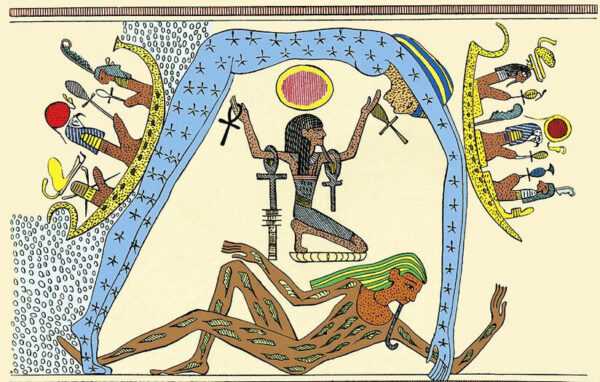

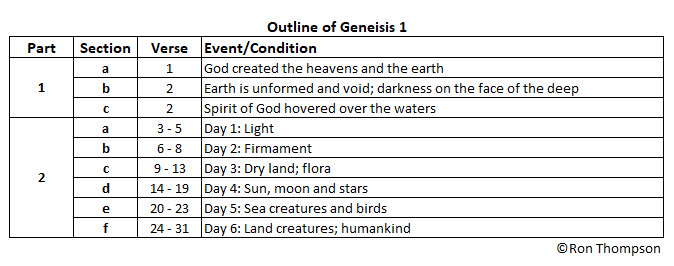


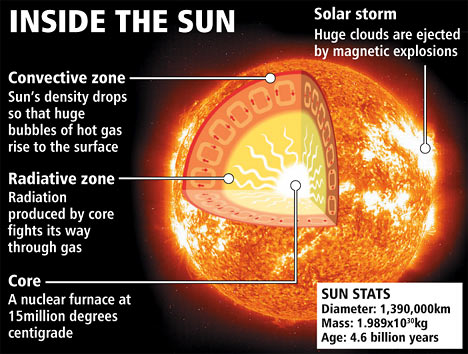

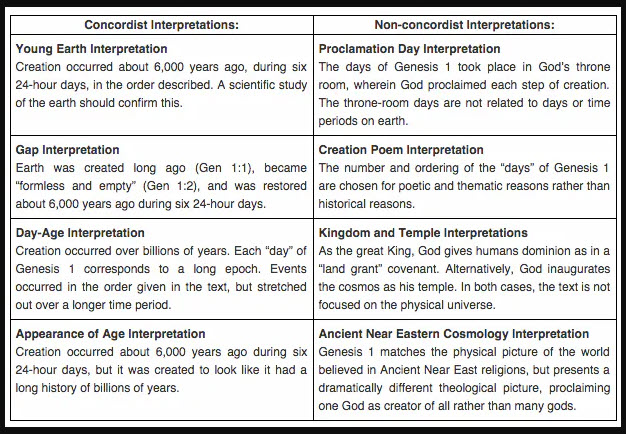
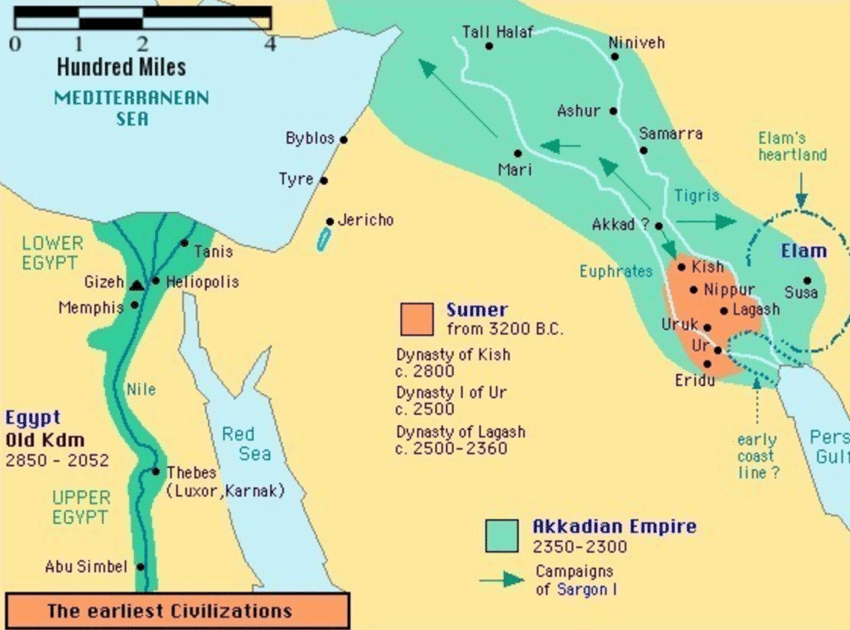


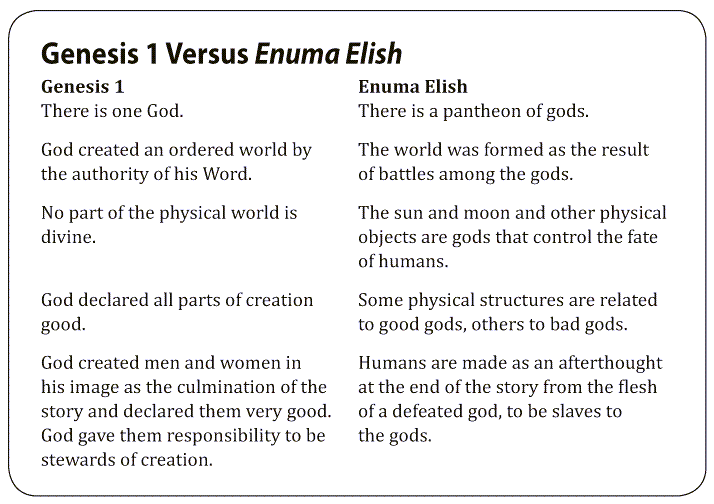


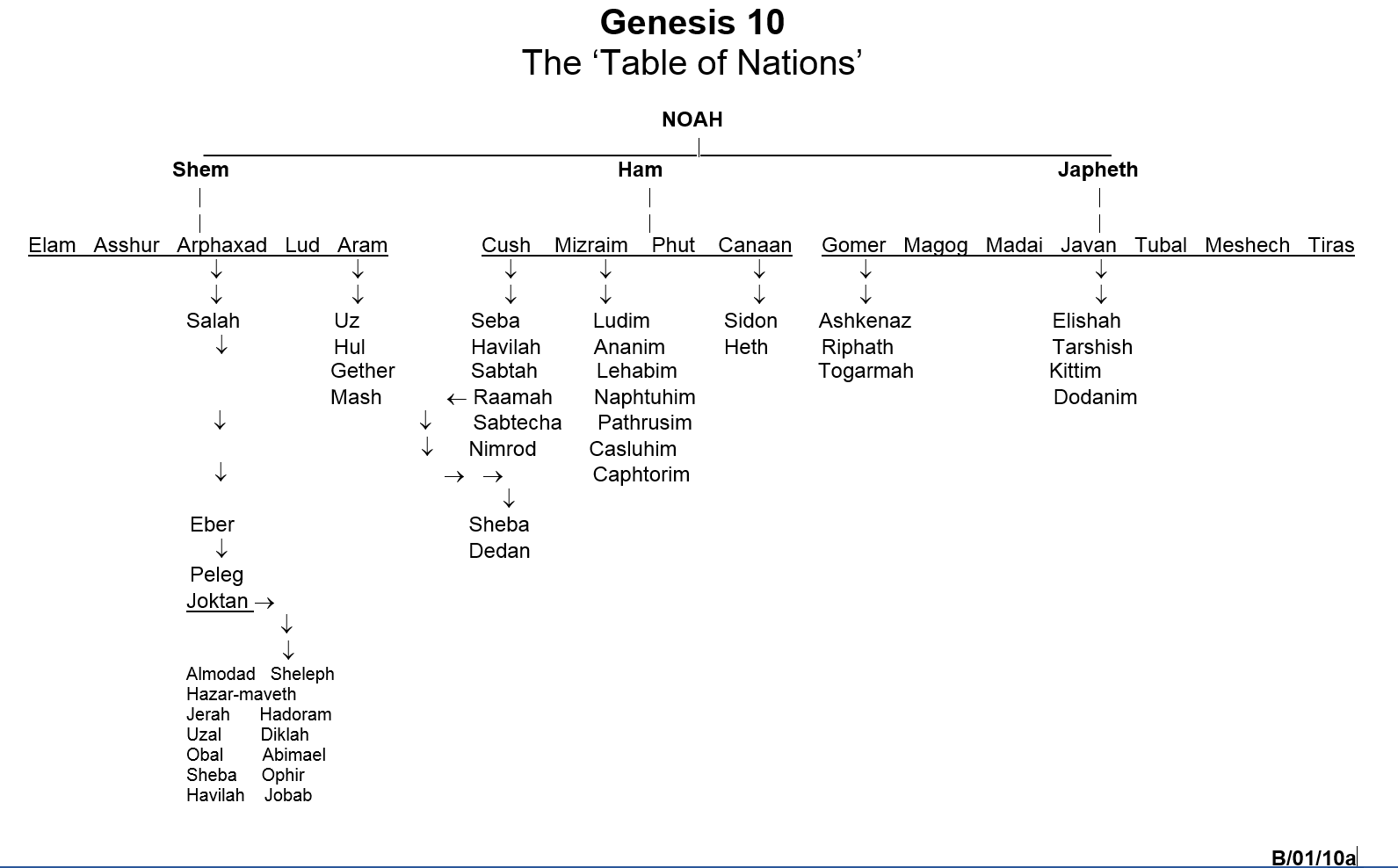


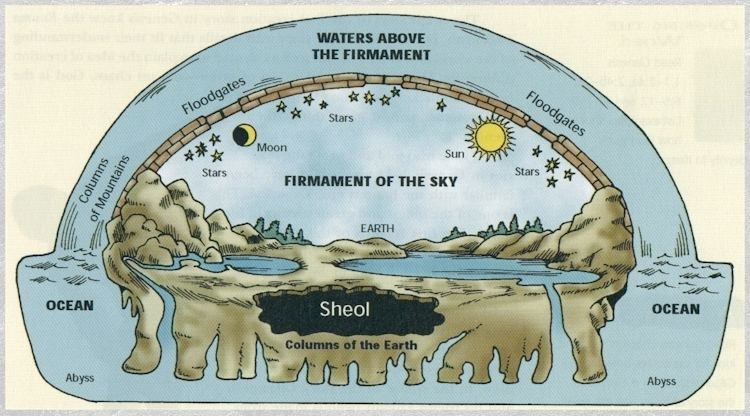


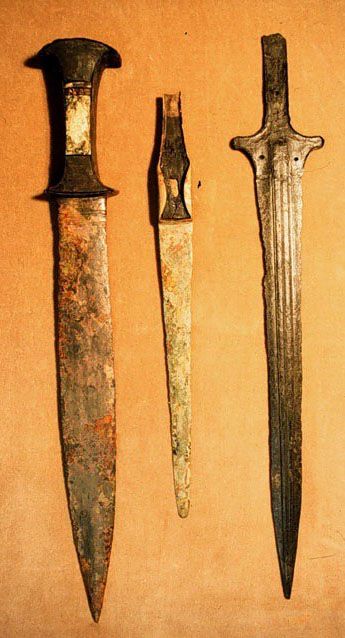

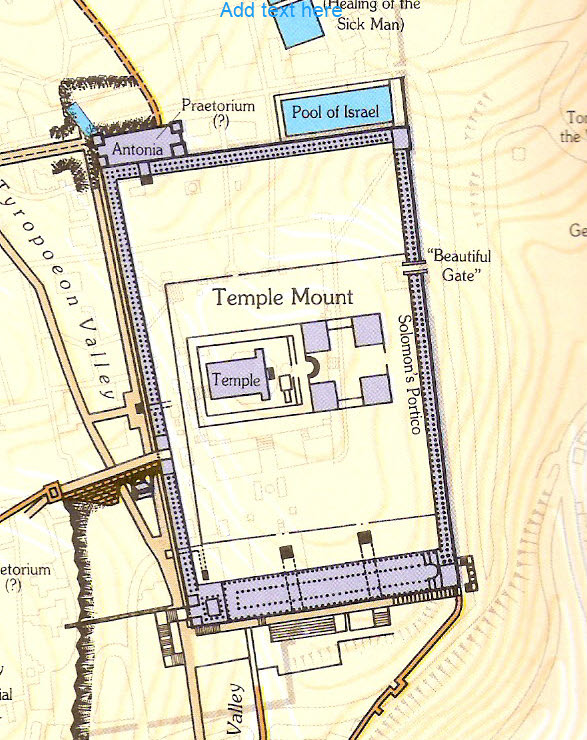
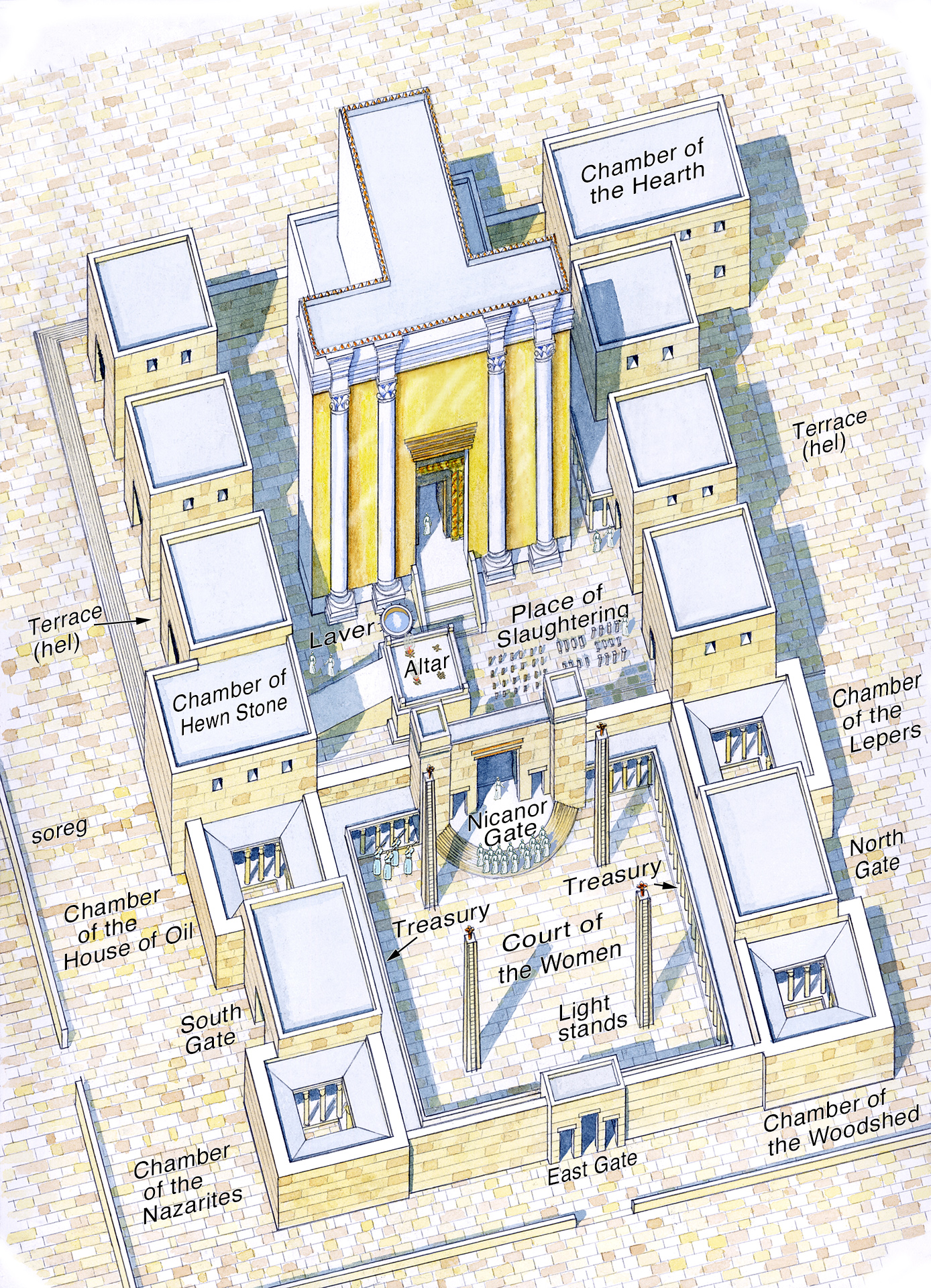






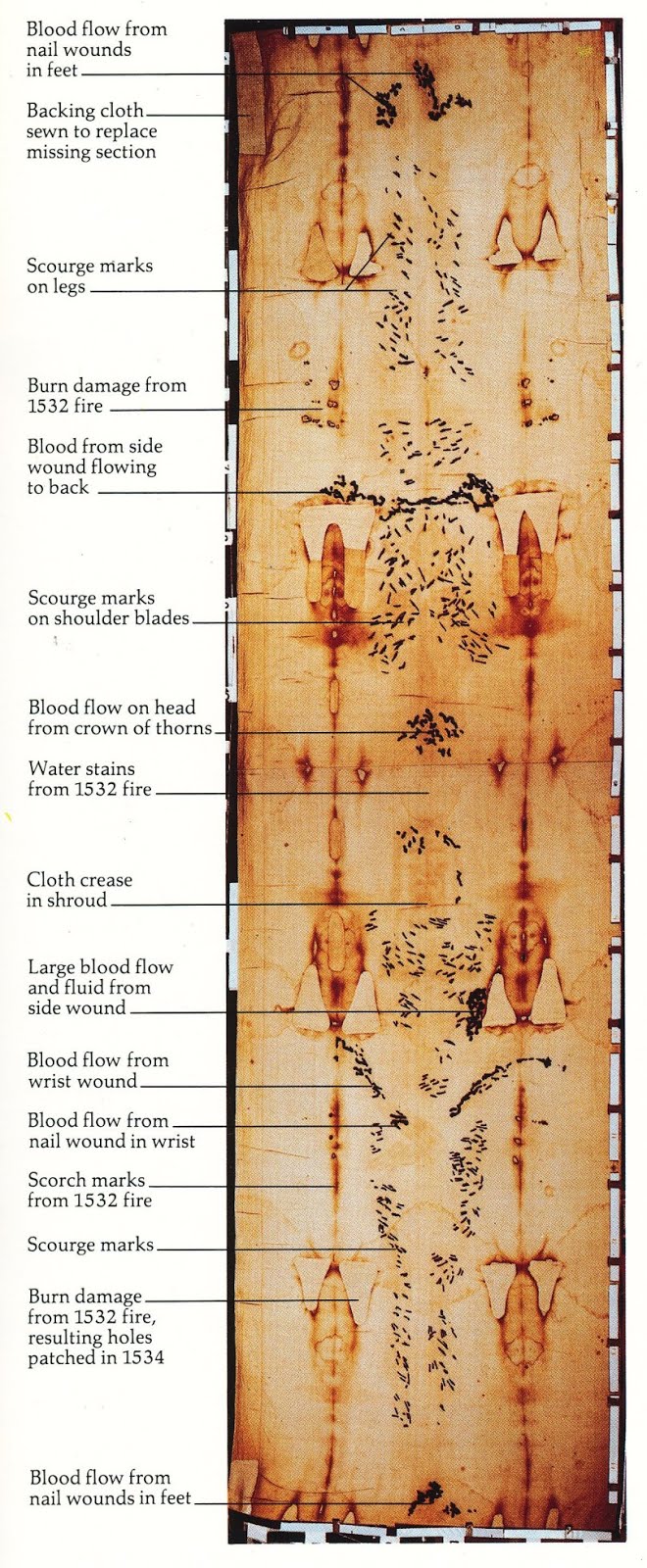


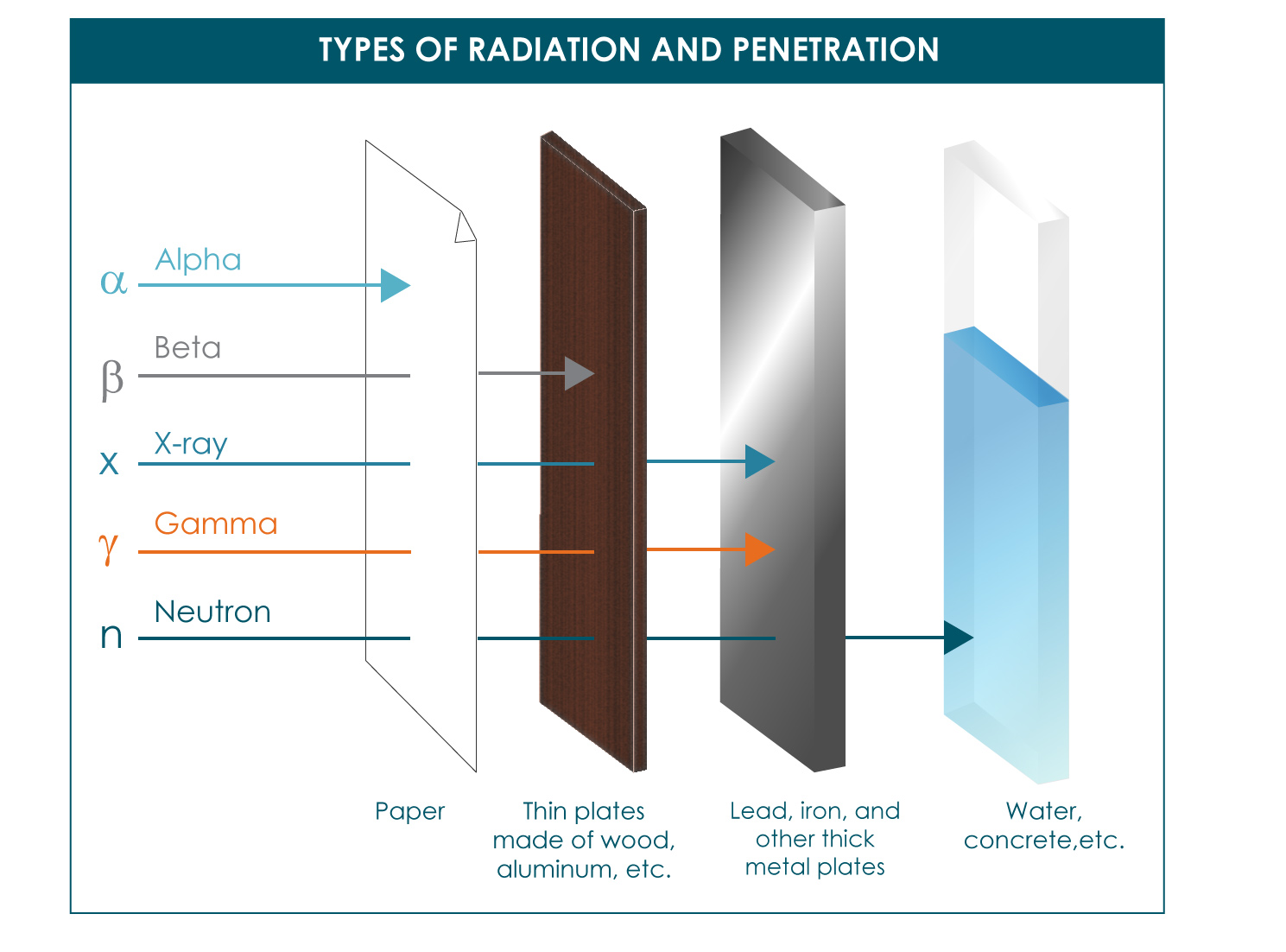




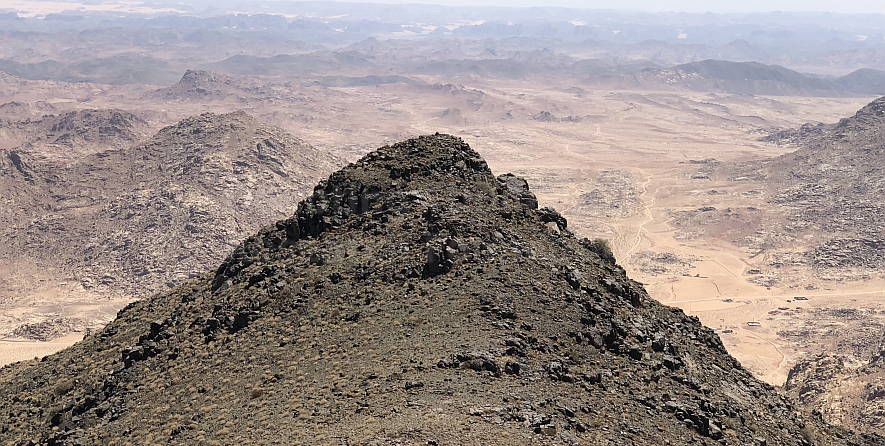
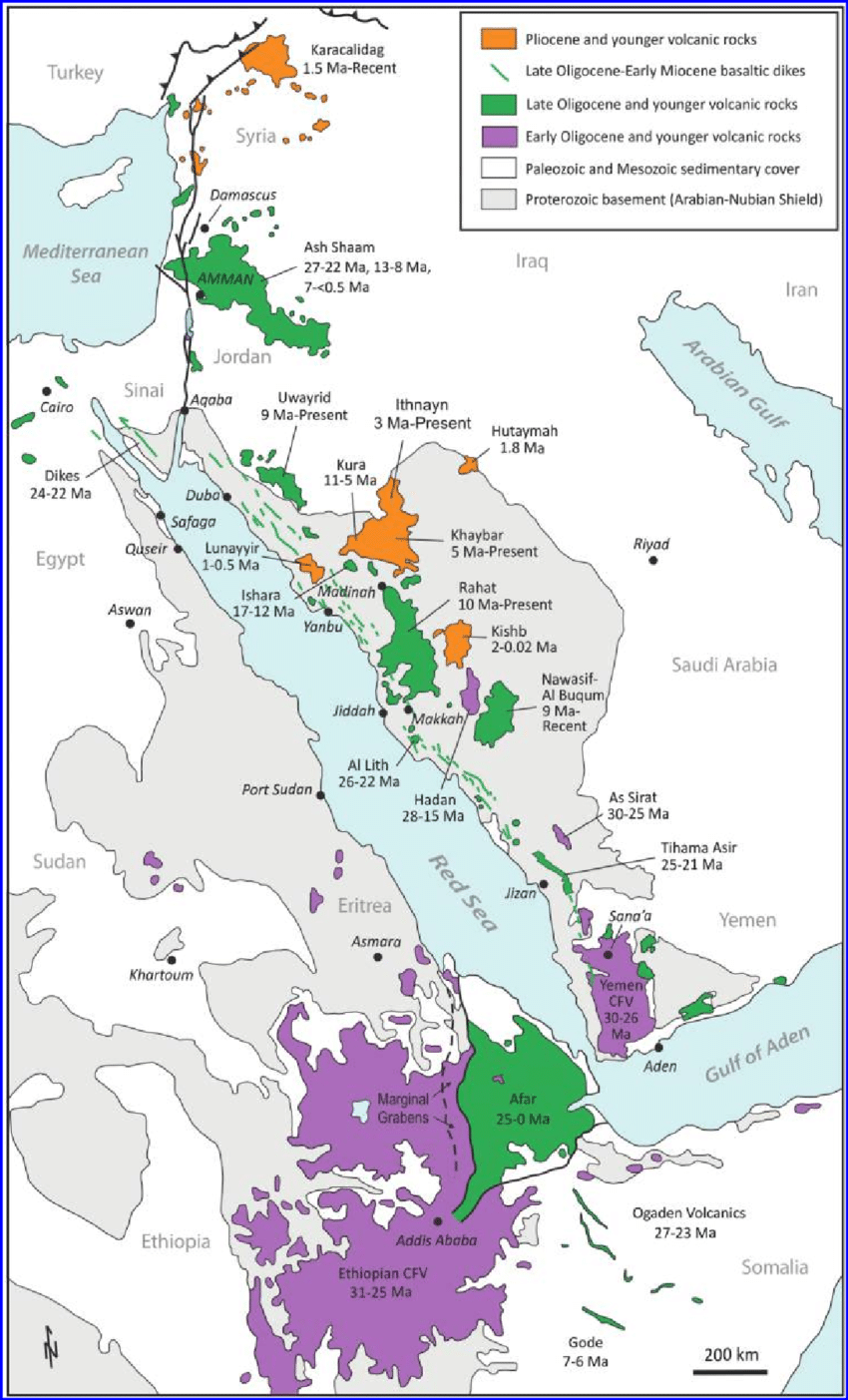

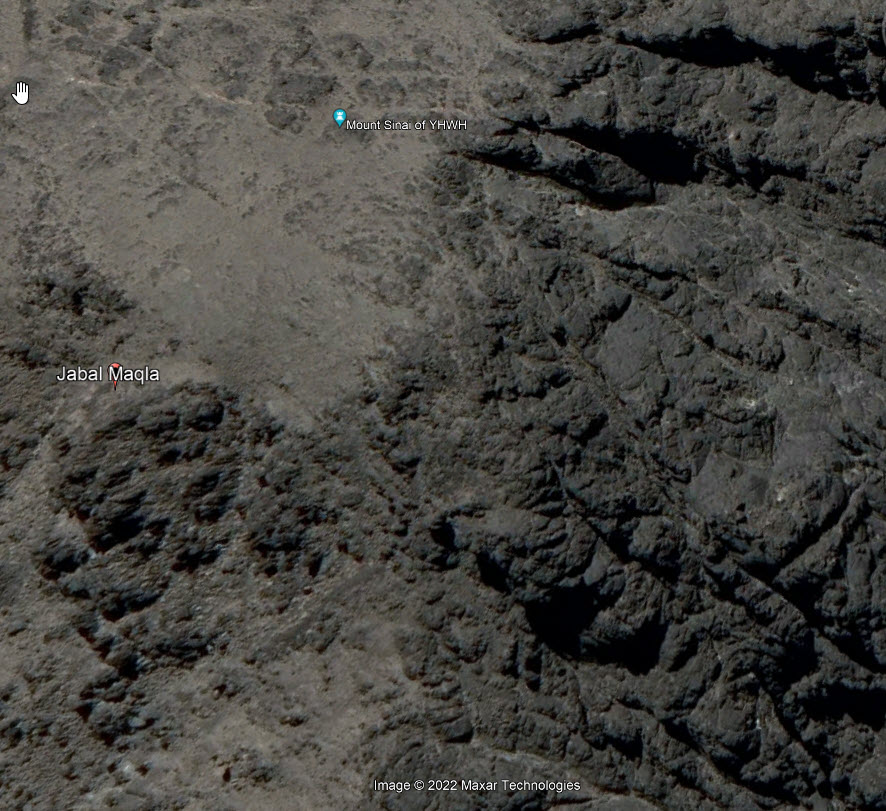
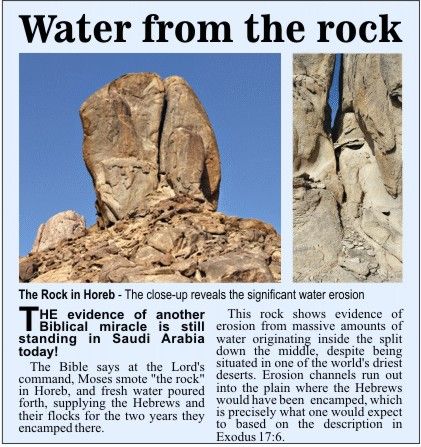

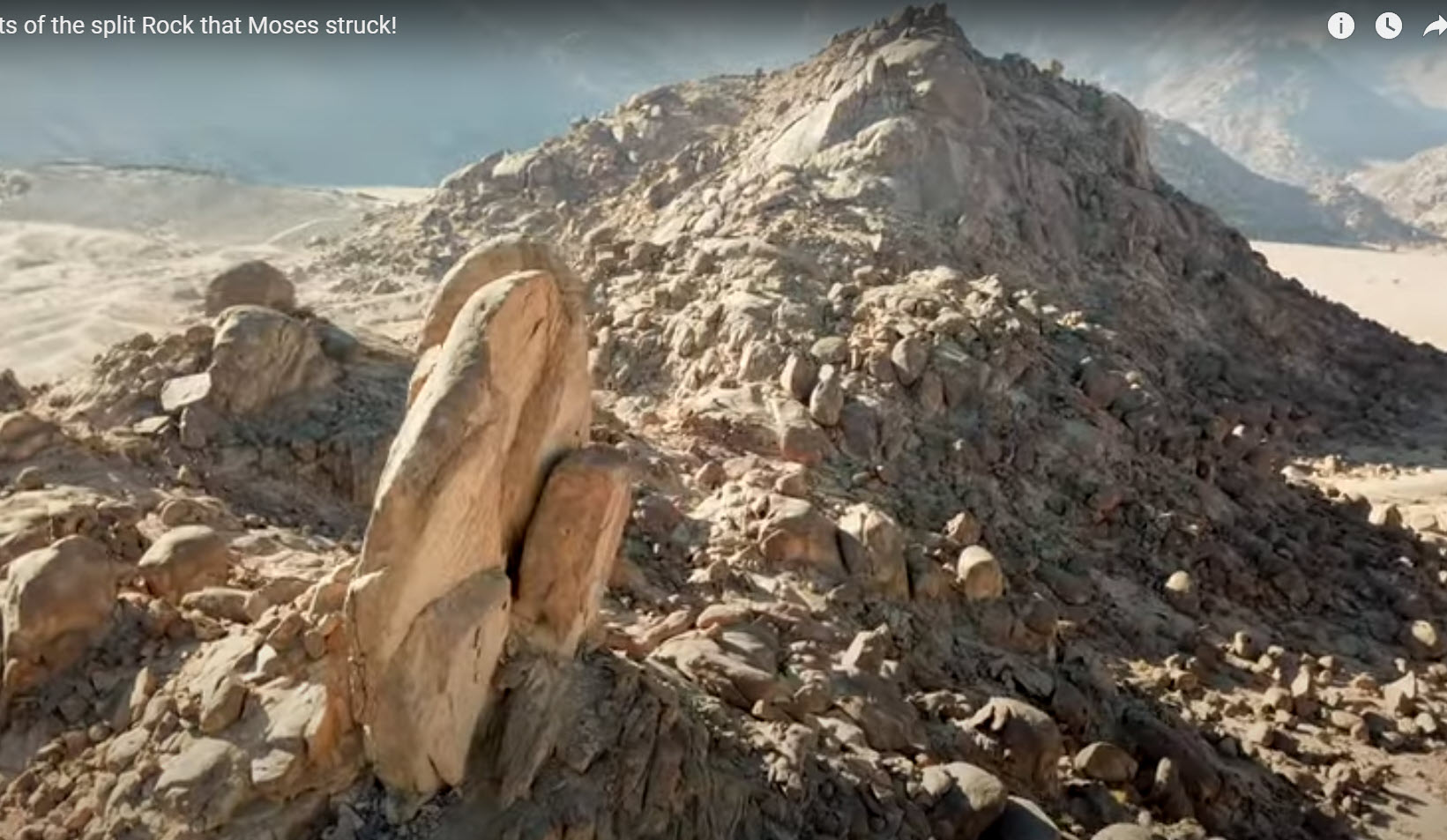


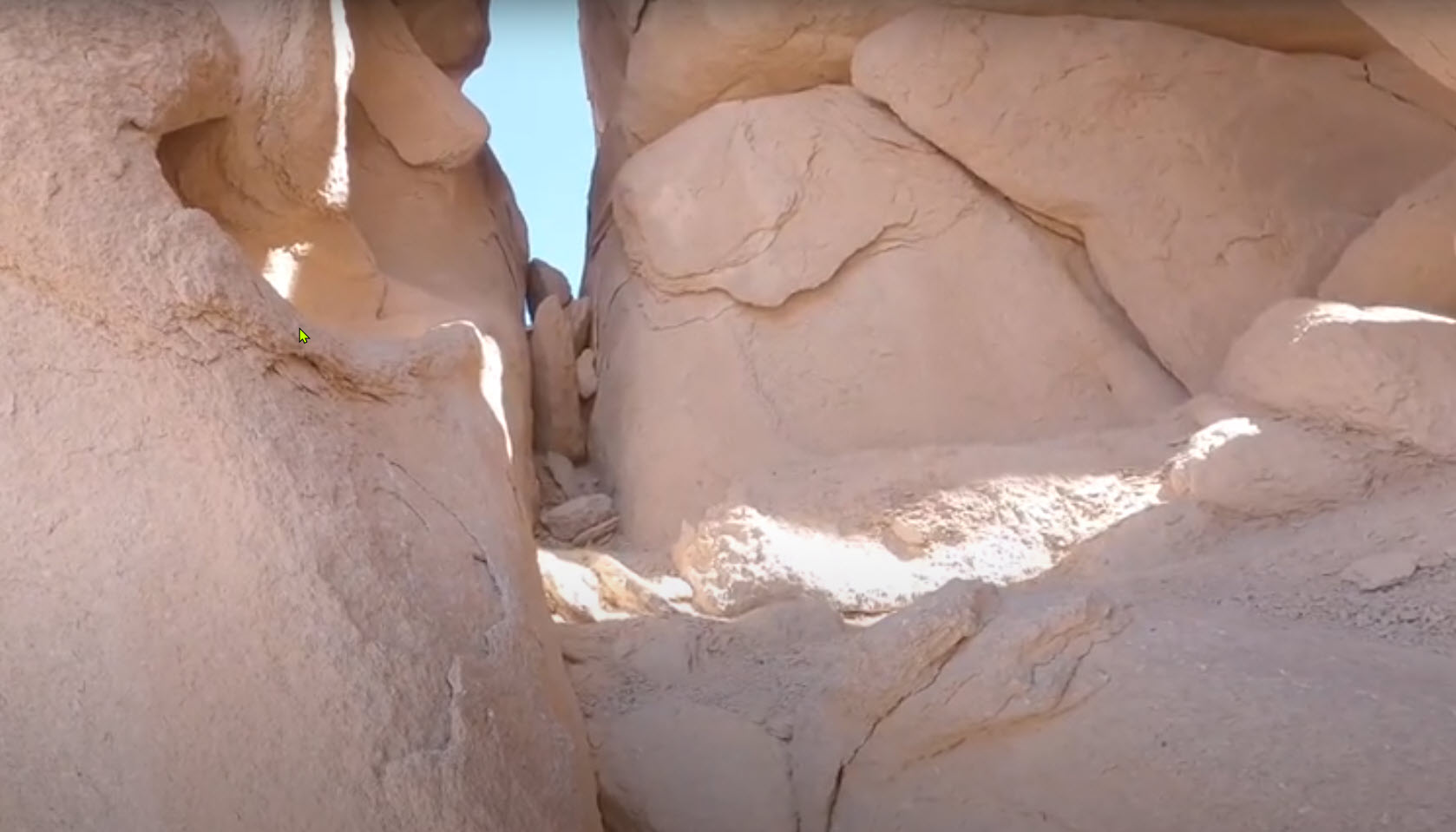



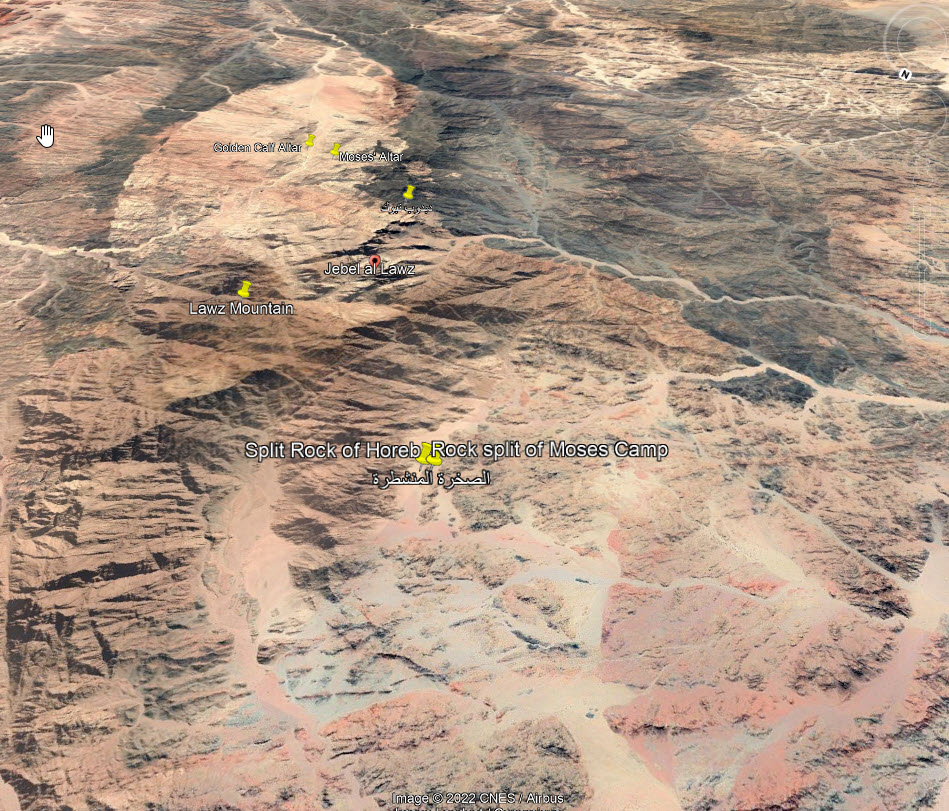






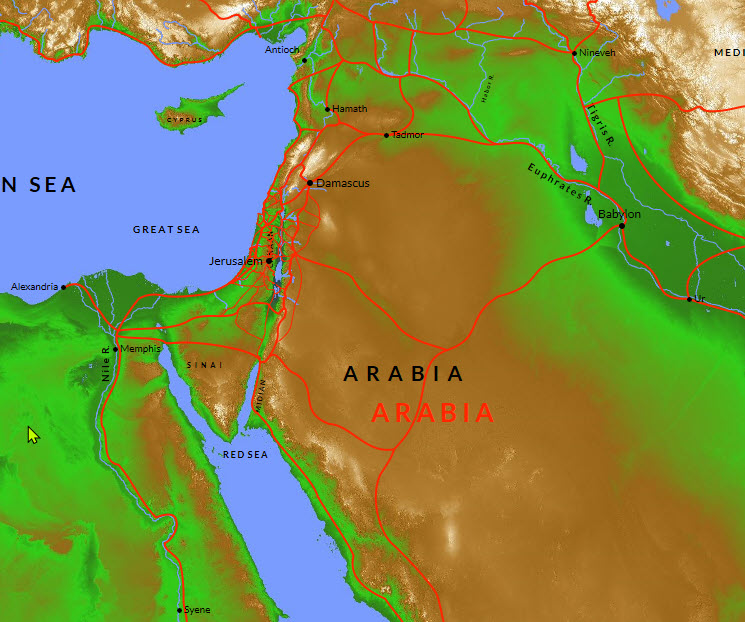

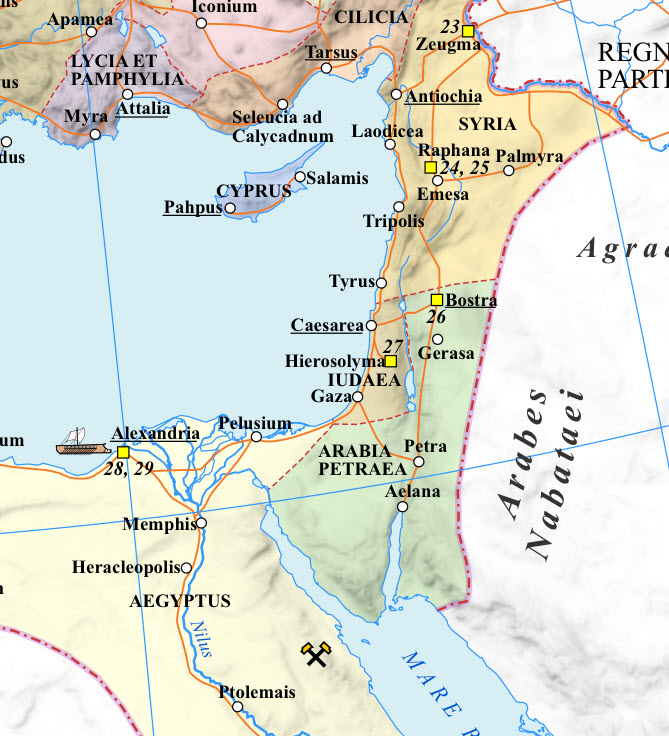

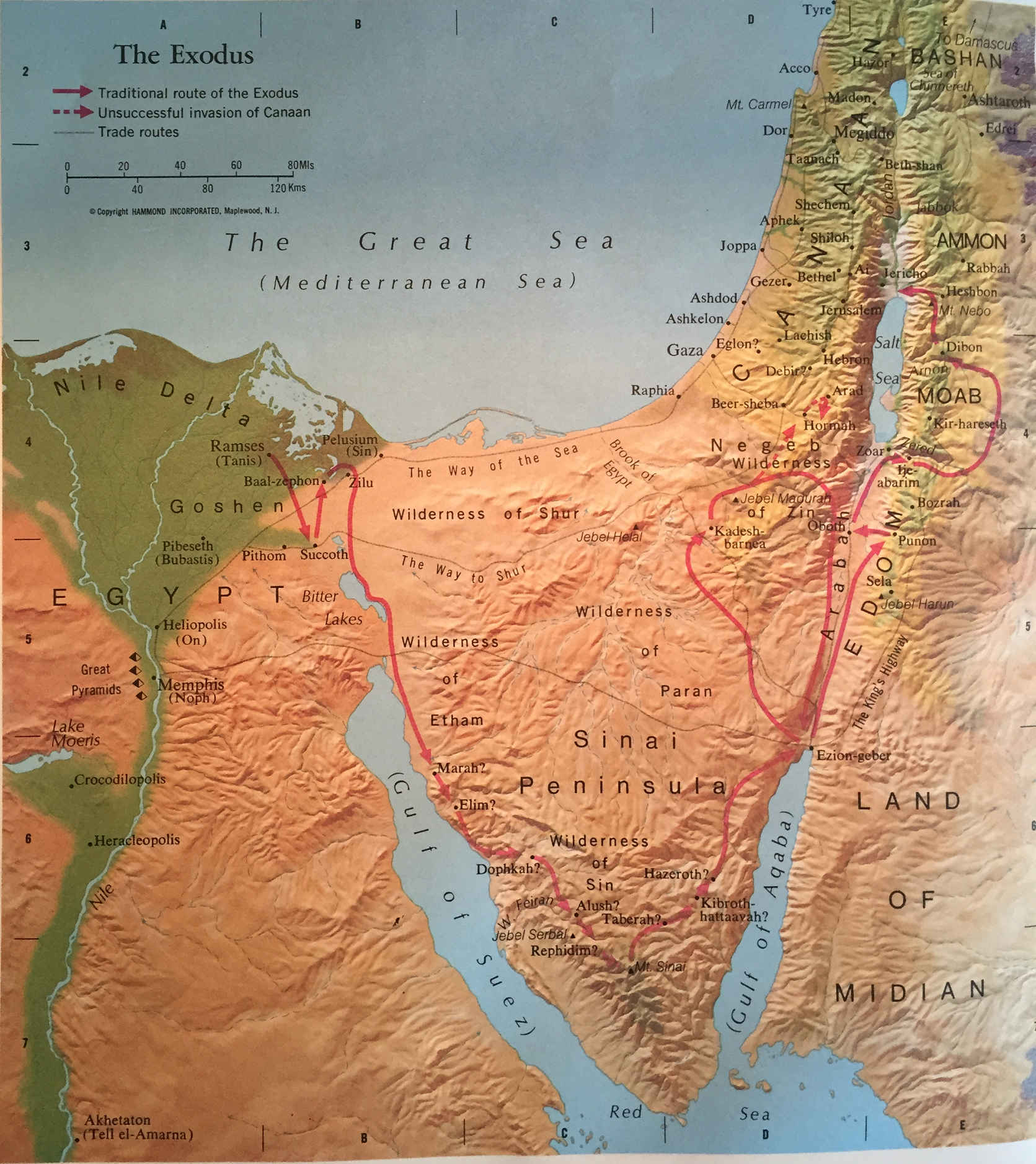
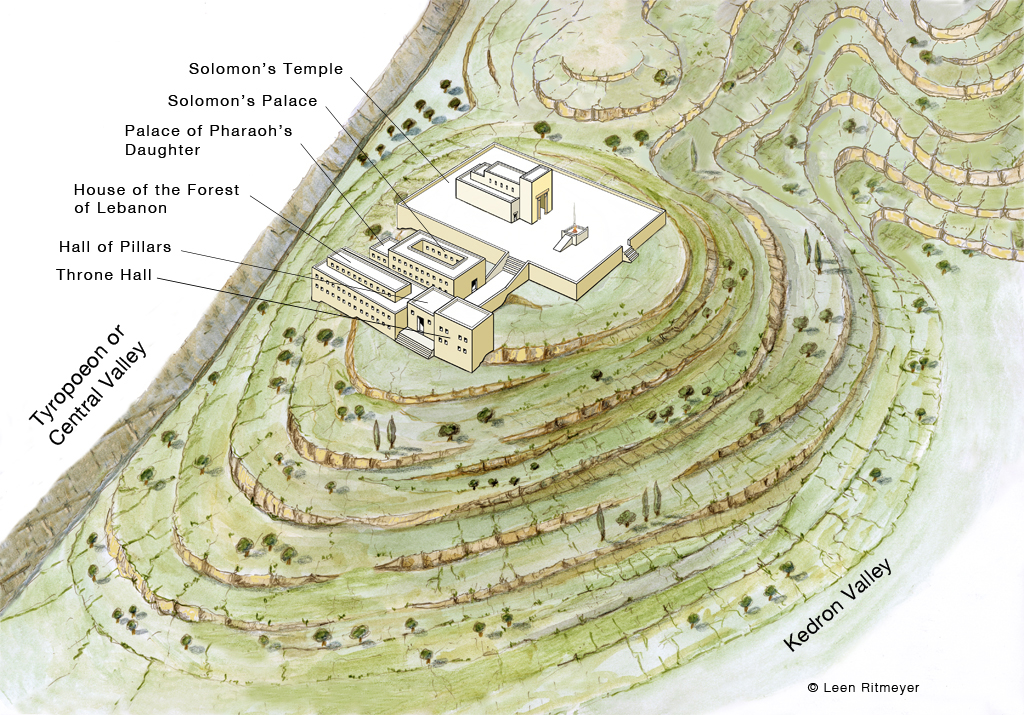

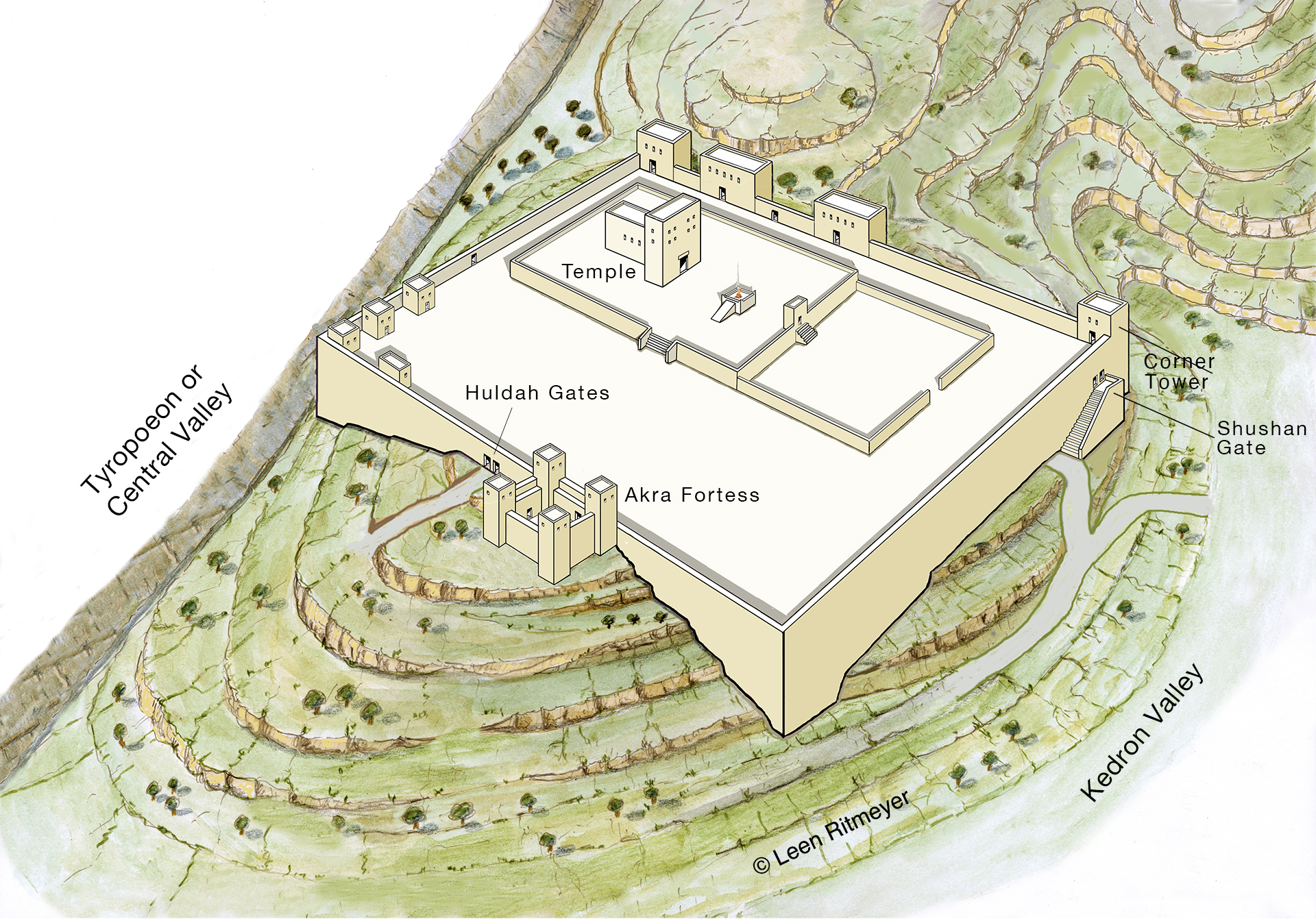

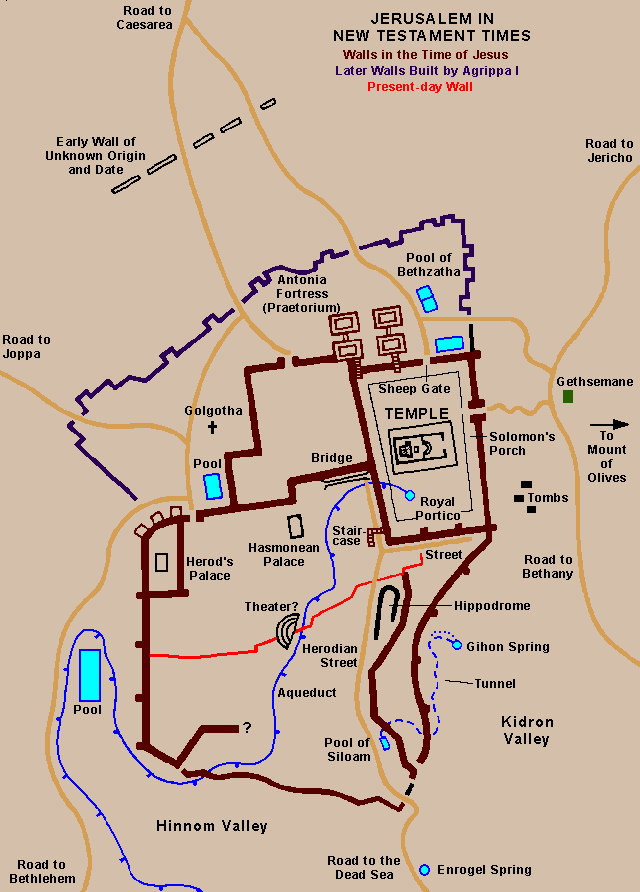

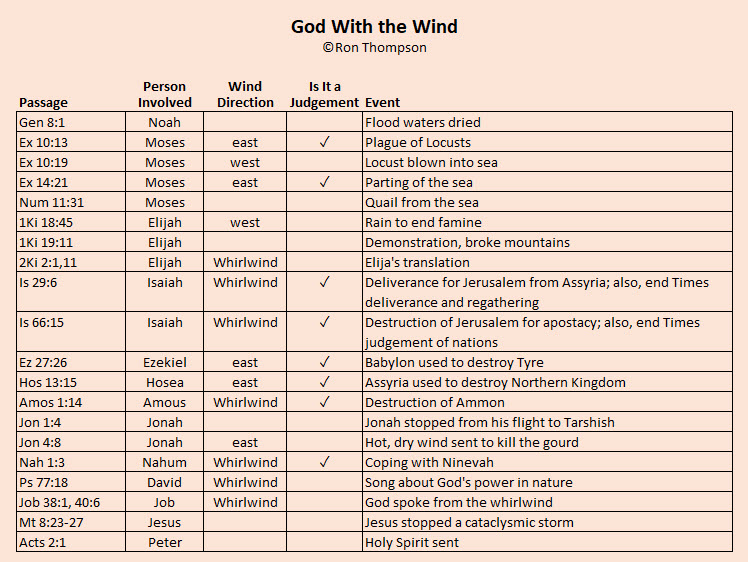

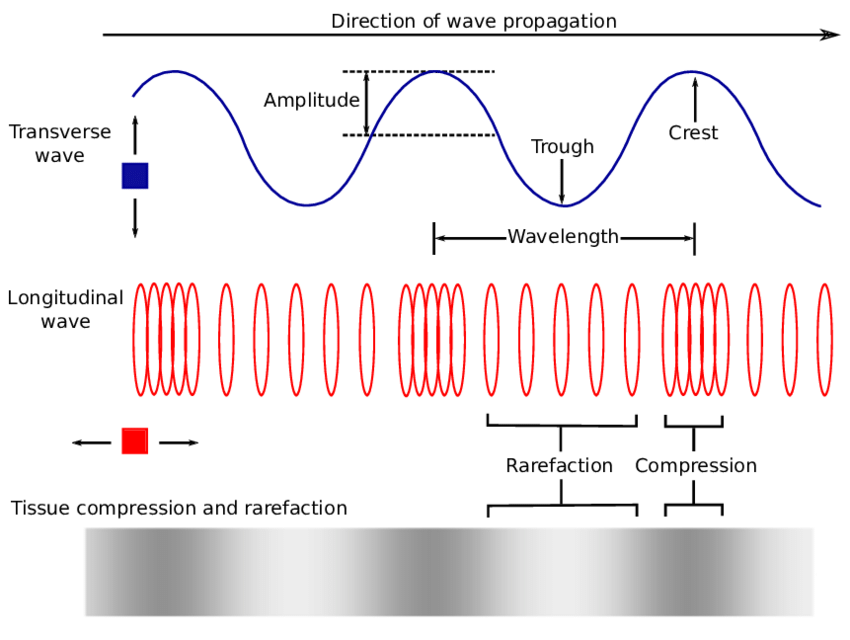

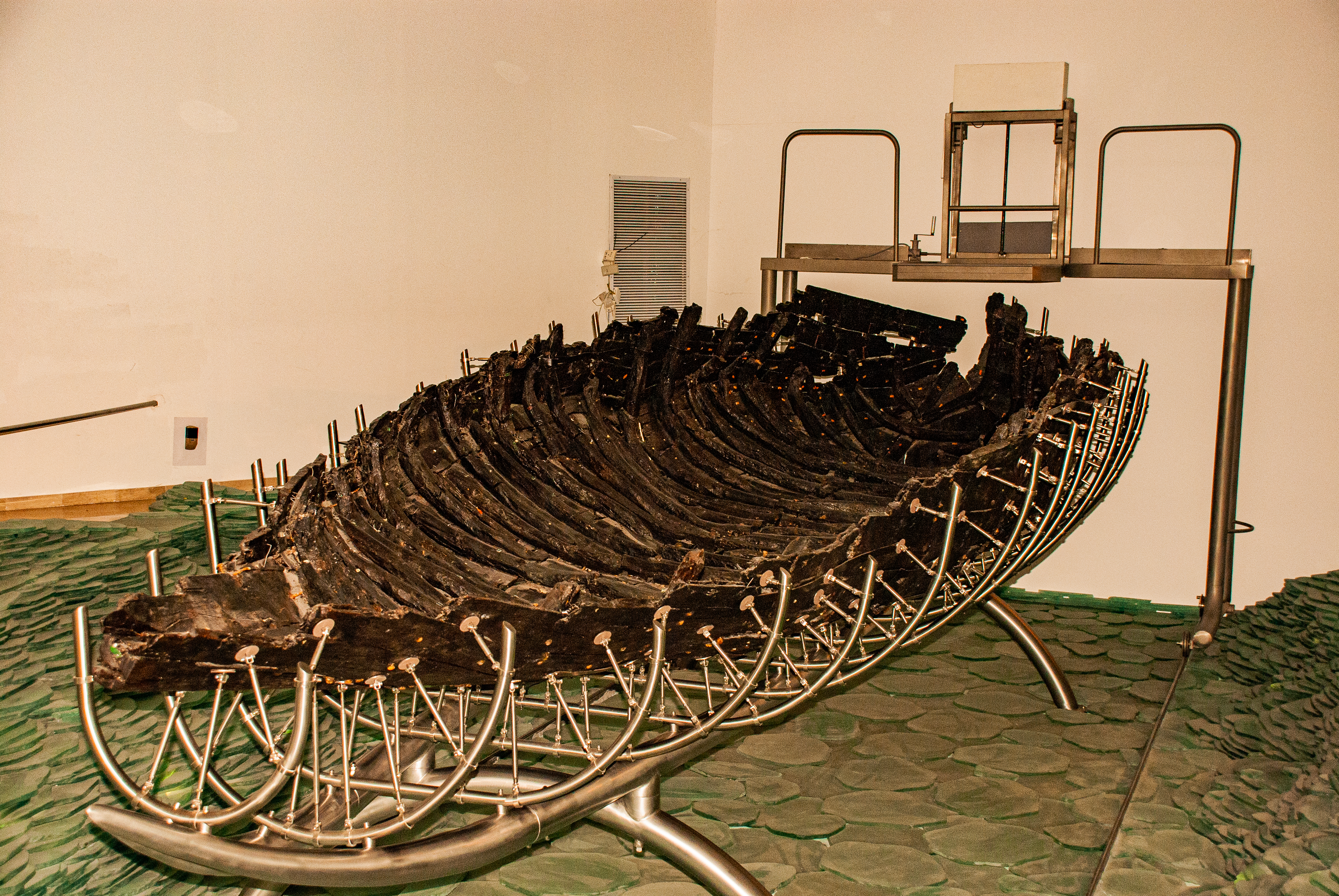

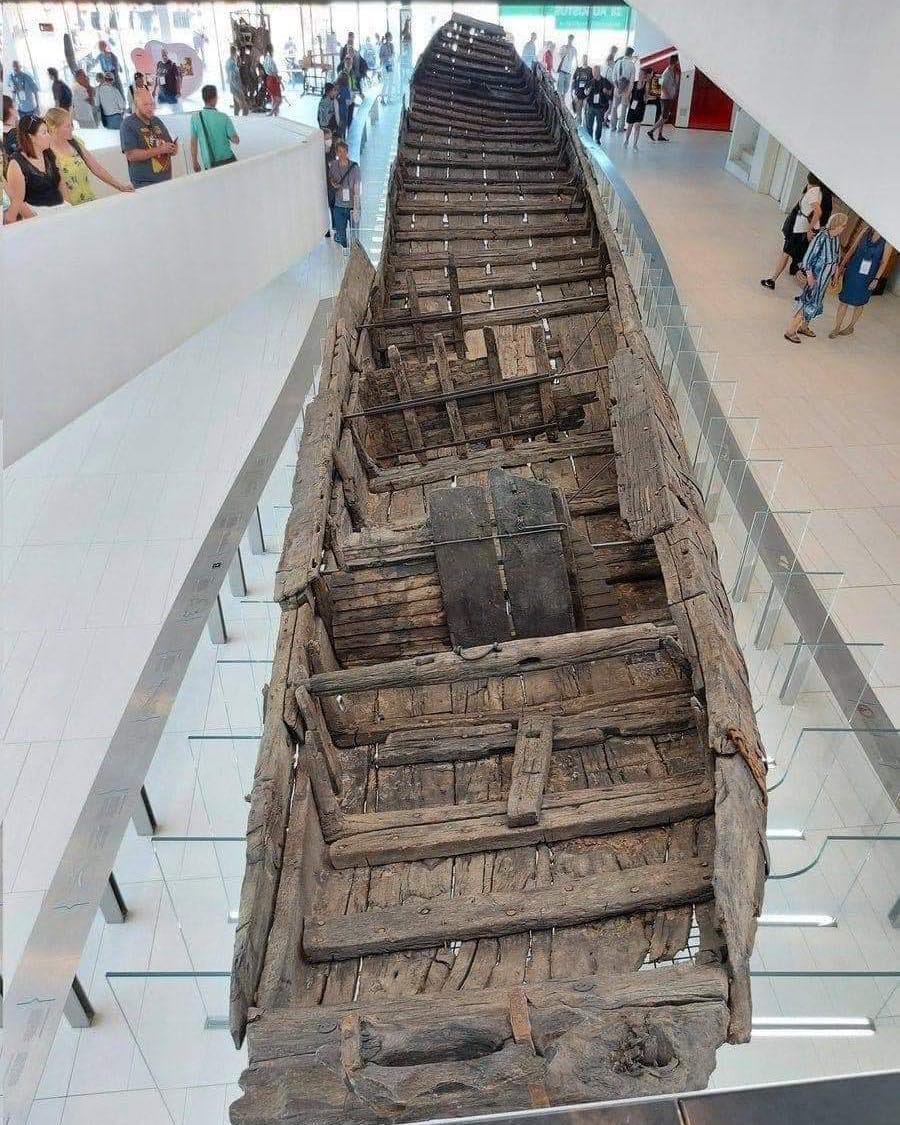
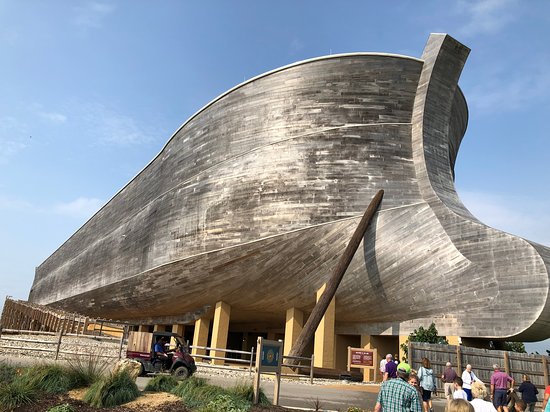

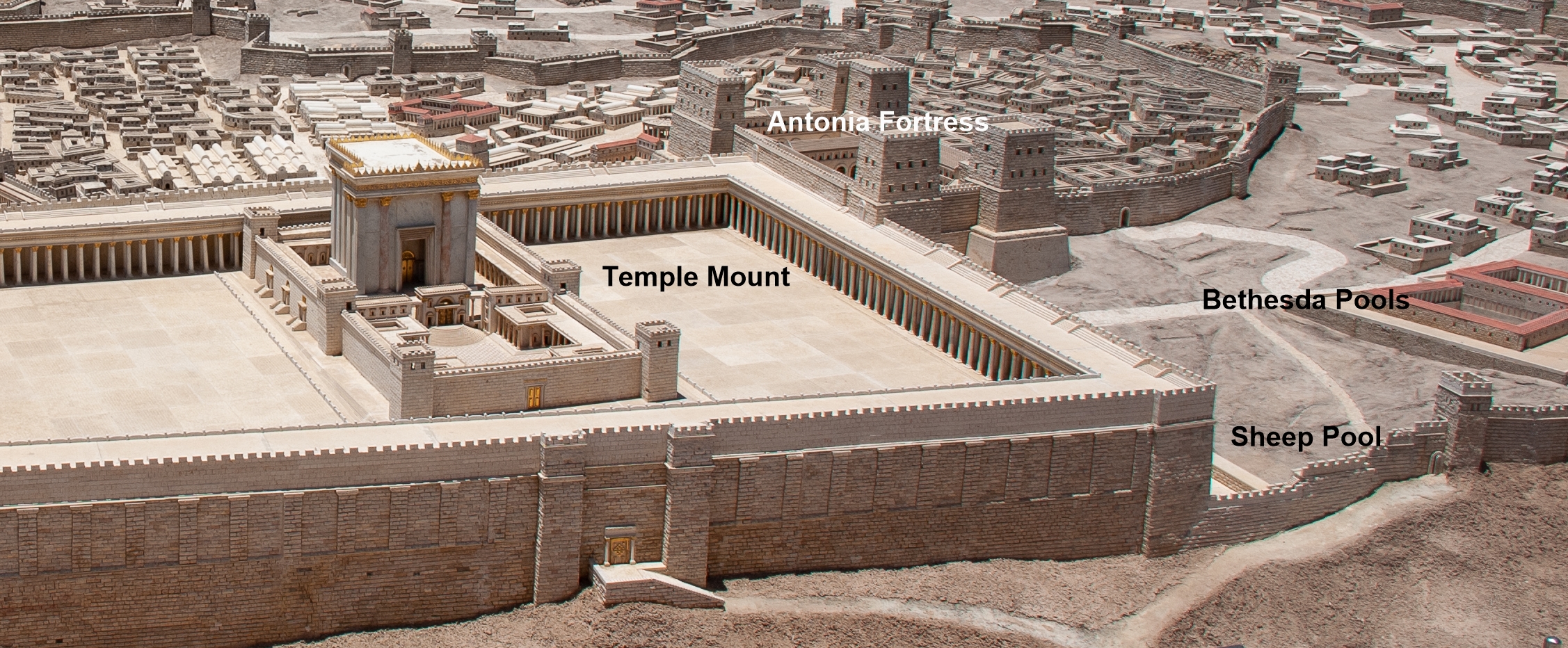


 The Back of My Mind